1. Introduction to Bearing Selection
1.1 What is a Bearing?
A bearing is a precision-engineered component designed to constrain relative motion and reduce friction between moving parts. It serves as the silent enabler of rotation, oscillation, and linear movement across countless machines. Without bearings, mechanical systems would succumb to excessive wear, heat buildup, and catastrophic inefficiency. In this Guide will learn in detail how to choose the Right Bearing for your application.
1.2 The Cost of Wrong Bearing Selection (Failures, Downtime, Losses)
An incorrect bearing choice rarely fails immediately. Instead, it deteriorates progressively—quietly at first, then abruptly. The consequences can be severe. Premature fatigue, overheating, lubrication breakdown, and misalignment often culminate in unplanned shutdowns.
Downtime in industrial environments is not merely inconvenient; it is expensive. Lost production, emergency maintenance, and collateral damage to adjacent components amplify the financial impact. In critical systems, such failures can also compromise safety. Selecting the wrong bearing is not just a technical oversight—it is a strategic miscalculation.
2. Understanding the Basics of Bearings
2.1 Definition and Core Function of Bearings
At its core, a bearing facilitates controlled motion while minimizing frictional resistance. It supports loads—either radial, axial, or both—while enabling smooth and efficient movement.
The primary function extends beyond mere motion. Bearings also maintain alignment, absorb vibrations, and distribute loads evenly across surfaces. Their role is both functional and protective.
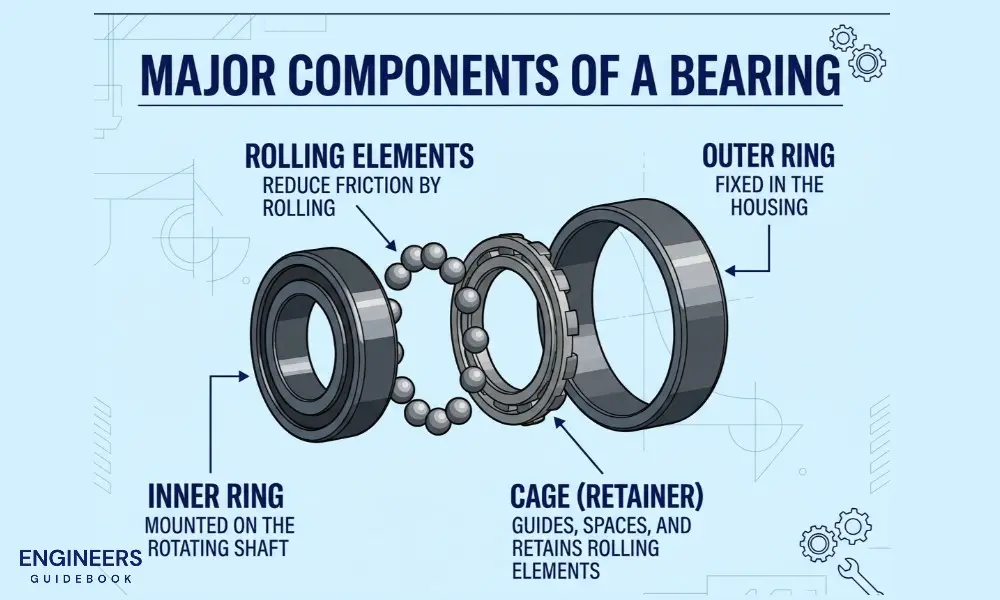
2.2 Major Components of a Bearing (Inner Ring, Outer Ring, Rolling Elements, Cage)
A typical rolling-element bearing consists of four fundamental components. The inner ring is mounted on the shaft, while the outer ring is housed within the casing. Between them lie the rolling elements—balls or rollers—that carry the load.
The cage, often overlooked, plays a critical role. It spaces the rolling elements evenly, preventing contact and reducing friction. Each component operates in synergy, and failure of one often compromises the entire assembly.
2.3 How Bearings Reduce Friction and Support Loads
Friction in sliding contact is significantly higher than in rolling contact. Bearings exploit this principle by introducing rolling elements between moving surfaces. This transformation from sliding to rolling drastically reduces energy loss.
Simultaneously, the bearing distributes applied loads across multiple contact points. This load-sharing mechanism minimizes localized stress, enhancing durability. The result is a system that operates smoothly, efficiently, and reliably over extended periods.
How to Choose the Right Bearing
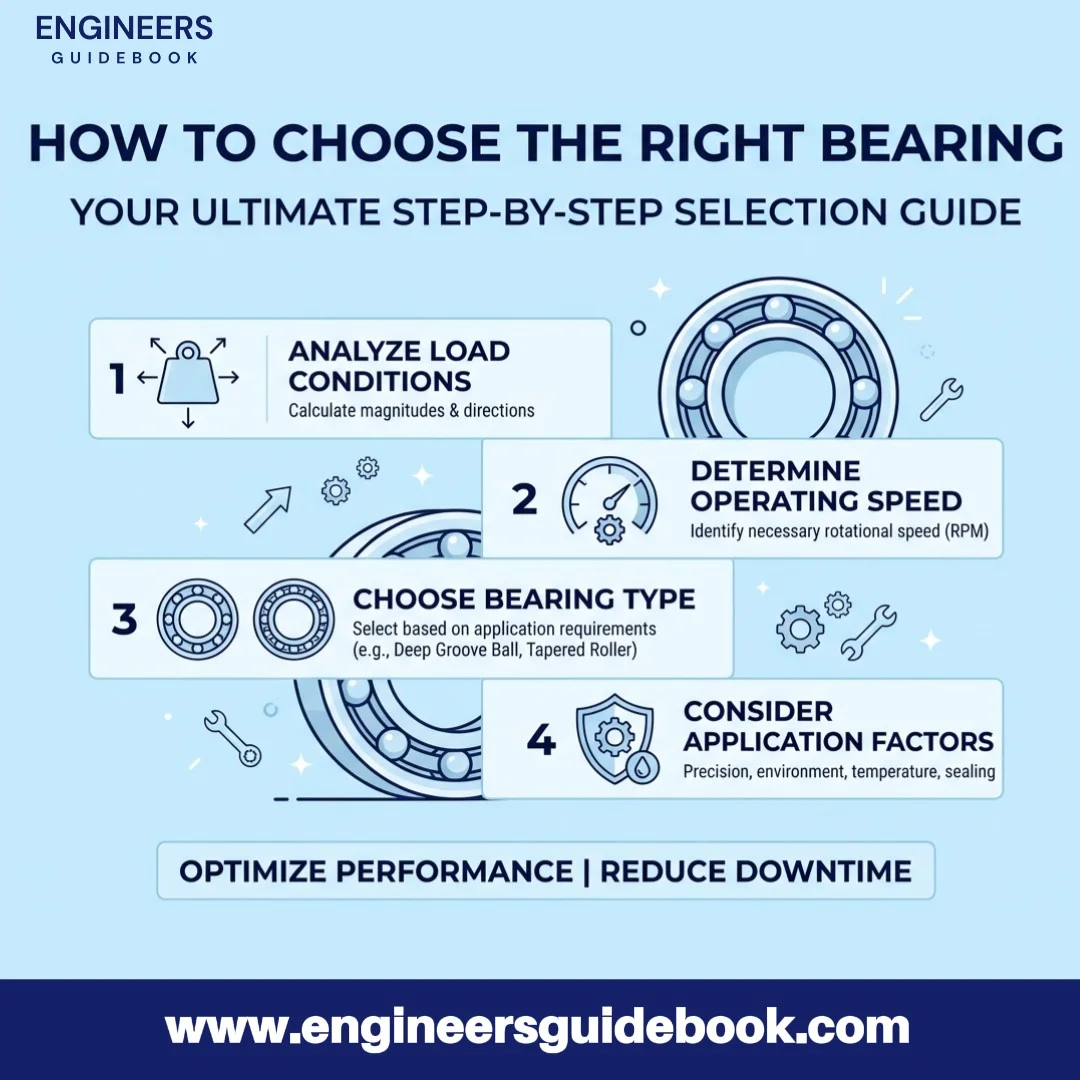
3. Step 1: Identify Load Requirements
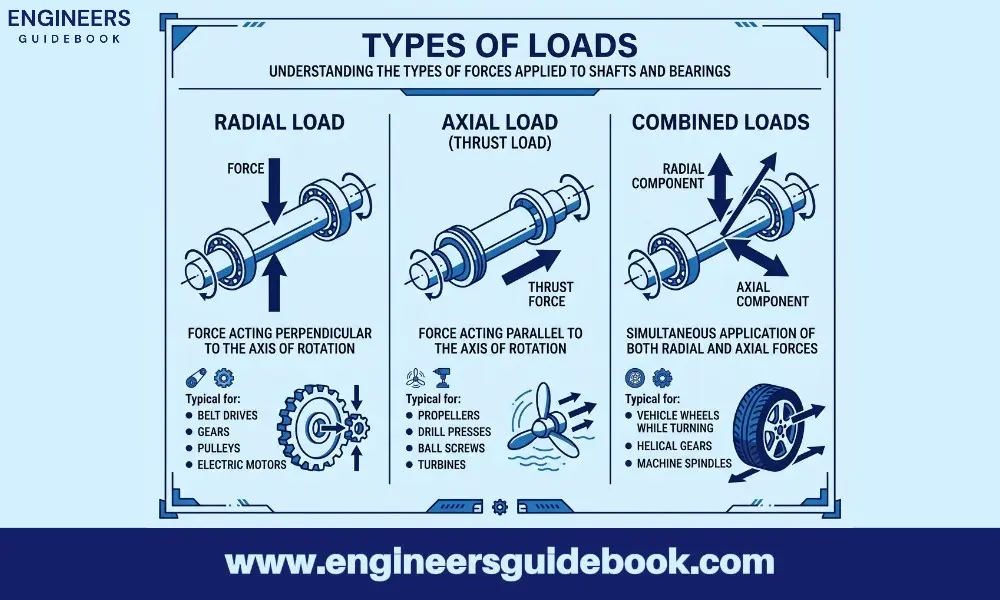
3.1 Types of Loads: Radial, Axial (Thrust), and Combined Loads
Load characterization is the foundation of bearing selection. Radial loads act perpendicular to the shaft, while axial loads act parallel to it. Many real-world applications involve combined loading conditions.
Understanding the direction and nature of these loads is crucial. A bearing designed for radial loads may fail prematurely under significant axial forces, and vice versa.
3.2 Static vs Dynamic Loads Explained
Static loads occur when the bearing is stationary or subjected to minimal motion. Dynamic loads arise during operation, often fluctuating with time.
Dynamic loading is more complex. It introduces fatigue phenomena, requiring careful analysis of load cycles and magnitudes. Ignoring this distinction can lead to inaccurate life predictions.
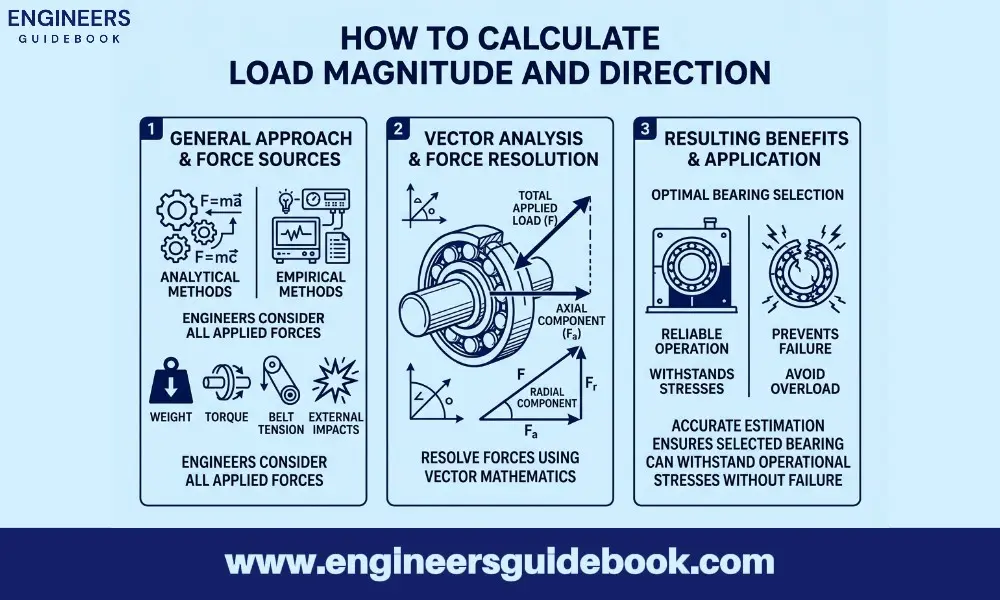
3.3 How to Calculate Load Magnitude and Direction
Load calculation involves both analytical and empirical methods. Engineers consider forces such as weight, torque, belt tension, and external impacts.
Vector analysis is often employed to resolve forces into radial and axial components. Accurate load estimation ensures that the selected bearing can withstand operational stresses without failure.
4. Step 2: Determine Operating Speed
4.1 Why Speed Matters in Bearing Selection
Speed directly influences bearing performance. Higher rotational speeds increase frictional heat, lubrication demands, and centrifugal forces acting on rolling elements.
A bearing that performs well at low speed may fail under high-speed conditions. Therefore, speed compatibility is non-negotiable.
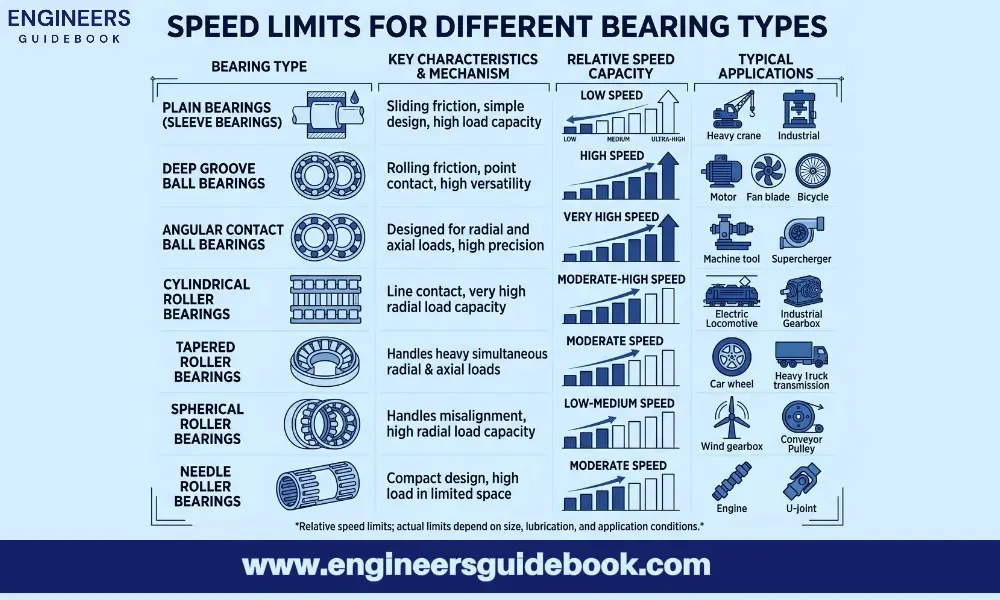
4.2 Speed Limits for Different Bearing Types
Each bearing type has an inherent speed limit. Ball bearings typically accommodate higher speeds due to lower contact area. Roller bearings, with their larger surfaces, are better suited for heavy loads but operate at lower speeds.
Exceeding speed limits accelerates wear and reduces service life.
4.3 Heat Generation and Its Impact on High-Speed Applications
Heat is an inevitable byproduct of high-speed operation. Excessive heat degrades lubricants, alters material properties, and increases thermal expansion.
If not managed properly, it can lead to seizure or catastrophic failure. Effective heat dissipation and proper lubrication are essential in such applications.
4.4 Matching Bearing Type with RPM Requirements
Selecting a bearing involves aligning its speed rating with operational RPM. This alignment ensures stable performance without excessive thermal stress.
Precision bearings, often used in high-speed machinery, are specifically engineered to handle such demanding conditions.
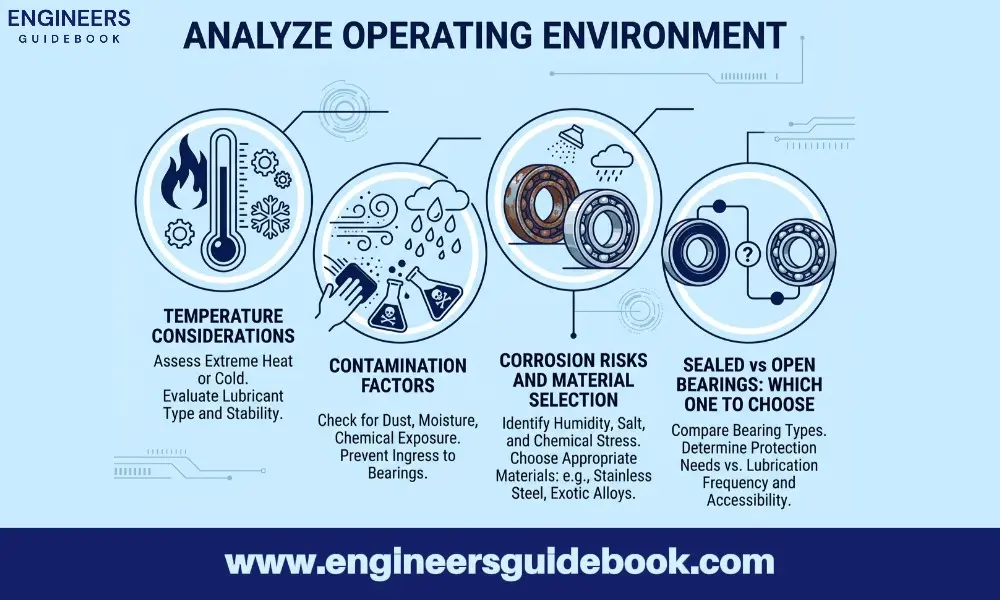
5. Step 3: Analyze Operating Environment
5.1 Temperature Considerations (High-Heat vs Low-Temperature Applications)
Temperature extremes significantly affect bearing performance. High temperatures can reduce hardness and degrade lubricants. Low temperatures, on the other hand, may cause brittleness and increased viscosity.
Material selection and lubrication strategy must be tailored accordingly.
5.2 Contamination Factors: Dust, Moisture, Chemicals
Contaminants are among the leading causes of bearing failure. Dust particles cause abrasive wear. Moisture leads to corrosion. Chemicals can degrade both material and lubricant.
Protective measures, such as seals and shields, are critical in hostile environments.
5.3 Corrosion Risks and Material Selection
Corrosion undermines structural integrity. In corrosive environments, standard steel bearings may fail rapidly.
Stainless steel or specially coated bearings offer enhanced resistance. Material choice must align with environmental exposure.
5.4 Sealed vs Open Bearings: Which One to Choose
Sealed bearings provide protection against contaminants and retain lubrication. Open bearings, while easier to maintain, require controlled environments.
The choice depends on maintenance capability and environmental severity.
6. Step 4: Select the Right Bearing Type
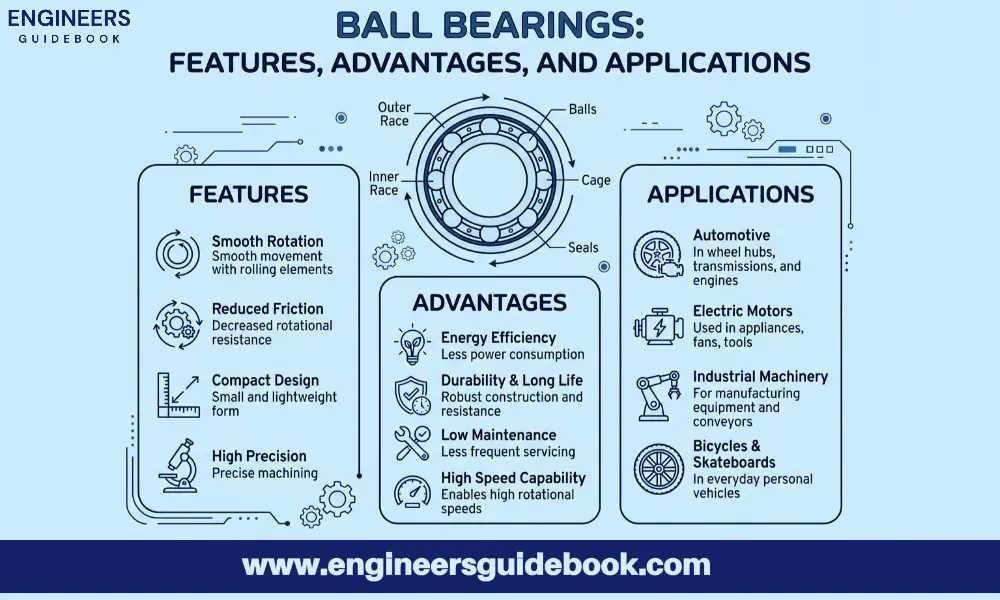
6.1 Ball Bearings: Features, Advantages, and Applications
Ball bearings are versatile and widely used. They offer low friction, high-speed capability, and moderate load capacity.
Their simplicity and efficiency make them suitable for applications ranging from electric motors to household appliances.
Also Read This: Ball Bearings: Fundamental Concepts and Applications
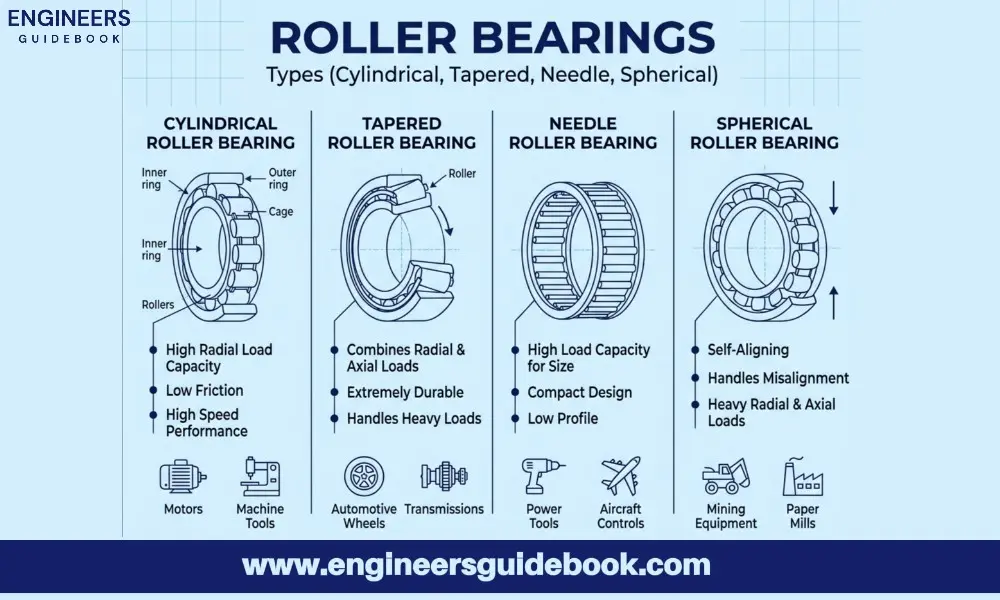
6.2 Roller Bearings: Types (Cylindrical, Tapered, Needle, Spherical)
Roller bearings excel in handling heavy loads. Cylindrical rollers manage high radial loads, while tapered rollers accommodate combined loads. Needle bearings are compact, and spherical bearings tolerate misalignment.
Each type serves a specific purpose, dictated by application requirements.
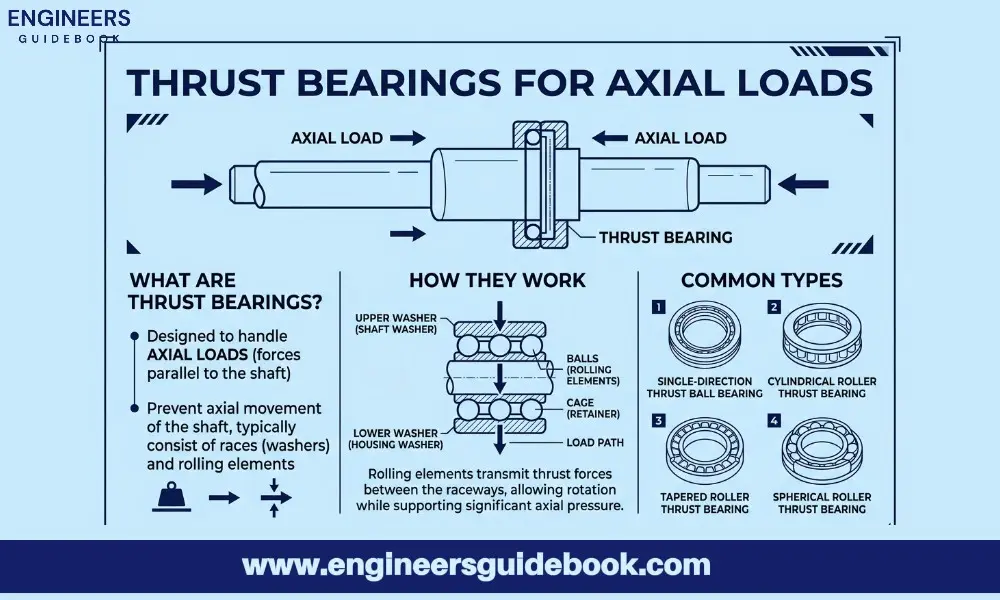
6.3 Thrust Bearings for Axial Loads
Also Read This: Thrust Bearings
Thrust bearings are designed to handle axial loads exclusively. They are commonly used in vertical shafts and rotating assemblies where axial forces dominate.
Their design ensures stability under directional loading conditions.
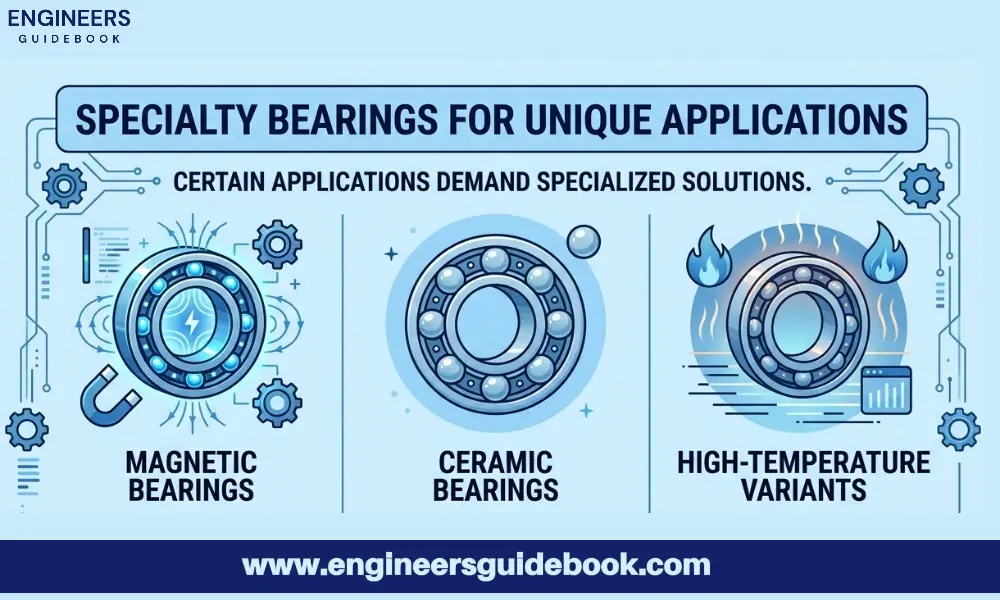
6.4 Specialty Bearings for Unique Applications
Certain applications demand specialized solutions. Magnetic bearings, ceramic bearings, and high-temperature variants cater to niche requirements.
These bearings often incorporate advanced materials and design innovations.
6.5 Quick Comparison Table for Easy Selection
A comparative evaluation highlights key parameters such as load capacity, speed capability, and alignment tolerance. Such a table simplifies decision-making and accelerates the selection process.
7. Step 5: Evaluate Bearing Life and Reliability
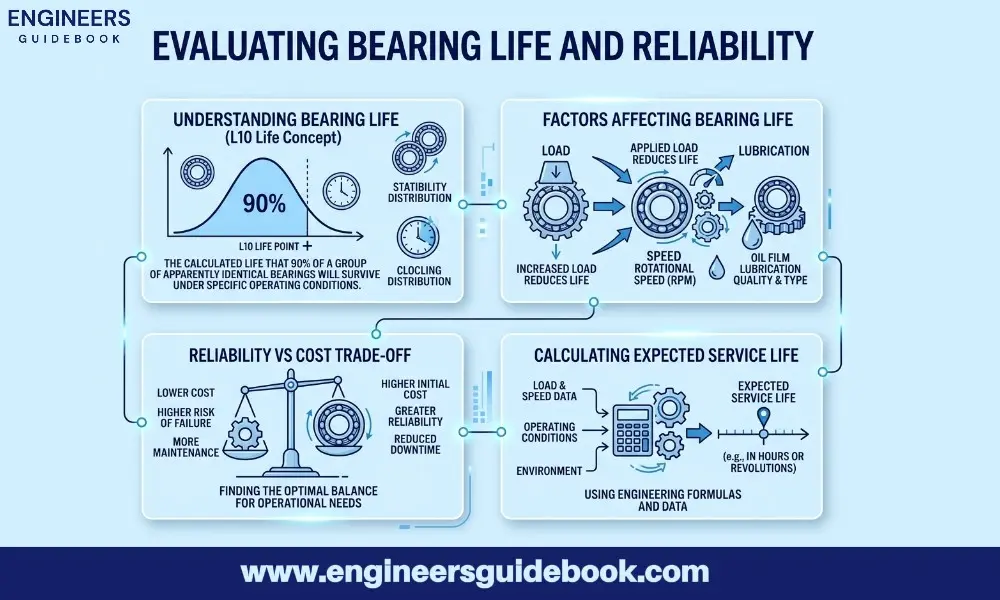
7.1 Understanding Bearing Life (L10 Life Concept)
Bearing life is commonly expressed as L10 life—the number of revolutions at which 90% of bearings are expected to survive.
This statistical measure provides a reliable basis for predicting performance under specified conditions.
7.2 Factors Affecting Bearing Life (Load, Speed, Lubrication)
Multiple variables influence bearing life. Excessive load accelerates fatigue. High speed increases thermal stress. Poor lubrication leads to wear and surface damage.
Optimizing these factors enhances longevity.
7.3 Reliability vs Cost Trade-Off
Higher reliability often entails higher initial cost. However, reduced downtime and maintenance expenses justify the investment.
A lifecycle cost perspective is essential for informed decision-making.
7.4 Calculating Expected Service Life
Service life estimation involves combining load data, speed, and material properties. Analytical models and manufacturer data aid in accurate prediction.
This calculation ensures that the bearing meets operational expectations.
8. Step 6: Choose the Correct Bearing Material
8.1 Common Materials (Chrome Steel, Stainless Steel, Ceramics)
Material selection defines performance boundaries. Chrome steel offers strength and durability. Stainless steel provides corrosion resistance. Ceramics deliver exceptional hardness and low weight.
Each material has distinct advantages and limitations.
8.2 Material Selection Based on Application
Applications dictate material choice. High-load environments favor hardened steel. Corrosive settings require stainless steel. High-speed, low-friction applications benefit from ceramics.
Matching material to application ensures optimal performance.
8.3 Heat Treatment and Surface Hardening Considerations
Heat treatment enhances hardness and fatigue resistance. Surface hardening techniques, such as carburizing, improve wear resistance.
These processes extend bearing life under demanding conditions.
8.4 When to Use Hybrid or Ceramic Bearings
Hybrid bearings combine steel rings with ceramic rolling elements. They offer reduced friction, higher speed capability, and improved resistance to electrical currents.
In high-performance or specialized environments, ceramic and hybrid bearings provide a decisive advantage.
9. Step 7: Consider Lubrication Requirements
9.1 Importance of Proper Lubrication
Lubrication is the lifeblood of any bearing system. It forms a protective film between rolling elements and raceways, preventing direct metal-to-metal contact. Without it, friction escalates rapidly, leading to heat generation, surface fatigue, and eventual seizure.
A well-lubricated bearing operates with remarkable smoothness. It dissipates heat, minimizes wear, and extends operational longevity. Conversely, inadequate lubrication is one of the most pervasive causes of premature bearing failure.
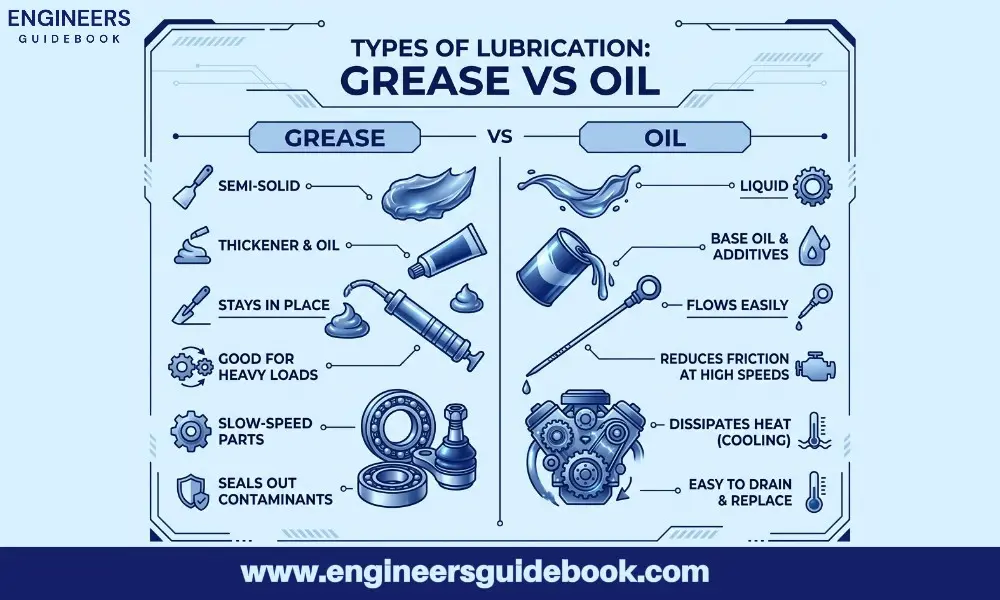
9.2 Types of Lubrication: Grease vs Oil
Grease lubrication is widely favored for its simplicity and retention capability. It adheres to surfaces, provides sealing against contaminants, and requires less frequent replenishment. However, it may not be suitable for extremely high-speed applications due to its viscous nature.
Oil lubrication, on the other hand, excels in high-speed and high-temperature environments. It offers superior heat dissipation and can be continuously circulated and filtered. The trade-off lies in system complexity and maintenance requirements.
9.3 Selecting Lubricant Based on Speed and Load
The selection of lubricant is a nuanced process. High-speed applications demand low-viscosity lubricants to reduce drag and heat buildup. Heavy-load conditions require higher viscosity to maintain an adequate film thickness.
Balancing these factors is critical. An inappropriate lubricant—either too thick or too thin—can compromise performance. Engineers must evaluate operating parameters meticulously to ensure compatibility.
9.4 Lubrication Failure: Causes and Prevention
Lubrication failure often manifests through contamination, degradation, or improper application. Dust ingress, moisture contamination, and thermal breakdown of lubricants are common culprits.
Preventive measures include proper sealing, regular monitoring, and scheduled replenishment. Advanced techniques such as oil analysis and condition-based lubrication further enhance reliability. Proactive management transforms lubrication from a routine task into a strategic advantage.
10. Step 8: Check Mounting and Space Constraints
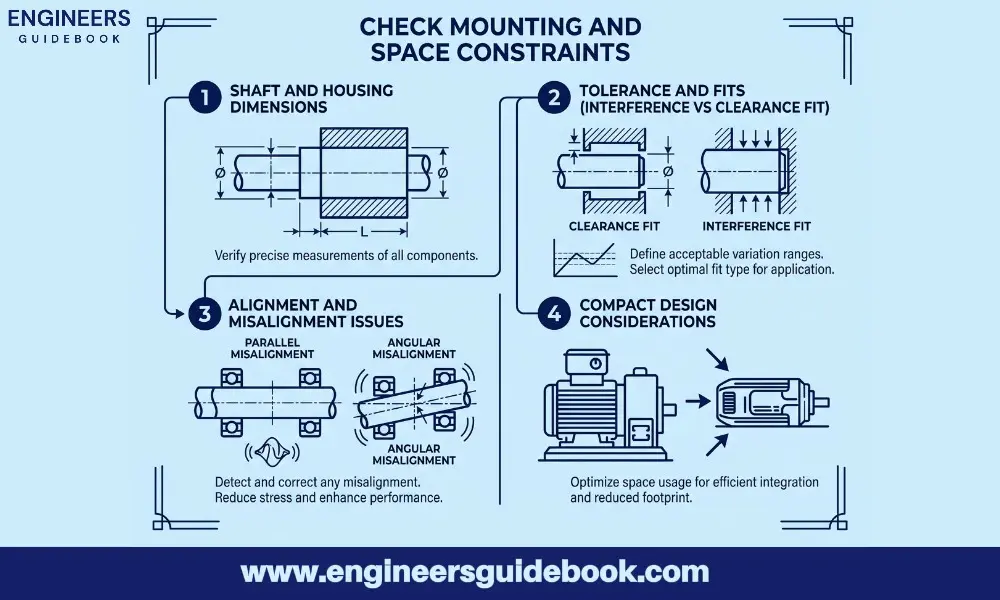
10.1 Shaft and Housing Dimensions
Dimensional compatibility is fundamental. The bearing must fit precisely onto the shaft and within the housing. Even minor deviations can induce stress concentrations and compromise performance.
Accurate measurement and adherence to standard tolerances ensure a secure and stable installation.
10.2 Tolerance and Fits (Interference vs Clearance Fit)
Fit selection dictates how the bearing interfaces with adjoining components. Interference fits provide a tight connection, preventing relative motion under load. Clearance fits allow slight movement, accommodating thermal expansion.
Choosing the correct fit requires a delicate balance. Excessive interference can cause internal stress, while too much clearance may lead to vibration and misalignment.
10.3 Alignment and Misalignment Issues
Perfect alignment is often an ideal rather than a reality. Misalignment introduces uneven load distribution, accelerating wear and reducing bearing life.
Certain bearing types, such as spherical bearings, are designed to accommodate misalignment. Nonetheless, minimizing alignment errors during installation remains a critical objective.
10.4 Compact Design Considerations
Modern machinery often demands compact and lightweight designs. Space constraints necessitate careful selection of bearing size and configuration.
Engineers must optimize within limited სივრც, ensuring that performance is not sacrificed for compactness. Innovative bearing designs, including needle bearings and thin-section bearings, address these challenges effectively.
11. Step 9: Evaluate Maintenance and Replacement Needs
11.1 Maintenance-Free vs Serviceable Bearings
Maintenance-free bearings offer convenience and reduced operational overhead. They are pre-lubricated and sealed, requiring minimal intervention.
Serviceable bearings, however, provide flexibility. They can be relubricated and inspected periodically, making them suitable for critical applications where monitoring is essential.
11.2 Ease of Installation and Removal
Installation complexity directly impacts maintenance efficiency. Bearings that are difficult to mount or dismount increase downtime and labor costs.
Design features such as tapered bores, split housings, and adapter sleeves facilitate easier handling. Efficient installation practices enhance overall system reliability.
11.3 Predictive Maintenance and Condition Monitoring
Predictive maintenance leverages data to anticipate failures before they occur. Techniques such as vibration analysis, temperature monitoring, and acoustic emission detection provide valuable insights.
Condition monitoring transforms maintenance from reactive to proactive. It reduces unexpected failures and optimizes maintenance schedules.
11.4 Spare Parts Availability and Standardization
Availability of replacement parts is a practical yet critical consideration. Standardized bearings ensure quick procurement and reduced downtime.
Non-standard or custom bearings, while sometimes necessary, may lead to delays and increased costs. Standardization enhances operational resilience.
12. Step 10: Factor in Cost and Supplier Selection
12.1 Initial Cost vs Lifetime Cost Analysis
The initial purchase price of a bearing is only a fraction of its total cost. Lifecycle cost includes maintenance, downtime, energy consumption, and replacement expenses.
A low-cost bearing may prove expensive in the long run. Conversely, a higher-quality bearing often delivers superior value through extended service life and reduced operational disruptions.
12.2 Choosing Reliable Bearing Manufacturers
Supplier reliability is paramount. Established manufacturers offer consistent quality, technical support, and adherence to standards.
Reputable suppliers also provide detailed specifications and performance data, enabling informed decision-making.
12.3 Importance of Quality Certifications and Standards
Certifications such as ISO standards ensure that bearings meet stringent quality and performance criteria. Compliance with these standards reflects manufacturing excellence and reliability.
Selecting certified products mitigates risks associated with substandard components.
12.4 Avoiding Counterfeit Bearings
Counterfeit bearings pose a significant threat. They often mimic genuine products but lack the necessary quality and precision.
Using counterfeit components can lead to premature failure and safety hazards. Procurement from authorized distributors is essential to ensure authenticity.
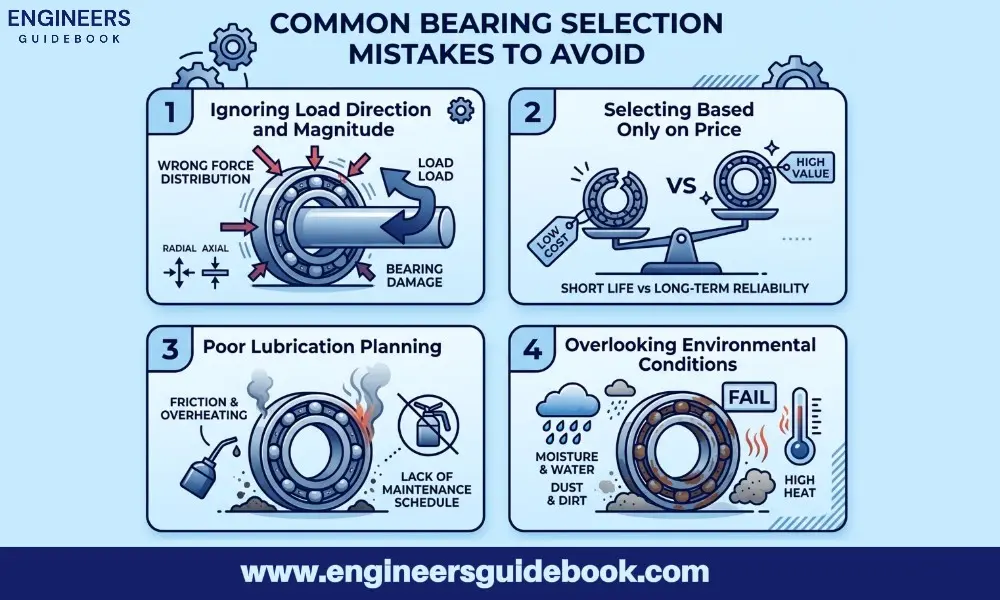
13. Common Bearing Selection Mistakes to Avoid
13.1 Ignoring Load Direction and Magnitude
Neglecting proper load analysis is a frequent error. Bearings subjected to loads beyond their capacity fail prematurely.
Accurate assessment of both magnitude and direction is indispensable.
13.2 Selecting Based Only on Price
Cost-driven decisions often compromise quality. A cheaper bearing may lack durability and reliability.
Prioritizing value over price leads to better long-term outcomes.
13.3 Poor Lubrication Planning
Inadequate lubrication strategy undermines even the best bearing selection. Without proper lubrication, performance deteriorates rapidly.
A comprehensive lubrication plan is essential for sustained operation.
13.4 Overlooking Environmental Conditions
Environmental factors such as temperature, contamination, and humidity significantly influence bearing performance.
Ignoring these factors can result in unexpected failures and reduced lifespan.
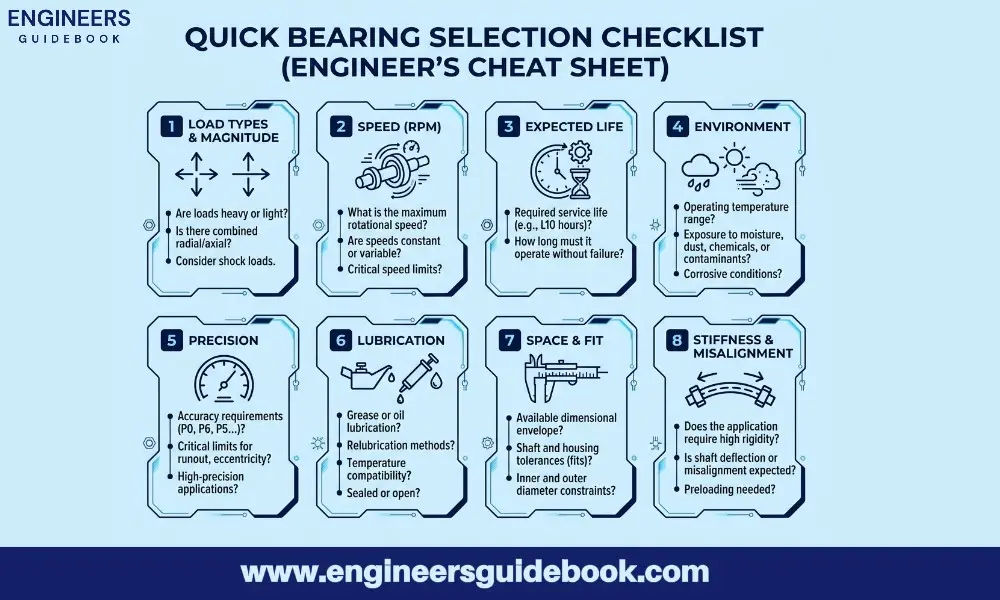
14. Quick Bearing Selection Checklist (Engineer’s Cheat Sheet)
14.1 Step-by-Step Summary for Fast Decision-Making
Begin with load analysis, followed by speed evaluation. Assess environmental conditions, then select the appropriate bearing type.
Finally, verify lubrication, material, and mounting requirements. This structured approach ensures completeness.
14.2 Key Parameters to Verify Before Final Selection
Critical parameters include load capacity, speed rating, temperature tolerance, and dimensional compatibility.
Verification of these factors prevents costly errors and ensures optimal performance.
14.3 Practical Tips for Field Engineers
Always consult manufacturer data sheets. Avoid assumptions. Double-check measurements and operating conditions.
Practical vigilance often distinguishes a successful installation from a problematic one.
15. Real-World Case Studies
15.1 Bearing Selection in Pumps and Compressors
Pumps and compressors operate under dynamic loads and varying speeds. Bearings must withstand both radial and axial forces while maintaining efficiency.
Proper selection ensures smooth fluid handling and minimizes energy losses.
15.2 Bearing Selection in Conveyor Systems
Conveyor systems demand durability and resistance to contamination. Bearings in these systems are exposed to dust, debris, and continuous operation.
Sealed bearings with robust lubrication are typically preferred.
15.3 Bearing Selection in Automotive Applications
Automotive applications require high precision and reliability. Bearings must endure fluctuating loads, high speeds, and varying temperatures.
Advanced materials and designs are often employed to meet these stringent demands.
16. Frequently Asked Questions (FAQs)
16.1 How Do I Know Which Bearing Type to Use?
The choice depends on load type, speed, and environmental conditions. A systematic evaluation of these factors leads to the appropriate selection.
16.2 What Happens If I Choose the Wrong Bearing?
Incorrect selection can result in excessive wear, overheating, and premature failure. It may also cause damage to surrounding components.
16.3 How to Increase Bearing Life in Harsh Conditions?
Use appropriate materials, ensure proper lubrication, and implement effective sealing. Regular monitoring further enhances longevity.
16.4 Can One Bearing Type Fit All Applications?
No single bearing type is . Each application has unique requirements that necessitate specific solutions.
17. Conclusion
Bearing selection is a multifaceted process involving load, speed, environment, and material considerations. Each parameter plays a critical role in determining performance and longevity
Adopt a systematic approach. Prioritize quality. Validate all parameters before finalizing the selection. Attention to detail yields reliable results.
Applying this structured methodology transforms bearing selection from guesswork into precision engineering. With consistent application, it ensures efficiency, reliability, and long-term success.