1. Introduction to Needle Bearings
1.1 Definition and Basic Concept
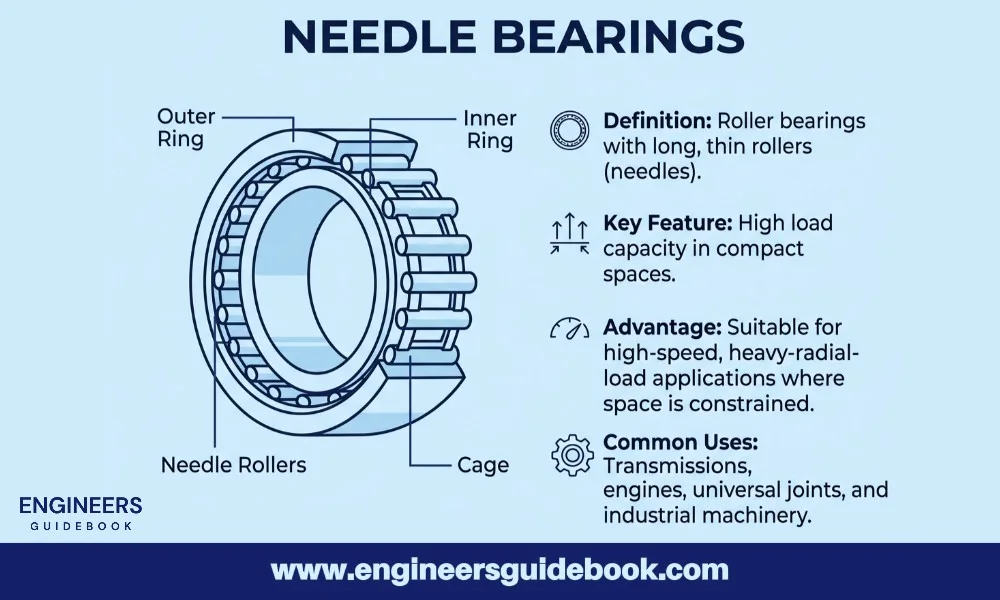
Needle bearings, a specialized subset of rolling element bearings, employ elongated cylindrical rollers whose length significantly exceeds their diameter. These slender rollers resembling needles enable the bearing to accommodate substantial radial loads while maintaining a remarkably compact radial profile.
Unlike conventional ball bearings, the line contact between rollers and raceways enhances load distribution, making needle bearings particularly suitable for constrained mechanical assemblies.
2. Construction and Design Features
2.1 Needle Roller Geometry and Dimensions
The defining characteristic of needle bearings lies in their high aspect ratio rollers. Typically, the roller length is at least four times its diameter, allowing for increased surface contact with raceways. This geometric configuration ensures superior load distribution while minimizing localized stress concentrations.
The precision of roller diameter uniformity is crucial, as even minute deviations can lead to uneven load sharing and premature failure.
2.2 Cage vs. Full Complement Designs
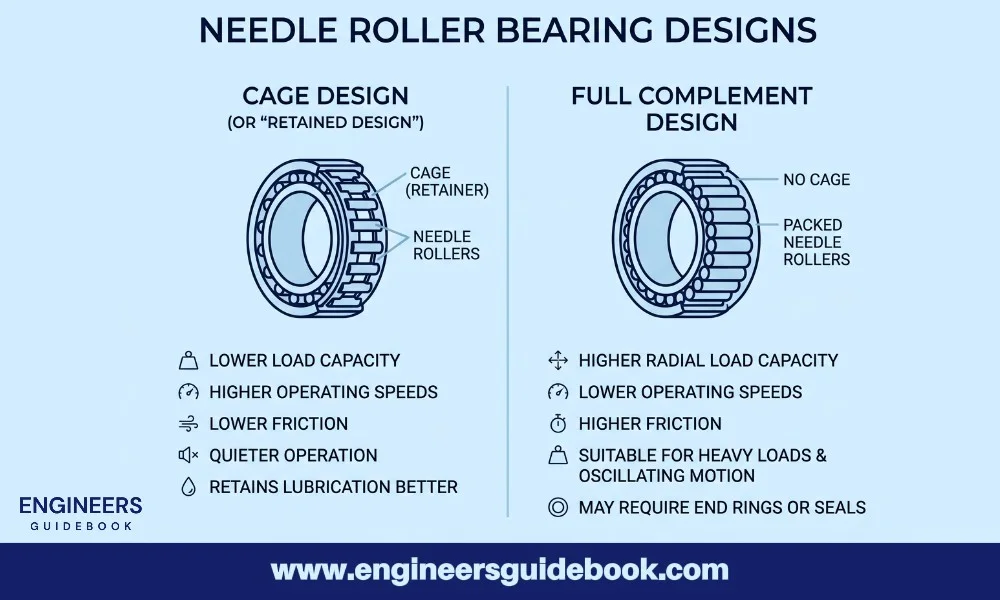
Needle bearings are broadly categorized into cage-type and full complement configurations. Cage-type bearings incorporate a retainer that spaces the rollers evenly, reducing friction and enabling higher rotational speeds. Conversely, full complement designs omit the cage, thereby accommodating a greater number of rollers.
This increases load-carrying capacity but at the expense of higher friction and reduced speed capability. The choice between these designs hinges on operational priorities—speed versus load.
3. Working Principle of Needle Bearings
3.1 Load Distribution Mechanism
Needle bearings operate on the principle of distributing applied loads across multiple rolling elements. The elongated rollers create a line contact with the raceways, as opposed to the point contact observed in ball bearings.
his line contact significantly increases the load-bearing area, thereby reducing contact stress and improving fatigue life under heavy loads.
3.2 Role of Rolling Elements in Friction Reduction
The substitution of sliding friction with rolling friction is fundamental to the efficiency of needle bearings. As the rollers rotate between the inner and outer raceways, frictional resistance is markedly diminished.
This reduction in friction not only enhances energy efficiency but also mitigates heat generation, which is critical for maintaining lubricant integrity and prolonging bearing lifespan.
Also Read Similar Topics:
Ball Bearings: Fundamental Concepts and Applications
Types of Roller Bearings |Classification and Applications|
Thrust Bearing Types, Features, Applications
How to Read Bearing Number | Step By Step Guide |
4. Classification of Needle Bearings
4.1 Based on Structure
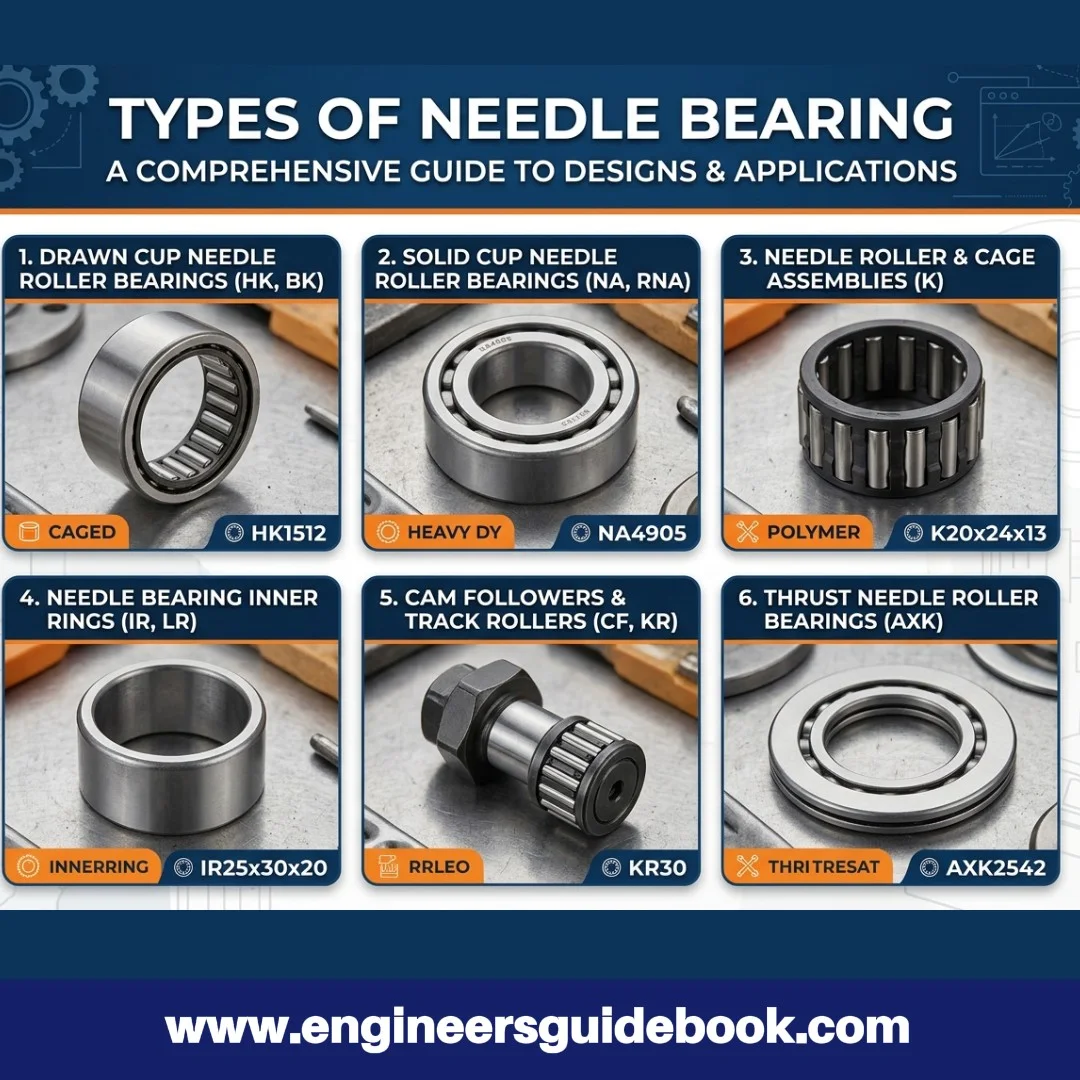
Structurally, needle bearings can be classified into drawn cup, machined ring, and roller-and-cage assemblies. Each variant is engineered to meet specific mechanical requirements, ranging from lightweight applications to heavy-duty industrial use.
Structural differences influence parameters such as rigidity, load capacity, and ease of installation.
4.2 Based on Mounting Arrangement
From a mounting perspective, needle bearings may be designed with or without inner rings. Bearings without inner rings rely on hardened shafts as raceways, offering a more compact solution.
Conversely, those with inner rings provide greater flexibility in applications where shaft hardness or finish cannot be guaranteed. This classification directly impacts installation complexity and maintenance considerations.
4.3 Based on Load Carrying Capacity
Needle bearings are also differentiated by their load-handling capabilities—light-duty, medium-duty, and heavy-duty variants.
Heavy-duty bearings typically feature thicker outer rings and a greater number of rollers, enabling them to withstand substantial loads in demanding environments such as construction machinery and industrial presses.
5. Drawn Cup Needle Bearings
5.1 Design Characteristics
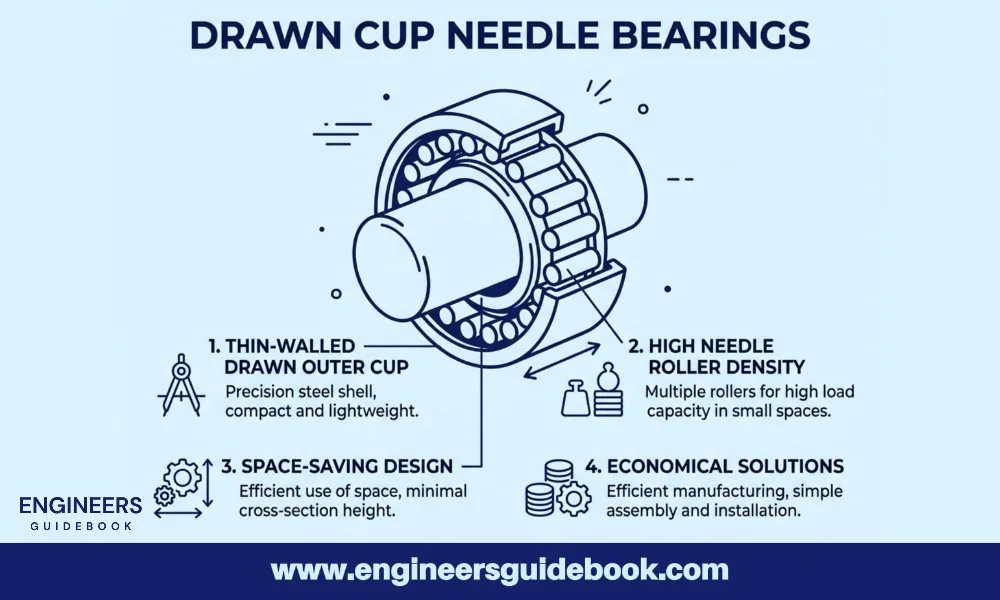
Drawn cup needle bearings are distinguished by their thin-walled, deep-drawn outer shell, which serves as the raceway.
This lightweight construction allows for significant space savings while maintaining adequate load capacity. The outer ring is typically formed from sheet steel, precision-shaped to achieve the required geometry and tolerances.
The principal advantage of drawn cup bearings lies in their compactness and ease of installation. They can be press-fitted into housings, eliminating the need for additional retention mechanisms. These bearings are extensively utilized in automotive transmissions, small electric motors, and power tools.
6. Machined Ring Needle Bearings
6.1 Structural Features
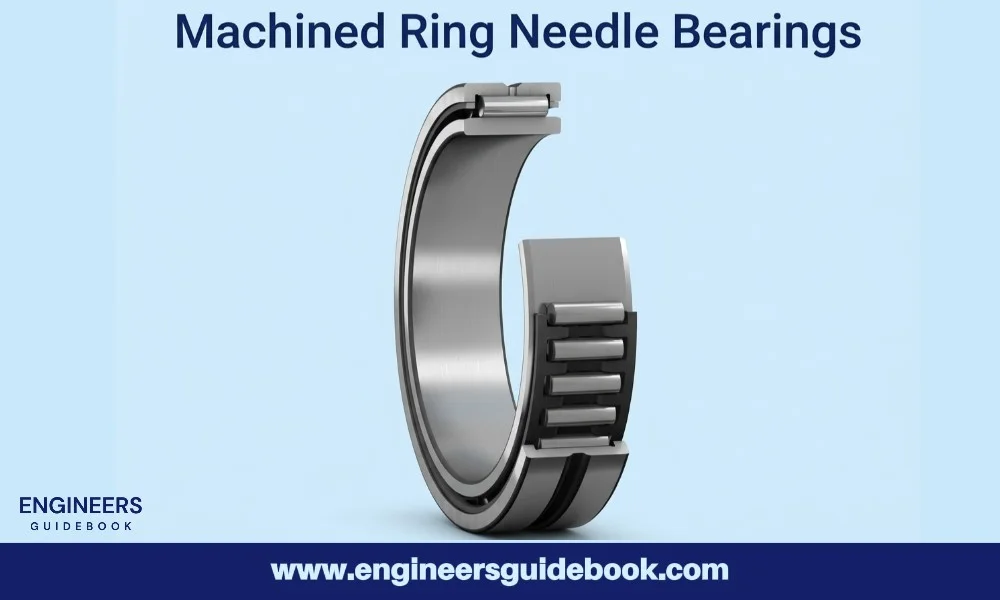
Machined ring needle bearings feature robust inner and outer rings manufactured through precision machining processes. Unlike drawn cup variants, these bearings possess thicker rings, providing enhanced structural rigidity and dimensional stability. They are often designed with flanges or lubrication grooves to facilitate improved performance.
6.2 Performance Advantages
The increased rigidity of machined ring bearings allows them to withstand higher loads and resist deformation under adverse conditions.
They also exhibit superior alignment tolerance and can accommodate shock loads more effectively. Additionally, their design supports more consistent lubrication, which contributes to extended service life.
6.3 Typical Use Cases
Machined ring needle bearings are commonly deployed in heavy-duty applications such as industrial gearboxes, construction equipment, and large compressors.
7. Needle Roller and Cage Assemblies
7.1 Construction and Functionality
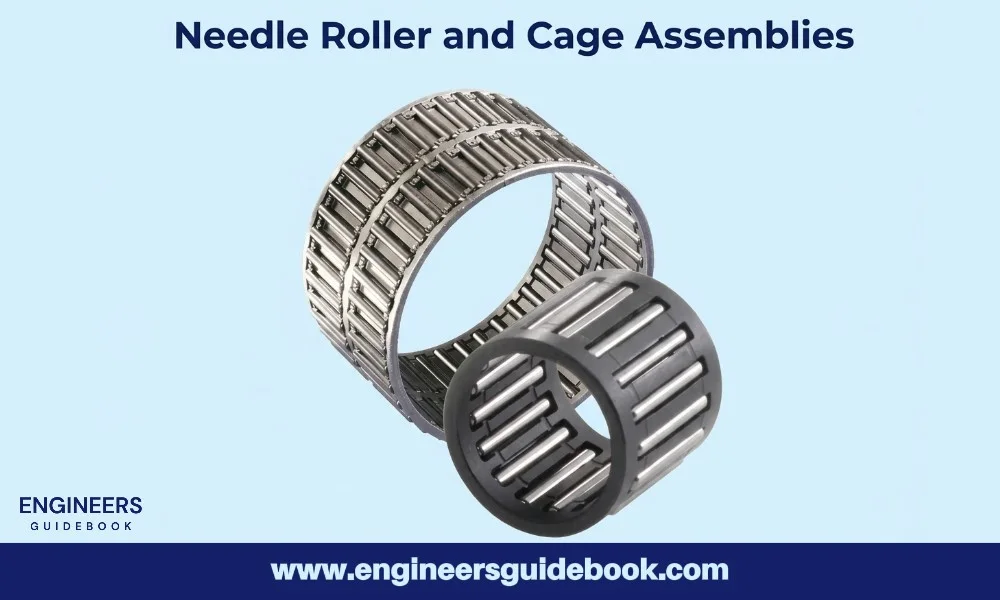
Needle roller and cage assemblies consist solely of rollers and a cage, without inner or outer rings. These assemblies are designed to be mounted directly onto shafts and housings, which act as raceways.
7.2 Benefits in Compact Designs
The absence of rings allows for maximum utilization of available space, making these assemblies ideal for applications with stringent dimensional constraints.
They also exhibit lower inertia, which is advantageous in high-speed operations where rapid acceleration and deceleration are required.
7.3 Application Areas
Typical applications include automotive transmissions, compressors, and precision instruments. Their adaptability and compactness make them a preferred choice in systems where conventional bearing arrangements would be impractical.
8. Thrust Needle Bearings
8.1 Axial Load Handling Mechanism
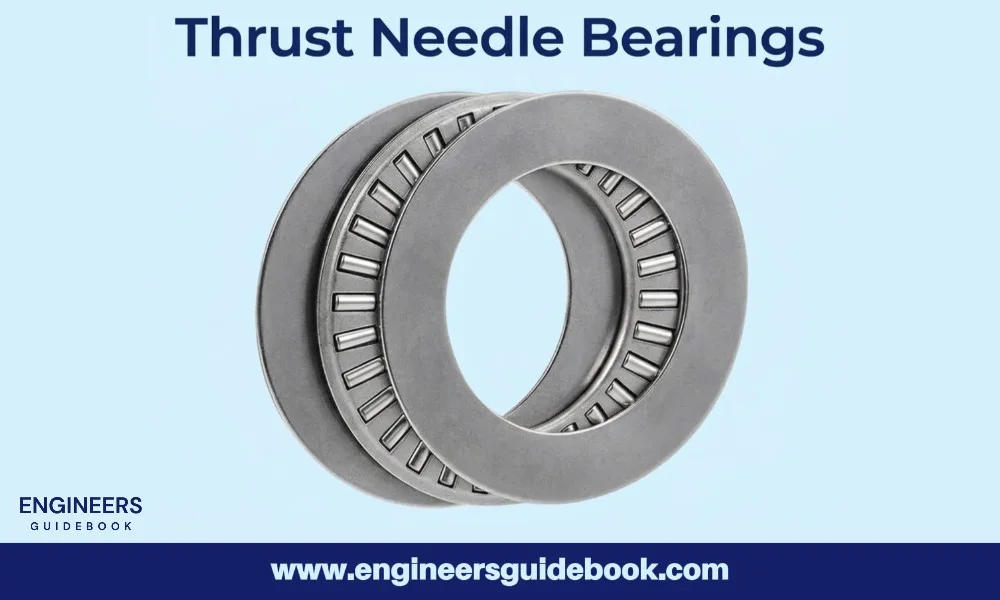
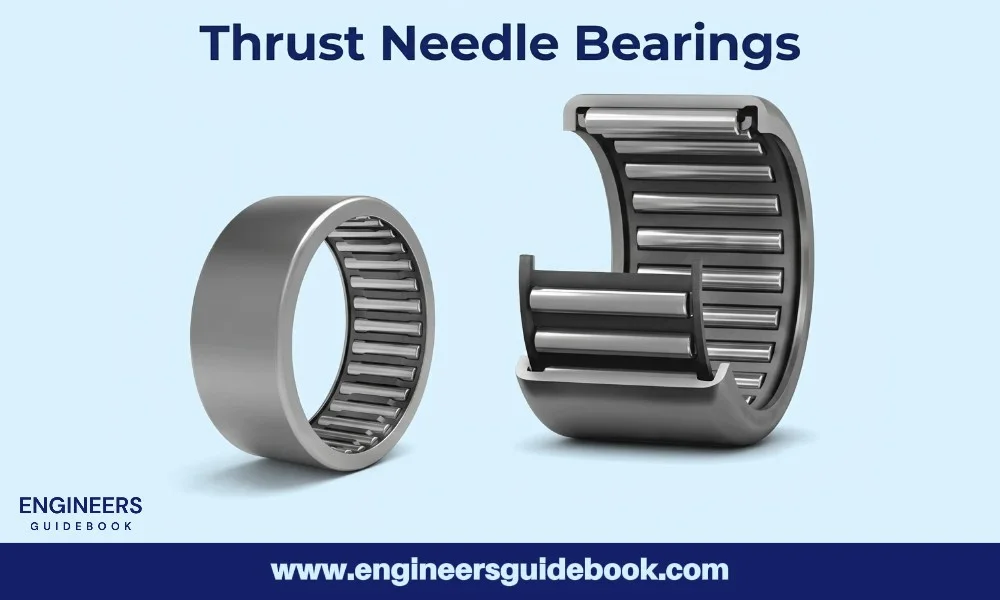
Thrust needle bearings are specifically engineered to accommodate axial loads. Unlike radial needle bearings, these bearings utilize flat raceways (washers) in conjunction with needle rollers arranged perpendicularly to the axis of rotation.
8.2 Design Configuration
A typical thrust needle bearing comprises a set of needle rollers retained within a cage, sandwiched between two hardened washers.
The washers serve as raceways and are designed to withstand axial forces. Variants may include single-direction or double-direction designs, depending on the application requirements.
8.3 Practical Applications
These bearings are widely employed in automotive gear assemblies, machine tool spindles, and steering systems where axial loads are predominant.
Their compact design and high load capacity make them indispensable in applications requiring precise axial positioning and minimal space utilization.
9. Combined Needle Bearings
9.1 Radial and Axial Load Integration
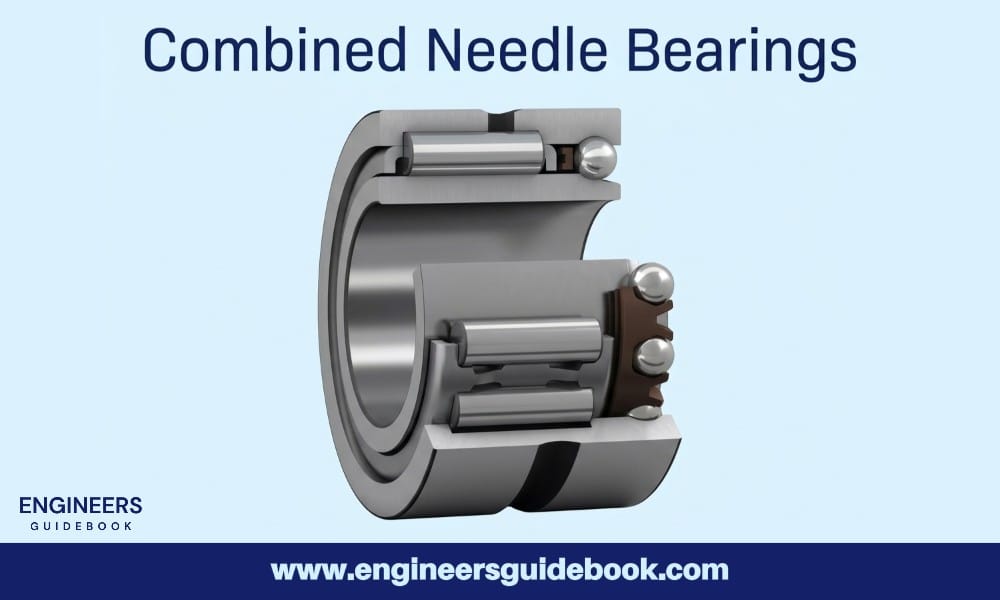
Combined needle bearings are engineered to simultaneously accommodate both radial and axial loads within a unified assembly.
This dual-load capability is achieved by integrating a radial needle bearing with a thrust bearing component, often arranged in a compact, coaxial configuration.
9.2 Structural Variants
These bearings are available in multiple configurations, including needle roller bearings combined with angular contact ball bearings or thrust ball bearings.
Combined needle bearings are often used in complex mechanical systems, including gearboxes, pumps, and automotive transmissions.
10. Heavy-Duty vs. Light-Duty Needle Bearings
10.1 Design Differences
Heavy-duty needle bearings are characterized by thicker outer rings, reinforced cages, and a higher of rollers, enabling them to endure substantial loads and harsh operating conditions.
In contrast, light-duty bearings feature a more streamlined design with thinner rings and fewer rollers, optimized for moderate loads and higher speeds.
11. Applications Across Industries
11.1 Automotive Industry
In the automotive sector, needle bearings are extensively utilized in transmissions, differential assemblies, and engine components. Their compactness and high load capacity make them ideal for handling the demands of vehicles, where efficiency and reliability are paramount.
11.2 Industrial Machinery
Industrial applications encompass a broad spectrum, including conveyors, compressors, pumps, and machinery. Needle bearings facilitate smooth operation under high loads, contributing to enhanced productivity and reduced maintenance downtime.
11.3 Aerospace and Precision Equipment
In aerospace and precision engineering, where tolerances are exceptionally stringent, needle bearings provide the requisite accuracy and reliability.
12. Advantages of Needle Bearings
12.1 High Load Capacity in Compact Space
One of the most compelling advantages of needle bearings is their ability to handle significant loads within a confined space. This attribute is particularly beneficial in applications where design compactness is a critical consideration.
12.2 Reduced Friction and Wear
The rolling between needle rollers and raceways minimizes frictional losses, thereby enhancing mechanical efficiency. Reduced friction also translates to lower heat generation and diminished wear, prolonging bearing life.
12.3 Cost Efficiency and Versatility
Needle bearings offer a cost-effective solution for a wide range of applications. Their versatility allows them to be adapted to various requirements, making them a preferred choice among engineers and designers.
13. Limitations and Challenges
13.1 Sensitivity to Misalignment
Despite their numerous advantages, needle bearings are highly sensitive to misalignment. Even slight deviations can result in uneven load distribution, leading to premature wear or catastrophic failure.
13.2 Lubrication Requirements
Adequate lubrication is imperative for the optimal performance of needle bearings. Insufficient or improper lubrication can cause increased friction, overheating, and eventual bearing damage.
13.3 Installation Constraints
The installation of needle bearings requires precision and adherence to specified tolerances. Improper mounting can deform the bearing components, compromising performance and durability.
14. Conclusion
Needle bearings represent a sophisticated solution for applications demanding high load capacity within limited. Their diverse configurations, ranging from drawn cups to combined bearings, enable engineers to address a wide array of mechanical challenges with precision and efficiency.