1. Introduction to Roller Bearings
1.1 What Are Roller Bearings?
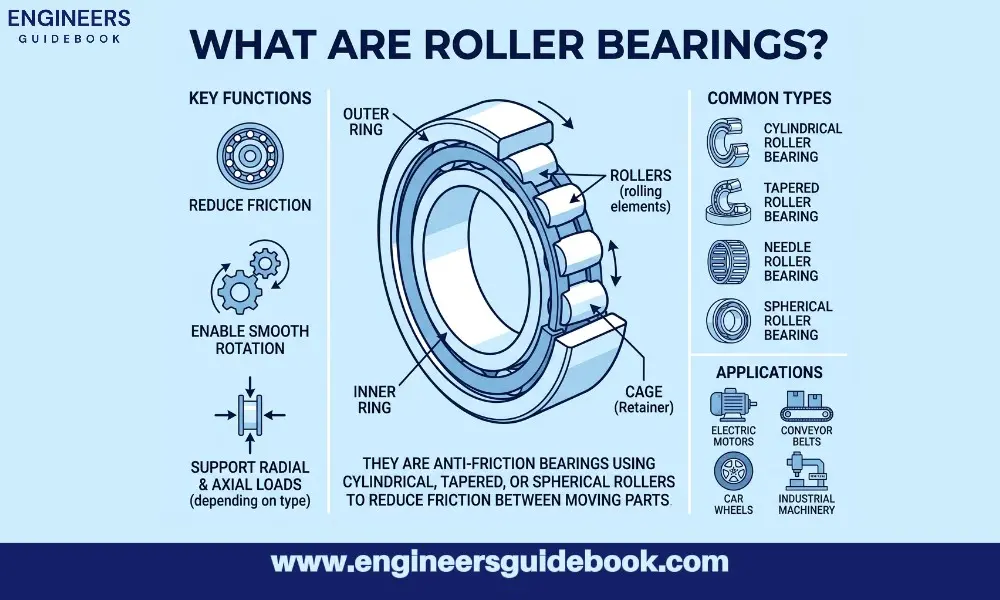
Roller bearings are precision-engineered mechanical components designed to support loads while minimizing friction between moving parts. Unlike point-contact systems, these bearings utilize line contact between rolling elements and raceways, which significantly enhances load-bearing capability.
At their core, roller bearings consist of cylindrical or shaped rolling elements positioned between inner and outer rings. These elements rotate with minimal resistance, enabling smooth and efficient motion. Their architecture is particularly suited for applications demanding durability, stability, and high load tolerance.
1.2 Why Roller Bearings Are Essential in Mechanical Systems
Modern machinery relies heavily on efficient motion transmission. Roller bearings play a pivotal role in this context by mitigating frictional losses and preventing premature wear of components.
Without these bearings, mechanical systems would suffer from excessive heat generation, energy inefficiency, and rapid degradation. Their ability to sustain heavy loads while maintaining alignment makes them indispensable in industries such as manufacturing, automotive, and power generation.
In essence, roller bearings act as silent enablers—ensuring reliability, longevity, and operational continuity.
2. Basic Construction and Working Principle
2.1 Main Components of a Roller Bearing (Inner Ring, Outer Ring, Rollers, Cage)
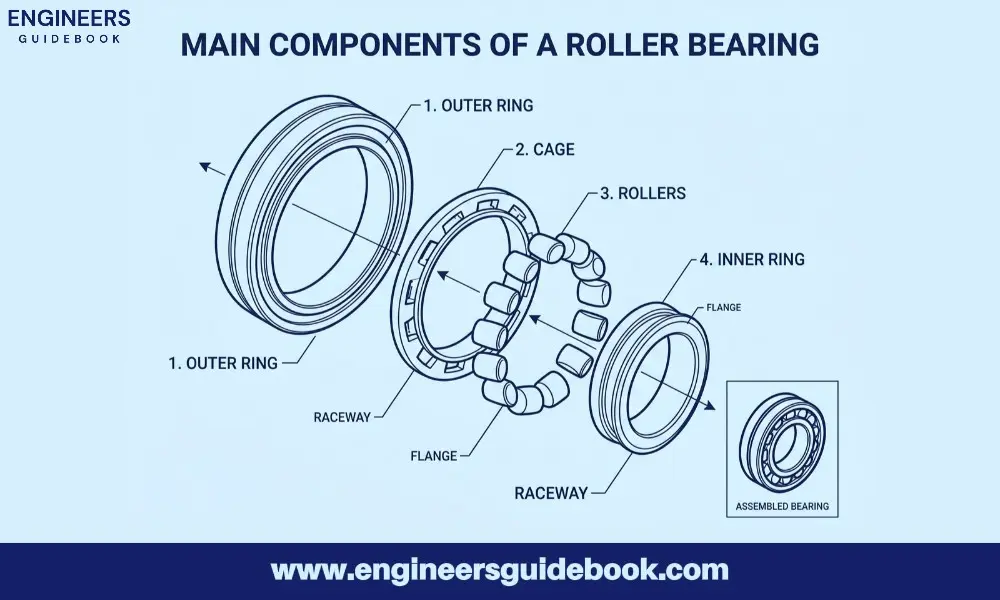
A roller bearing comprises several integral components, each contributing to its functionality. The inner ring is mounted on the rotating shaft, while the outer ring is housed within a stationary structure.
Between these rings reside the rolling elements—cylindrical, tapered, or spherical in shape. These elements facilitate motion by rolling rather than sliding.
The cage, often overlooked, plays a crucial role. It maintains uniform spacing between rollers, prevents collision, and ensures smooth rotation. This orchestrated assembly results in a robust yet efficient mechanical unit.
2.2 How Roller Bearings Reduce Friction
Friction is an inherent challenge in any moving system. Roller bearings address this by replacing sliding motion with rolling motion, which significantly reduces resistance.
When the shaft rotates, the rollers move along the raceways with minimal surface interaction. This reduces heat generation and energy loss. The incorporation of lubrication further enhances this effect by forming a thin film that separates contact surfaces.
The result is a system that operates with remarkable smoothness and efficiency, even under substantial loads.
2.3 Load Distribution Mechanism in Roller Bearings
One of the defining characteristics of roller bearings is their ability to distribute loads over a larger contact area. Unlike ball bearings, where contact is limited to a single point, roller bearings engage along a line.
This line contact ensures that stresses are evenly distributed across the rolling elements. Consequently, the bearing can higher loads without experiencing localized deformation or fatigue.
This attribute is particularly advantageous in heavy-duty applications, where uneven load distribution can lead to catastrophic failure.
2.4 Radial vs Axial Load Handling Explained
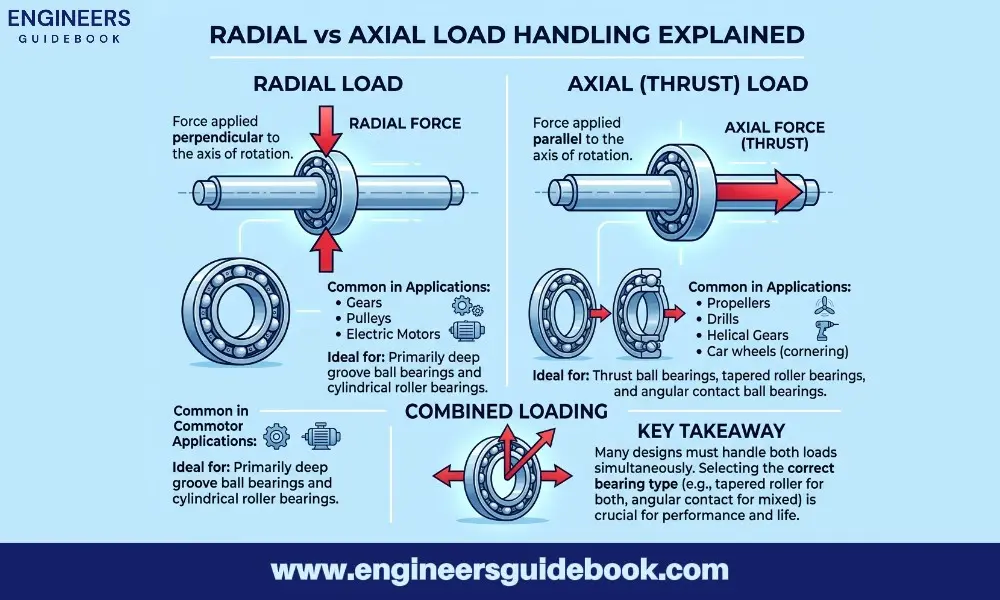
Roller bearings are engineered to accommodate different types of loads, primarily radial and axial. Radial loads act perpendicular to the shaft axis, while axial loads act parallel to it.
Certain roller bearings, such as cylindrical types, excel in handling radial loads. Others, like thrust roller bearings, are specifically designed for axial loads. Some variants, including tapered roller bearings, can manage a combination of both.
3. Classification of Roller Bearings
3.1 Classification Based on Roller Shape
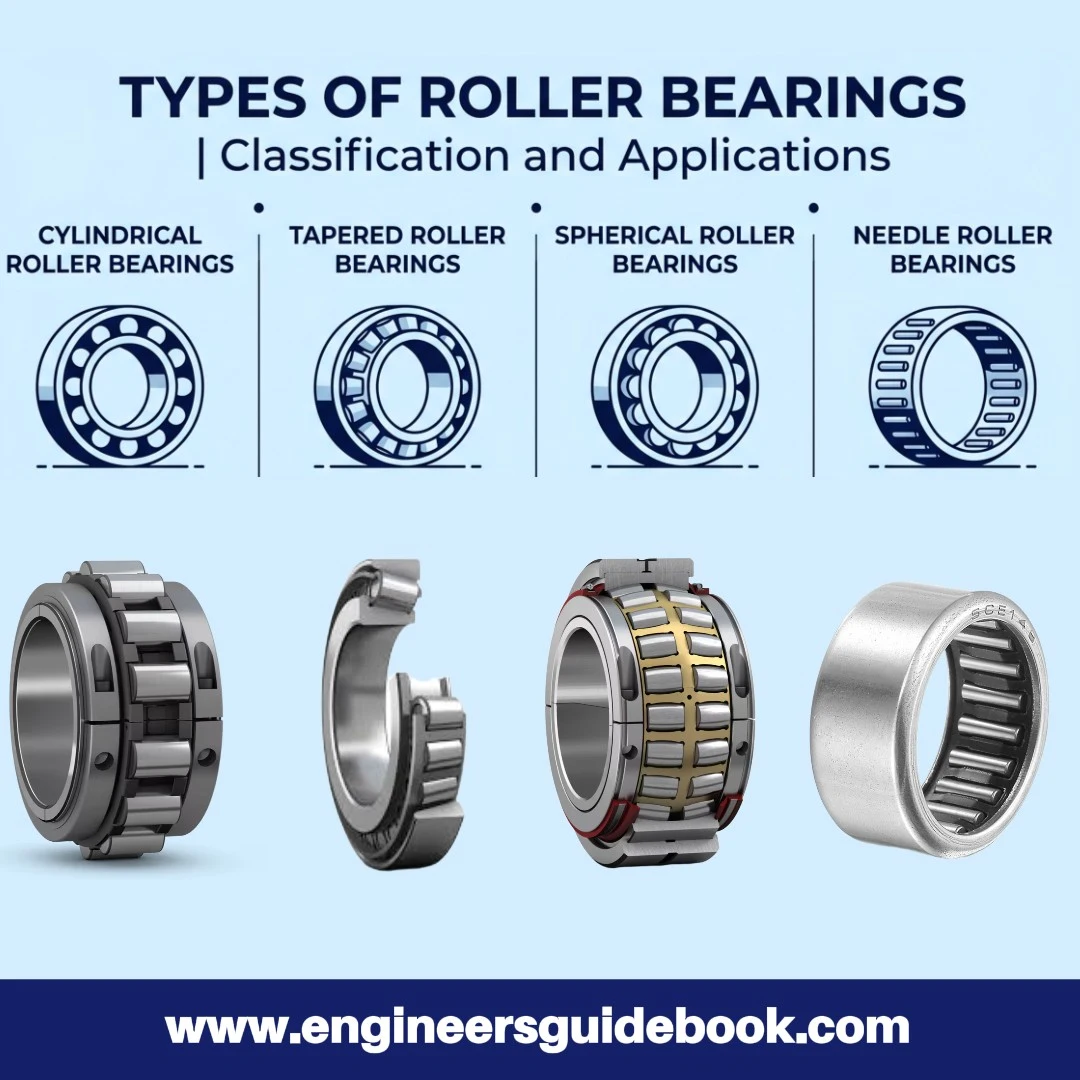
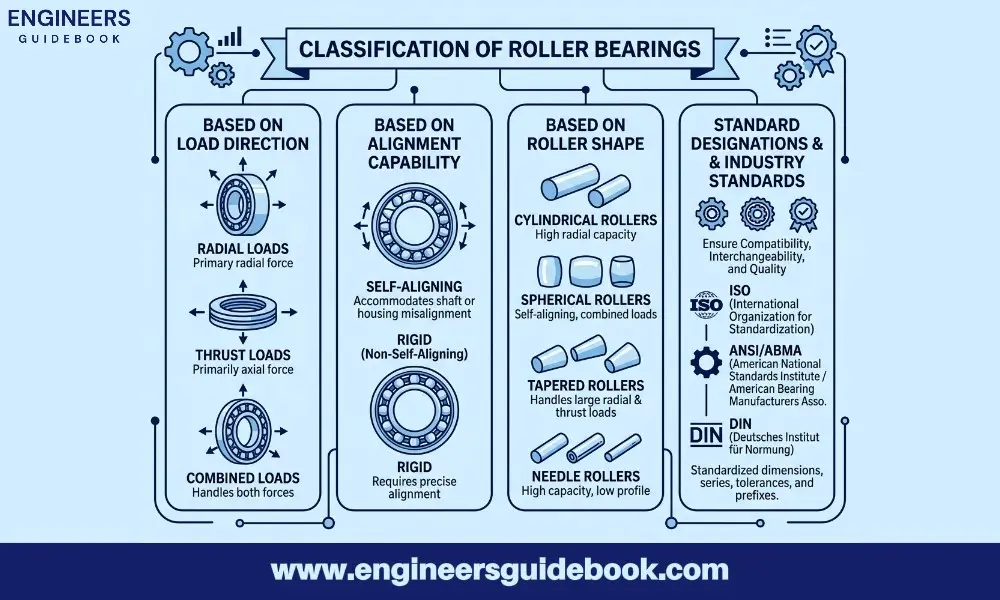
Roller bearings are often categorized according to the geometry of their rolling elements. Common shapes include cylindrical, tapered, spherical, and needle-like forms.
Each shape imparts unique characteristics. Cylindrical rollers provide high radial load capacity, while tapered rollers enable combined load handling. Spherical rollers offer self-alignment capabilities, and needle rollers excel in compact spaces.
This classification provides a foundational understanding of bearing functionality.
3.2 Classification Based on Load Direction
Another critical classification criterion is the direction of load the bearing is designed to support. Bearings may be optimized for radial loads, axial loads, or a combination of both.
Radial bearings are used in applications where forces act perpendicular to the shaft, whereas thrust bearings are employed when forces act along the axis. Combined load bearings bridge the gap, offering versatility in complex systems.
3.3 Classification Based on Alignment Capability
Alignment plays a vital role in bearing performance. Some roller bearings are rigid and require precise alignment, while others are self-aligning and can accommodate shaft misalignment.
Self-aligning bearings, such as spherical roller bearings, are particularly useful in applications where shaft deflection or mounting inaccuracies are inevitable. This capability reduces stress concentrations and enhances operational reliability.
3.4 Standard Designations and Industry Standards
To ensure consistency and interoperability, roller bearings are manufactured according to established standards. Organizations such as ISO and ANSI define dimensions, tolerances, and performance criteria.
Standardized designations allow engineers to select and replace bearings with confidence. These codes often encapsulate information about bearing type, size, and configuration, serving as a universal language in the engineering domain.
Also Read:
Ball Bearings: Fundamental Concepts and Applications
4. Types of Roller Bearings (Detailed Breakdown)
4.1 Cylindrical Roller Bearings
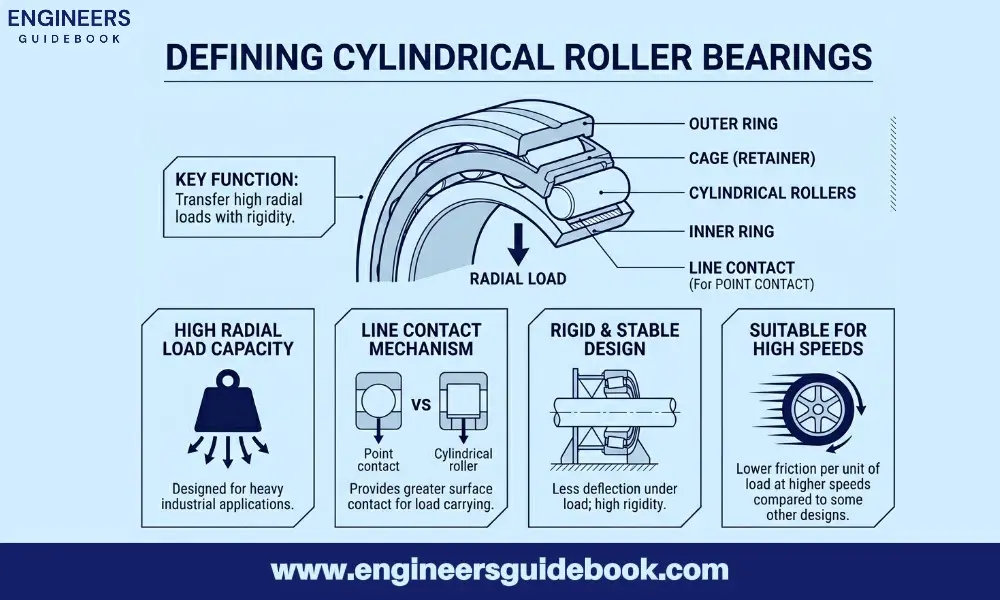
Cylindrical roller bearings feature straight, elongated rollers arranged parallel to the axis of rotation. This geometry facilitates efficient load transfer and minimizes frictional resistance.
Their design often includes separable components, allowing for ease of installation and maintenance.
These bearings are renowned for their high radial load capacity. The line contact between rollers and raceways enables them to substantial forces without deformation.
They also support relatively high speeds, making them suitable for applications requiring both strength and efficiency.
4.2 Tapered Roller Bearings
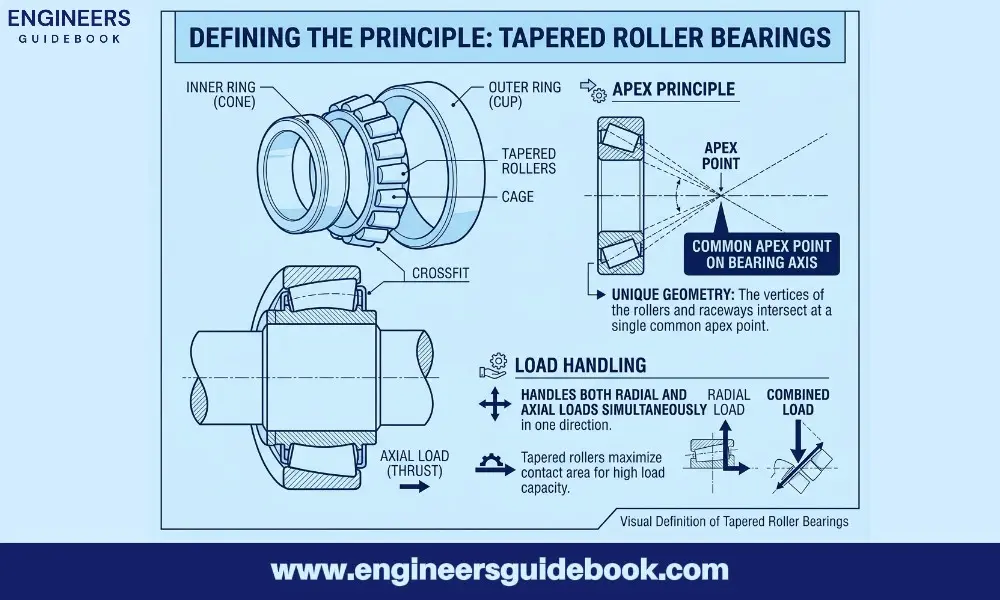
Tapered roller bearings employ conical rollers and raceways, with all elements converging at a common apex. This unique geometry allows for efficient load distribution.
These bearings are specifically designed to handle both radial and axial loads simultaneously. The angle of contact determines the ratio of load distribution.
They are extensively used in automotive wheel hubs, transmissions, and heavy machinery. Their ability to manage complex load conditions makes them highly versatile.
4.3 Spherical Roller Bearings
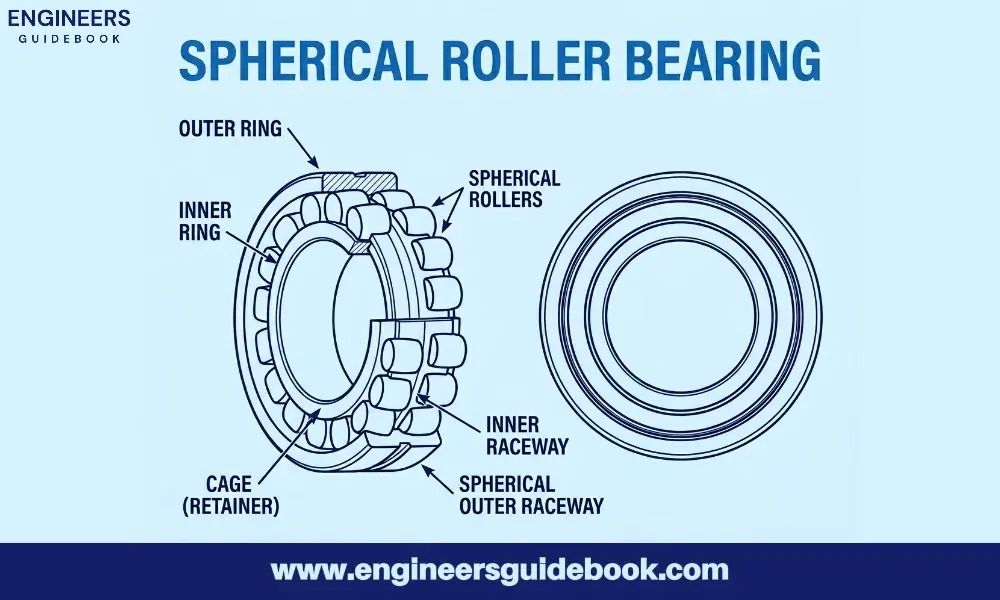
Spherical roller bearings feature barrel-shaped rollers and a curved outer raceway. This design enables self-alignment, accommodating shaft misalignment without compromising performance.
Even under angular deviations, these bearings maintain uniform load distribution. This reduces stress concentrations and prolongs service life.
They are commonly found in mining equipment, vibrating screens, and heavy-duty conveyors, where operating conditions are demanding and alignment is challenging.
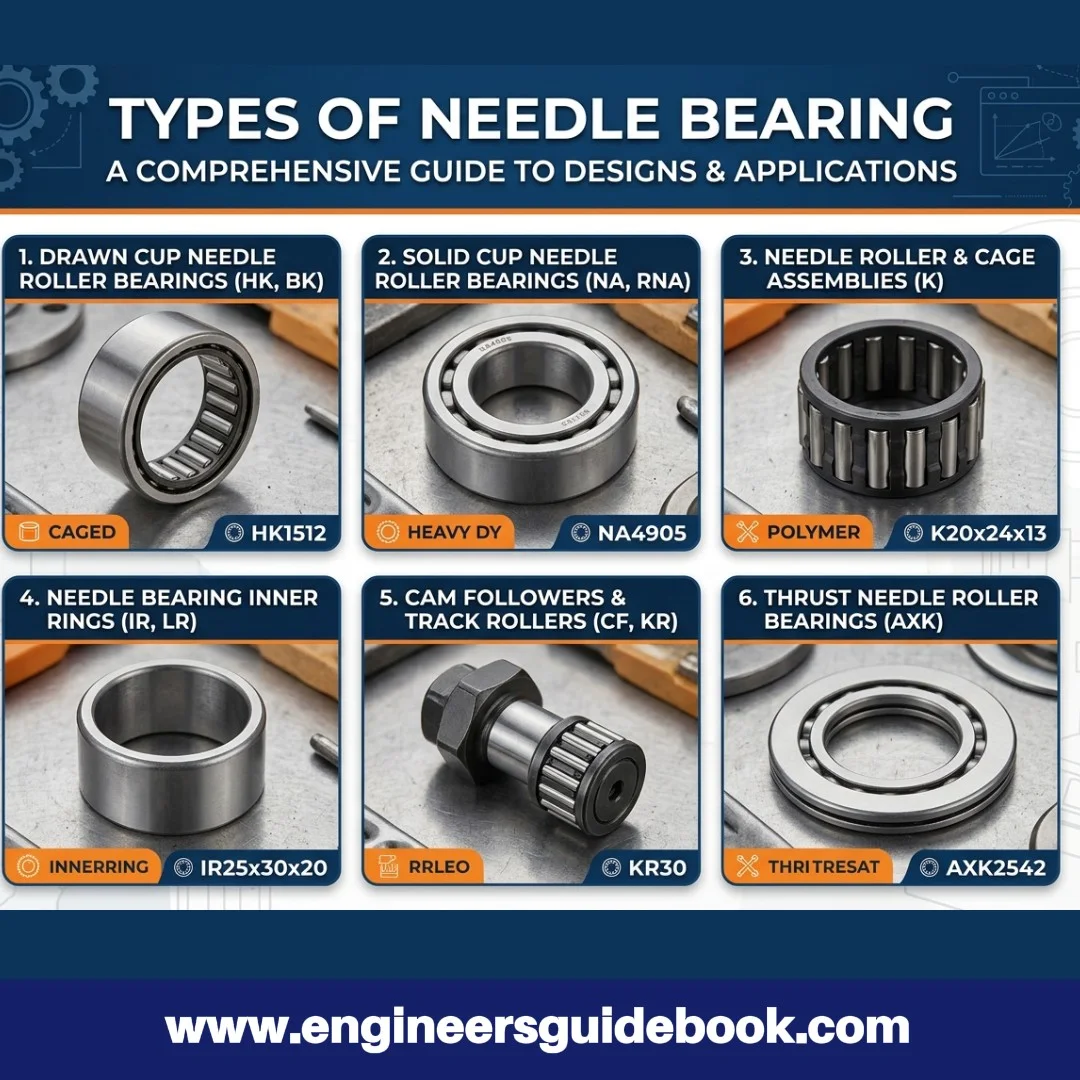
4.4 Needle Roller Bearings
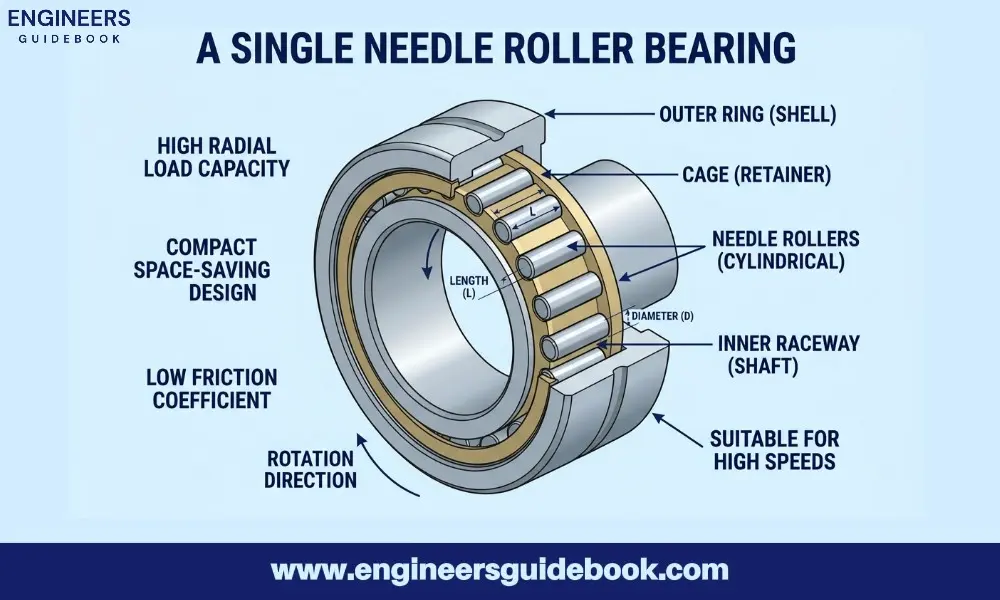
Needle roller bearings utilize slender, elongated rollers with a high length-to-diameter ratio. This allows them to significant loads despite their compact size.
Their minimal cross-sectional height makes them ideal for applications with limited radial space.
They are widely used in automotive components, gearboxes, and portable machinery, where space optimization is critical.
4.5 Thrust Roller Bearings
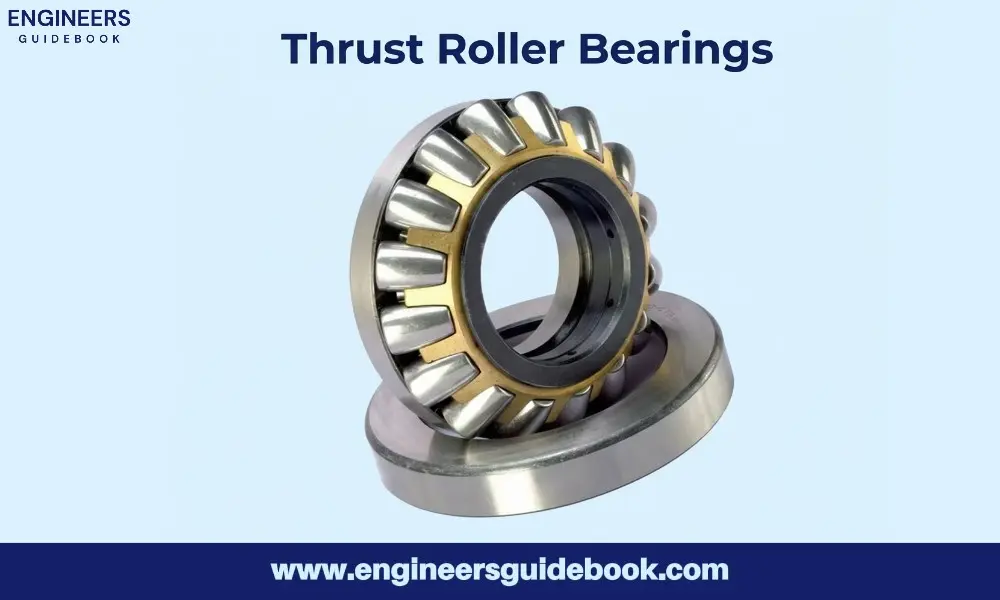
Thrust roller bearings are specifically engineered to support axial loads. Their design ensures efficient load transfer along the axis of rotation.
Variants include cylindrical, tapered, and spherical thrust bearings, each tailored for specific load and alignment conditions.
These bearings are commonly used in crane hooks, vertical shafts, and turbine assemblies, where axial forces dominate.
4.6 Track Roller Bearings
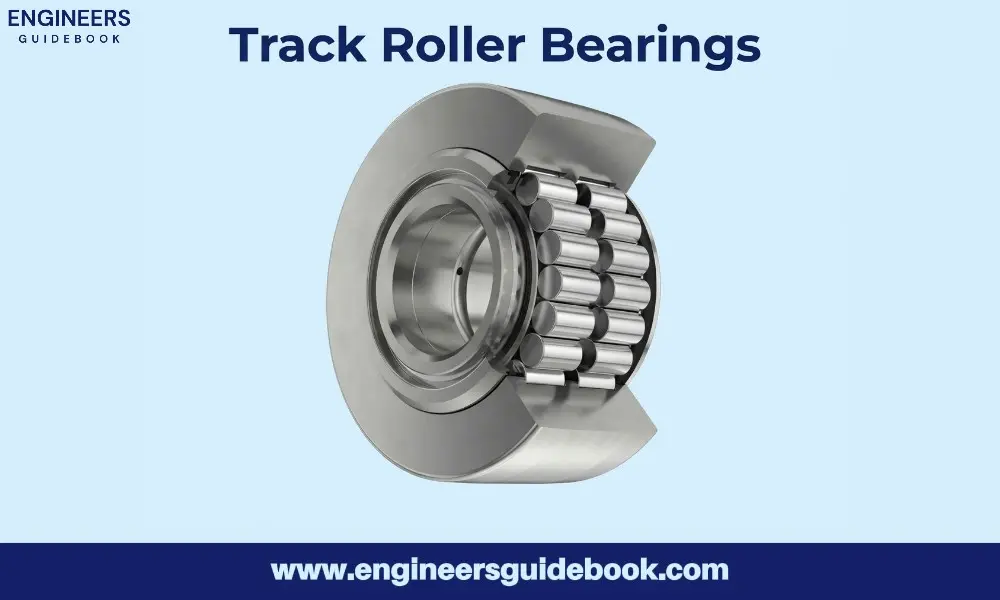
Track roller bearings are designed with a thick outer ring to support rolling contact on tracks or rails. Their construction is robust and impact-resistant.
They are capable of handling high radial loads while facilitating smooth linear motion.
These bearings are widely used in conveyor systems, cam drives, and automated machinery, where guided motion is essential.
5. Design Considerations for Roller Bearings
5.1 Load Requirements and Selection Criteria
The cornerstone of bearing design lies in accurately evaluating load conditions. Roller bearings must be selected based on the magnitude, direction, and variability of applied loads. Radial loads, axial loads, or a combination of both dictate the type and configuration of the bearing.
Engineers often rely on dynamic and static load ratings to ensure operational reliability. The dynamic load rating reflects the bearing’s capacity under rotating conditions, while the static rating pertains to stationary or shock-loaded scenarios.
5.2 Speed Limitations and Thermal Effects
Speed introduces complexity. As rotational velocity increases, so does frictional heat generation. Roller bearings, due to their line contact, inherently experience higher friction compared to point-contact systems.
Excessive heat can degrade lubrication, alter material properties, and induce thermal expansion. This expansion may lead to internal stress and misalignment.
5.3 Lubrication Methods and Their Impact
Lubrication serves as the lifeblood of any bearing system. It minimizes friction, reduces wear, and dissipates heat. Without it, even the most robust bearing would succumb to rapid degradation.
Common lubrication methods include grease lubrication, oil bath systems, and circulating oil systems.
5.4 Material Selection (Steel, Ceramic, Hybrid Bearings)
Material selection profoundly impacts bearing performance. Traditional bearings are manufactured from high-carbon chromium steel, prized for its strength and fatigue resistance.
Ceramic materials, such as silicon nitride, offer superior hardness, low density, and exceptional thermal resistance. Hybrid bearings, combining steel rings with ceramic rolling elements, provide an optimal balance of strength and efficiency.
5.5 Clearance, Tolerance, and Fit Considerations
Internal clearance and dimensional tolerances are subtle yet critical parameters. Clearance refers to the total distance through which one bearing ring can move relative to the other.
Insufficient clearance can cause excessive friction and heat buildup. Conversely, excessive clearance may lead to vibration, noise, and reduced precision.
6. Advantages and Limitations of Roller Bearings
6.1 Key Advantages
Roller bearings are synonymous with strength and resilience. Their line contact design allows them to significantly higher loads compared to ball bearings.
They exhibit remarkable durability, particularly in harsh operating environments. Their ability to withstand shock loads and resist deformation makes them indispensable in heavy-duty applications.
Furthermore, their robust construction ensures prolonged service life, reducing maintenance frequency and operational downtime.
6.2 Limitations
Despite their strengths, roller bearings are not without limitations. Their increased contact area results in higher friction, which can restrict high-speed performance.
They are also more sensitive to misalignment, particularly non-self-aligning types. Improper installation or shaft deflection can lead to uneven load distribution and accelerated wear.
Additionally, their relatively larger size and weight may pose constraints in compact or lightweight systems.
7. Applications of Different Roller Bearing Types
7.1 Use in the Automotive Industry
The automotive sector heavily relies on roller bearings for efficient power transmission and load support. They are integral to wheel hubs, transmissions, and differential assemblies.
7.2 Applications in Heavy Machinery and Equipment
Heavy machinery demands components that can endure extreme conditions. Roller bearings fulfill this requirement with remarkable efficacy.
7.3 Role in Power Generation and Turbines
In power generation systems, precision and reliability are paramount. Roller bearings are employed in turbines, generators, and compressors to support rotating shafts.
7.4 Use in Manufacturing and Process Industries
Manufacturing environments demand consistency and efficiency. Roller bearings are used in conveyor systems, machine tools, and processing equipment to facilitate smooth operation.
8. Roller Bearings vs Ball Bearings
8.1 Key Differences in Design and Function
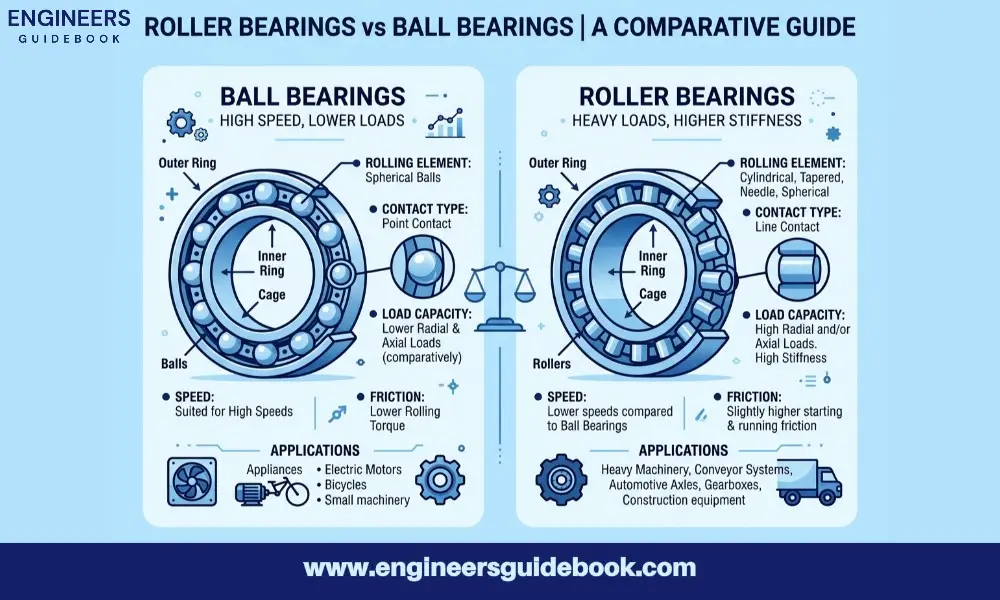
The fundamental distinction between roller and ball bearings lies in their contact geometry. Roller bearings utilize line contact, whereas ball bearings rely on point contact.
This difference influences load capacity, friction, and operational characteristics. Roller bearings are optimized for heavy loads, while ball bearings excel in high-speed, low-load applications.
8.2 Performance Comparison (Load, Speed, Efficiency)
In terms of load capacity, roller bearings outperform ball bearings by a considerable margin. However, this comes at the expense of higher friction and reduced speed capability.
8.3 When to Choose Roller Bearings Over Ball Bearings
Roller bearings should be selected when load-bearing requirements dominate the design criteria. Applications involving heavy radial or axial loads, shock conditions, or harsh environments benefit significantly from their use.
Conversely, for high-speed, low-load applications, ball bearings remain the preferred choice. The decision hinges on a careful evaluation of operational priorities.
9. Bearing Selection Guide
Also Read: How to Choose the Right Bearing |Step-by-Step Selection Guide|
9.1 Step-by-Step Process to Select the Right Roller Bearing
Effective bearing selection begins with a clear understanding of application requirements. The process involves identifying load types, calculating load magnitudes, and determining speed conditions.
Next, environmental factors such as temperature, contamination, and lubrication must be considered. Finally, the appropriate bearing type, size, and material are selected based on these parameters.
9.2 Factors to Consider in Real Applications
Real-world applications introduce complexities that extend beyond theoretical calculations. Factors such as installation constraints, maintenance accessibility, and cost considerations play a significant role.
Additionally, operating conditions may vary over time, necessitating a degree of flexibility in design. A holistic perspective is essential for successful implementation.
9.3 Common Selection Mistakes to Avoid
Errors in bearing selection can lead to costly consequences. Common mistakes include underestimating load conditions, neglecting alignment requirements, and choosing inappropriate lubrication methods.
Overlooking environmental factors, such as contamination or temperature extremes, can also compromise performance. Avoiding these pitfalls requires diligence and technical acumen.
10. Maintenance and Lubrication Best Practices
10.1 Importance of Proper Lubrication
Lubrication is not merely a supportive function—it is a critical determinant of bearing life. Proper lubrication reduces friction, prevents wear, and dissipates heat.
Selecting the correct lubricant and maintaining adequate lubrication levels are essential for sustained performance.
10.2 Inspection and Preventive Maintenance
Routine inspection is vital for early detection of potential issues. Preventive maintenance practices, such as lubrication replenishment and alignment checks, help avert unexpected failures.
Condition monitoring techniques, including vibration analysis and temperature measurement, provide valuable insights into bearing health.
10.3 Signs of Bearing Wear and Failure
Early indicators of bearing failure include unusual noise, increased vibration, and elevated operating temperatures.
Visual signs, such as discoloration, pitting, and surface damage, further confirm deterioration. Prompt intervention can prevent minor issues from escalating into major failures.
11. Conclusion
Roller bearings are indispensable components in modern engineering, offering unparalleled load-bearing capacity and durability. Their diverse types and configurations enable their use across a wide range of applications, from automotive systems to heavy industrial machinery.
A comprehensive understanding of their design, selection, and maintenance is essential for achieving optimal performance. As technology continues to evolve, roller bearings will remain at the forefront of mechanical innovation, driving efficiency and reliability in countless applications.