1. Introduction to Oil Seals
1.1. Unlocking the Core Purpose
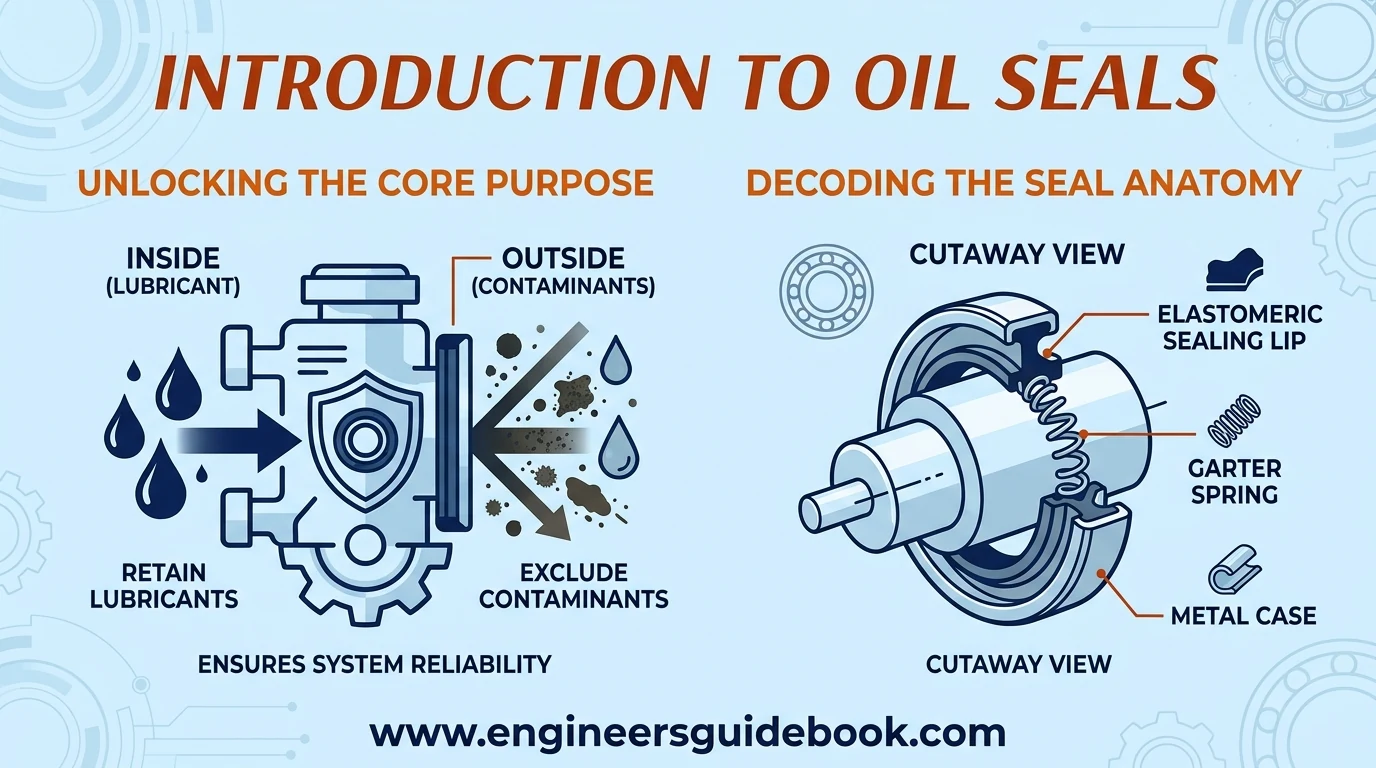
Oil seals are the unsung heroes of mechanical integrity. They serve a paramount function in industrial machinery. By establishing a hermetic barrier, these unassuming components prevent the egress of vital lubricants while simultaneously barring the ingress of deleterious contaminants. A single compromised seal can precipitate catastrophic tribological failure. Thus, their core purpose transcends mere containment. It is the absolute preservation of operational longevity and systemic reliability.
1.2. Decoding the Seal Anatomy
To comprehend their efficacy, one must dissect their fundamental architecture. A standard radial shaft seal comprises three primary elements. The elastomeric sealing lip provides the dynamic, flexible barrier. A garter spring maintains precise radial tension against the rotating shaft. Finally, a rigid metal case ensures structural rigidity within the housing bore. This synergistic triad guarantees optimal performance under extreme mechanical duress.
2. Radial Shaft Oil Seals
2.1. Mastering Single Lip Configurations
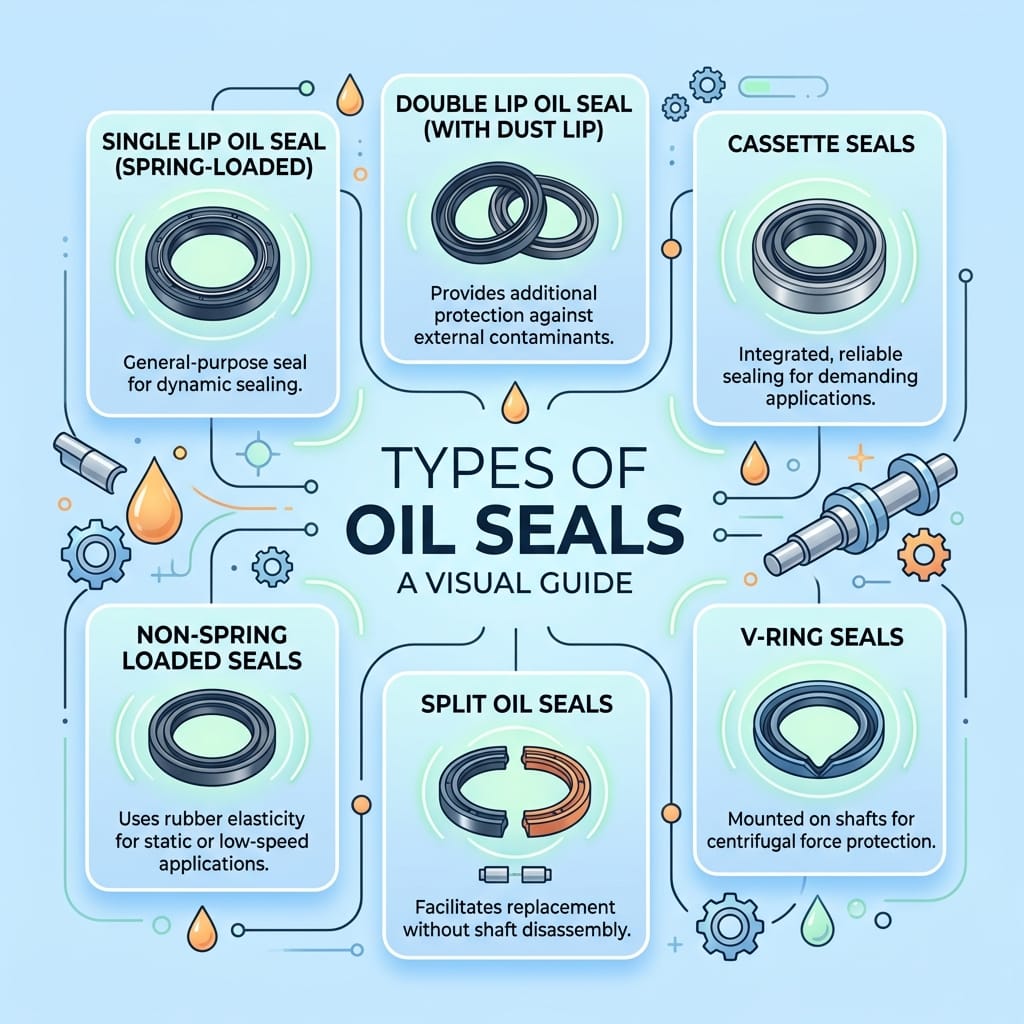
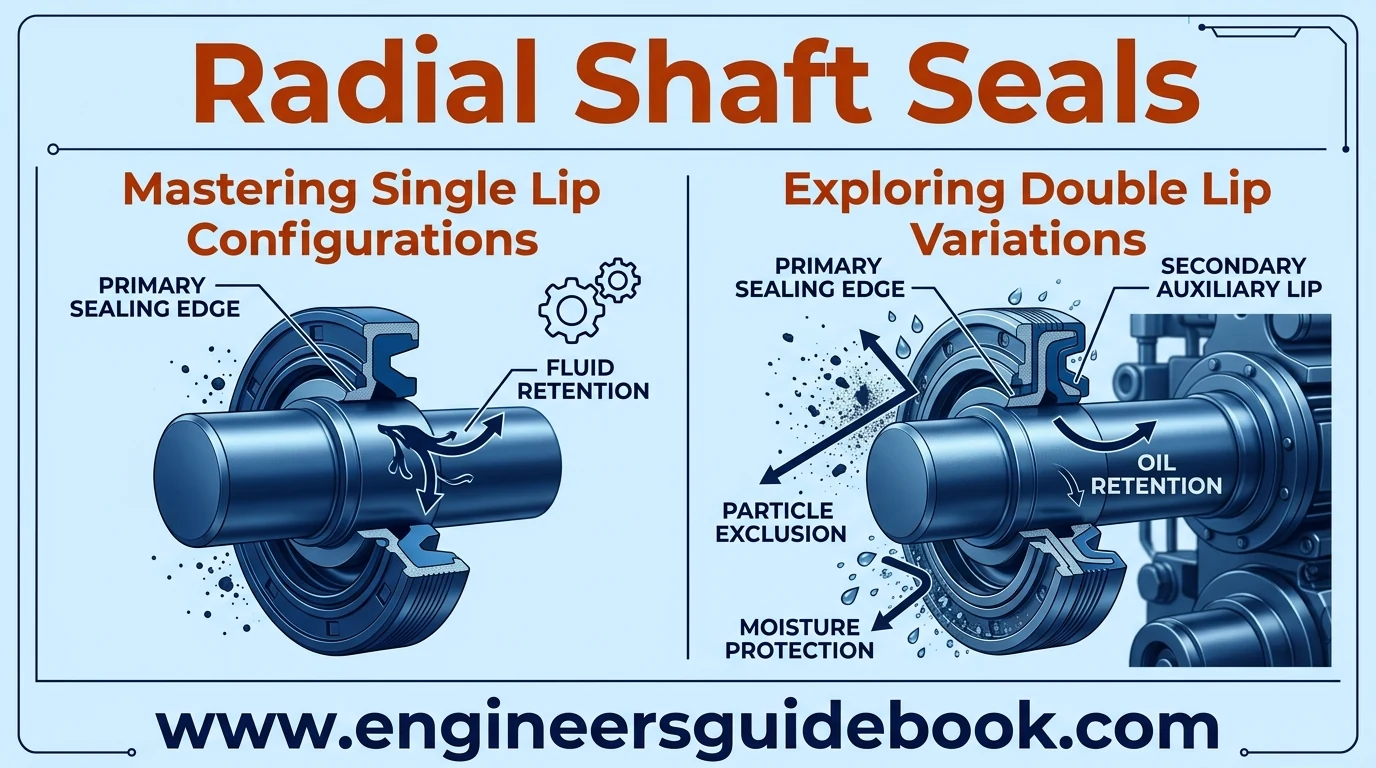
The single lip configuration remains the most ubiquitous iteration in mechanical design. It features one primary sealing edge that interfaces directly with the shaft. This minimalist architecture excels in environments where contaminant exclusion is secondary to fluid retention. Engineers favor this design for its inherent cost-effectiveness and straightforward installation protocols.
2.2. Exploring Double Lip Variations
When operational milieus demand heightened protection, the double lip variation emerges as the superior choice. It incorporates a secondary, auxiliary lip positioned outwardly from the primary seal. This ancillary barrier acts as a formidable bulwark against abrasive particulates, dust, and moisture. Consequently, it dramatically extends the service life of the primary sealing element in hostile environments.
3. Axial Face oil Seals
3.1. Precision Mechanical Face Seals
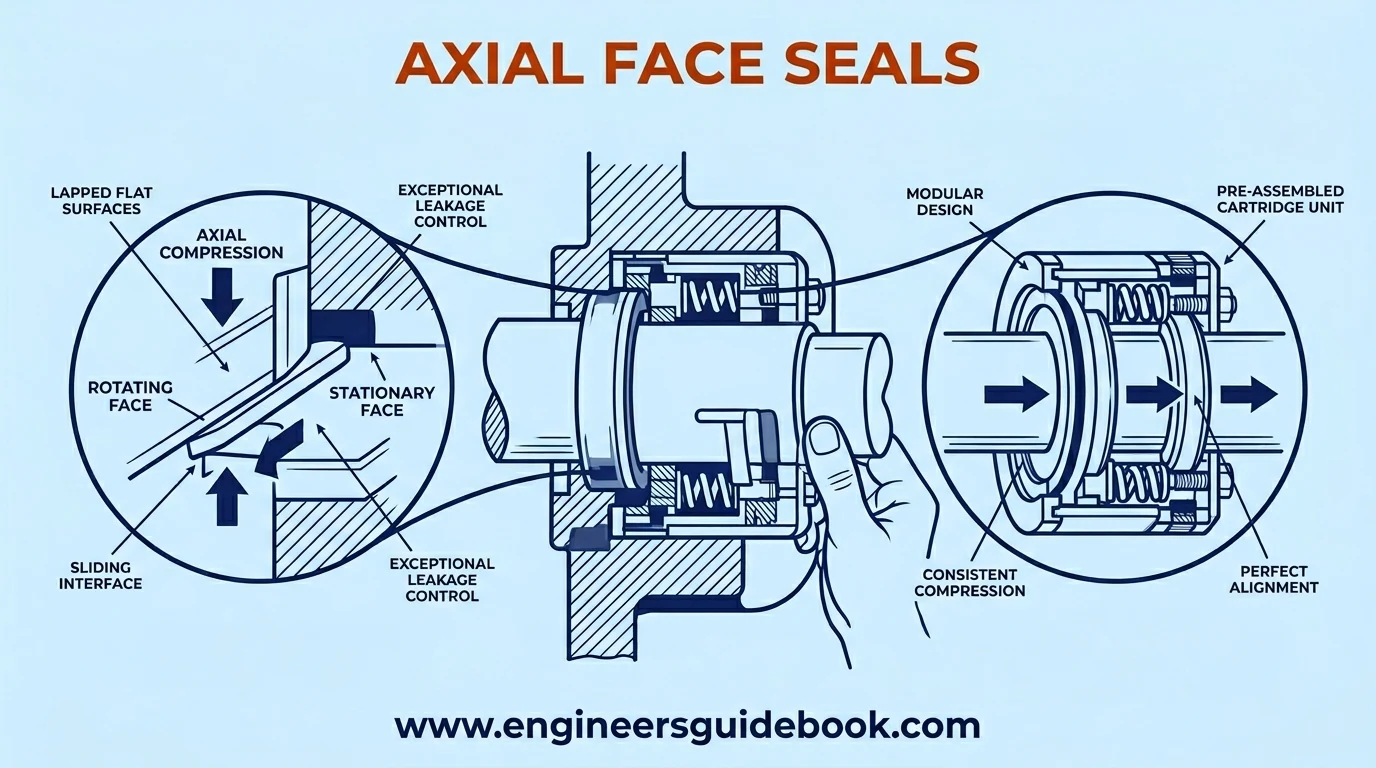
Axial face seals operate on an entirely different tribological paradigm. Instead of radial interference, they rely on two meticulously lapped, flat surfaces sliding against one another. One face rotates with the shaft, while the other remains stationary within the housing. This configuration yields exceptional leakage control. It is indispensable for high-value chemical processing and precision pump applications.
3.2. Robust Cartridge Seal Designs
Cartridge seals represent the zenith of pre-engineered axial sealing solutions. All critical components, including the seal faces, secondary seals, and hardware, are assembled into a single, cohesive unit. This modular design eliminates the vagaries of manual installation. Technicians simply slide the cartridge onto the shaft, ensuring perfect alignment and consistent compression every time.
4. Rotary Lip oil Seals
4.1. Conquering High Speed Applications
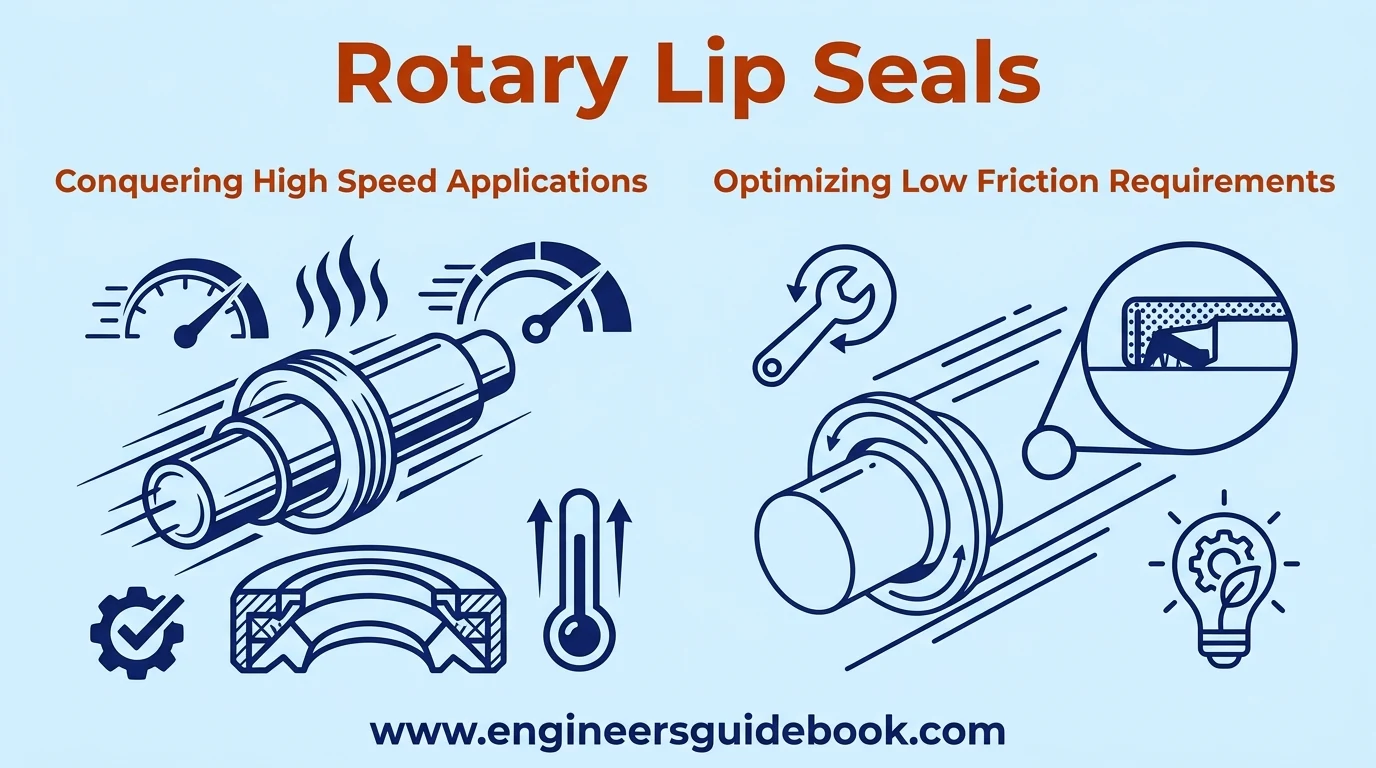
High rotational velocities generate substantial frictional heat. Standard elastomers quickly degrade under such thermal duress. Rotary lip seals engineered for high-speed applications utilize advanced fluorocarbon compounds and optimized lip geometries. These modifications minimize hydrodynamic friction, thereby preventing thermal runaway and maintaining a stable lubricating film at extreme revolutions per minute.
4.2. Optimizing Low Friction Requirements
In certain精密 applications, minimizing parasitic drag is paramount. Low friction rotary seals achieve this through specialized surface treatments and micro-textured sealing lips. By reducing the contact area without compromising the sealing interface, these components drastically lower torque requirements. This optimization directly translates to enhanced energy efficiency and reduced operational wear.
5. Reciprocating oil Seals
5.1. Understanding Piston Seal Dynamics
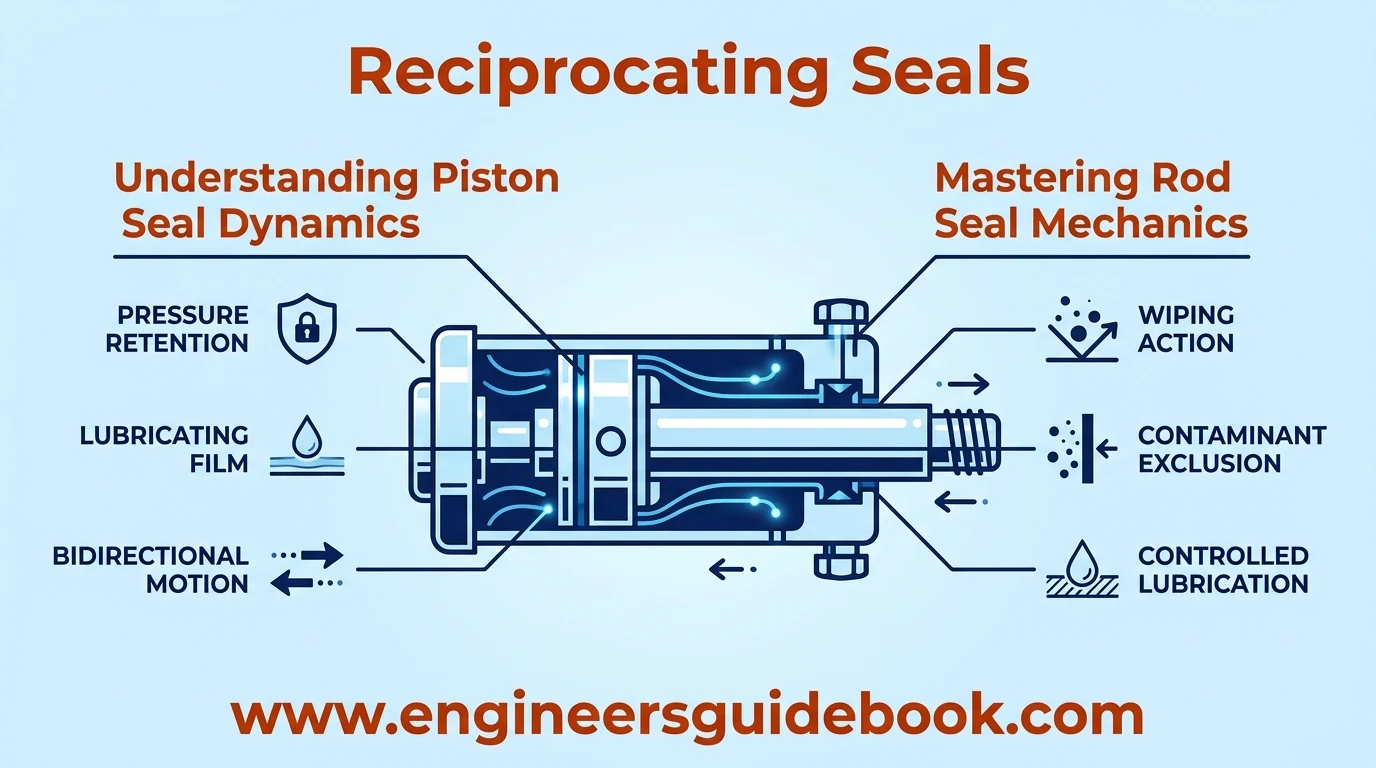
Reciprocating motion introduces unique kinematic challenges. Piston seals must navigate continuous bidirectional movement within a cylinder bore. They are meticulously designed to retain high-pressure fluid on one side while permitting a microscopic lubricating film to prevent dry running. The intricate balance of squeeze and stretch dictates their efficacy in hydraulic actuators.
5.2. Mastering Rod Seal Mechanics
Rod seals guard the exterior interface of a reciprocating assembly. Their primary mandate is to wipe the rod clean upon retraction, preventing external debris from infiltrating the system. Simultaneously, they must allow a minuscule, controlled film of hydraulic fluid to remain on the rod to lubricate the wiper. Mastering this delicate equilibrium is the hallmark of superior rod seal engineering.
6. Hydraulic System Oil Seals
6.1. Ensuring High Pressure Tolerance
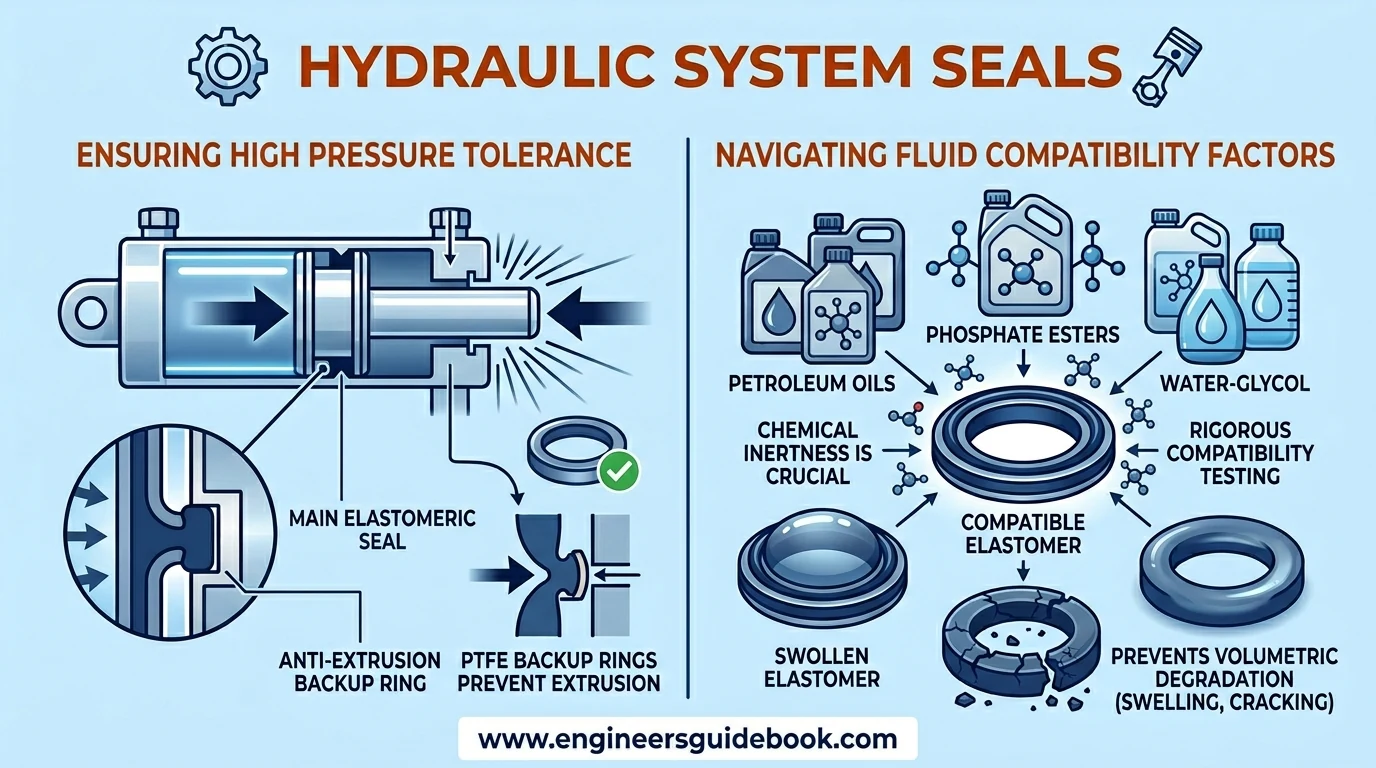
Hydraulic systems routinely operate under immense, pulsating pressures. Seals within these circuits must possess extraordinary extrusion resistance. Engineers achieve this by integrating anti-extrusion backup rings made from rigid polymers like PTFE. These reinforcements prevent the softer elastomeric seal from being forced into the microscopic clearance gaps between mating metal components.
6.2. Navigating Fluid Compatibility Factors
The chemical composition of hydraulic fluid varies wildly across different applications. A seal material that thrives in petroleum-based oils may rapidly swell or disintegrate when exposed to phosphate esters or water-glycol mixtures. Rigorous compatibility testing is therefore non-negotiable. Selecting the precise elastomer ensures chemical inertness and prevents premature volumetric degradation.
7. Pneumatic System Oil Seals
7.1. Deploying Low Friction Air Seals
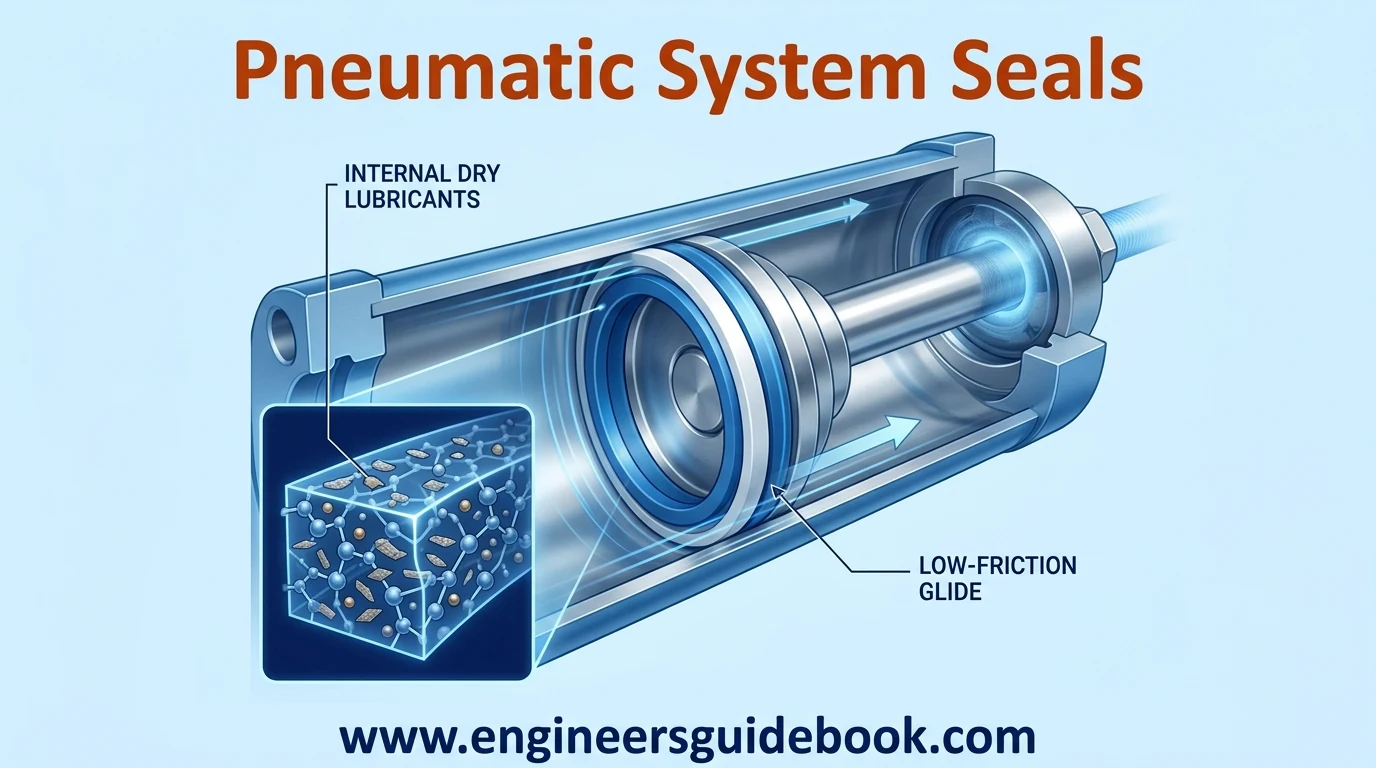
Pneumatic systems utilize compressible air, which inherently lacks the lubricating properties of hydraulic oil. Consequently, pneumatic seals must exhibit inherently low coefficients of friction. Materials such as polyurethane or specialized PTFE blends are frequently deployed. These compounds glide effortlessly against metal surfaces, minimizing stiction and ensuring smooth, responsive actuator movement.
7.2. Leveraging Dry Running Capabilities
Many modern pneumatic applications demand maintenance-free, lubrication-free operation. Dry running seals are explicitly formulated to withstand prolonged periods without external lubrication. They incorporate solid lubricants, such as molybdenum disulfide, directly into the polymer matrix. This intrinsic lubricity prevents abrasive wear, guaranteeing reliable performance even in the most austere, dust-laden environments.
8. Critical Material Selection
8.1. Maximizing Nitrile Rubber Benefits
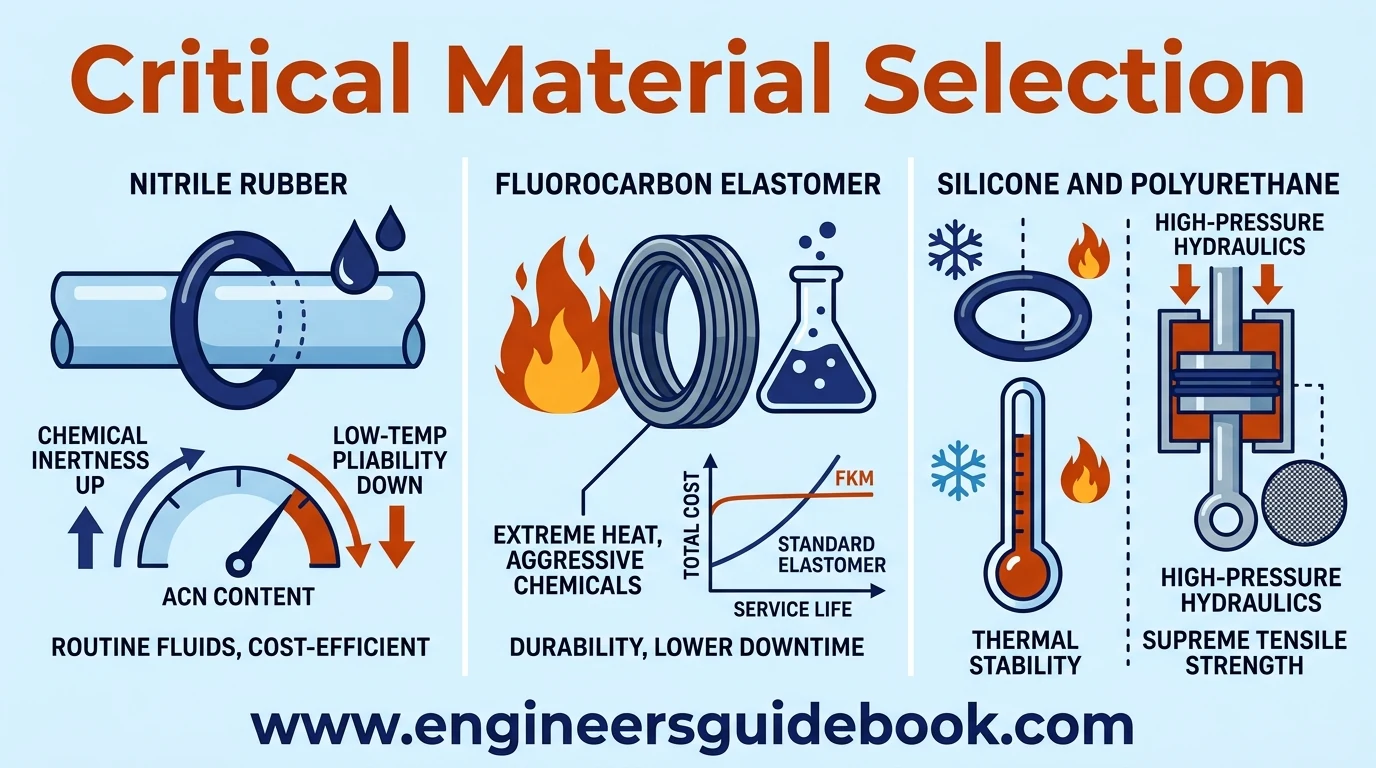
Nitrile butadiene rubber (NBR) remains the quintessential elastomer for ubiquitous sealing applications. Its molecular architecture confers exceptional resistance to aliphatic hydrocarbons and petroleum-based lubricants. The acrylonitrile content is the critical variable. Higher concentrations augment chemical imperviousness. However, this concurrently diminishes low-temperature pliability. Engineers must meticulously calibrate this dichotomy. When optimally specified, nitrile delivers a cost-efficient, robust bulwark against routine fluid egress.
8.2. Harnessing Fluorocarbon Elastomer Advantages
Fluorocarbon elastomers, predominantly FKM, represent the vanguard of high-temperature sealing paradigms. These advanced polymers exhibit profound chemical inertness across a vast spectrum of aggressive solvents and oxidizing agents. They withstand extreme thermal gradients with absolute aplomb. The initial capital expenditure for fluorocarbon seals is undeniably elevated. Nevertheless, the exponentially extended service life and attenuated downtime swiftly ameliorate the upfront pecuniary outlay.
8.3. Exploring Silicone and Polyurethane Uses
Material selection frequently diverges based on highly specific environmental exigencies. Silicone excels in applications demanding profound thermal stability and physiological inertness. It maintains elastomeric flexibility from sub-zero depths to elevated thermal thresholds. Conversely, polyurethane delivers exceptional abrasion resistance and supreme tensile strength. It thrives in high-pressure hydraulic milieus where extrusion is a perpetual threat. Selecting between these polymers hinges entirely on the dominant tribological challenges of the assembly.
9. Automotive Industry Applications
9.1. Securing Engine Crankshaft Protection
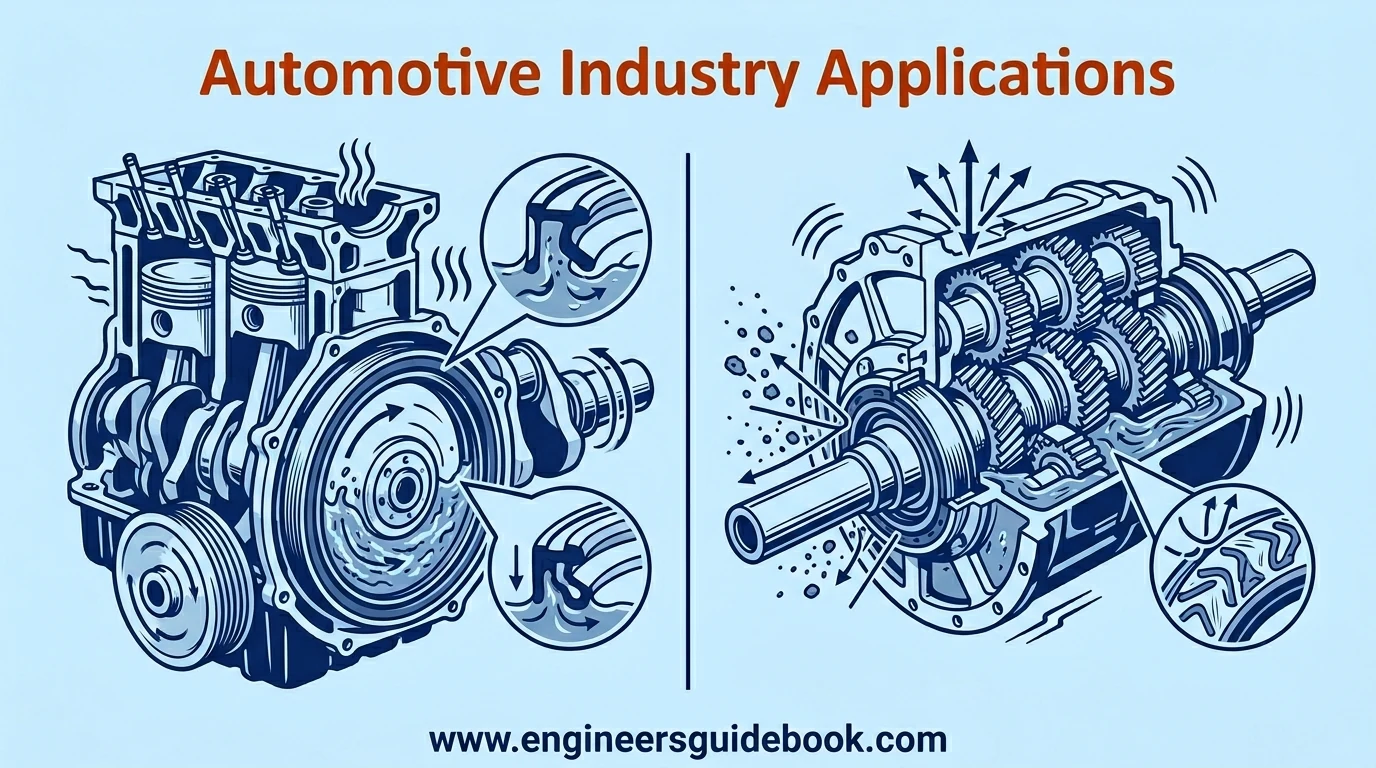
The internal combustion engine operates under relentless thermal and mechanical duress. Front and rear main crankshaft seals must remain impervious to high-RPM rotation and scorching oil temperatures. A single failure in this critical locus invites catastrophic lubricant depletion. Robust, precisely engineered sealing ensures the powertrain’s longevity. It prevents oil from contaminating the clutch or torque converter, thereby safeguarding overall vehicular performance.
9.2. Optimizing Transmission and Axle Sealing
Transmissions and axles endure complex, multi-directional forces and relentless vibration. Seals within these assemblies must aggressively repel external grit while retaining viscous gear oils. Advanced lip geometries and hydrodynamic pumping aids are frequently deployed to manage churning fluids. This meticulous optimization prevents premature wear. It maintains drivetrain efficiency by ensuring that lubrication remains exactly where it is most requisite.
10. Heavy Machinery and Industrial Applications
10.1. Meeting Construction Equipment Demands
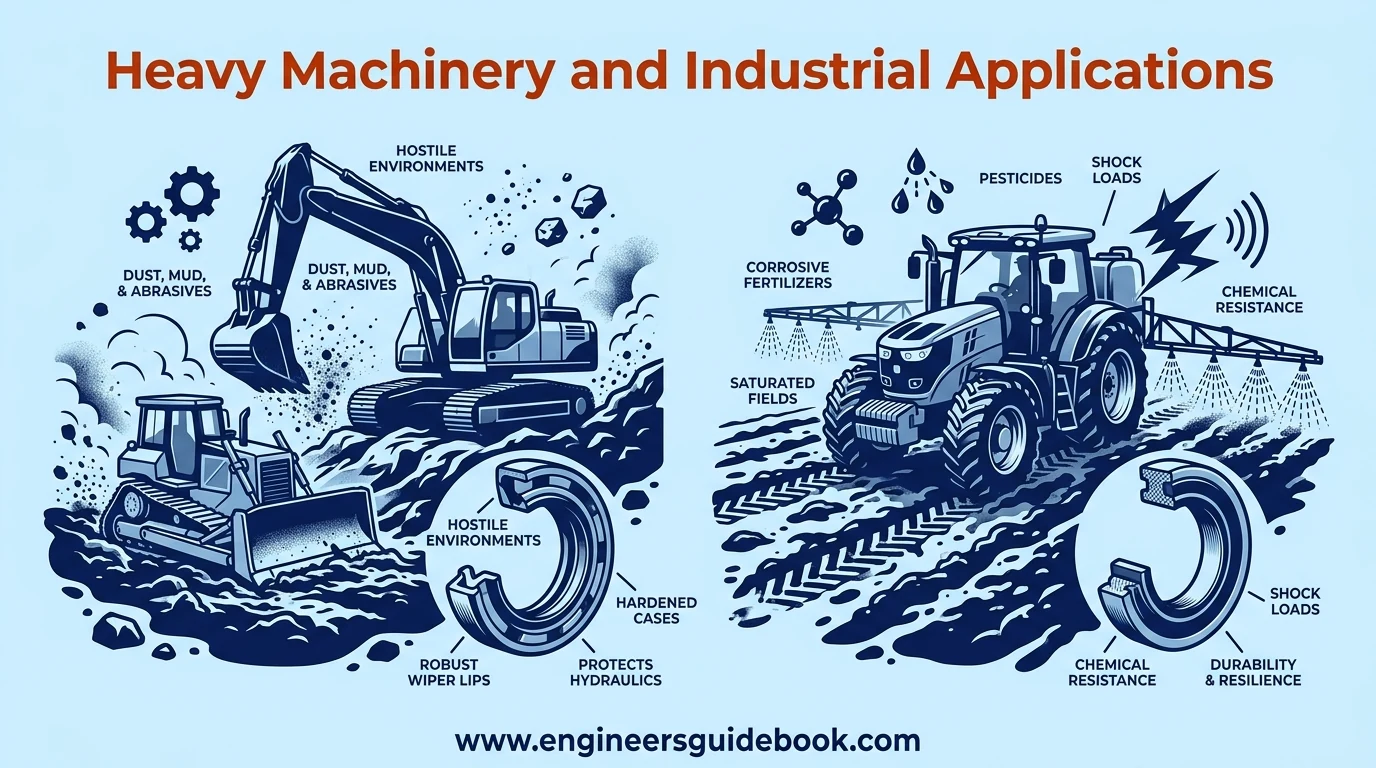
Construction machinery operates in profoundly hostile, unforgiving environments. Dust, mud, and abrasive particulates constantly assault exposed sealing interfaces. Heavy-duty seals counter this by incorporating robust wiper lips and hardened, reinforced cases. These features fortify the internal hydraulic components against relentless external degradation. Reliability in this sector is not a luxury. It is an operational imperative.
10.2. Overcoming Agricultural Machinery Challenges
Agricultural equipment faces a unique set of operational paradigms. It must navigate saturated, muddy fields while withstanding prolonged exposure to corrosive fertilizers and pesticides. Seals deployed here require exceptional chemical resistance. They must also function flawlessly despite intermittent, heavy shock loads. Durability and environmental resilience are the absolute cornerstones of agricultural sealing design.
11. Aerospace and Marine Applications
11.1. Achieving Extreme Temperature Resilience
Aerospace components traverse from freezing stratospheric altitudes to the blistering heat of engine nacelles. Seals must maintain their elastomeric integrity across this vast, punishing thermal spectrum. Specialized fluorosilicones are frequently utilized to bridge this gap. They prevent catastrophic embrittlement and ensure a hermetic seal under the most arduous flight conditions. Failure is simply not an option at thirty thousand feet.
11.2. Guaranteeing Saltwater Corrosion Resistance
Marine environments are relentlessly corrosive and biologically active. Saltwater aggressively attacks standard metallic and elastomeric components alike. Marine-grade seals utilize highly specialized compounds paired with stainless steel or bronze casings. This synergistic material pairing guarantees imperviousness to saline degradation and biofouling. It ensures that propulsion systems remain watertight and fully operational.
12. Installation and Maintenance Best Practices
12.1. Executing Proper Mounting Techniques
A seal is only as efficacious as its installation. Improper mounting can nick the delicate sealing lip or permanently distort the garter spring. Utilizing dedicated installation sleeves and applying a thin film of compatible lubricant are mandatory protocols. These simple precautions prevent immediate, entirely preventable failures. Precision during installation dictates the entire lifecycle of the component.
12.2. Establishing Routine Inspection Protocols
Proactive maintenance perpetually supersedes reactive replacement. Scheduled inspections should rigorously scrutinize seals for early signs of weeping, discoloration, or extrusion. Employing advanced diagnostic tools like vibration analysis and thermal imaging can detect anomalous friction. This foresight identifies issues before catastrophic failure occurs. Vigilance preserves operational continuity and protects capital equipment.

13. Common Failure Modes and Troubleshooting
13.1. Diagnosing Lip Wear Patterns
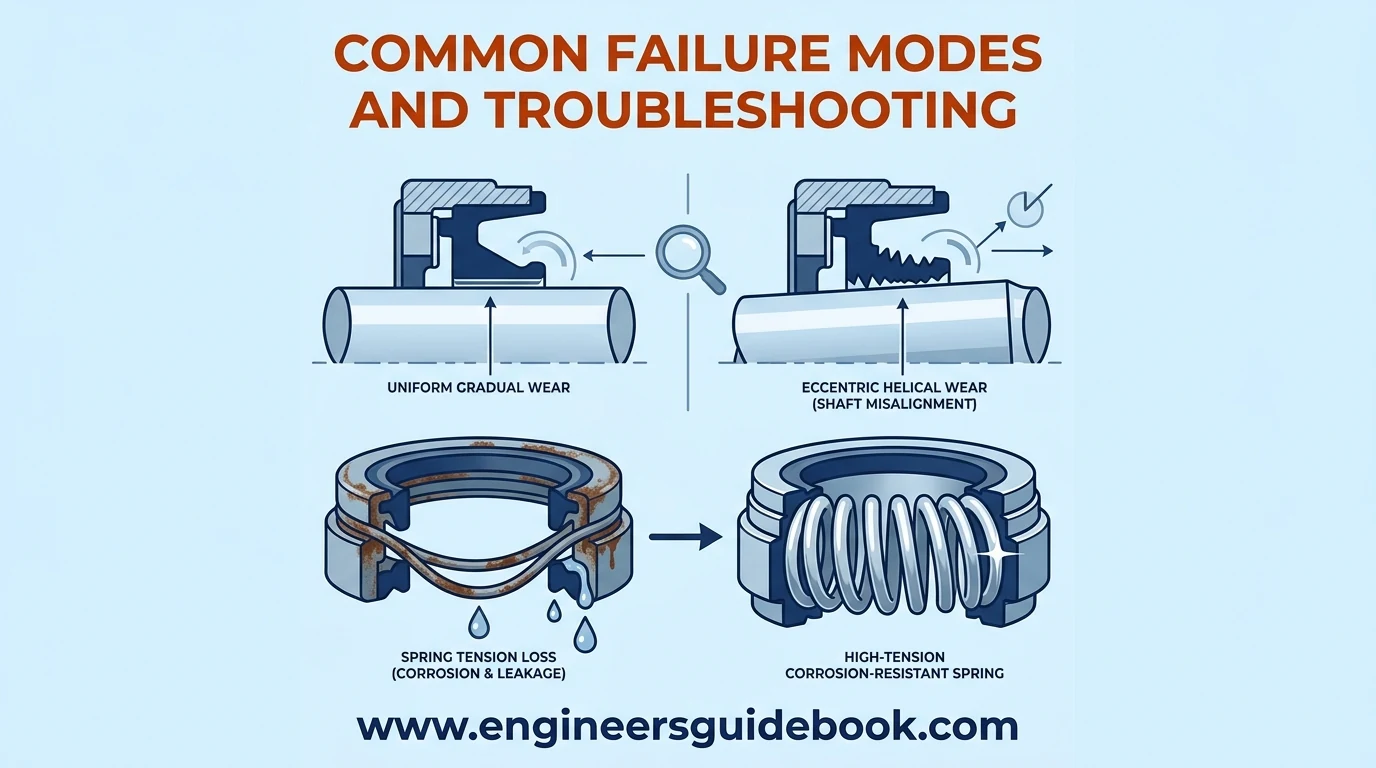
The morphology of lip wear offers a highly accurate diagnostic roadmap. Uniform, gradual wear indicates normal, expected aging. Conversely, eccentric or helical wear patterns suggest underlying shaft misalignment or excessive runout. Identifying these subtle topographical anomalies allows for precise, targeted corrective action. It prevents the installation of a new seal into a fundamentally flawed housing.
13.2. Resolving Spring Tension Loss
The garter spring provides the critical radial force necessary for maintaining the sealing interface. Over time, severe thermal cycling and chemical exposure can cause the spring to lose its temper or corrode. This tension loss inevitably manifests as fluid leakage. Replacing the compromised seal with a variant featuring a corrosion-resistant, high-tension spring rectifies this specific failure mode permanently.
14. Future Innovations in Sealing Technology
14.1. Pioneering Smart Seals with Embedded Sensors
The frontier of sealing technology lies in rapid digitization. Smart seals now integrate micro-sensors directly into the elastomeric matrix. These microscopic sensors monitor temperature, pressure, and wear in real-time. This continuous telemetry enables predictive maintenance. It transforms seals from passive, dumb components into active, data-generating diagnostic nodes.
14.2. Integrating Advanced Nanomaterial Coatings
Nanotechnology is fundamentally revolutionizing surface tribology. Applying nanoscale coatings, such as diamond-like carbon (DLC), to the sealing lip drastically reduces the coefficient of friction. This microscopic innovation minimizes heat generation and wear. It extends the operational lifespan of the seal exponentially. The future of high-performance sealing is undeniably nanoscale.