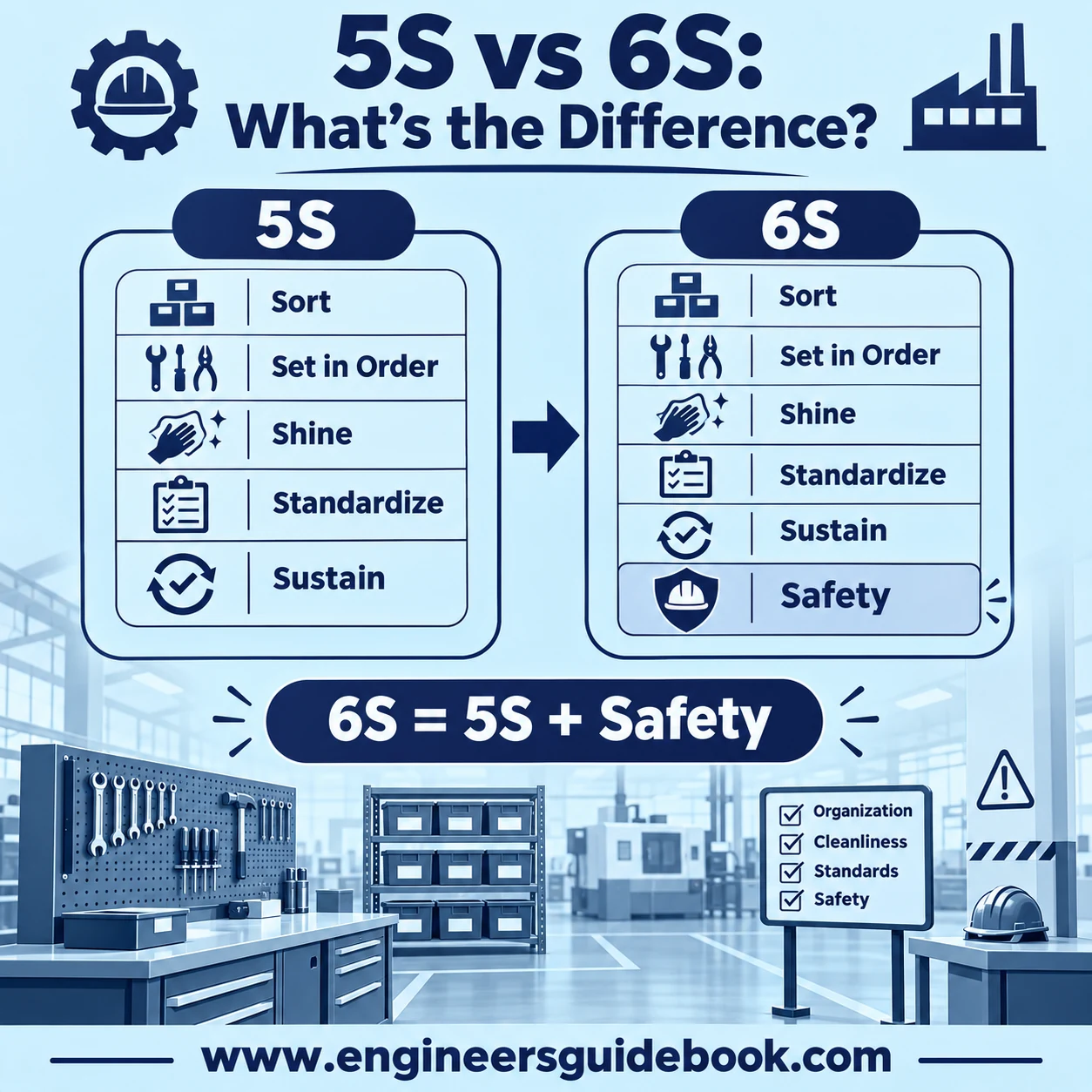
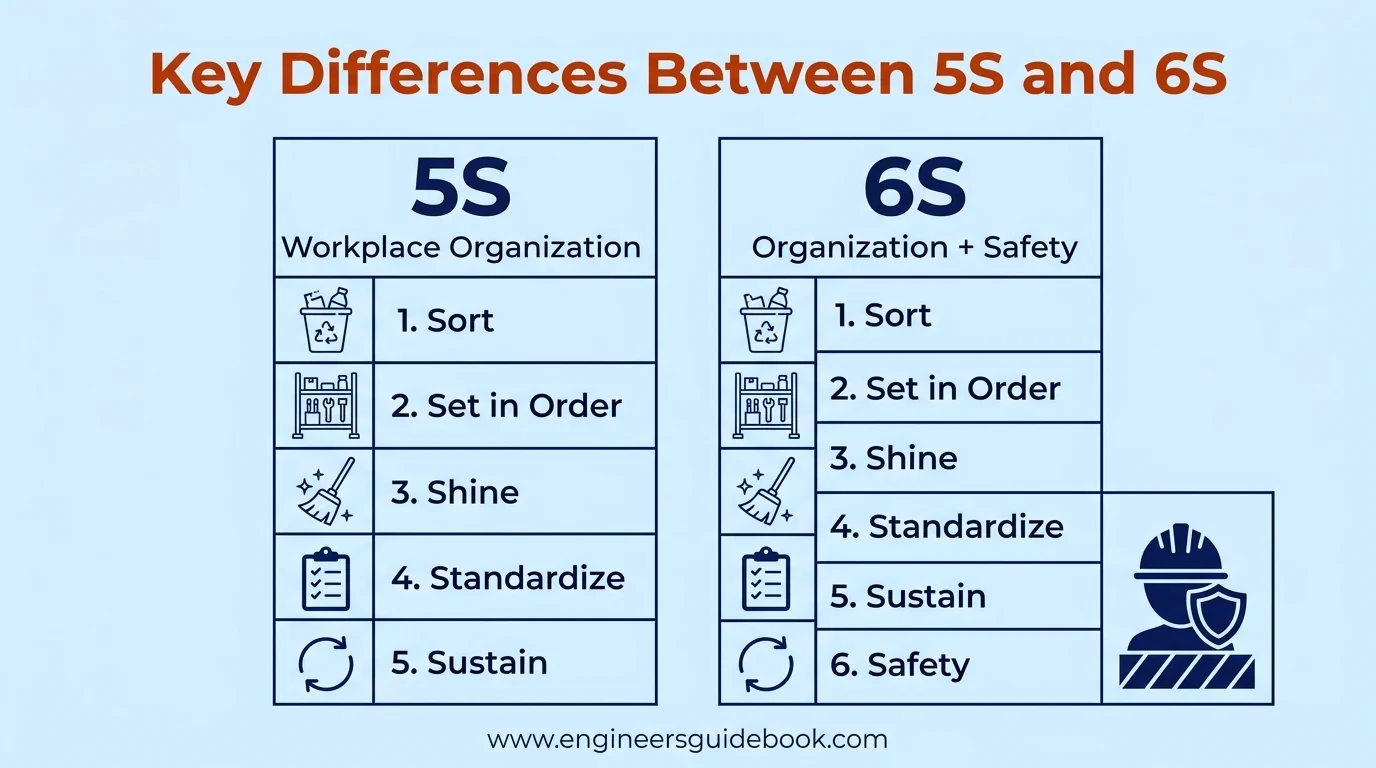
The main difference between 5S and 6S is the explicit inclusion of Safety as the sixth pillar. While 5S focuses on Sort, Set in Order, Shine, Standardize, and Sustain to improve workplace organization and efficiency, 6S incorporates systematic hazard identification, risk assessment, and accident prevention to establish a safer and more productive working environment.
1. Introduction to 5S vs 6S
1.1 Understanding Workplace Organization Methodologies
Workplace organization methodologies establish systematic procedures for managing materials, equipment, personnel, and operational activities. Both 5S and 6S eliminate unnecessary clutter, optimize resource utilization, and establish disciplined working environments that support operational excellence.
1.2 The Role of 5S and 6S in Lean Manufacturing
Lean manufacturing emphasizes waste elimination and continuous improvement. The 5S and 6S methodologies provide foundational frameworks for achieving these objectives through visual management, process standardization, workplace discipline, and efficient material movement.
1.3 Evolution From 5S to 6S
Although traditional 5S practices contribute to workplace safety, organizations recognized the benefits of addressing occupational hazards explicitly. This recognition encouraged the development of 6S, incorporating safety as a dedicated component of workplace organization.
1.4 Importance of Workplace Organization and Safety
Disorganized workplaces increase operational inefficiencies, equipment damage, and accident exposure. Combining systematic organization with proactive safety management establishes favorable conditions for productivity, employee well-being, and sustainable industrial performance.
2. What Is the 5S Methodology?
2.1 Definition of 5S
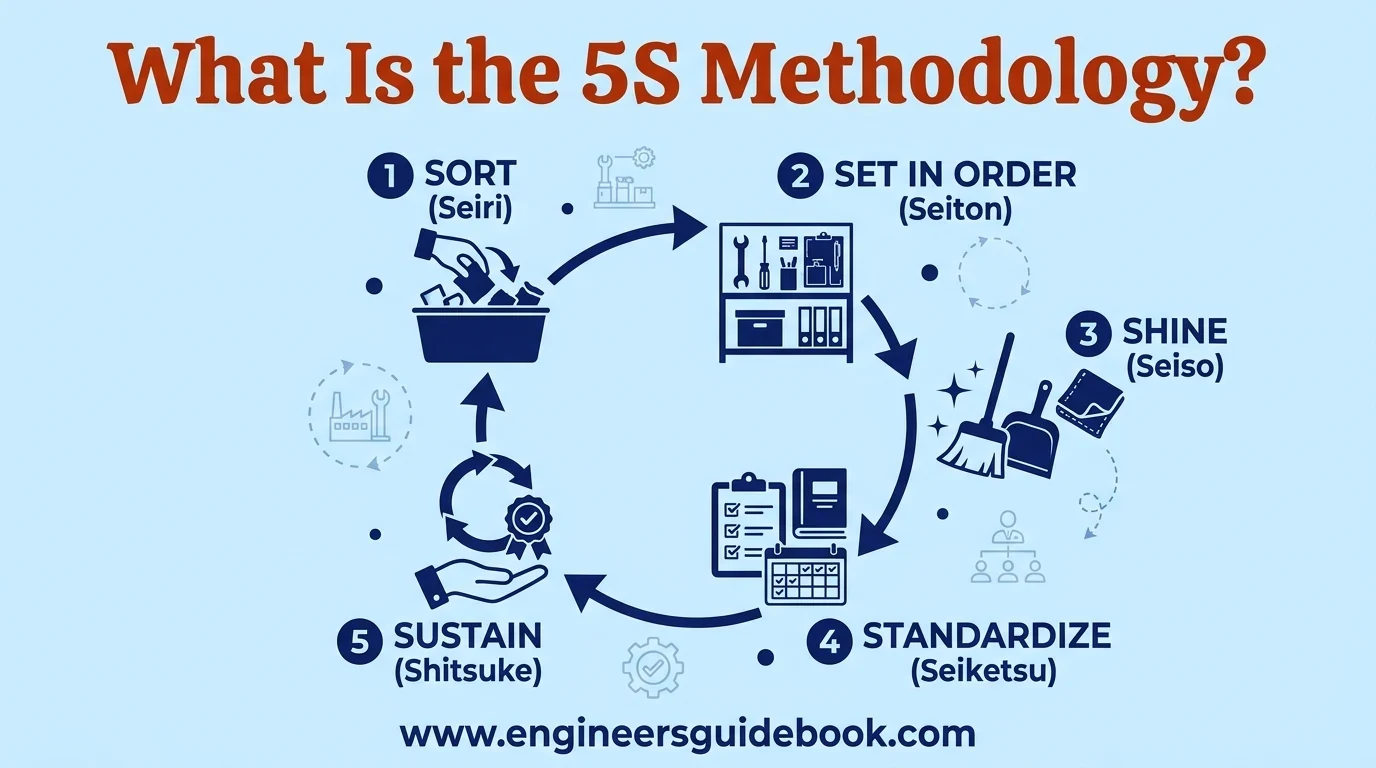
The 5S methodology is a structured workplace management technique designed to improve organization, cleanliness, standardization, and operational discipline through five interconnected principles.
2.2 Origin and History of 5S
The methodology originated in Japanese industrial management practices and became closely associated with the Toyota Production System. Its systematic approach subsequently gained international recognition across manufacturing and service industries.
2.3 Sort (Seiri)
Sorting involves distinguishing essential workplace items from unnecessary materials. Red-tagging procedures help identify obsolete tools, redundant inventory, damaged components, and unused equipment requiring removal, relocation, or disposal.
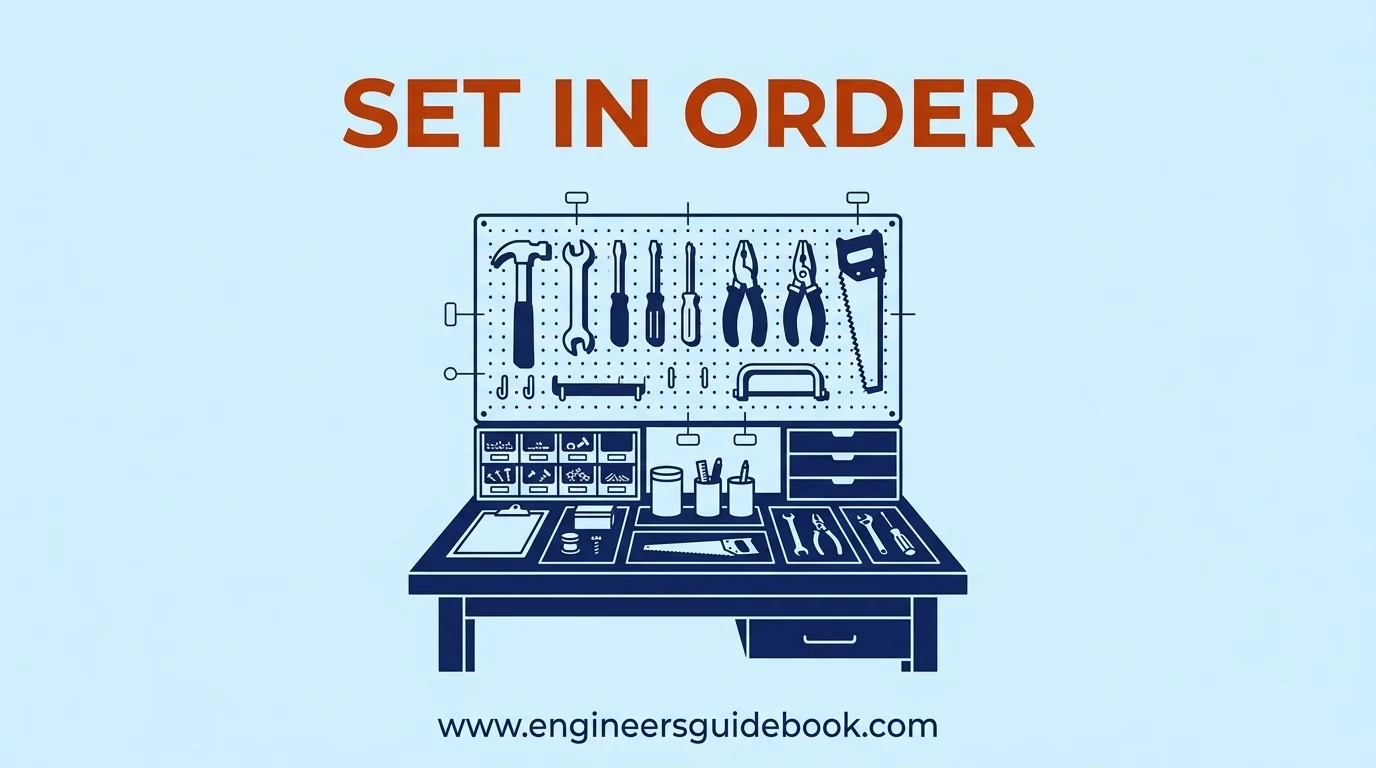
2.4 Set in Order (Seiton)
Essential items are arranged according to accessibility, utilization frequency, and operational requirements. Shadow boards, labeled storage cabinets, designated locations, and floor markings minimize retrieval time and unnecessary movement.
2.5 Shine (Seiso)
Shine involves systematic cleaning and inspection of equipment and working environments. Regular cleaning helps employees identify lubricant leakage, loose fasteners, abnormal wear, and other emerging equipment abnormalities before deterioration progresses.
2.6 Standardize (Seiketsu)
Standardization establishes uniform procedures for maintaining workplace organization. Visual instructions, cleaning schedules, inspection checklists, and designated responsibilities prevent inconsistencies between departments, production lines, and working shifts.
2.7 Sustain (Shitsuke)
Sustain focuses on institutionalizing workplace discipline through regular audits, employee training, supervisory involvement, and continuous improvement. Its purpose is to prevent regression toward previous disorganized working practices.
2.8 Primary Objectives of 5S
The principal objectives of 5S include:
- Eliminating unnecessary workplace materials.
- Improving operational efficiency.
- Reducing material retrieval time.
- Establishing standardized working conditions.
- Supporting continuous improvement initiatives.
3. What Is the 6S Methodology?
3.1 Definition of 6S
The 6S methodology extends traditional 5S principles by incorporating Safety as an explicit pillar. It combines workplace organization with systematic occupational hazard management and accident prevention.
3.2 Evolution of the 6S Framework
Industrial organizations developed 6S practices to strengthen the relationship between lean manufacturing and occupational safety. The expanded framework emphasizes that productivity improvements should never compromise employee protection.
3.3 The Six Pillars of 6S
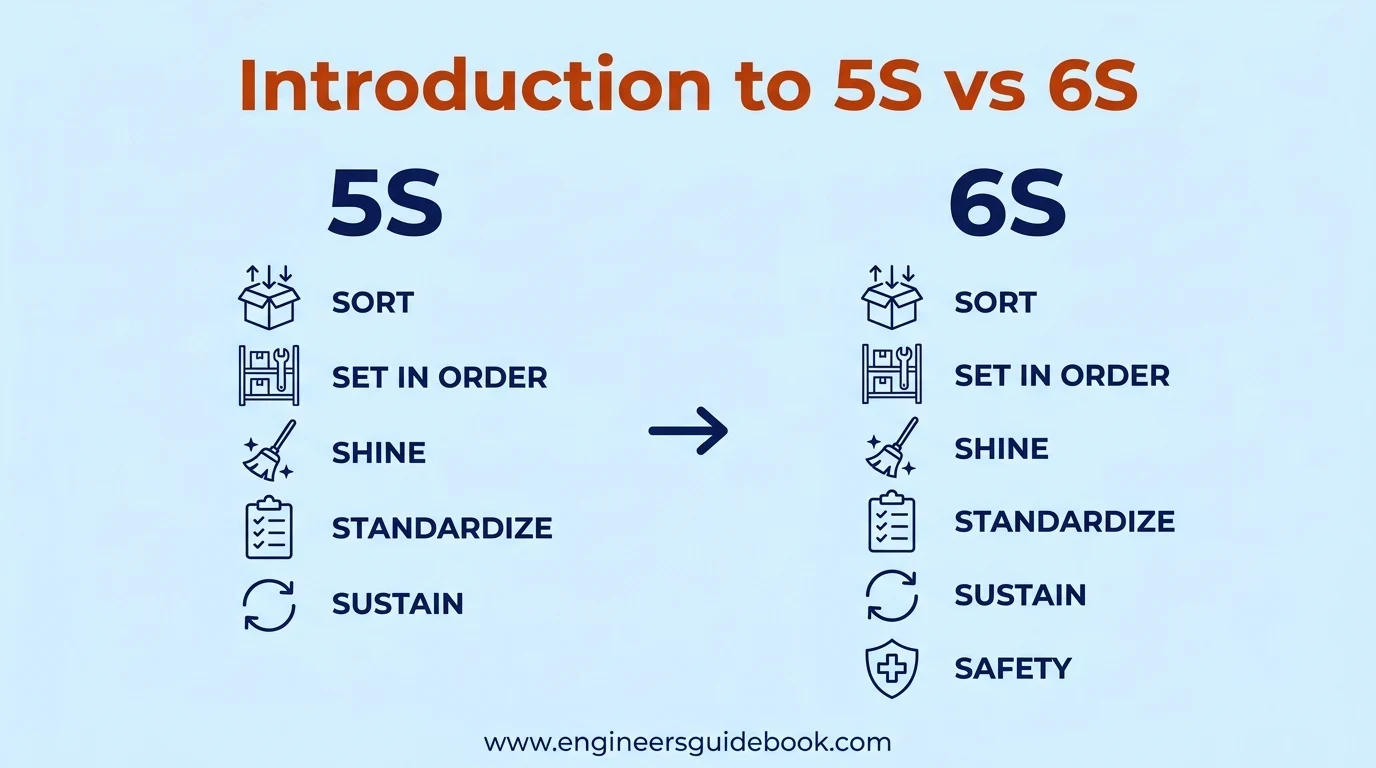
The six fundamental pillars of 6S are:
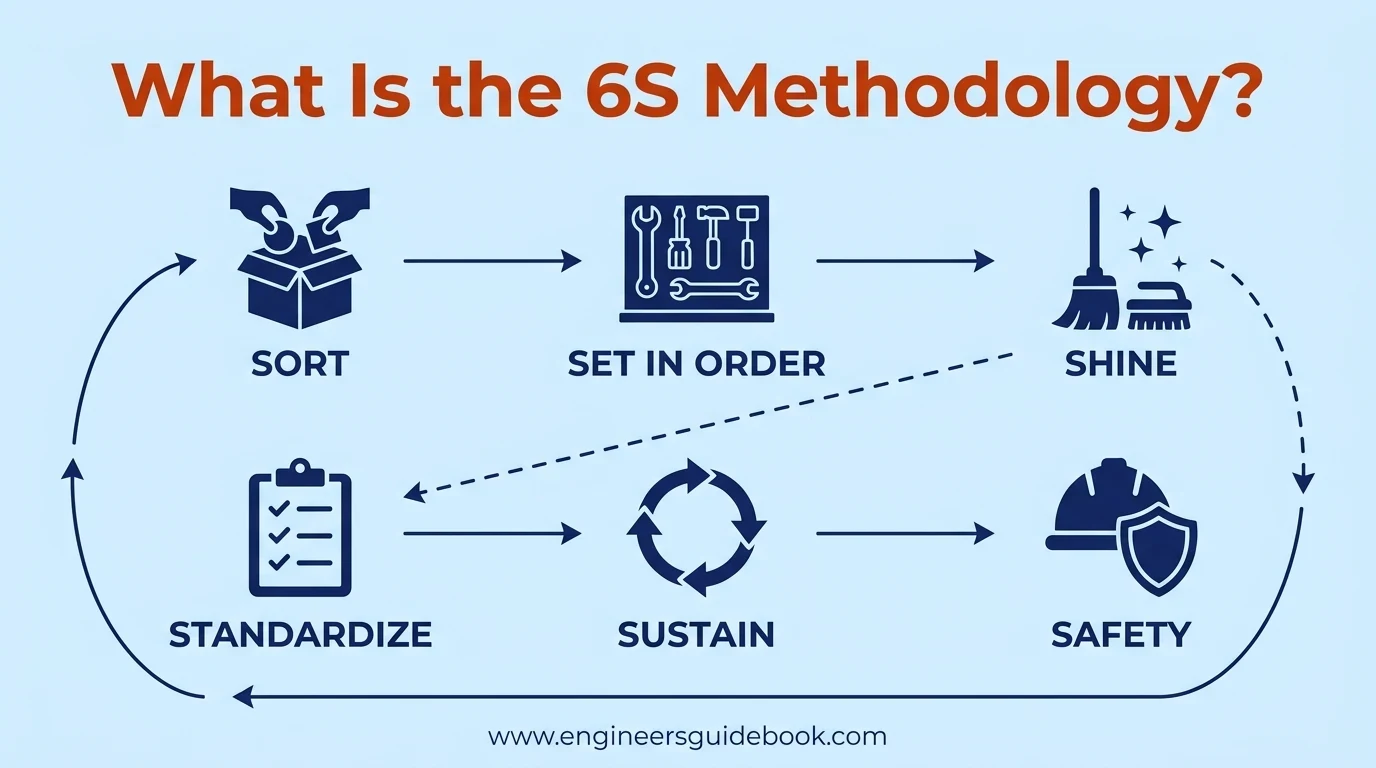
1. Sort

2. Set in Order
3. Shine
4. Standardize
5. Sustain
6. Safety
Although safety is commonly identified as the sixth pillar, it should be integrated throughout all five organizational activities rather than treated as a subsequent task.
3.4 Safety as the Sixth Pillar
Safety introduces formal hazard identification, risk evaluation, protective measures, and safe working procedures. Employees are encouraged to recognize hazardous conditions and initiate appropriate corrective actions before incidents occur.
3.5 Primary Objectives of 6S
The primary objectives include improving productivity, minimizing occupational hazards, preventing injuries, strengthening safety awareness, and establishing an organized working environment that supports both operational efficiency and employee protection.
4. Key Differences Between 5S and 6S
4.1 Differences in Fundamental Objectives
The primary objective of 5S is workplace organization and operational efficiency. Conversely, 6S explicitly combines these objectives with occupational safety, hazard mitigation, and systematic accident prevention.
4.2 Workplace Safety Integration
Traditional 5S indirectly improves safety through housekeeping and organization. The 6S methodology makes safety an explicit performance requirement supported by documented procedures, inspections, and corrective actions.
4.3 Hazard Identification and Risk Management
While 5S can expose unsafe conditions through cleaning and organization, 6S emphasizes systematic hazard identification, risk assessment, and the implementation of appropriate control measures.
4.4 Implementation Requirements
Implementing 6S may require additional resources for safety training, protective equipment, engineering controls, emergency procedures, and risk assessments compared with conventional 5S implementation.
4.5 Employee Roles and Responsibilities
Under both methodologies, employees maintain workplace standards. However, 6S places greater emphasis on hazard reporting, safety inspections, safe working practices, and participation in accident prevention initiatives.
4.6 Performance Measurement and Auditing
Traditional 5S audits evaluate five organizational pillars. The 6S audit additionally evaluates safety compliance, hazard controls, emergency accessibility, and the effectiveness of corrective actions.
4.7 5S vs 6S Comparison Table
Comparison Factor 5S, 6S Number of pillars Five Six Primary focus Workplace organization Organization and safety Safety integration Implicit Explicit Hazard assessment May be included Explicitly emphasized Audit criteria Five pillars Six pillars Training requirements Organizational practices Organizational and safety practices Risk management Indirect contribution Systematic integration Implementation complexity Generally lower Potentially higher
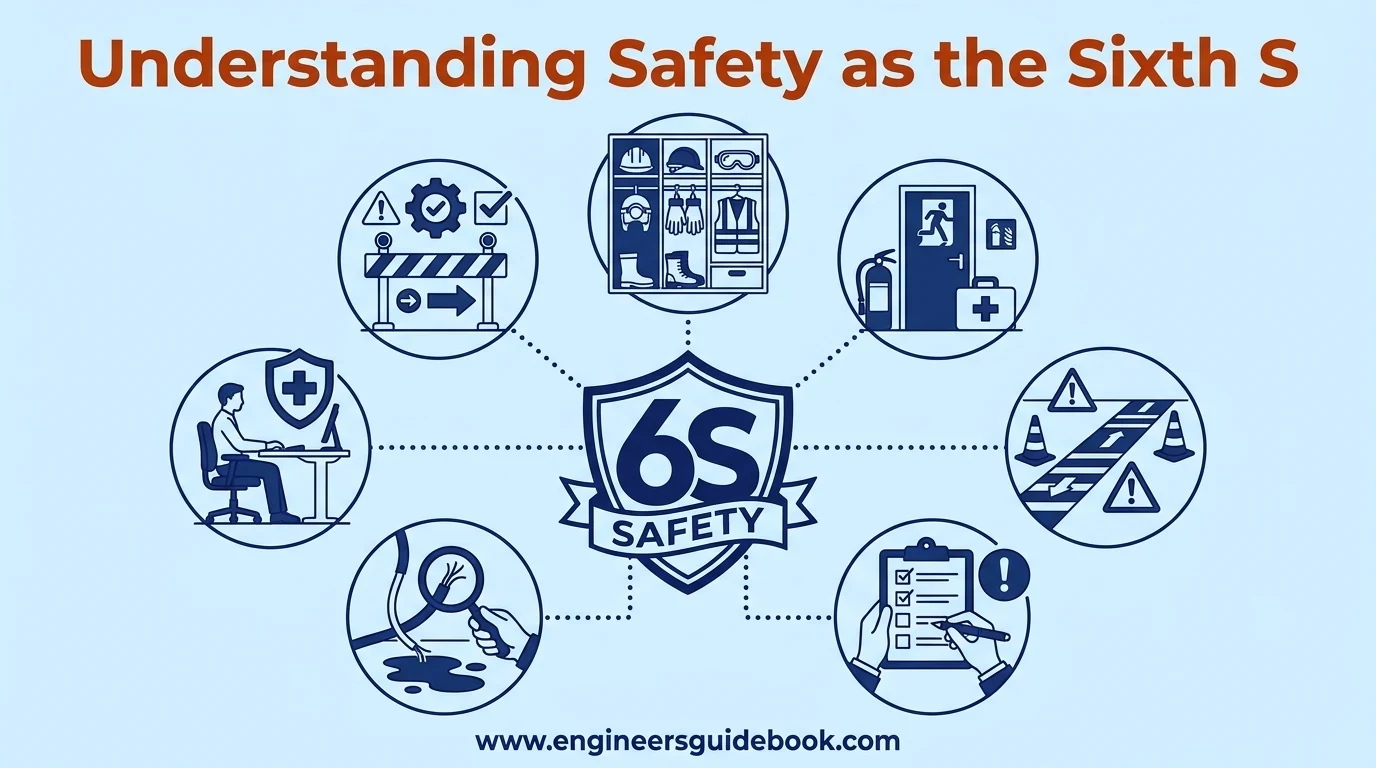
5. Understanding Safety as the Sixth S
5.1 Workplace Hazard Identification
Hazard identification involves recognizing mechanical, electrical, chemical, ergonomic, and environmental dangers. Routine workplace inspections help detect exposed moving components, damaged cables, chemical leakage, and obstructed passageways.
5.2 Occupational Health and Safety
The 6S framework reinforces occupational health and safety practices by encouraging safe operating conditions, minimizing hazardous exposures, and integrating employee protection into everyday operational activities.
5.3 Risk Assessment and Control Measures
Risk assessments evaluate the likelihood and severity of potential incidents. Appropriate controls should follow the hierarchy of controls, prioritizing elimination, substitution, and engineering measures before administrative controls and personal protective equipment.
5.4 Personal Protective Equipment Management
Protective equipment must be selected according to identified hazards. Organized storage, accessibility, routine inspection, proper training, and timely replacement help maintain the effectiveness of protective equipment.
5.5 Emergency Preparedness and Response
Emergency exits, fire extinguishers, first-aid stations, and evacuation routes must remain accessible. Emergency response procedures and periodic drills improve organizational preparedness during unexpected incidents.
5.6 Safety Signage and Visual Management
Visual management communicates workplace hazards through warning signs, equipment labels, floor markings, and operating instructions. Effective signage reduces ambiguity and reinforces safe behavior without replacing physical hazard controls.
5.7 Accident Prevention and Near-Miss Reporting
Near-miss reporting identifies deficiencies before serious incidents occur. Investigating reported hazards and implementing corrective actions strengthens organizational learning and supports proactive accident prevention.
6. Benefits of 5S and 6S
6.1 Improved Workplace Organization
Both methodologies eliminate superfluous materials and establish designated storage locations. Organized workplaces improve accessibility, minimize congestion, and establish more predictable operating conditions.
6.2 Increased Productivity and Operational Efficiency
Employees spend less time searching for tools, retrieving materials, and navigating unnecessary obstacles. These improvements reduce non-value-added activities and facilitate smoother production processes.
6.3 Reduced Waste and Operational Costs
Systematic organization helps minimize redundant inventory, material damage, unnecessary transportation, and inefficient resource utilization. Reduced operational waste can translate into measurable financial savings.
6.4 Improved Equipment Reliability
Routine cleaning and inspection facilitate early detection of equipment abnormalities. Timely corrective maintenance can prevent progressive deterioration, reduce unplanned downtime, and improve equipment availability.
6.5 Enhanced Employee Engagement
Employee participation in workplace improvement encourages accountability and ownership. Well-organized working environments can also improve morale, communication, collaboration, and adherence to established operational standards.
6.6 Reduced Workplace Accidents Through 6S
Explicit safety integration helps organizations identify hazardous conditions and implement preventive controls. Effective implementation can reduce employee exposure to occupational hazards, injuries, and associated production interruptions.
6.7 Stronger Continuous Improvement Culture
Regular audits, performance monitoring, and corrective actions establish a culture of incremental improvement. Both methodologies encourage employees to continuously evaluate and refine existing workplace practices.

7. Limitations and Challenges of 5S and 6S
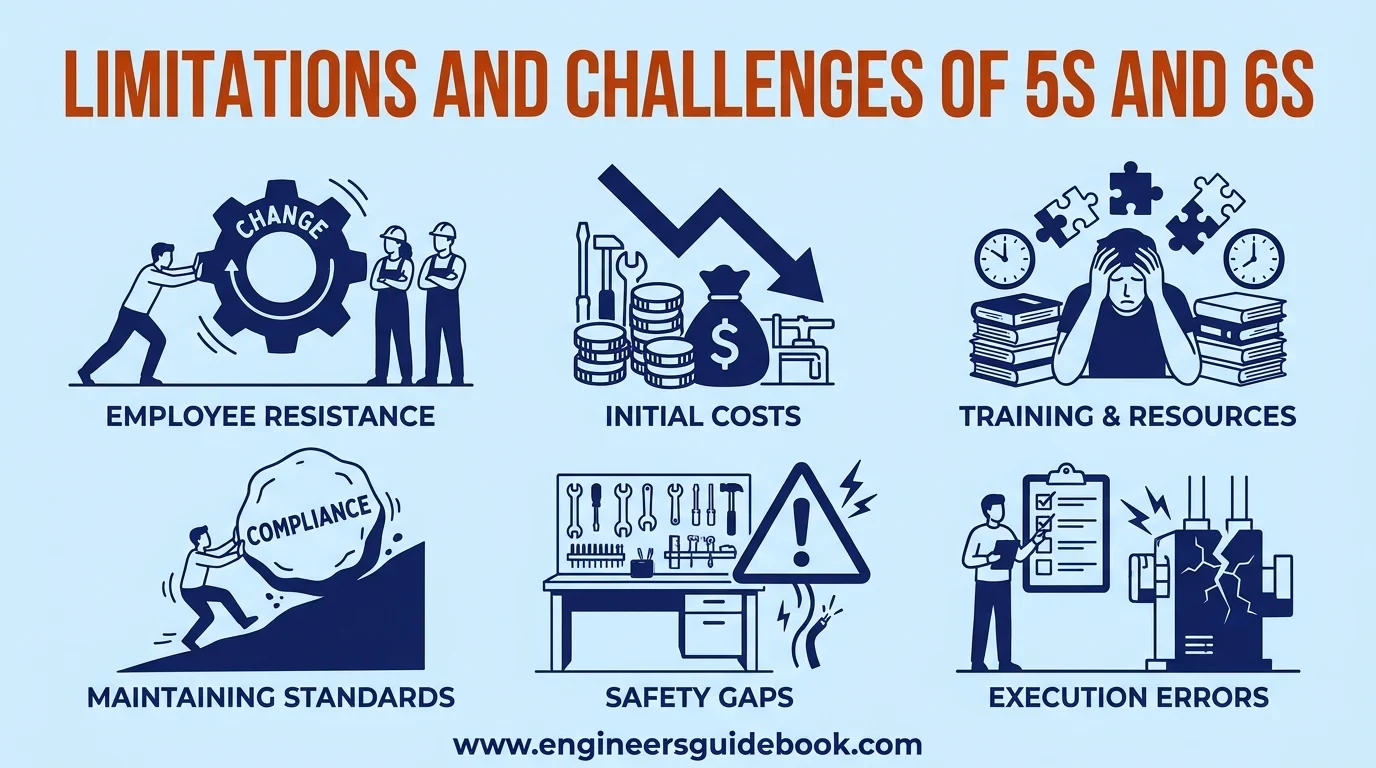
7.1 Employee Resistance to Change
Employees accustomed to established working practices may resist new procedures. Management involvement, practical demonstrations, and employee participation can help overcome organizational inertia.
7.2 Initial Implementation Costs
Implementation may require investments in storage systems, labeling equipment, training, workplace modifications, and safety infrastructure. The magnitude of expenditure depends on existing workplace conditions.
7.3 Training and Resource Requirements
Successful implementation requires adequate training, personnel availability, documented standards, and management support. The additional safety responsibilities associated with 6S may necessitate specialized technical expertise.
7.4 Maintaining Long-Term Compliance
Initial improvements can deteriorate without consistent monitoring. Scheduled audits, clearly defined responsibilities, performance indicators, and corrective action tracking are essential for sustaining organizational standards.
7.5 Limitations of 5S Without Explicit Safety Integration
Traditional 5S may improve housekeeping without systematically addressing significant occupational hazards. An organized workplace can still contain electrical, mechanical, chemical, or ergonomic risks requiring specialized controls.
7.6 Common 6S Implementation Mistakes
Common implementation mistakes include:
- Treating safety as a separate, isolated activity.
- Prioritizing visual appearance over hazard elimination.
- Conducting superficial workplace audits.
- Neglecting employee safety training.
- Failing to investigate recurring hazards.
- Ignoring corrective action deadlines.
Effective 6S implementation requires consistent management commitment, meaningful employee participation, systematic risk control, and measurable performance improvements rather than merely achieving visually organized working conditions.
8. Practical Applications of 5S and 6S
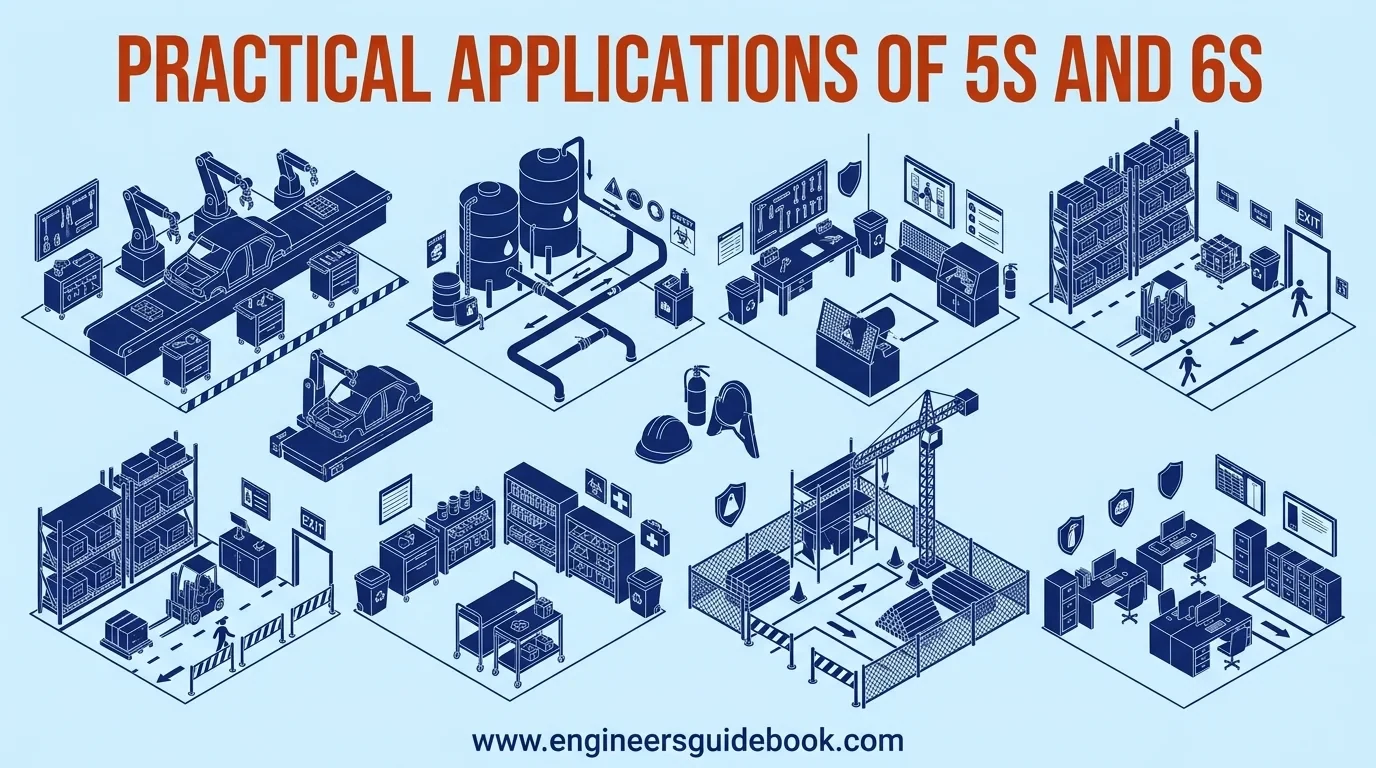
8.1 Automotive Manufacturing
Automotive manufacturers implement 5S to organize assembly stations, component inventories, and production tooling. The 6S methodology further addresses robotic equipment hazards, moving machinery, ergonomic challenges, and employee exposure to hazardous substances.
8.2 Chemical and Process Industries
Chemical processing facilities benefit from systematic equipment organization, pipeline identification, and material segregation. Integrating safety through 6S strengthens chemical handling procedures, spill prevention, emergency preparedness, and hazardous material storage practices.
8.3 Industrial Maintenance Workshops
Maintenance workshops utilize 5S to organize spare parts, hand tools, lubricants, and diagnostic instruments. The 6S approach additionally emphasizes electrical isolation, lifting equipment inspections, machine guarding, and safe maintenance procedures.
8.4 Warehouses and Distribution Centers
Warehouse operations benefit from designated storage locations, standardized inventory labeling, and efficient material movement. Safety integration addresses forklift traffic, pedestrian segregation, storage rack integrity, and emergency exit accessibility.
8.5 Healthcare and Pharmaceutical Facilities
Healthcare facilities apply 5S to organize medical instruments, pharmaceutical supplies, and treatment areas. The 6S methodology reinforces infection control, hazardous waste segregation, chemical handling, and patient safety practices.
8.6 Construction and Heavy Engineering
Construction environments contain numerous occupational hazards. Implementing 6S supports organized equipment storage, unobstructed access routes, fall protection, lifting safety, and systematic identification of potentially dangerous working conditions.
8.7 Offices and Administrative Workplaces
Office environments can implement 5S through document organization, digital file management, and workstation standardization. Adding safety addresses ergonomic deficiencies, electrical hazards, emergency evacuation routes, and employee well-being.
9. Step-by-Step Guide to Transition From 5S to 6S
9.1 Evaluating Existing 5S Practices
Begin by reviewing existing workplace organization standards, audit scores, employee responsibilities, and documented procedures. Establishing a performance baseline helps identify deficiencies and provides a foundation for subsequent safety improvements.
9.2 Conducting Workplace Safety Assessments
Conduct systematic inspections to identify mechanical, electrical, chemical, ergonomic, and environmental hazards. Involve operational personnel, maintenance teams, and safety professionals to obtain a comprehensive understanding of workplace conditions.
9.3 Identifying Safety Gaps
Compare existing practices against organizational safety requirements and applicable regulations. Document deficiencies such as inadequate machine guarding, obstructed emergency exits, improper chemical storage, and insufficient employee training.
9.4 Establishing Safety Standards and Procedures
Develop documented safety procedures addressing identified workplace hazards. Establish standardized inspection requirements, equipment operating instructions, emergency response protocols, and responsibilities for maintaining safe working conditions.
9.5 Training Employees and Assigning Responsibilities
Provide practical training covering hazard recognition, safe working practices, incident reporting, and emergency preparedness. Assign clear responsibilities to departmental personnel, supervisors, and management representatives to strengthen accountability.
9.6 Integrating Safety Into Existing 5S Checklists
Expand existing audit checklists by incorporating safety-related inspection criteria. These may include emergency equipment accessibility, machine guarding, electrical integrity, hazardous material management, and compliance with protective equipment requirements.
9.7 Conducting Regular 6S Audits
Establish an audit schedule appropriate to workplace risk levels. Record observations, calculate performance scores, assign corrective actions, and verify implementation effectiveness through subsequent inspections.
9.8 Sustaining Continuous Improvement
Integrate 6S activities into routine operational management. Regular performance reviews, employee feedback, corrective action verification, and management participation prevent organizational complacency and support long-term improvement.

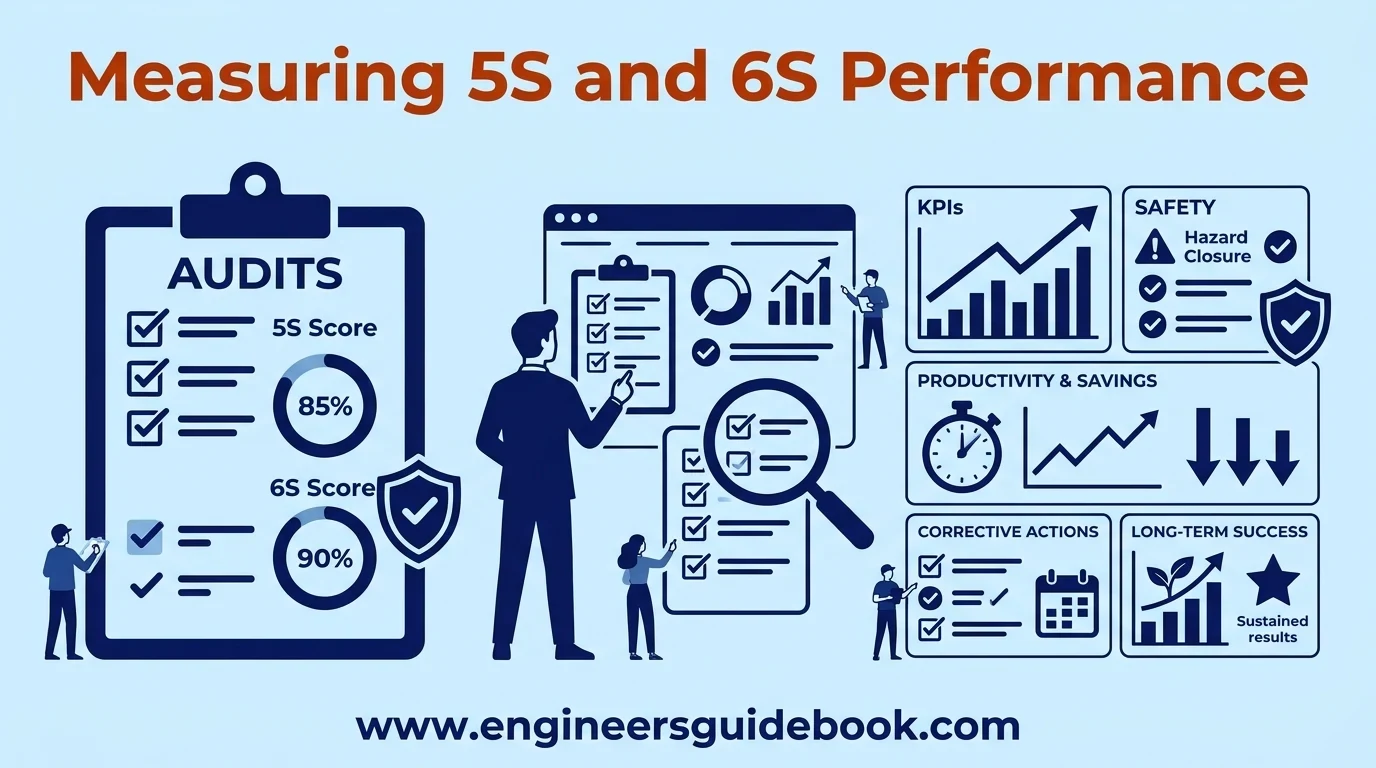
10. Measuring 5S and 6S Performance
10.1 Establishing Key Performance Indicators
Key performance indicators provide quantitative evidence of implementation effectiveness. Common indicators include audit scores, tool retrieval time, workplace organization compliance, hazard closure rates, equipment downtime, and employee participation.
10.2 5S Audit Checklist and Scoring System
A 5S audit checklist evaluates workplace performance across the five organizational pillars. Each criterion can receive a numerical score based on compliance levels.
5S Audit Score (%) = (Total Obtained Score / Maximum Possible Score) × 100
For example, obtaining 85 points out of 100 produces an audit score of 85%.
10.3 6S Audit Checklist and Scoring System
The 6S scoring system incorporates additional safety-related criteria while retaining the original five pillars.
6S Audit Score (%) = (Total Obtained Score / Maximum Possible Score) × 100
If an organization obtains 108 points out of 120, its audit score is 90%. Critical safety violations should require immediate corrective action regardless of the overall score.
10.4 Tracking Workplace Safety Indicators
Safety performance can be evaluated using leading and lagging indicators. Hazard reporting, safety inspection completion, and corrective action closure are leading indicators, while occupational injuries and lost-time incidents are lagging indicators.
10.5 Measuring Productivity and Cost Savings
Compare operational performance before and after implementation. Reduced material retrieval time, lower inventory wastage, improved equipment availability, and fewer operational interruptions can demonstrate the economic benefits of workplace organization.
10.6 Monitoring Corrective Actions
Every identified deficiency should have a designated responsible person, completion deadline, and verification procedure. Monitoring overdue corrective actions helps prevent recurring nonconformities and strengthens organizational accountability.
10.7 Evaluating Long-Term Implementation Success
Long-term success depends on sustained performance rather than isolated audit achievements. Consistent compliance, declining recurrent deficiencies, effective hazard controls, and employee participation demonstrate methodological maturity.
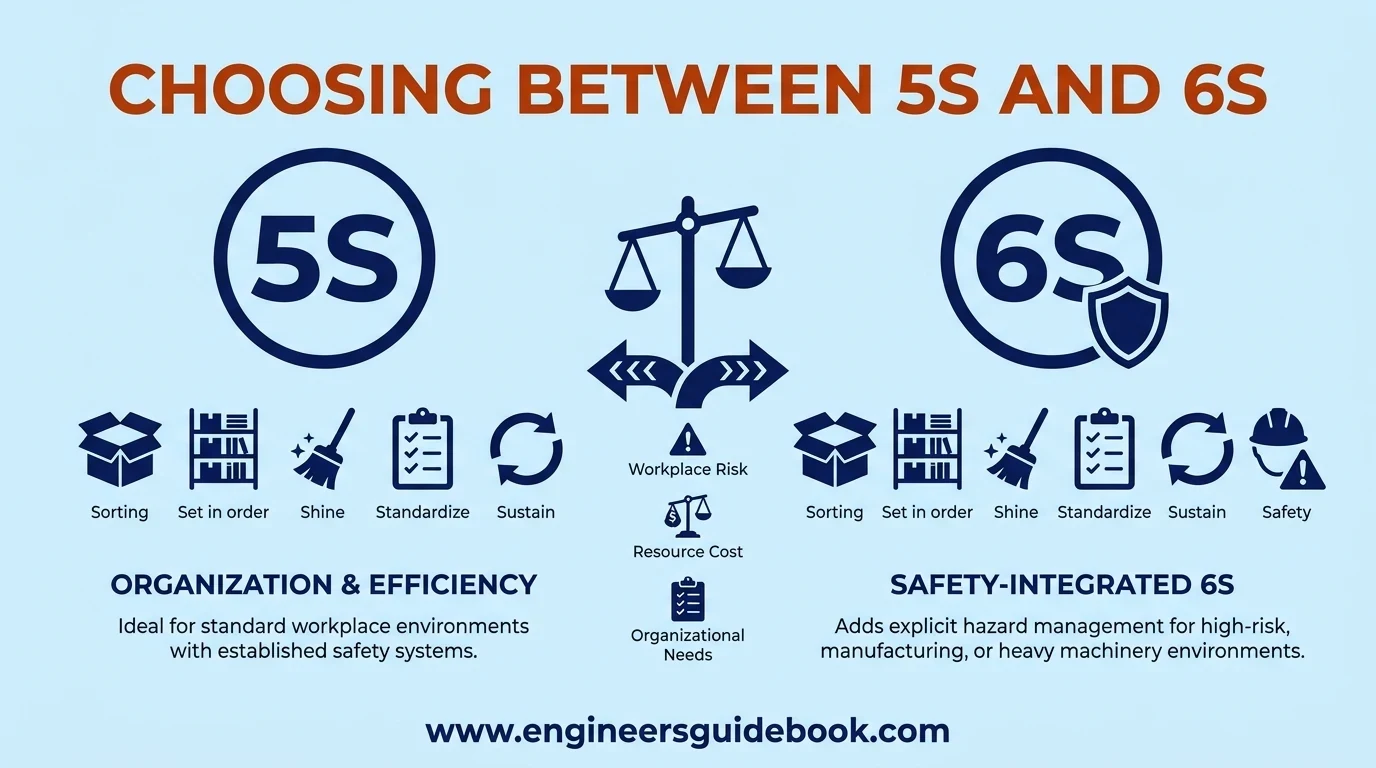
11. Choosing Between 5S and 6S
11.1 Assessing Organizational Requirements
Organizations should evaluate their operational objectives, workforce structure, equipment complexity, and existing management systems. These considerations help determine which workplace organization framework offers the most appropriate implementation structure.
11.2 Evaluating Workplace Risk Levels
Facilities containing heavy machinery, hazardous chemicals, electrical installations, or complex production processes can benefit significantly from explicit safety integration. Risk assessment should guide the extent of necessary control measures.
11.3 Comparing Implementation Costs
Implementing 5S may involve comparatively modest expenditure on storage equipment, labeling, and training. The 6S methodology may require additional investments in engineering controls, safety infrastructure, protective equipment, and specialized training.
11.4 Considering Occupational Safety Requirements
Organizations must comply with applicable occupational health and safety requirements regardless of their chosen methodology. Implementing 6S complements regulatory compliance but does not replace a comprehensive safety management system.
11.5 When to Implement 5S
The 5S methodology is suitable for organizations primarily seeking structured workplace organization, improved housekeeping, waste elimination, and operational standardization, particularly where effective safety management systems already exist.
11.6 When to Implement 6S
The 6S methodology is particularly valuable in manufacturing facilities, construction environments, chemical plants, warehouses, and maintenance workshops where integrating hazard management into daily workplace organization provides substantial operational benefits.
11.7 Selecting the Right Workplace Organization Strategy
The selection should reflect organizational maturity, operational risks, resource availability, and improvement objectives. Neither methodology eliminates the necessity for independent safety assessments and appropriate occupational risk controls.
12. Frequently Asked Questions (FAQ)
12.1 What Is the Main Difference Between 5S and 6S?
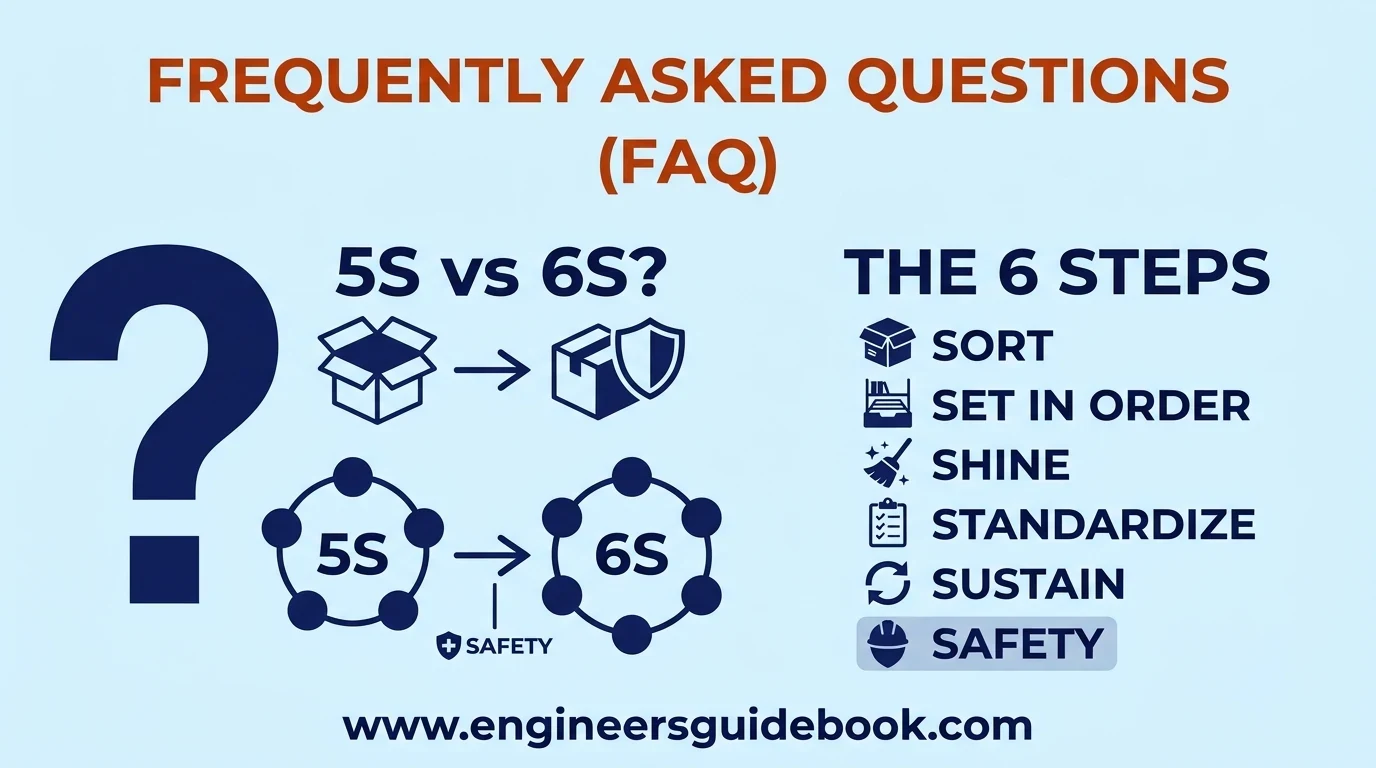
The primary difference is the explicit inclusion of Safety as the sixth pillar. The 6S methodology combines traditional workplace organization principles with systematic hazard identification, risk reduction, and accident prevention.
12.2 What Are the Six Steps of 6S?
The six steps are Sort, Set in Order, Shine, Standardize, Sustain, and Safety. Safety should remain integral throughout the implementation process rather than being addressed exclusively at the final stage.
12.3 Why Is Safety Added to the 5S Methodology?
Safety is added to ensure that workplace organization improvements explicitly address occupational hazards. This integration encourages proactive risk management and reinforces the importance of protecting employees alongside improving productivity.
12.4 Is 6S Better Than 5S?
The 6S methodology offers a more explicit safety-oriented framework. However, its suitability depends on organizational requirements, workplace hazards, and existing safety management practices. Effective implementation matters more than terminology.
12.5 Does 5S Include Workplace Safety?
Yes. Traditional 5S indirectly and directly contributes to workplace safety through organized storage, improved housekeeping, unobstructed passageways, and standardized procedures. However, safety is not identified as a separate pillar.
12.6 Can a Company Implement 6S Without Implementing 5S First?
Yes. Organizations can implement all six pillars simultaneously without previously establishing a separate 5S program. This approach allows workplace organization and safety practices to develop concurrently.
12.7 What Is the Difference Between 6S and Six Sigma?
The 6S methodology focuses on workplace organization and safety. Six Sigma is a statistical process improvement methodology that concentrates on reducing process variation, defects, and inconsistencies.
12.8 How Do You Calculate a 6S Audit Score?
Divide the total obtained audit score by the maximum possible score and multiply the result by 100. For example, 90 points out of 120 represents a 75% compliance score.
12.9 Is 6S Part of Lean Manufacturing?
Yes. The 6S methodology is commonly employed within lean manufacturing programs to support waste reduction, workplace standardization, operational efficiency, and proactive safety management.
12.10 Can 6S Be Implemented in Non-Manufacturing Workplaces?
Yes. Healthcare facilities, educational institutions, laboratories, administrative offices, retail establishments, and service organizations can implement 6S by adapting organizational and safety criteria to their operational requirements.
13. Conclusion
13.1 Summary of 5S vs 6S
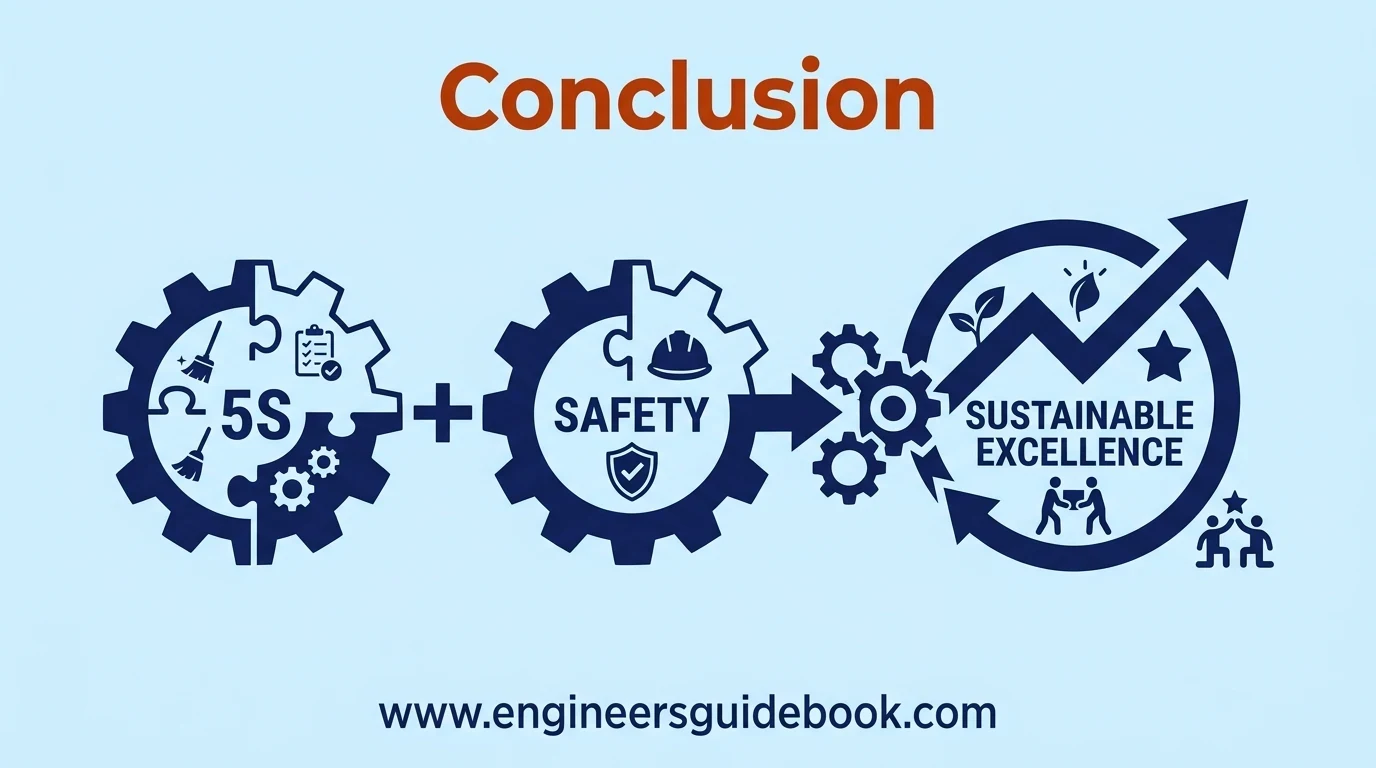
Both 5S and 6S provide structured frameworks for workplace organization and continuous improvement. Their fundamental distinction lies in the explicit integration of Safety within the 6S methodology.
13.2 Importance of Integrating Safety With Workplace Organization
Workplace organization and occupational safety are mutually reinforcing disciplines. Combining them enables organizations to improve operational efficiency while systematically identifying hazards and protecting employees from preventable incidents.
13.3 Building a Sustainable Culture of Operational Excellence
Sustainable operational excellence requires management commitment, employee participation, standardized procedures, regular audits, and continuous improvement. Whether implementing 5S or 6S, organizations must prioritize lasting behavioral transformation over superficial workplace improvements.