1. Introduction to Bearing Lubrication
Bearing Lubrication is one of the most critical aspects of machinery maintenance and reliability. Bearings operate under varying loads, speeds, and environmental conditions, and without proper lubrication, they can fail prematurely.
In simple terms, Bearing Lubrication reduces friction between moving parts, minimizes wear, dissipates heat, and protects against corrosion. Whether in industrial machines, automotive systems, or household equipment, proper lubrication ensures smooth and efficient operation.
2. What is Bearing Lubrication?
Bearing Lubrication is the process of applying oil, grease, or solid lubricants to a bearing to reduce friction, prevent wear, and improve operational efficiency. It also helps in heat dissipation and protection against contamination and corrosion.
3. Importance of Bearing Lubrication
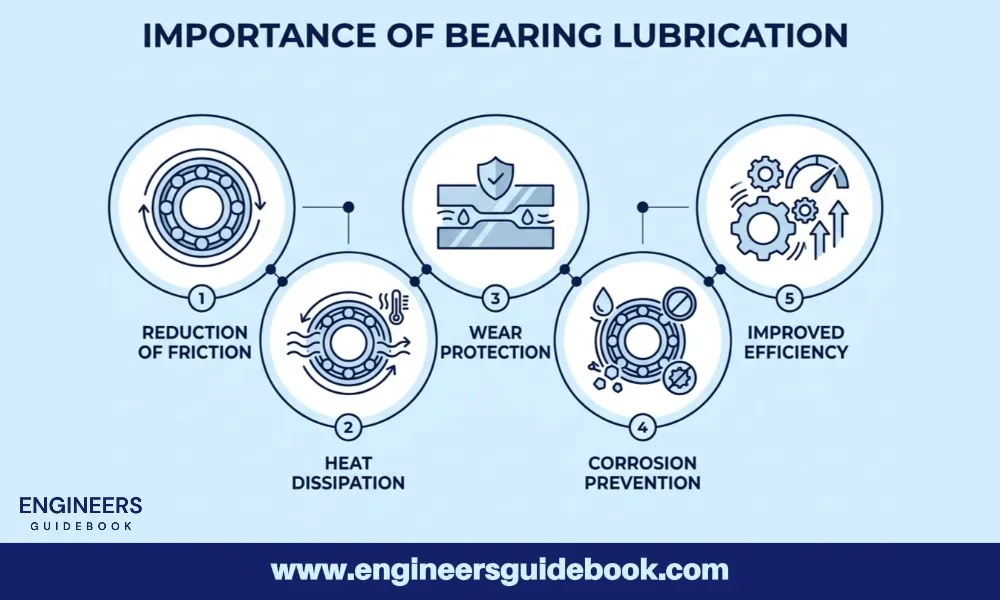
3.1 Reduction of Friction
One of the primary benefits of Bearing Lubrication is the reduction of friction between rolling elements and raceways. When proper Bearing Lubrication is applied, a thin film forms between contact surfaces, allowing smoother motion. This not only reduces energy losses but also improves the overall efficiency of the machine.
3.2 Heat Dissipation
During operation, bearings generate heat due to friction and load. Effective Bearing Lubrication helps absorb this heat and carry it away from the contact surfaces. This prevents overheating, which can otherwise lead to lubricant breakdown and premature bearing failure.
3.3 Wear Protection
Proper Bearing Lubrication creates a protective film that separates metal surfaces. This prevents direct metal-to-metal contact, which is a major cause of wear. By minimizing wear, Bearing Lubrication significantly increases the service life of the bearing.
3.4 Corrosion Prevention
Another key advantage of Bearing Lubrication is protection against corrosion. Lubricants form a barrier that prevents moisture, dust, and other contaminants from reaching the bearing surfaces. This is especially important in harsh industrial environments.
3.5 Improved Efficiency
Optimized Bearing Lubrication ensures smooth operation of machinery. With reduced friction and wear, machines consume less energy and operate more reliably, resulting in improved productivity and lower maintenance costs.
4. Types of Bearing Lubrication
4.1 Grease Lubrication
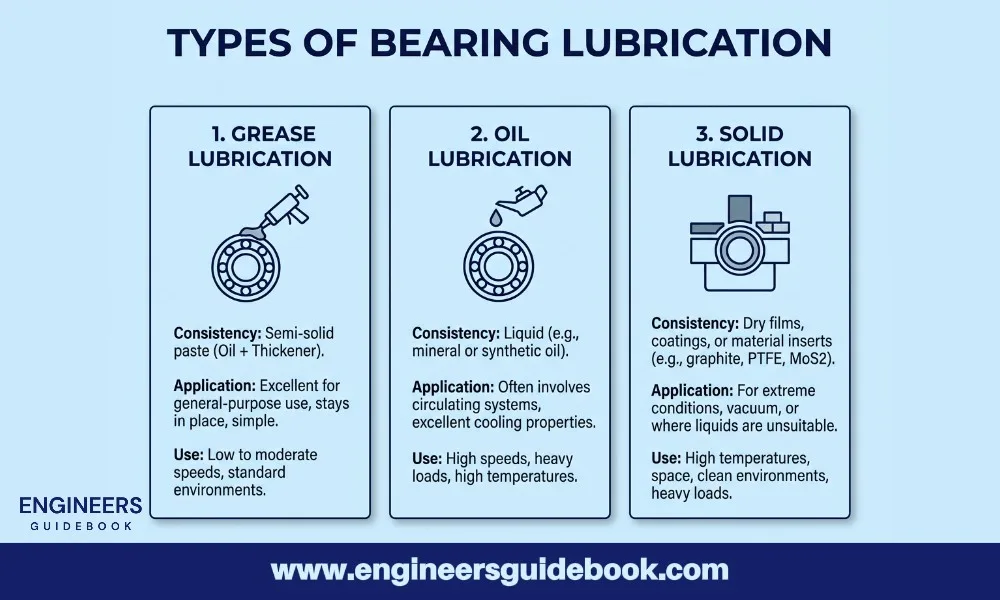
Grease is one of the most commonly used methods of Bearing Lubrication. It is a semi-solid lubricant made by combining base oil with a thickening agent.
- Easy to apply and requires less frequent maintenance
- Provides excellent sealing against dust and contaminants
- Suitable for low to medium-speed applications
Grease-based Bearing Lubrication is widely used in applications where simplicity and reliability are required.
4.2 Oil Lubrication
Oil-based Bearing Lubrication is ideal for high-speed and high-temperature applications where efficient cooling is necessary.
- Offers superior heat dissipation compared to grease
- Suitable for continuous and high-speed operations
- Requires regular monitoring and proper circulation systems
This type of Bearing Lubrication is commonly used in turbines, compressors, and heavy industrial machinery.
4.3 Solid Lubrication
In extreme conditions where liquid lubricants fail, solid Bearing Lubrication is used. Materials such as graphite and molybdenum disulfide provide lubrication without melting.
- Performs effectively at very high temperatures
- Ideal for vacuum or high-load environments
- Used where oil or grease cannot be applied
5. Properties of Lubricants
5.1 Viscosity
Viscosity is a critical parameter in Bearing Lubrication as it defines the lubricant’s resistance to flow. Selecting the correct viscosity ensures that a proper lubricating film is maintained under operating conditions.
VI = (L – U) / (L – H) × 100
Where:
- L = viscosity of low VI oil
- U = viscosity of test oil
- H = viscosity of high VI oil
Proper viscosity selection is essential for effective Bearing Lubrication performance.
5.2 Thermal Stability
Thermal stability refers to the ability of a lubricant to maintain its properties at high temperatures. In Bearing Lubrication, this ensures that the lubricant does not degrade under heat.
5.3 Oxidation Resistance
Lubricants used in Bearing Lubrication must resist oxidation to avoid sludge formation and performance loss over time.
5.4 Load Carrying Capacity
A good lubricant must support applied loads without breaking the lubricating film. This property is essential for heavy-duty Bearing Lubrication applications.
6. Lubrication Regimes
6.1 Boundary Lubrication
Boundary lubrication occurs when the lubricant film is very thin, and some direct surface contact may occur. In this regime, Bearing Lubrication relies on the chemical properties of the lubricant.
6.2 Mixed Lubrication
Mixed lubrication is a transition phase where both the lubricant film and surface contact share the load. Proper Bearing Lubrication helps shift operation toward full film conditions.
6.3 Hydrodynamic Lubrication
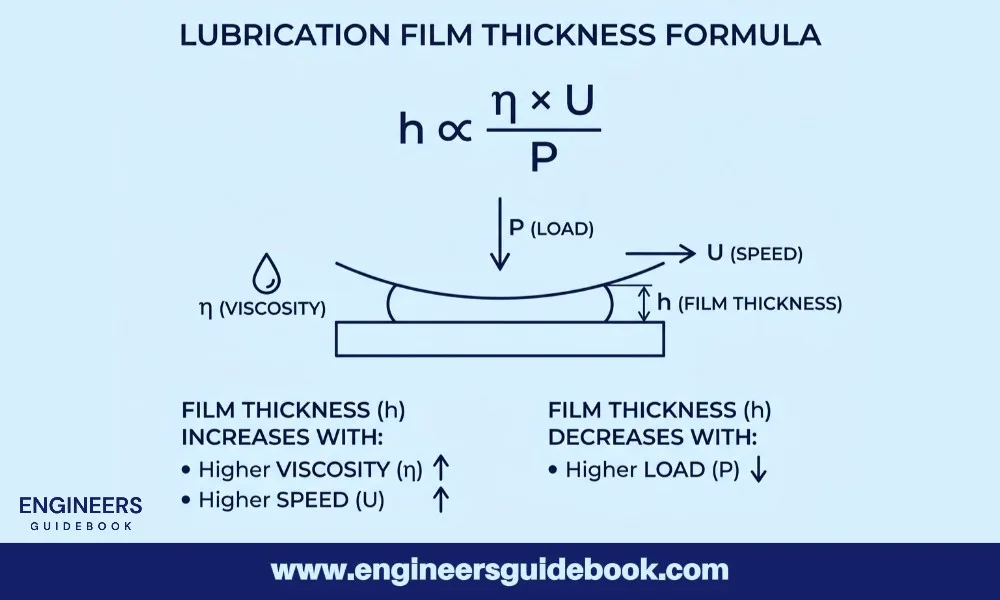
Hydrodynamic lubrication is the most desirable regime in Bearing Lubrication. A complete fluid film separates the surfaces, eliminating direct contact and minimizing wear.
Film Thickness Formula
h ∝ (η × U) / P
Where:
- h = film thickness
- η = viscosity
- U = velocity
- P = load
7. Methods of Bearing Lubrication
7.1 Manual Lubrication
Manual Bearing Lubrication involves applying lubricant at scheduled intervals. While simple, it requires proper planning to avoid over- or under-lubrication.
7.2 Automatic Lubrication Systems
Automatic Bearing Lubrication systems supply lubricant continuously or at set intervals. These systems improve consistency and reduce human error.
7.3 Oil Bath Lubrication
In oil bath Bearing Lubrication, bearings are partially submerged in oil. As the bearing rotates, oil is distributed across all contact surfaces.
7.4 Oil Mist Lubrication
Oil mist Bearing Lubrication delivers a fine mist of oil to the bearing. This method is efficient for high-speed applications and reduces lubricant consumption.
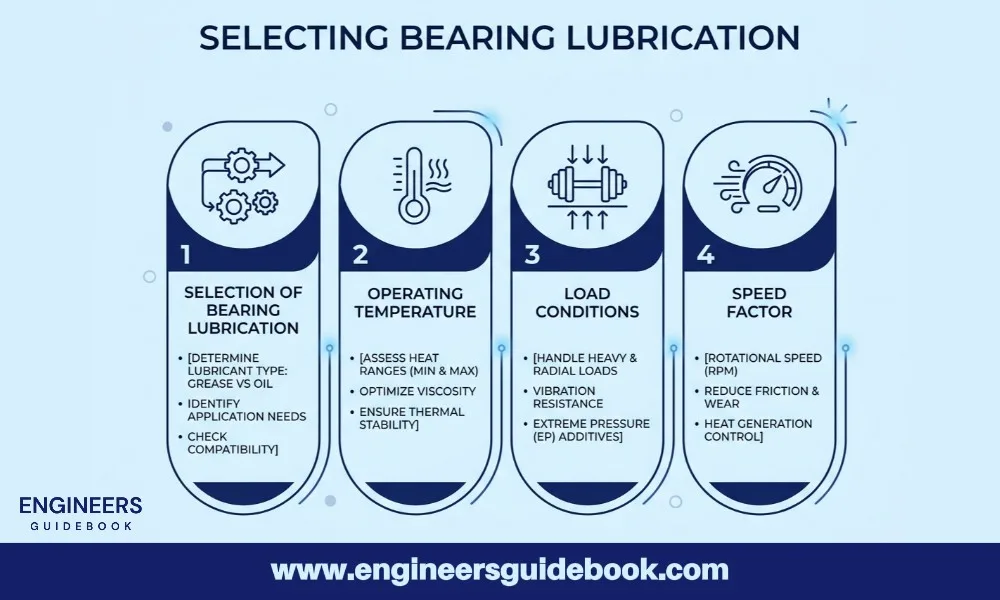
8. Selection of Bearing Lubrication
8.1 Operating Temperature
Temperature is a key factor in selecting Bearing Lubrication. High temperatures require lubricants with strong thermal stability and resistance to degradation.
8.2 Load Conditions
Load directly affects the choice of Bearing Lubrication. Heavy loads require higher viscosity lubricants to maintain a strong protective film.
8.3 Speed Factor
The speed factor is an important parameter in Bearing Lubrication selection, helping determine the appropriate lubricant type and viscosity.
Speed Factor = n × d
Where:
- n = rotational speed (RPM)
- d = bearing bore diameter (mm)
8.4 Environmental Conditions
Environmental factors such as dust, moisture, and chemicals play a major role in Bearing Lubrication selection. Proper sealing and lubricant choice help ensure long-term reliability.
9. Lubrication Interval Calculation
Proper scheduling of Bearing Lubrication is essential to ensure reliable operation and to avoid premature bearing failure. Applying lubricant too frequently can lead to over-lubrication, while long intervals can result in insufficient lubrication. Therefore, calculating the correct relubrication interval is a critical part of maintenance planning.
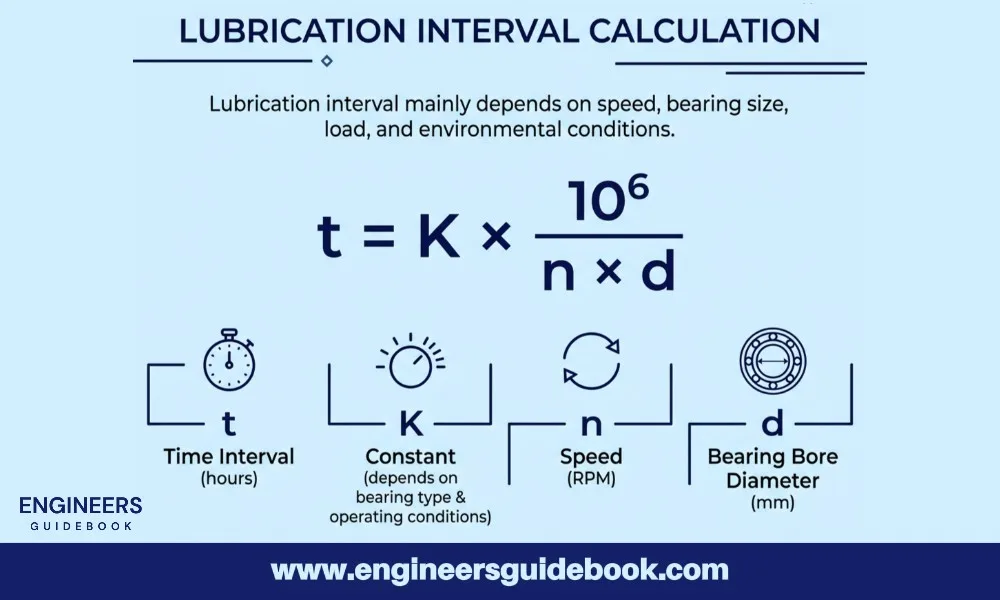
The lubrication interval mainly depends on operating speed, bearing size, load, and environmental conditions.
t = K × (10^6 / (n × d))
Where:
- t = time interval (hours)
- K = constant (depends on bearing type and operating conditions)
- n = speed (RPM)
- d = bearing bore diameter (mm)
This formula shows that as speed (n) and bearing size (d) increase, the lubrication interval decreases. In practical Bearing Lubrication planning, engineers also consider factors like temperature, contamination, and vibration before finalizing the interval.
10. Common Lubrication Failures
Understanding common failures in Bearing Lubrication helps in preventing costly breakdowns and improving equipment reliability.
10.1 Over-Lubrication
Over-lubrication occurs when excess grease or oil is applied. This can cause increased internal resistance, leading to heat buildup. In grease-lubricated bearings, excess lubricant can also damage seals and cause leakage. Proper Bearing Lubrication requires applying the right quantity—not just frequent application.
10.2 Under-Lubrication
Under-lubrication happens when there is not enough lubricant to form a proper film between surfaces. This leads to direct metal-to-metal contact, increasing friction, wear, and eventually causing bearing failure. Consistent Bearing Lubrication schedules help prevent this issue.
10.3 Contamination
Contamination is one of the leading causes of lubrication failure. Dust, dirt, and water entering the bearing can degrade lubricant quality and damage surfaces. Even small particles can disrupt the lubrication film, making Bearing Lubrication ineffective.
10.4 Incorrect Lubricant Selection
Using the wrong type or grade of lubricant can significantly impact bearing performance. For example, low-viscosity oil in high-load conditions may fail to maintain a protective film. Proper Bearing Lubrication always involves selecting lubricant based on speed, load, and environment.
11. Signs of Poor Bearing Lubrication
Identifying early warning signs of poor Bearing Lubrication can help prevent major failures and reduce downtime.
11.1 Increased Temperature
A sudden rise in bearing temperature often indicates lubrication issues. Poor Bearing Lubrication leads to higher friction, which generates excess heat and can damage both the bearing and lubricant.
11.2 Noise and Vibration
Unusual noise, such as grinding or squealing, is a clear sign of lubrication problems. Increased vibration levels also indicate improper Bearing Lubrication or surface damage.
11.3 Discoloration
Changes in the color of the bearing or lubricant usually indicate overheating or contamination. Darkened grease or oil is a common sign of degraded Bearing Lubrication.
11.4 Premature Failure
If bearings fail earlier than expected, poor Bearing Lubrication is often the root cause. This includes improper application, wrong lubricant, or contamination.
12. Best Practices for Bearing Lubrication
Following best practices ensures effective Bearing Lubrication and maximizes bearing performance and lifespan.
12.1 Use Correct Lubricant Type
Always select the lubricant based on manufacturer recommendations and operating conditions. Correct Bearing Lubrication depends on choosing the right viscosity, type, and additives.
12.2 Maintain Clean Environment
Cleanliness is critical during lubrication. Even small contaminants can reduce the effectiveness of Bearing Lubrication. Always use clean tools and sealed containers.
12.3 Monitor Operating Conditions
Regularly monitor temperature, speed, and load conditions. Changes in these parameters may require adjustments in Bearing Lubrication strategy.
12.4 Follow Proper Lubrication Schedule
Stick to calculated lubrication intervals. Avoid guesswork, as both over- and under-lubrication can negatively affect Bearing Lubrication performance.
12.5 Use Proper Storage
Lubricants should be stored in clean, dry, and sealed containers to prevent contamination. Proper storage helps maintain lubricant quality for effective Bearing Lubrication.
13. Advanced Techniques in Bearing Lubrication
Modern industries are adopting advanced technologies to improve Bearing Lubrication efficiency and reliability.
13.1 Condition-Based Monitoring
Sensors are used to monitor temperature, vibration, and lubricant condition in real time. This approach allows maintenance teams to optimize Bearing Lubrication based on actual operating conditions rather than fixed schedules.
13.2 Smart Lubrication Systems
Smart systems automatically adjust the amount and timing of lubricant supply. These systems improve accuracy and ensure consistent Bearing Lubrication, reducing human error.
13.3 Nano Lubricants
Nano lubricants are an emerging technology that uses nanoparticles to enhance lubrication properties. These advanced lubricants improve wear resistance, reduce friction, and increase the efficiency of Bearing Lubrication in demanding applications.
14. Industrial Applications of Bearing Lubrication
Bearing Lubrication is essential in:
- Manufacturing plants
- Automotive systems
- Power generation equipment
- Paper and pulp industries
- Food processing machinery
Each application requires tailored lubrication strategies to ensure reliability and efficiency.
15. Conclusion
Bearing Lubrication is not just a maintenance task—it is a critical engineering practice that directly impacts equipment performance, efficiency, and lifespan. By understanding lubrication types, selection criteria, and best practices, engineers can significantly reduce downtime and operational costs.
Proper implementation of Bearing Lubrication ensures reliability, enhances productivity, and supports long-term asset management.
16. Frequently Asked Questions (FAQs)
Q1: What is the best type of Bearing Lubrication?
The best type depends on application conditions. Grease is common for low-speed applications, while oil is preferred for high-speed and high-temperature operations.
Q2: How often should bearings be lubricated?
Lubrication intervals depend on speed, load, and environment. Use the relubrication formula or manufacturer guidelines.
Q3: What happens if a bearing is over-lubricated?
Over-lubrication can cause overheating, seal damage, and increased friction.
Q4: How do I choose the right lubricant?
Consider viscosity, temperature, load, speed, and environmental conditions.
Q5: Can lubrication improve bearing life?
Yes, proper Bearing Lubrication significantly increases bearing life by reducing wear and preventing failure.
Q6: What are signs of lubrication failure?
Common signs include noise, vibration, overheating, and discoloration.