Predictive maintenance is a proactive maintenance strategy that uses equipment condition monitoring, sensor data, and analytical techniques to predict potential failures before they occur. Technologies such as vibration analysis, infrared thermography, oil analysis, and artificial intelligence help industries schedule timely maintenance, reduce unexpected breakdowns, minimize operational costs, and improve equipment reliability.
1. Introduction to Predictive Maintenance
1.1 What Is Predictive Maintenance?
Predictive maintenance (PdM) is an equipment maintenance strategy that evaluates machinery conditions to anticipate potential failures. Rather than replacing components at predetermined intervals, it determines maintenance requirements through measurable deterioration patterns and operational data.
This approach enables maintenance teams to intervene before functional failure occurs.
1.2 Objectives of Predictive Maintenance
The primary objective of predictive maintenance is to maximize equipment availability while minimizing unnecessary maintenance interventions. Additional objectives include detecting incipient faults, optimizing maintenance expenditure, improving asset longevity, and preventing catastrophic equipment failures.
These objectives support sustainable and reliable industrial operations.
1.3 Evolution of Industrial Maintenance Strategies
Industrial maintenance initially depended on reactive repairs performed after equipment breakdowns. Preventive maintenance subsequently introduced scheduled inspections and component replacements.
Predictive maintenance represents a more sophisticated approach, incorporating condition monitoring, prognostic algorithms, and data-driven decision-making to anticipate machinery deterioration.
1.4 Importance of Predictive Maintenance in Modern Industries
Modern manufacturing facilities rely on interconnected machinery operating under demanding production conditions. Failure of a critical component can disrupt an entire production line.
Predictive maintenance mitigates this vulnerability by identifying abnormal equipment behavior and facilitating timely maintenance interventions.
2. How Predictive Maintenance Works
2.1 Equipment Condition Monitoring
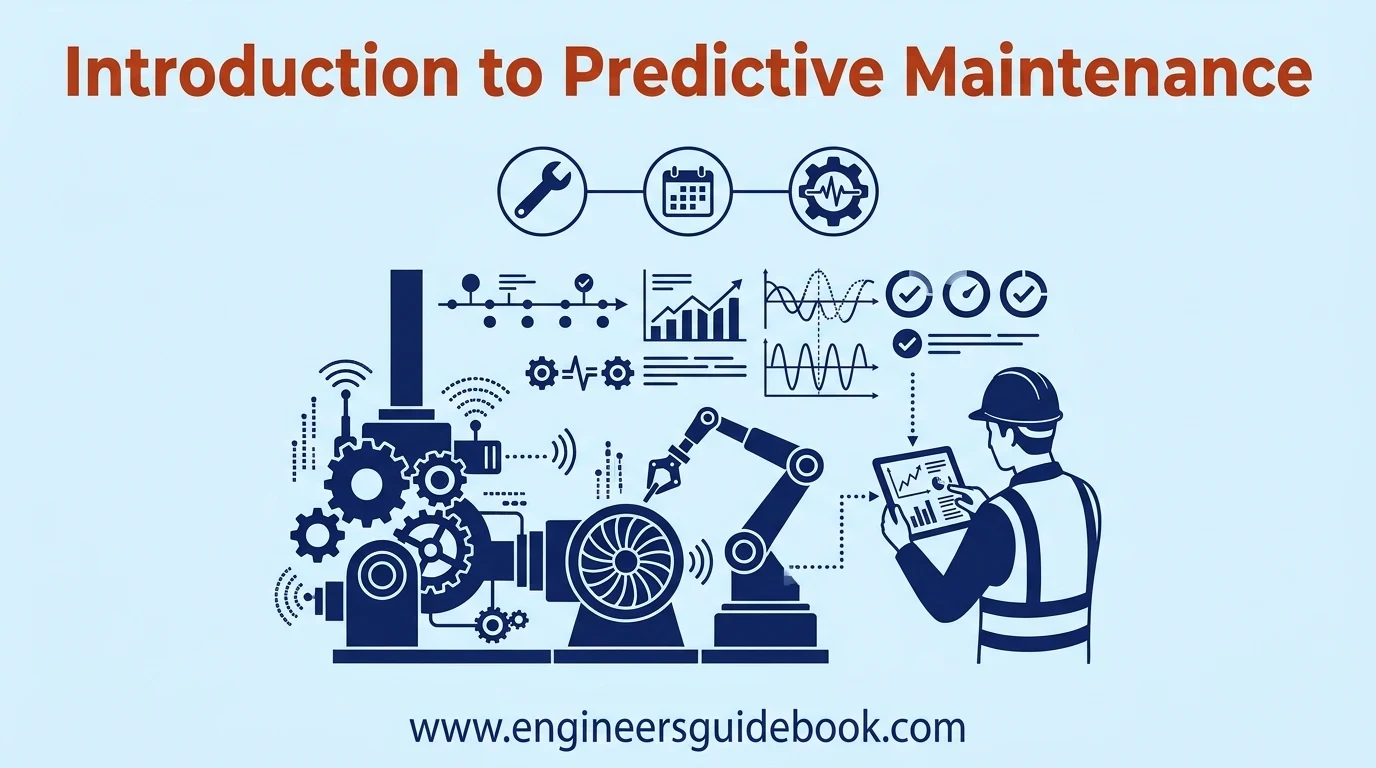
Condition monitoring involves measuring physical and operational characteristics that reflect equipment health. Engineers monitor vibration, temperature, pressure, lubricant condition, electrical current, and other relevant parameters.
Deviations from established baseline conditions may indicate progressive mechanical or electrical deterioration.
2.2 Real-Time Data Collection
Industrial sensors collect operational information continuously or at predefined intervals. Accelerometers, temperature sensors, pressure transmitters, and electrical monitoring devices transmit measurements to centralized monitoring systems.
Continuous data acquisition allows maintenance personnel to identify emerging abnormalities without interrupting production.
2.3 Data Processing and Trend Analysis
Collected data undergoes filtering, normalization, and analytical processing to eliminate irrelevant disturbances. Historical measurements are compared with current operating parameters to identify degradation trends.
Trend analysis helps distinguish persistent equipment deterioration from temporary fluctuations caused by changing operating conditions.
2.4 Early Fault Detection and Failure Prediction
Predictive models identify abnormal signatures associated with potential failure mechanisms. These may include bearing defects, shaft misalignment, insulation degradation, or excessive component wear.
Advanced prognostic systems estimate the remaining useful life (RUL) of components, although prediction accuracy depends on data quality and operating variability.
2.5 Maintenance Decision-Making and Intervention
Once a potential failure is identified, maintenance personnel evaluate its severity, progression rate, and operational consequences.
Engineers schedule appropriate interventions, arrange spare parts, and coordinate production shutdowns before deterioration reaches unacceptable levels.
3. Types of Predictive Maintenance
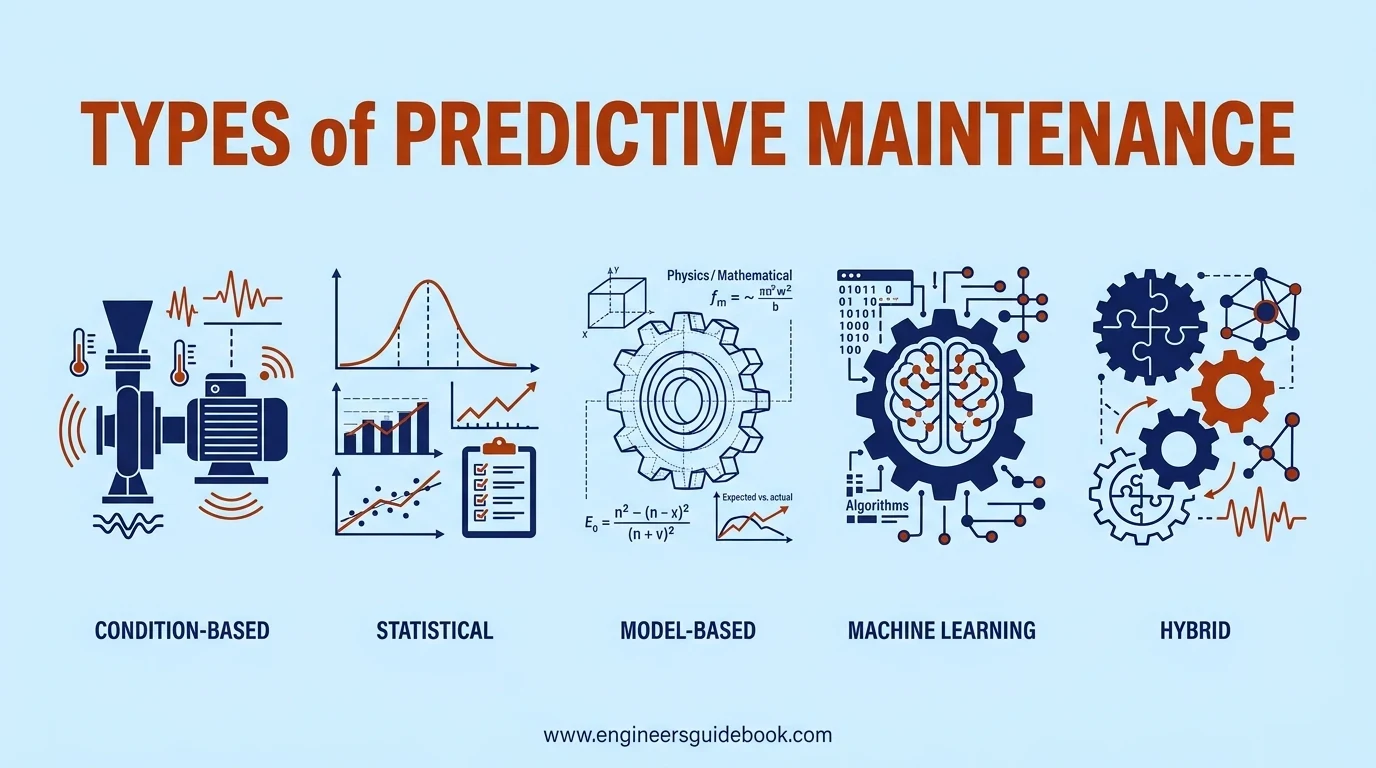
3.1 Condition-Based Predictive Maintenance
Condition-based predictive maintenance evaluates equipment health through measurable physical indicators. Historical trends and degradation rates help anticipate when maintenance becomes necessary.
For example, progressively increasing bearing vibration may indicate an approaching mechanical failure.
3.2 Statistical Predictive Maintenance
Statistical predictive maintenance uses historical failure records, probability distributions, regression analysis, and reliability models to estimate failure likelihood.
Techniques such as Weibull analysis can help engineers understand component failure characteristics and develop more informed maintenance schedules.
3.3 Model-Based Predictive Maintenance
Model-based predictive maintenance employs mathematical or physics-based representations of equipment behavior. Actual operating measurements are compared against expected performance under comparable conditions.
Significant discrepancies may indicate internal wear, reduced efficiency, or developing mechanical defects.
3.4 Machine Learning-Based Predictive Maintenance
Machine learning algorithms analyze extensive operational datasets to recognize complex relationships between equipment parameters and failure events.
Classification, regression, and anomaly detection models can identify deterioration patterns that conventional threshold-based monitoring might overlook.
3.5 Hybrid Predictive Maintenance
Hybrid predictive maintenance combines statistical methods, physical models, condition monitoring, and machine learning algorithms.
This multidisciplinary approach can improve diagnostic robustness by integrating engineering knowledge with empirical evidence, particularly in complex industrial systems.
4. Predictive Maintenance Technologies and Techniques
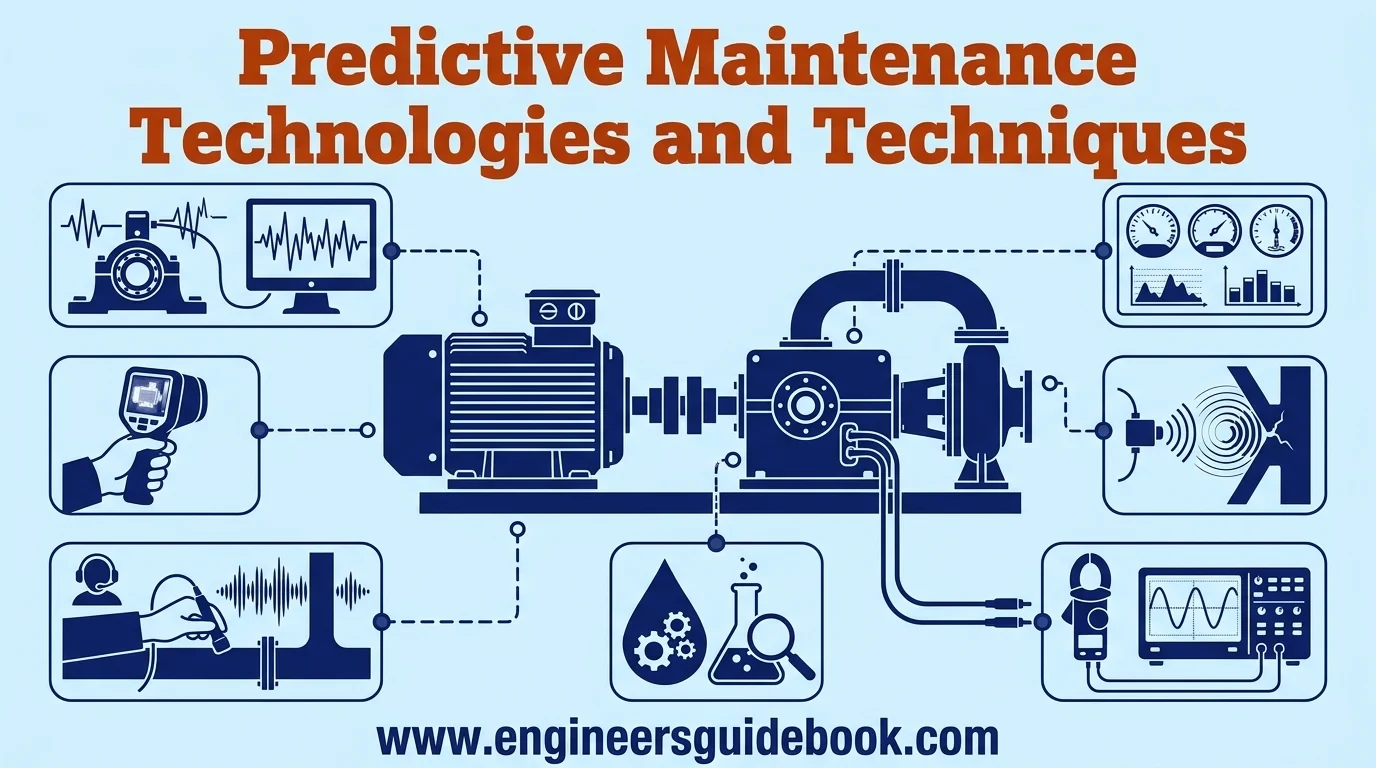
4.1 Vibration Analysis
Vibration analysis detects mechanical abnormalities by evaluating machinery oscillations across different frequencies. It is particularly effective for rotating equipment, including pumps, motors, compressors, and gearboxes.
Characteristic vibration signatures can reveal imbalance, looseness, misalignment, and rolling-element bearing defects.
4.2 Infrared Thermography
Infrared thermography uses thermal imaging cameras to identify abnormal temperature distributions without direct physical contact.
Overheated electrical connections, inadequate lubrication, overloaded components, and insulation defects can produce distinctive thermal anomalies requiring further investigation.
4.3 Ultrasonic Testing
Airborne and structure-borne ultrasound monitoring detects high-frequency acoustic signals generated by friction, electrical discharge, and fluid leakage.
Maintenance technicians commonly employ ultrasound instruments to identify compressed air leaks, inadequate bearing lubrication, and developing electrical faults.
4.4 Lubricant and Oil Analysis
Oil analysis evaluates lubricant viscosity, contamination, oxidation, moisture content, and metallic wear particles.
Abnormal lubricant characteristics provide valuable insights into internal component degradation. Ferrographic analysis can further assist in identifying wear mechanisms within gearboxes and other lubricated machinery.
4.5 Motor Current Signature Analysis
Motor current signature analysis (MCSA) examines electrical current waveforms and frequency components to detect abnormalities within electric motors.
Broken rotor bars, eccentricity, and certain mechanical loading irregularities can produce identifiable electrical signatures during operation.
4.6 Acoustic Emission Monitoring
Acoustic emission monitoring detects transient elastic waves generated by microscopic material deformation, crack propagation, and other physical processes.
This technique is valuable for monitoring structural integrity and investigating developing defects in critical industrial assets.
4.7 Operational Parameter Monitoring
Operational parameter monitoring evaluates measurements such as flow rate, discharge pressure, power consumption, temperature, and rotational speed.
Unexpected changes under comparable operating conditions may indicate equipment deterioration, internal leakage, fouling, or reduced mechanical efficiency.
5. Predictive Maintenance Tools and Systems
5.1 Industrial Sensors and Data Acquisition Systems
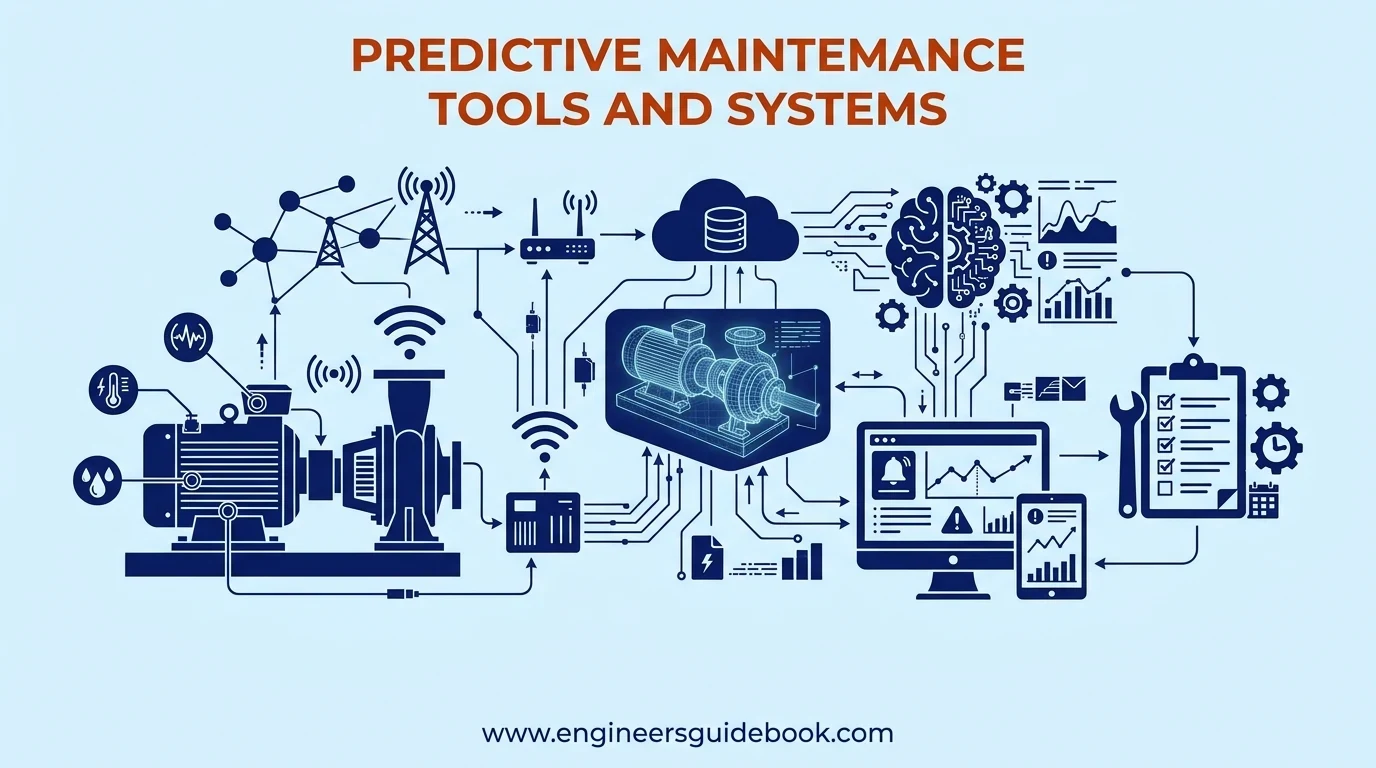
Industrial sensors convert physical equipment characteristics into measurable electrical signals. Data acquisition systems collect, digitize, synchronize, and store these measurements.
Reliable instrumentation and appropriate sampling frequencies are fundamental to accurate predictive maintenance assessments.
5.2 Industrial Internet of Things
The Industrial Internet of Things (IIoT) connects machinery, sensors, controllers, and monitoring platforms through industrial communication networks.
This connectivity facilitates remote condition monitoring, centralized data management, and automated transmission of equipment health information.
5.3 Artificial Intelligence and Machine Learning
Artificial intelligence enhances predictive maintenance by identifying correlations, recognizing anomalies, and estimating equipment degradation trajectories.
Machine learning systems can process multidimensional datasets, although representative training data and periodic model validation remain essential for dependable predictions.
5.4 Predictive Maintenance Software
Predictive maintenance software consolidates operational measurements into equipment health dashboards, diagnostic reports, and automated alerts.
These platforms help maintenance engineers visualize deterioration trends, prioritize equipment inspections, and evaluate potential failure risks.
5.5 Computerized Maintenance Management Systems
A computerized maintenance management system (CMMS) manages maintenance work orders, equipment histories, labor allocation, and spare parts inventories.
Integration with predictive monitoring platforms enables condition-based alerts to initiate maintenance workflows and improve intervention traceability.
5.6 Digital Twins and Cloud Computing
Digital twins are virtual representations of physical assets that incorporate engineering models and operational information.
Combined with cloud computing infrastructure, they can facilitate remote diagnostics, performance simulations, degradation forecasting, and evaluation of alternative maintenance scenarios.
6. Benefits of Predictive Maintenance
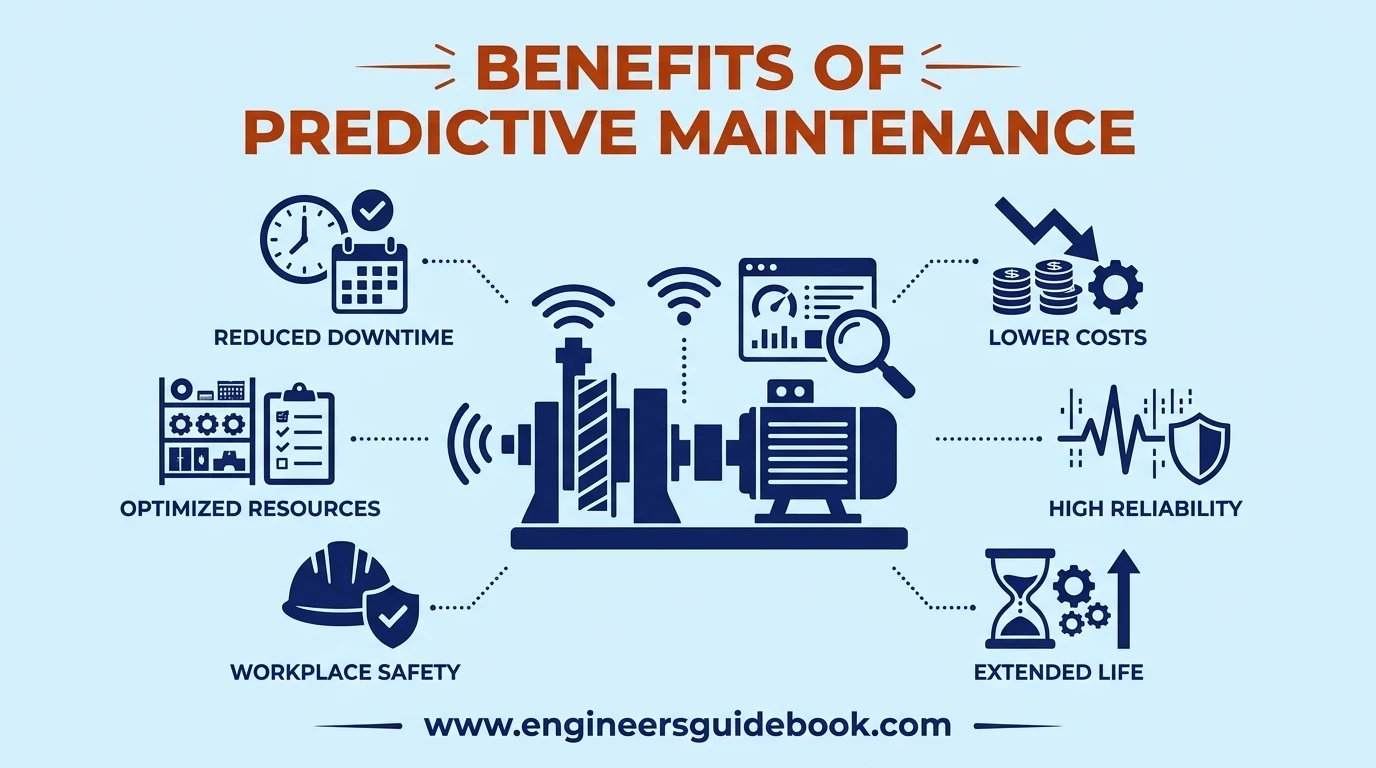
6.1 Reduction in Unplanned Equipment Downtime
Early detection of equipment deterioration allows maintenance activities to be scheduled during suitable production windows. This reduces unexpected interruptions and associated production losses.
Critical machinery becomes more manageable when emerging failures are identified proactively.
6.2 Lower Maintenance and Operational Costs
Predictive maintenance reduces unnecessary component replacements, emergency repair expenditure, and secondary equipment damage.
Although monitoring infrastructure requires investment, well-designed programs can deliver substantial lifecycle cost savings for critical industrial assets.
6.3 Improved Equipment Reliability and Availability
Timely interventions reduce the probability of unexpected functional failures. Consequently, equipment reliability and operational availability can improve.
These improvements may also contribute to higher overall equipment effectiveness (OEE).
6.4 Extended Machinery Service Life
Detecting inadequate lubrication, excessive vibration, overheating, and abnormal loading helps prevent accelerated component degradation.
Addressing these conditions before irreversible damage occurs can extend machinery service life and defer capital replacement expenditure.
6.5 Improved Workplace Safety
Unexpected equipment failures can expose personnel to mechanical, electrical, thermal, and chemical hazards.
Predictive maintenance supports safer operations through early hazard identification, although it does not replace mandatory inspections, protective systems, or established safety procedures.
6.6 Optimized Spare Parts and Resource Utilization
Failure forecasts help maintenance planners anticipate component requirements and allocate technicians more efficiently.
Improved procurement planning reduces emergency purchasing, excessive inventory accumulation, and unnecessary maintenance labor.
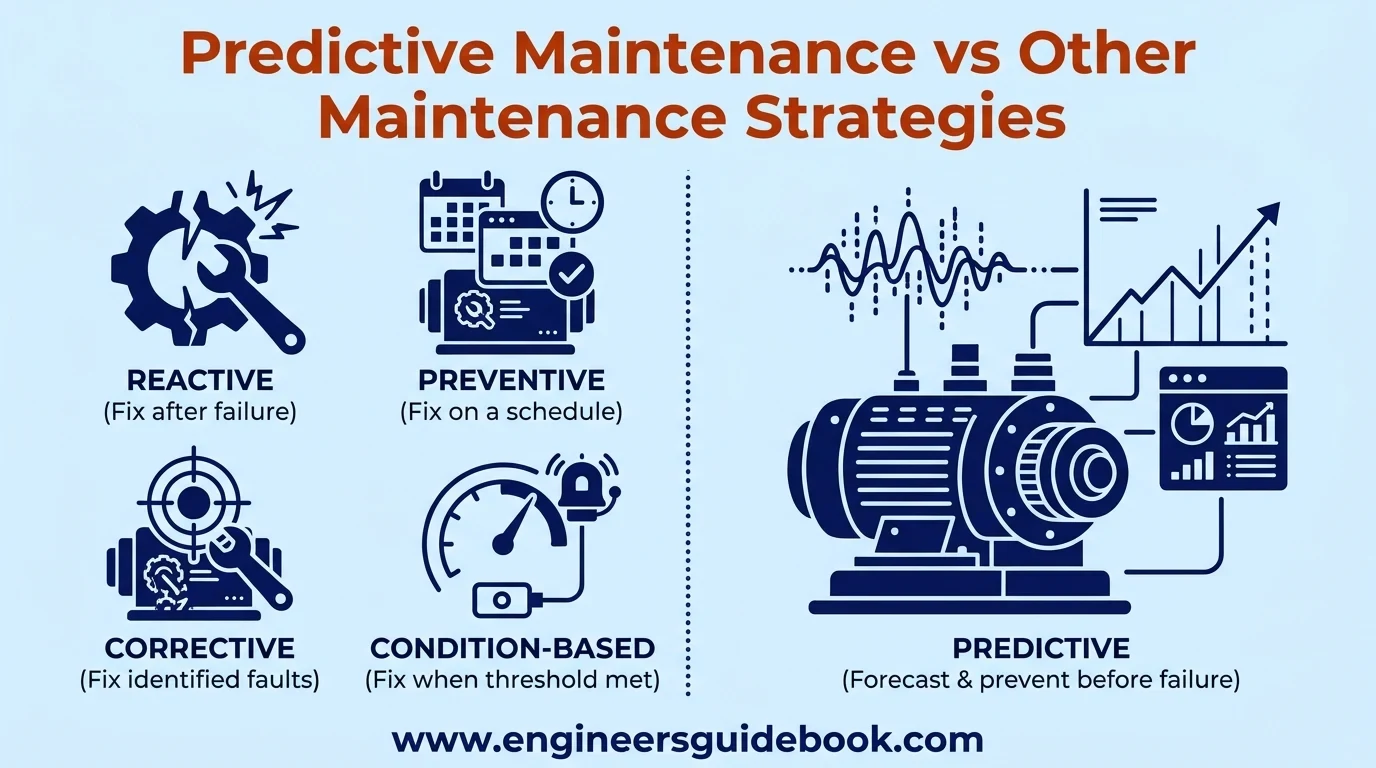
7. Predictive Maintenance vs Other Maintenance Strategies
7.1 Predictive Maintenance vs Preventive Maintenance
Preventive maintenance involves predetermined servicing intervals based on operating hours, calendar periods, or usage cycles.
Predictive maintenance instead uses equipment condition and degradation forecasts to determine intervention timing. It can reduce premature replacements while accommodating actual machinery deterioration.
7.2 Predictive Maintenance vs Corrective Maintenance
Corrective maintenance addresses identified equipment faults to restore acceptable functionality. It may be performed immediately or deferred according to operational requirements.
Predictive maintenance anticipates potential failures, allowing corrective interventions to be planned before functional breakdowns occur.
7.3 Predictive Maintenance vs Reactive Maintenance
Reactive maintenance generally involves repairing equipment after functional failure. Although suitable for certain inexpensive, noncritical assets, it can create considerable operational disruption when applied to critical machinery.
Predictive maintenance reduces this exposure through anticipatory fault identification.
7.4 Predictive Maintenance vs Condition-Based Maintenance
Condition-based maintenance initiates interventions according to observed equipment conditions, often using established alarm thresholds.
Predictive maintenance extends this principle through degradation forecasting and prognostic analysis, helping estimate when equipment conditions may become unacceptable. Both approaches frequently complement each other.
7.5 Selecting the Right Maintenance Strategy
Maintenance strategy selection should consider equipment criticality, failure consequences, monitoring feasibility, replacement costs, and failure predictability.
Predictive maintenance is particularly advantageous for critical machinery with detectable degradation patterns. Combining predictive, preventive, corrective, and reactive strategies according to asset characteristics often produces a more economical and resilient maintenance framework.
8. Step-by-Step Predictive Maintenance Implementation
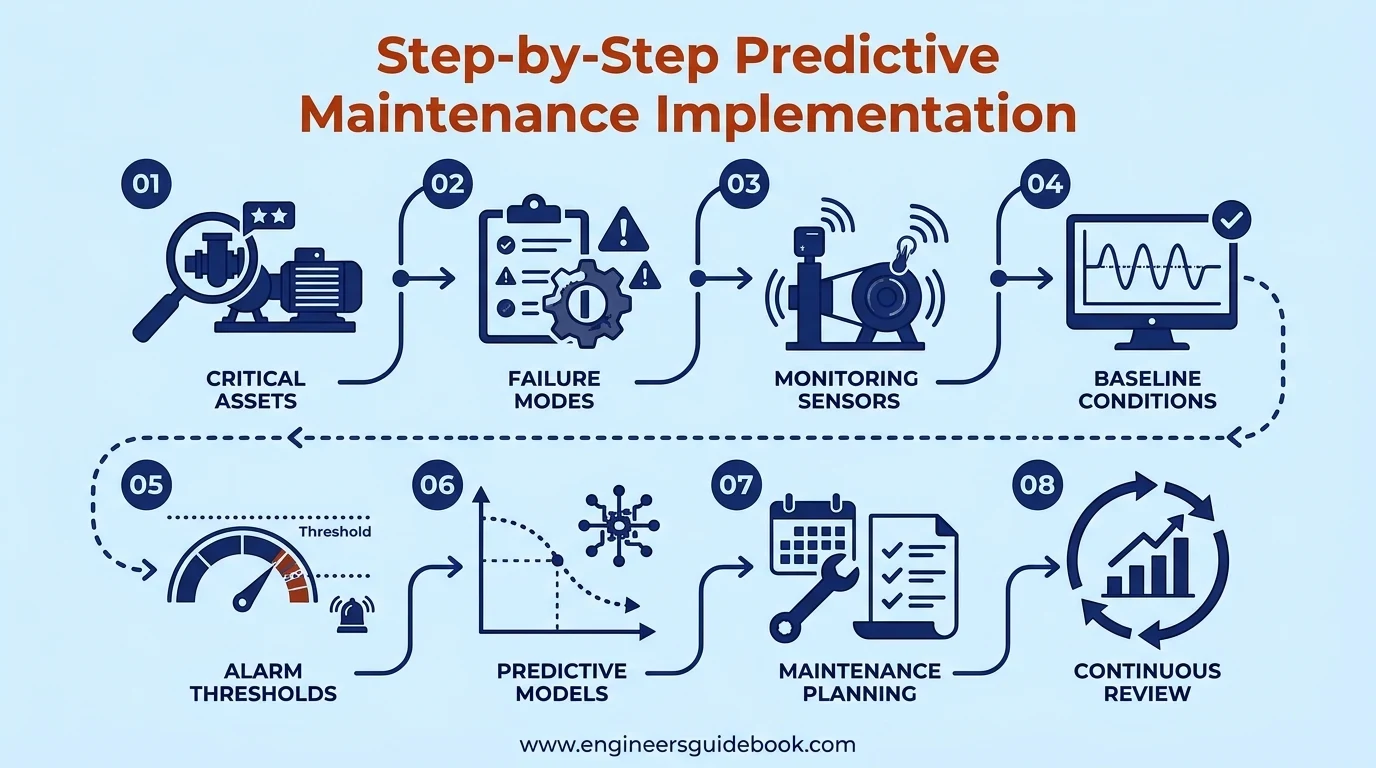
8.1 Identifying Critical Equipment
Predictive maintenance implementation begins with identifying equipment whose failure could significantly affect production, safety, or operational expenditure. Asset criticality assessments help prioritize machinery according to failure consequences, replacement costs, and operational dependency.
Critical pumps, compressors, motors, and production machinery generally receive higher monitoring priority.
8.2 Conducting Failure Mode and Criticality Analysis
Failure Mode, Effects, and Criticality Analysis (FMECA) identifies potential failure mechanisms, their consequences, and relative criticality.
Maintenance engineers evaluate component susceptibility to deterioration and determine which measurable parameters can provide early indications of developing defects.
8.3 Selecting Appropriate Monitoring Technologies
Monitoring technologies should correspond to anticipated failure mechanisms. Vibration analysis is suitable for rotating machinery, whereas infrared thermography is effective for detecting thermal abnormalities.
Selecting appropriate diagnostic techniques improves monitoring accuracy and avoids unnecessary instrumentation expenditure.
8.4 Establishing Equipment Baseline Conditions
Baseline measurements establish reference conditions representing satisfactory equipment operation. Engineers record vibration levels, operating temperatures, electrical consumption, and other relevant parameters under representative operating conditions.
Subsequent measurements are compared against these references to identify abnormal deviations.
8.5 Defining Alarm Thresholds and Failure Indicators
Alarm thresholds establish acceptable operating boundaries for monitored equipment parameters. Warning levels indicate developing abnormalities, while critical thresholds may necessitate immediate investigation or intervention.
Thresholds should consider manufacturer recommendations, equipment history, operating conditions, and applicable engineering standards.
8.6 Developing Predictive Maintenance Models
Predictive models utilize historical measurements, degradation patterns, and failure records to estimate future equipment conditions.
Depending on application complexity, engineers may employ statistical regression, machine learning algorithms, or physics-based prognostic models. Periodic validation improves forecasting accuracy.
8.7 Integrating Maintenance Planning and Scheduling
Predictive maintenance findings must translate into actionable maintenance activities. Integration with maintenance management systems enables engineers to generate work orders, arrange spare parts, and coordinate planned production shutdowns.
Effective scheduling prevents diagnostic information from becoming operationally redundant.
8.8 Continuous Monitoring and Program Improvement
Predictive maintenance requires continuous evaluation rather than one-time implementation. Maintenance teams should review diagnostic accuracy, intervention outcomes, equipment failures, and financial performance.
These findings support iterative improvements in monitoring techniques, alarm thresholds, and predictive algorithms.
9. Real-World Examples of Predictive Maintenance
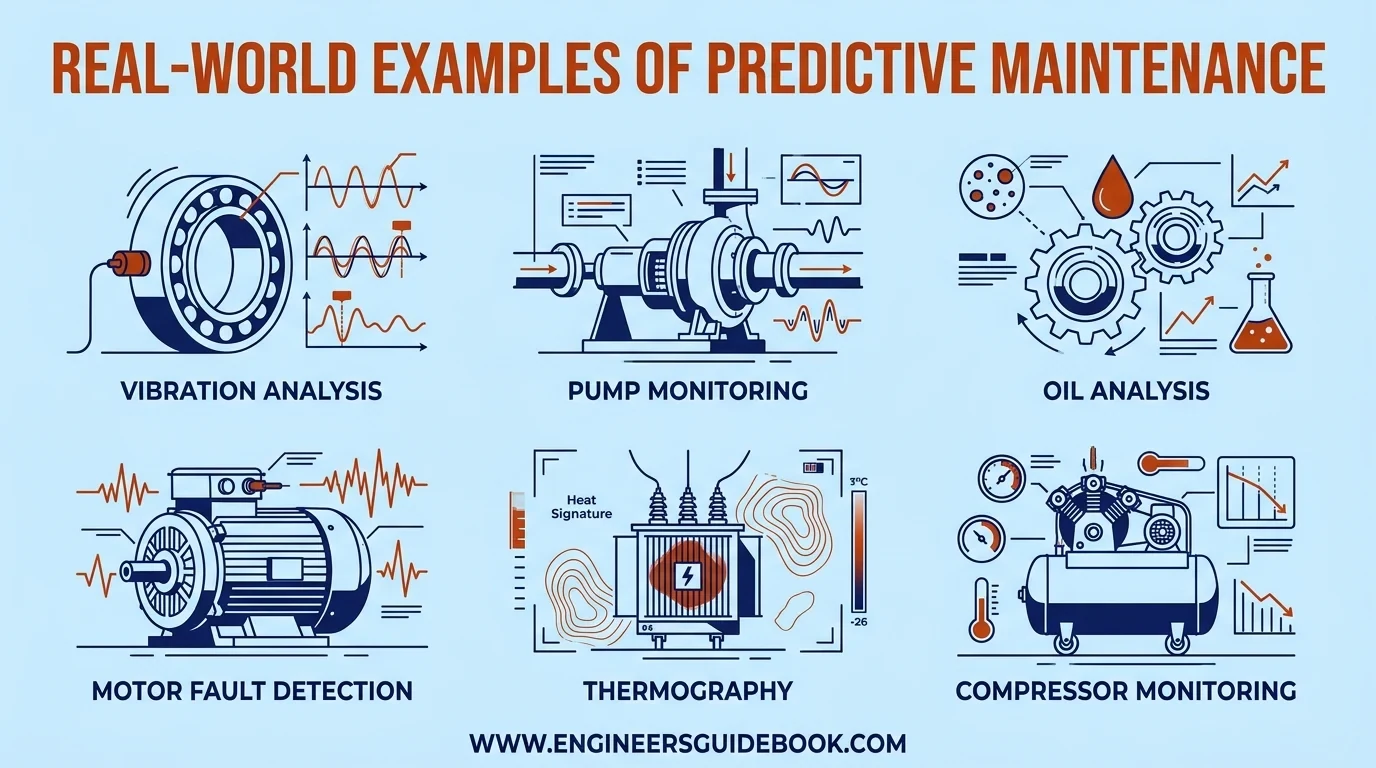
9.1 Bearing Failure Prediction Using Vibration Analysis
Consider an industrial motor exhibiting progressively increasing vibration at characteristic bearing defect frequencies. Vibration spectrum analysis may identify localized deterioration within the bearing raceway.
Maintenance personnel can arrange bearing replacement during a planned shutdown, potentially preventing extensive motor damage and unexpected production interruptions.
9.2 Centrifugal Pump Condition Monitoring
A centrifugal pump experiencing declining discharge pressure, increasing vibration, and abnormal noise may be developing cavitation, impeller deterioration, or internal recirculation.
Correlating hydraulic performance with vibration measurements helps engineers investigate the underlying cause before significant mechanical damage occurs.
9.3 Gearbox Wear Detection Using Oil Analysis
Increasing concentrations of metallic particles in gearbox lubricant may indicate progressive gear tooth or bearing wear.
Laboratory oil analysis, combined with vibration measurements, enables maintenance engineers to investigate internal deterioration and schedule repairs before severe transmission damage develops.
9.4 Electric Motor Fault Detection
Motor current signature analysis can reveal electrical frequency components associated with broken rotor bars and other motor abnormalities.
By monitoring these signatures over time, engineers can identify progressive deterioration and arrange detailed inspections without waiting for complete motor failure.
9.5 Electrical Transformer Monitoring Using Thermography
Infrared thermal imaging can identify abnormal temperature distributions around transformer terminals, electrical connections, and accessible cooling components.
Recurring thermal anomalies under comparable loading conditions may indicate loose connections, excessive electrical resistance, or inadequate cooling performance.
9.6 Industrial Compressor Performance Monitoring
Industrial compressors can be monitored through discharge temperature, vibration, pressure, lubricant condition, and power consumption.
Increasing energy consumption combined with declining compression efficiency may indicate internal leakage, component wear, or deteriorating valve performance requiring investigation.
10. Predictive Maintenance Applications Across Industries
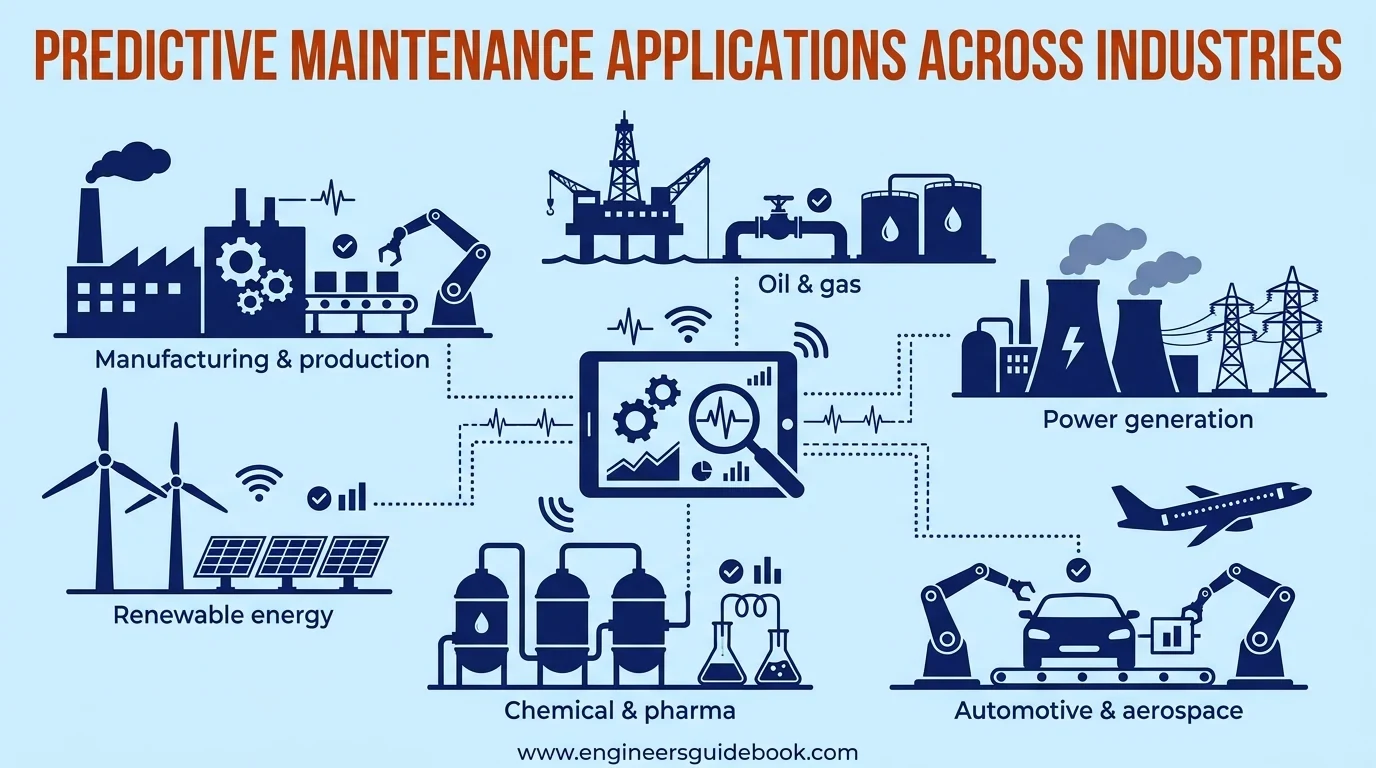
10.1 Manufacturing and Production Plants
Manufacturing facilities employ predictive maintenance to monitor conveyors, packaging machines, hydraulic systems, production motors, and automated machinery.
Early fault identification supports production continuity, improves asset availability, and reduces disruptions across interconnected manufacturing processes.
10.2 Oil and Gas Industry
Oil and gas facilities operate critical equipment under demanding environmental and process conditions. Predictive maintenance supports the monitoring of compressors, process pumps, turbines, and pipeline infrastructure.
Early deterioration detection helps minimize operational disruptions and equipment-related safety risks.
10.3 Power Generation and Distribution
Power plants utilize predictive maintenance to monitor turbines, generators, transformers, bearings, and auxiliary machinery.
Electrical and mechanical condition assessments help identify developing abnormalities that could compromise electricity generation efficiency or distribution reliability.
10.4 Automotive and Aerospace Industries
Automotive manufacturers use predictive maintenance to monitor robotic systems, machining centers, and automated assembly lines.
Aerospace applications incorporate sophisticated equipment health monitoring and prognostic techniques. However, predictive analytics must operate within approved maintenance programs and applicable airworthiness requirements.
10.5 Chemical and Pharmaceutical Industries
Chemical and pharmaceutical facilities depend on reliable mixing vessels, process pumps, compressors, and temperature-controlled equipment.
Predictive maintenance supports process continuity, equipment integrity, and consistent manufacturing conditions while complementing regulatory compliance and mandatory maintenance requirements.
10.6 Renewable Energy Systems
Wind turbines and solar energy installations benefit from continuous equipment condition monitoring. Wind turbine gearboxes, generators, and bearings are particularly suitable for predictive analysis.
Remote monitoring helps maintenance teams coordinate interventions at geographically dispersed installations.
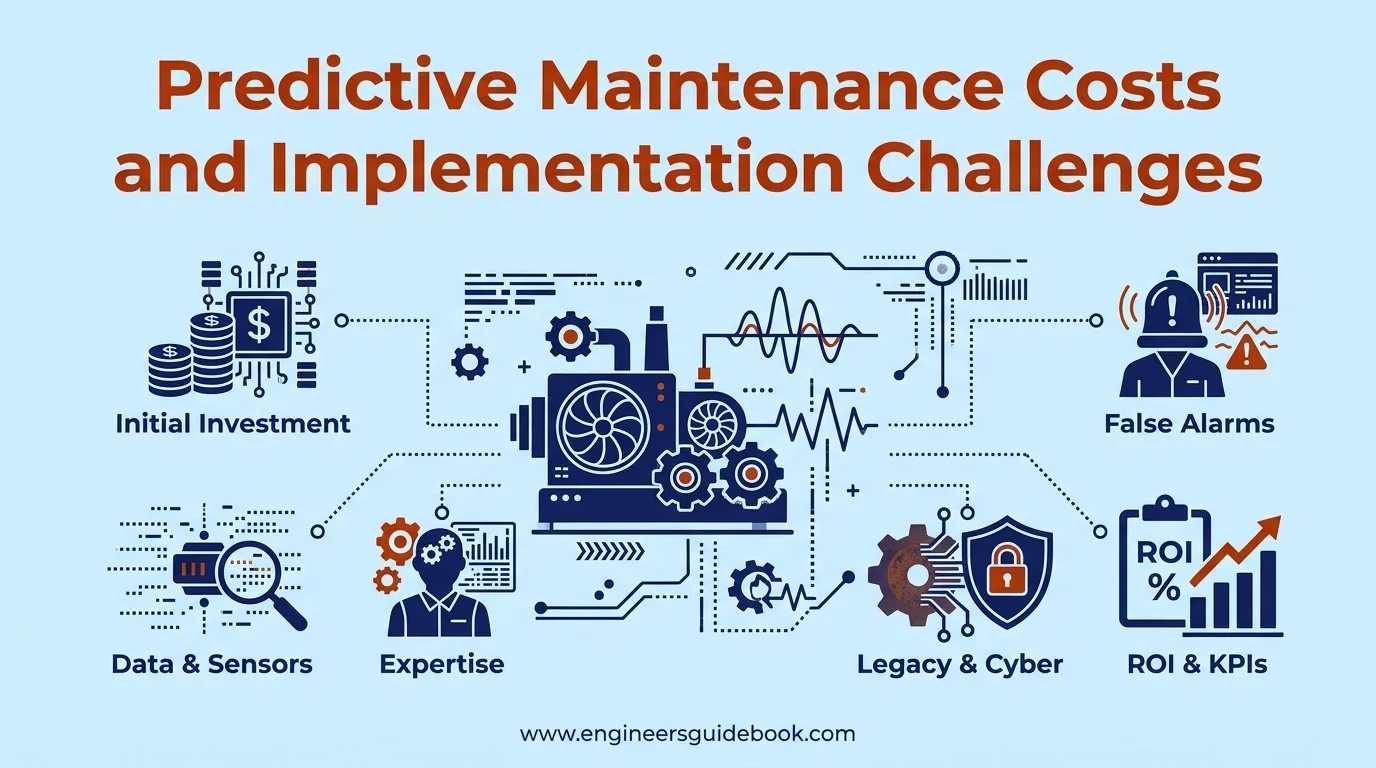
11. Predictive Maintenance Costs and Implementation Challenges
11.1 Initial Investment and Infrastructure Requirements
Predictive maintenance requires expenditure on sensors, diagnostic instruments, communication infrastructure, software, and workforce development.
Organizations can mitigate financial barriers by initially implementing monitoring programs on high-criticality assets before expanding across additional equipment.
11.2 Data Quality and Sensor Accuracy
Inaccurate sensor readings, inadequate sampling frequencies, inconsistent measurements, and incomplete historical records can undermine prediction reliability.
Proper sensor calibration, standardized measurement procedures, and systematic data validation are essential for dependable diagnostic outcomes.
11.3 Technical Expertise and Workforce Training
Predictive maintenance requires competencies in condition monitoring, fault diagnosis, data interpretation, and equipment reliability engineering.
Regular technical training enables maintenance personnel to distinguish meaningful deterioration signatures from extraneous operational disturbances.
11.4 False Alarms and Prediction Uncertainty
Predictive systems may generate false-positive alerts or overlook developing failures. Variable operating conditions and insufficient failure data frequently contribute to diagnostic uncertainty.
Combining multiple monitoring techniques with engineering judgment can improve decision-making reliability.
11.5 Legacy Equipment Integration and Cybersecurity
Older machinery may lack compatible communication interfaces and integrated sensing capabilities. Retrofitting instrumentation can overcome some of these limitations.
Connected monitoring systems also require appropriate network segmentation, access controls, and cybersecurity safeguards to protect industrial infrastructure.
11.6 Predictive Maintenance Performance Indicators
Predictive maintenance effectiveness can be evaluated using measurable key performance indicators, including:
Mean Time Between Failures (MTBF)
Mean Time to Repair (MTTR)
Equipment availability
Unplanned downtime
Prediction accuracy
Maintenance cost per asset
Overall Equipment Effectiveness (OEE)
Performance trends help determine whether monitoring investments deliver tangible operational improvements.
11.7 Return on Investment Calculation
Predictive maintenance ROI compares financial benefits against implementation and operating costs.
ROI (%) = [(Total Financial Benefits − Total Costs) / Total Costs] × 100
For example, if a predictive maintenance program costs $20,000 and generates $50,000 in financial benefits over the same evaluation period, its return on investment is 150%.
12. Frequently Asked Questions About Predictive Maintenance
12.1 What Is Predictive Maintenance in Simple Words?
Predictive maintenance means monitoring equipment to anticipate when it might fail and performing maintenance before a breakdown occurs. It uses machinery condition data to determine appropriate maintenance timing.
12.2 What Is an Example of Predictive Maintenance?
Monitoring motor bearing vibration and predicting deterioration before bearing failure is a common example. Maintenance personnel can replace the defective bearing during a scheduled shutdown.
12.3 What Are the Main Types of Predictive Maintenance?
The main approaches include condition-based predictive maintenance, statistical prediction, physics-based modeling, machine learning-based prediction, and hybrid predictive maintenance. Each employs different analytical methods to anticipate equipment deterioration.
12.4 What Is the Difference Between Preventive and Predictive Maintenance?
Preventive maintenance follows predetermined servicing schedules, whereas predictive maintenance uses equipment condition measurements and degradation forecasts to determine when maintenance is necessary.
12.5 What Sensors Are Used in Predictive Maintenance?
Common predictive maintenance sensors include accelerometers, temperature sensors, pressure transducers, acoustic sensors, electrical current sensors, proximity probes, and lubricant condition sensors.
12.6 How Is AI Used in Predictive Maintenance?
Artificial intelligence analyzes equipment data to identify abnormal behavior, recognize failure patterns, and estimate remaining useful component life. It supports earlier fault detection and more informed maintenance decisions.
12.7 What Are the Disadvantages of Predictive Maintenance?
Major disadvantages include initial implementation costs, technical complexity, data quality requirements, false alarms, cybersecurity concerns, and dependence on specialized personnel.
Certain failure mechanisms may also develop too rapidly for effective prediction.
12.8 How Do You Measure Predictive Maintenance Effectiveness?
Predictive maintenance effectiveness is measured through reductions in unplanned downtime, maintenance expenditure, and equipment failures, alongside improvements in asset availability, prediction accuracy, and return on investment.
12.9 Can Small Manufacturing Companies Implement Predictive Maintenance?
Yes. Small manufacturers can begin with periodic vibration measurements, handheld thermal imaging, lubricant analysis, and systematic equipment condition records.
A phased implementation reduces initial investment while establishing practical condition monitoring capabilities.

13. Conclusion
13.1 Key Takeaways of Predictive Maintenance
Predictive maintenance transforms conventional equipment servicing into a proactive, data-driven reliability strategy. By detecting incipient deterioration and forecasting potential failures, organizations can improve equipment availability, reduce maintenance expenditure, and extend machinery service life.
13.2 Best Practices for Successful Implementation
Successful implementation requires asset prioritization, appropriate monitoring technologies, reliable data acquisition, competent personnel, and effective maintenance planning.
Starting with critical equipment and progressively expanding monitoring capabilities provides a practical foundation for sustainable improvements.
13.3 Future of Predictive Maintenance and Industry 4.0
Predictive maintenance is becoming increasingly integrated with Industry 4.0 technologies, including artificial intelligence, industrial IoT, edge computing, and digital twins.
As these technologies mature, predictive maintenance will support more sophisticated prognostics, automated diagnostics, and intelligent asset management, contributing to resilient, efficient, and increasingly interconnected industrial operations.