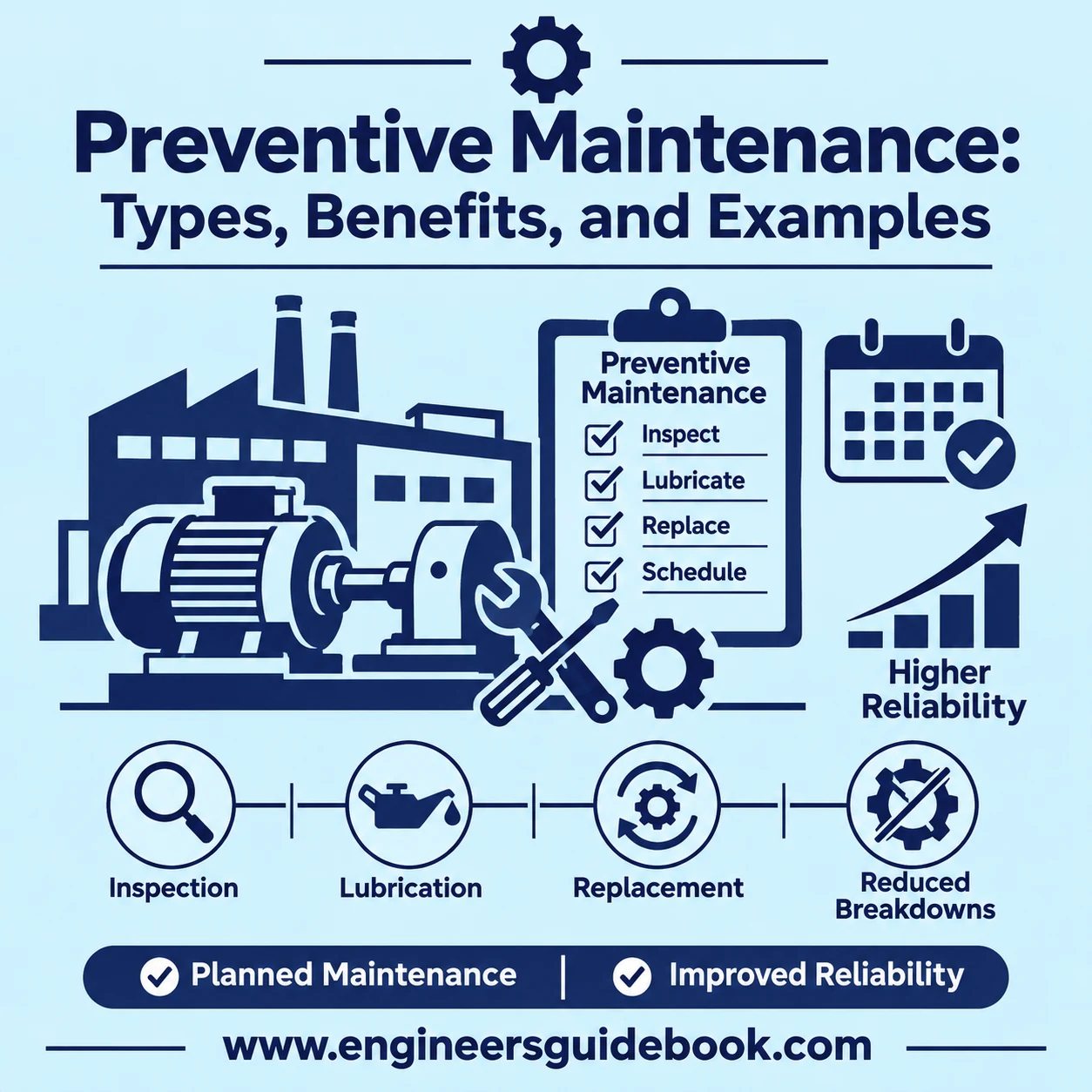
Mean Time to Repair (MTTR) is a maintenance performance metric that measures the average time required to repair failed equipment and restore its functionality. MTTR is calculated by dividing total repair time by the number of completed repairs. A lower MTTR generally indicates improved maintenance efficiency, reduced equipment downtime, and better operational availability.
1. Introduction to MTTR
1.1 What Is MTTR?
MTTR is a key maintenance performance indicator used to evaluate how quickly failed equipment can be repaired. It quantifies the average duration of corrective maintenance activities, helping organizations assess their maintenance capabilities and identify opportunities to minimize equipment downtime.
1.2 Meaning of Mean Time to Repair
Mean Time to Repair represents the average time required to complete repairs on malfunctioning assets. Depending on the measurement methodology, it may encompass fault diagnosis, component replacement, equipment reassembly, functional testing, and restoration to an operational condition.
1.3 Purpose of MTTR in Maintenance Management
The primary purpose of MTTR is to measure maintenance responsiveness and repair efficiency. Maintenance managers use this metric to evaluate workforce productivity, identify procedural bottlenecks, optimize resource allocation, and establish measurable equipment restoration targets.
1.4 Importance of MTTR in Industrial Operations
Equipment failures can interrupt production, increase operational expenditure, and compromise delivery schedules. Monitoring MTTR enables manufacturing facilities to minimize these disruptions, enhance asset availability, and maintain production continuity without unnecessarily increasing maintenance resources.

2. Understanding the Different Types of MTTR
2.1 Mean Time to Repair
Mean Time to Repair measures the average duration of physical equipment repair and associated restoration activities. It is particularly relevant to mechanical, electrical, and instrumentation maintenance teams responsible for restoring malfunctioning industrial assets.
2.2 Mean Time to Recovery
Mean Time to Recovery measures the average duration between a failure and the restoration of normal service. It can include failure detection, maintenance mobilization, repair activities, and system restart, making it broader than active repair time.
2.3 Mean Time to Resolve
Mean Time to Resolve evaluates the average time required to address an incident completely. This can encompass investigation, corrective action, verification, and incident closure. It is commonly used in information technology and service management.
2.4 Mean Time to Respond
Mean Time to Respond measures the average interval between incident notification and the initiation of an appropriate response. It helps organizations evaluate emergency preparedness, maintenance team responsiveness, and communication effectiveness.
2.5 Differences Between MTTR Definitions
Although these metrics share the same abbreviation, their measurement boundaries differ significantly.
MTTR Type Measurement Focus Mean Time to Repair Equipment repair duration Mean Time to Recovery Service restoration duration Mean Time to Resolve Complete incident resolution Mean Time to Respond Initial response duration
Organizations must establish consistent definitions before comparing maintenance performance.

3. MTTR Formula and Key Components
3.1 Standard MTTR Formula
The standard formula for calculating Mean Time to Repair is:
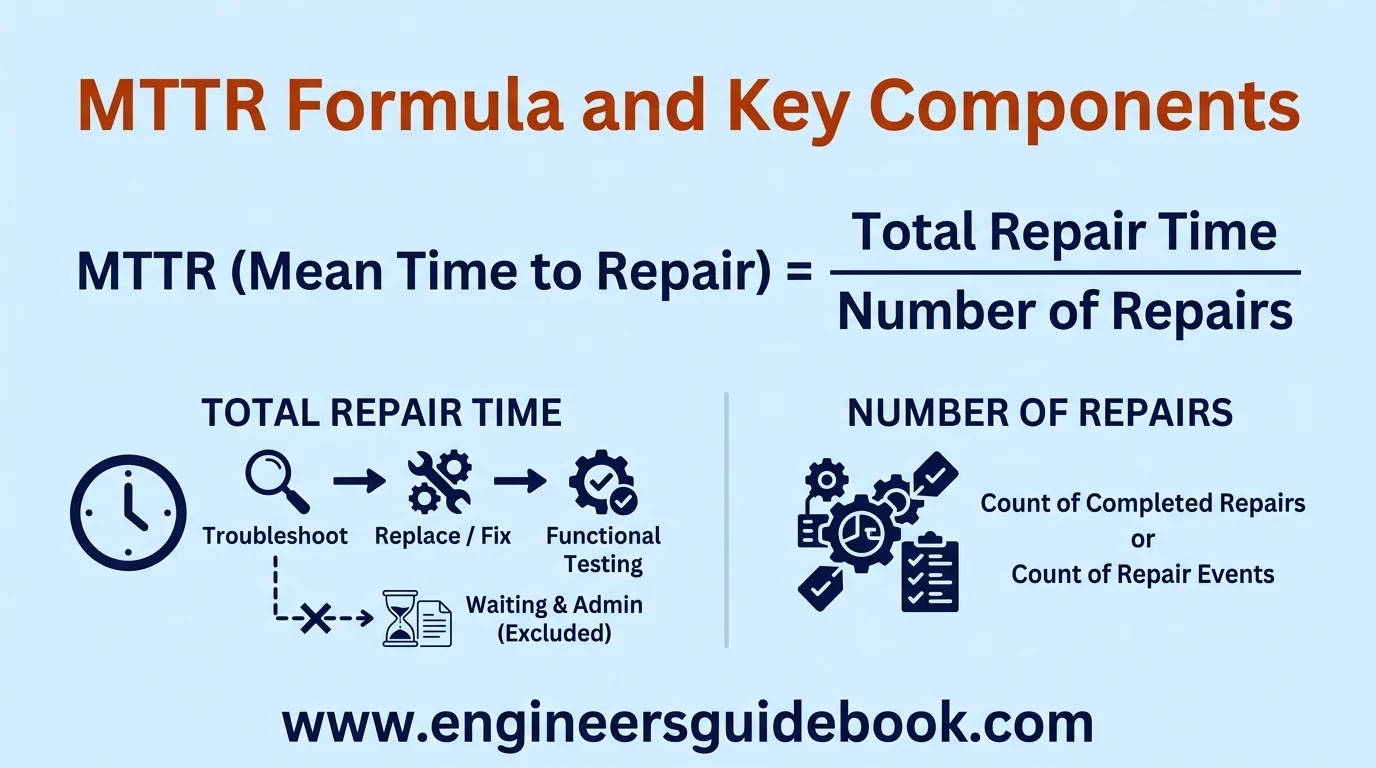
MTTR = Total Repair Time ÷ Number of Repairs
For example, if five repairs require a combined duration of 20 hours, the MTTR is four hours.
3.2 Total Repair Time
Total repair time represents the cumulative duration of completed repair activities during a specified measurement period. Accurate recording is essential because omitted activities or inconsistent timestamps can distort maintenance performance assessments.
3.3 Total Number of Repairs
The denominator represents the total number of completed repair events within the selected period. Multiple technicians working simultaneously on one equipment failure generally constitute one repair event rather than several independent repairs.
3.4 Units of MTTR Measurement
MTTR is commonly expressed in seconds, minutes, or hours, depending on equipment complexity and operational requirements. Industrial maintenance departments typically use minutes or hours to simplify breakdown analysis and performance reporting.
3.5 Activities Included and Excluded in MTTR
Active repair time generally includes troubleshooting, disassembly, component replacement, reassembly, and functional testing. Administrative delays, spare parts waiting periods, and unrelated preventive maintenance activities may be excluded when measuring active repair time rather than total restoration time.
4. How to Calculate MTTR Step by Step
4.1 Identifying Equipment Failures
Begin by identifying all relevant equipment failures within the selected reporting period. Establish clear failure criteria to differentiate genuine equipment malfunctions from routine inspections, planned shutdowns, and scheduled maintenance interventions.
4.2 Recording Repair Start and Completion Times
Document the exact commencement and completion timestamps for each repair. Digital maintenance management systems, breakdown reports, and technician work orders provide reliable mechanisms for maintaining chronological records of maintenance interventions.
4.3 Calculating Total Repair Duration
Calculate the duration of each repair event and aggregate the results.
Repair Duration = End Time − Start Time
Exclude intervals outside the established measurement boundaries to maintain consistency.
4.4 Determining the Number of Repair Events
Count all eligible completed repair events recorded during the measurement period. Avoid duplicate work orders and incomplete repair records, as these can introduce inaccuracies into the calculated maintenance indicator.
4.5 Applying the MTTR Formula
Divide the cumulative repair duration by the number of completed repairs.
For eight repairs requiring 24 hours:
MTTR = 24 ÷ 8 = 3 hours
4.6 Interpreting MTTR Calculation Results
An MTTR of three hours indicates that equipment repairs require three hours on average. Compare this result against historical performance, equipment criticality, and established maintenance objectives to identify improvement opportunities.

5. MTTR Calculation Examples
5.1 Basic MTTR Calculation Example
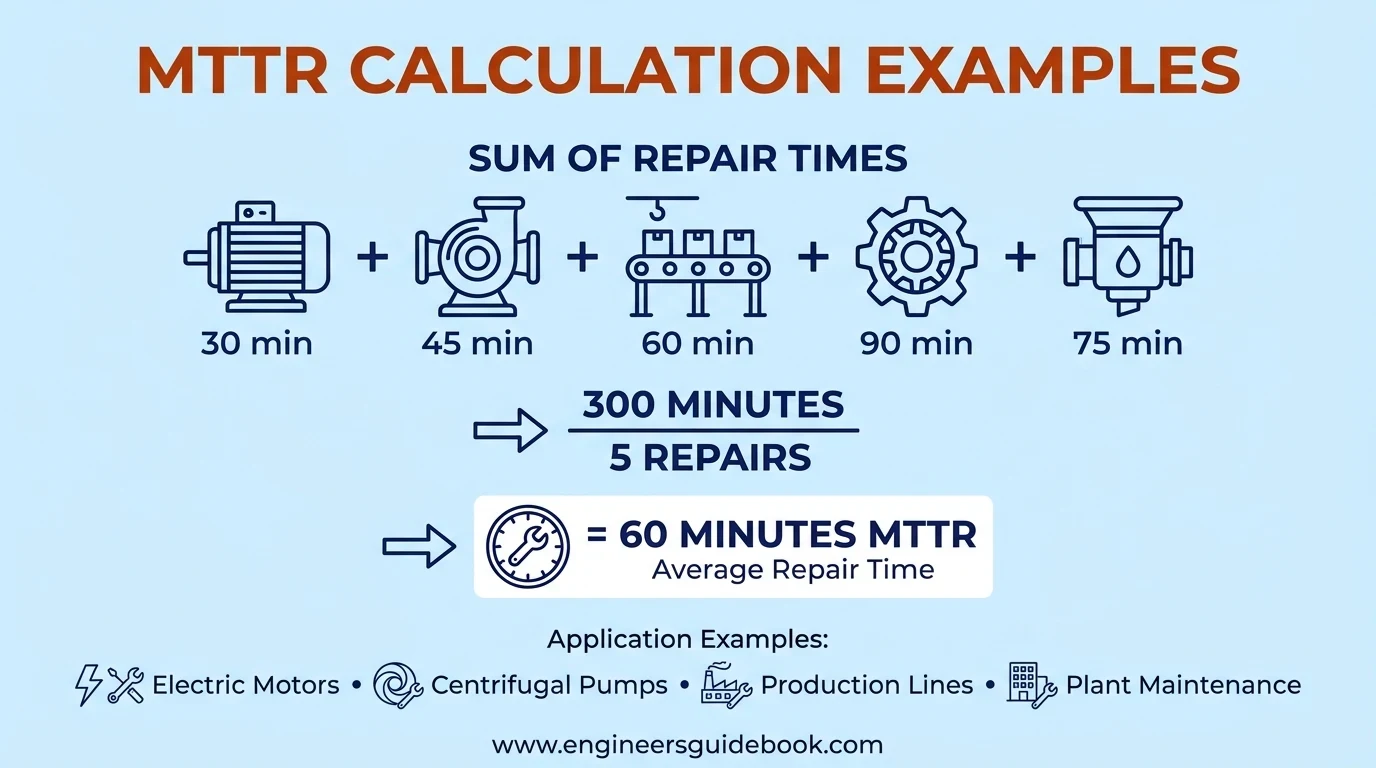
Consider five equipment failures with the following repair durations.
Repair Event Repair Time Failure 1 30 minutes Failure 2 45 minutes Failure 3 60 minutes Failure 4 90 minutes Failure 5 75 minutes Total 300 minutes
MTTR = 300 ÷ 5 = 60 minutes
The average repair duration is one hour.
5.2 Electric Motor Repair Example
An electric motor experiences four failures requiring repair durations of two, three, four, and five hours.
MTTR = (2 + 3 + 4 + 5) ÷ 4
MTTR = 3.5 hours
Each motor repair requires an average of 3.5 hours.
5.3 Centrifugal Pump Breakdown Example
A centrifugal pump experiences three breakdowns involving mechanical seal replacement, bearing replacement, and coupling repair. The respective repair durations are four, six, and two hours.
MTTR = (4 + 6 + 2) ÷ 3 = 4 hours
5.4 Manufacturing Production Line Example
A packaging line experiences ten breakdowns during one month, resulting in 450 minutes of cumulative repair time.
MTTR = 450 ÷ 10 = 45 minutes
The maintenance team requires an average of 45 minutes per repair.
5.5 Monthly Plant Maintenance MTTR Example
An industrial facility records 40 completed repairs with a cumulative repair duration of 120 hours.
MTTR = 120 ÷ 40 = 3 hours
This plant-wide indicator provides an aggregated assessment of maintenance repair efficiency.
6. MTTR and Other Maintenance KPIs
6.1 MTTR vs MTBF
Mean Time Between Failures (MTBF) measures the average operating duration between failures of repairable equipment. Conversely, MTTR measures the average repair duration. Higher MTBF and lower MTTR are generally desirable characteristics of effective asset management.
6.2 MTTR vs MTTF
Mean Time to Failure (MTTF) measures the expected operating lifespan of non-repairable components before failure. MTTR primarily applies to repairable equipment, where functionality can be restored through corrective maintenance interventions.
6.3 MTTR vs Mean Down Time
Mean Down Time (MDT) measures the average total duration an asset remains unavailable. Unlike active repair MTTR, MDT can include logistical delays, administrative procedures, maintenance mobilization, and spare parts procurement.
6.4 Relationship Between MTTR and Equipment Availability
MTTR directly influences inherent equipment availability, which can be calculated using:
Availability (%) = [MTBF ÷ (MTBF + MTTR)] × 100
For equipment with an MTBF of 100 hours and an MTTR of two hours:
Availability = (100 ÷ 102) × 100
Availability = 98.04%
6.5 Impact of MTTR on Overall Equipment Effectiveness
Overall Equipment Effectiveness (OEE) combines availability, performance, and quality. Reducing repair duration can increase the availability component of OEE by minimizing unplanned production stoppages during scheduled manufacturing periods.
6.6 Relationship Between MTTR and Maintainability
Maintainability describes the ability of equipment to be restored within specified conditions and time constraints. Lower MTTR generally reflects improved maintainability, particularly when equipment design, technician competence, and maintenance resources support efficient restoration.

7. Factors Affecting MTTR
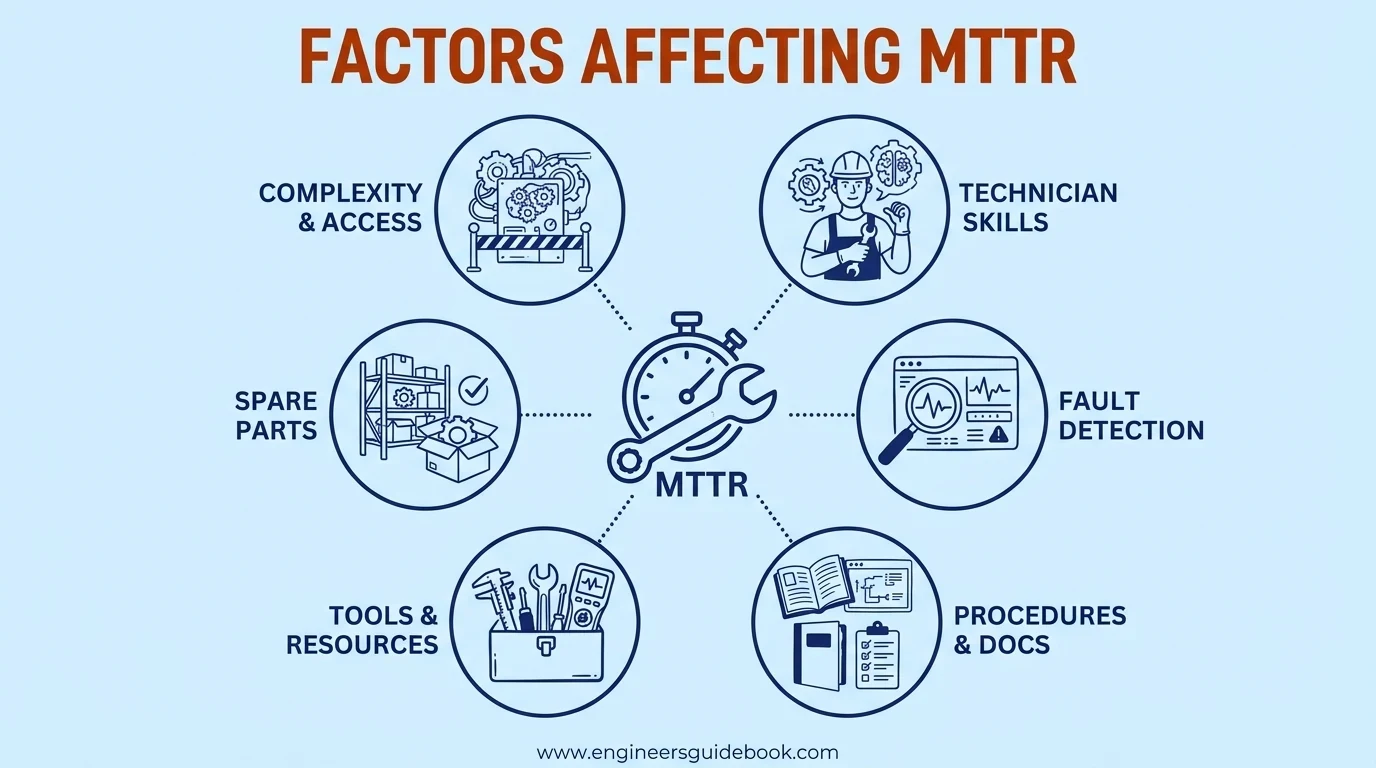
7.1 Equipment Complexity and Accessibility
Complex machinery often requires extensive disassembly, specialized troubleshooting, and meticulous reassembly. Restricted component accessibility can prolong maintenance interventions, whereas modular equipment designs facilitate faster component replacement and functional restoration.
7.2 Maintenance Technician Skills
Technician proficiency significantly influences repair duration. Experienced maintenance personnel can identify failure mechanisms, select appropriate corrective measures, and execute technical procedures efficiently while maintaining equipment integrity and workplace safety.
7.3 Spare Parts Availability
Unavailable spare parts can substantially extend total restoration time. Effective inventory management, equipment criticality assessments, and strategic procurement help ensure essential components remain available when unexpected equipment failures occur.
7.4 Fault Detection and Troubleshooting Time
Accurate fault diagnosis prevents unnecessary component replacement and repetitive maintenance interventions. Condition monitoring instruments, diagnostic software, and systematic troubleshooting methodologies can accelerate failure identification and reduce repair duration.
7.5 Maintenance Tools and Resources
Specialized tools, calibrated measuring instruments, lifting equipment, and diagnostic devices enable technicians to perform repairs efficiently. Inadequate maintenance infrastructure can create procedural inefficiencies, increase manual effort, and unnecessarily prolong equipment restoration.
7.6 Repair Procedures and Documentation
Standard operating procedures, technical manuals, engineering drawings, and historical maintenance records provide essential guidance during breakdowns. Well-documented repair methodologies eliminate ambiguity, facilitate consistent maintenance execution, and reduce dependence on individual technician experience without compromising safety or repair quality.
8. MTTR Benchmarks and Performance Targets
8.1 What Is a Good MTTR Score?
A good MTTR score represents an average repair duration that satisfies operational requirements without compromising maintenance quality or safety. Lower values are generally preferable. However, acceptable MTTR depends on equipment complexity, asset criticality, maintenance infrastructure, and production requirements.
8.2 Industry-Specific MTTR Benchmarks
MTTR benchmarks vary considerably across industrial sectors. The following values represent illustrative performance targets rather than universal industry standards.
Industry Illustrative MTTR Target Automotive manufacturing 1–4 hours Food and beverage processing 1–3 hours Pharmaceutical manufacturing 2–6 hours Oil and gas 4–24 hours Electronics manufacturing 30 minutes–2 hours General manufacturing 2–8 hours
Organizations should establish benchmarks using historical maintenance data, equipment characteristics, and operational priorities.
8.3 MTTR Targets for Critical Equipment
Critical assets require carefully defined restoration targets because their failures can significantly affect production, personnel safety, and operational expenditure. Equipment criticality assessments help maintenance departments prioritize resources and establish appropriate repair time objectives.
8.4 Establishing Realistic MTTR Targets
Effective MTTR targets should be achievable, measurable, and aligned with operational capabilities. Historical breakdown records, manufacturer recommendations, technician competencies, and spare parts availability provide a practical foundation for establishing realistic performance objectives.
8.5 Monitoring MTTR Performance Trends
Regularly monitoring MTTR trends helps identify deterioration or improvement in maintenance performance. Monthly comparisons, rolling averages, and equipment-specific analyses reveal recurring inefficiencies that individual breakdown reports may overlook.

9. Benefits and Limitations of MTTR
9.1 Improved Equipment Availability
Reducing MTTR enables equipment to return to service sooner following unexpected failures. Increased asset availability supports production continuity, enhances equipment utilization, and improves the operational effectiveness of manufacturing facilities.
9.2 Reduced Production Downtime
Efficient maintenance interventions minimize the duration of production interruptions. This becomes particularly important in continuous manufacturing environments, where prolonged equipment stoppages can create upstream and downstream operational disruptions.
9.3 Lower Maintenance and Operational Costs
Shorter repair durations can reduce overtime expenditure, emergency contractor requirements, and production losses. Effective MTTR management also promotes judicious resource utilization, although repair quality should never be sacrificed for immediate cost savings.
9.4 Improved Maintenance Team Efficiency
MTTR provides a quantitative mechanism for evaluating maintenance processes. Analyzing repair durations helps supervisors identify training requirements, eliminate procedural redundancies, and improve coordination between mechanical, electrical, instrumentation, and production teams.
9.5 Limitations of Average Repair Time
An average value can conceal substantial variations between individual repair events. Several minor breakdowns may obscure a prolonged equipment failure. Consequently, MTTR should be evaluated alongside median repair time, maximum repair duration, failure frequency, and asset criticality.
9.6 Common MTTR Measurement Errors
Inconsistent data collection can undermine the accuracy of MTTR calculations.
Common measurement errors include:
Incorrect repair timestamps.
Counting duplicate maintenance work orders.
Including scheduled preventive maintenance.
Mixing active repair time with total downtime.
Excluding exceptionally long repairs without justification.
Using inconsistent reporting periods.
Standardized measurement criteria improve analytical accuracy and performance comparability.

10. Effective Strategies to Reduce MTTR
10.1 Implementing Preventive Maintenance
Preventive maintenance reduces equipment deterioration and helps maintenance personnel identify developing defects before catastrophic failure occurs. Regular lubrication, inspections, adjustments, and component replacements can also reduce the complexity and duration of subsequent corrective repairs.
10.2 Adopting Predictive Maintenance Technologies
Predictive maintenance technologies enable early detection of equipment abnormalities. Vibration analysis, infrared thermography, ultrasonic testing, and lubricant analysis provide diagnostic information that allows maintenance teams to prepare tools, spare parts, and repair procedures before equipment failure.
10.3 Improving Fault Diagnosis Through Root Cause Analysis
Root Cause Analysis (RCA) identifies underlying failure mechanisms rather than merely addressing superficial symptoms. Techniques such as the 5 Whys, Fishbone Diagram, and Fault Tree Analysis improve understanding of recurring breakdowns and support more efficient future troubleshooting.
10.4 Optimizing Spare Parts Inventory
Strategic spare parts management eliminates unnecessary procurement delays during breakdowns. Establishing minimum inventory levels, identifying critical components, and monitoring supplier lead times can significantly reduce overall equipment restoration time.
10.5 Standardizing Maintenance Procedures
Standardized maintenance procedures provide technicians with structured instructions for troubleshooting, disassembly, replacement, reassembly, and testing. Clear procedural documentation reduces ambiguity, prevents repetitive mistakes, and promotes consistent repair quality across maintenance shifts.
10.6 Enhancing Technician Training
Technical training strengthens diagnostic capabilities and equipment-specific knowledge. Cross-functional training also reduces dependence on individual specialists, allowing maintenance departments to respond efficiently to diverse mechanical, electrical, and instrumentation failures.
10.7 Improving Equipment Maintainability
Equipment maintainability can be enhanced through engineering modifications that simplify maintenance access and component replacement. Modular assemblies, accessible lubrication points, standardized fasteners, and quick-release mechanisms reduce unnecessary disassembly and facilitate efficient repairs.

11. MTTR Monitoring Tools and Practical Applications
11.1 MTTR Tracking Using Excel
Microsoft Excel provides an accessible solution for calculating and monitoring MTTR. Maintenance personnel can record equipment identification, failure dates, repair timestamps, and repair durations within a structured spreadsheet.
For repair durations recorded in cells D2 through D11, the following formula calculates MTTR:
=AVERAGE(D2:D11)
Pivot tables and charts can further support equipment-specific performance analysis.
11.2 Computerized Maintenance Management Systems
A Computerized Maintenance Management System (CMMS) centralizes maintenance work orders, equipment histories, repair durations, and spare parts records. Automated MTTR calculations reduce administrative workloads and improve maintenance data traceability.
11.3 Enterprise Asset Management Software
Enterprise Asset Management (EAM) software integrates maintenance information with procurement, inventory, financial management, and asset lifecycle planning. This comprehensive approach enables organizations to evaluate MTTR alongside broader operational and financial performance indicators.
11.4 Real-Time Maintenance Monitoring
Industrial monitoring systems can capture equipment failure notifications and restoration timestamps automatically. Integration between SCADA, industrial sensors, and maintenance management platforms improves breakdown visibility and facilitates timely maintenance mobilization.
11.5 MTTR Dashboards and Reporting
Maintenance dashboards transform raw repair records into actionable performance information. Effective dashboards typically display equipment-specific MTTR, historical trends, performance targets, repair duration distributions, and comparisons between maintenance departments.
11.6 Using MTTR for Continuous Improvement
MTTR supports continuous improvement methodologies such as Kaizen, Total Productive Maintenance, and the Plan-Do-Check-Act cycle. Investigating prolonged repairs allows organizations to implement corrective initiatives, evaluate their effectiveness, and establish progressively improved maintenance practices.

12. Frequently Asked Questions About MTTR
12.1 What Does MTTR Stand for in Maintenance?
MTTR stands for Mean Time to Repair. It measures the average time required to repair failed equipment and restore its functionality within defined measurement boundaries.
12.2 What Is the Formula for MTTR?
The MTTR formula is:
MTTR = Total Repair Time ÷ Number of Repairs
The result is generally expressed in minutes or hours.
12.3 How Do You Calculate MTTR With an Example?
If equipment undergoes five repairs requiring a combined duration of 25 hours, MTTR is calculated as:
MTTR = 25 ÷ 5 = 5 hours
The average equipment repair duration is five hours.
12.4 What Is the Difference Between MTTR and MTBF?
MTTR measures the average time required to repair equipment, whereas MTBF measures the average operating time between failures. MTTR primarily evaluates maintainability, while MTBF evaluates equipment reliability.
12.5 Is a High or Low MTTR Better?
A low MTTR is generally better because it indicates faster equipment restoration. However, maintenance personnel must ensure that shorter repair durations do not compromise safety, workmanship, or long-term reliability.
12.6 What Is Considered a Good MTTR?
A good MTTR meets established operational and equipment-specific performance targets. There is no universally applicable ideal value because repair requirements differ considerably between assets and industries.
12.7 Does MTTR Include Waiting Time?
It depends on the measurement definition. Active repair MTTR generally excludes logistical waiting periods, whereas recovery or restoration-based MTTR may include spare parts delays, technician mobilization, and other interruptions.
12.8 Can MTTR Be Zero?
MTTR cannot realistically be zero when physical repairs require measurable time. If no repairs occur during a reporting period, MTTR is undefined rather than zero because the denominator contains no repair events.
12.9 How Does MTTR Affect Equipment Availability?
Reducing MTTR increases inherent equipment availability when MTBF remains constant. Faster repair completion reduces equipment unavailability and enables assets to spend more time performing their intended functions.
12.10 How Can MTTR Be Reduced in Manufacturing?
Manufacturers can reduce MTTR through technician training, effective fault diagnosis, standardized repair procedures, optimized spare parts management, predictive maintenance, improved equipment accessibility, and accurate maintenance documentation.
13. Conclusion
13.1 Key Takeaways of MTTR
Mean Time to Repair is a fundamental maintenance indicator that quantifies average equipment repair duration. Its straightforward calculation provides valuable insights into maintenance efficiency, equipment maintainability, and opportunities for operational improvement.
13.2 Importance of MTTR in Maintenance Performance
MTTR connects maintenance execution with broader manufacturing objectives. When evaluated alongside MTBF, OEE, equipment availability, and maintenance costs, it provides a comprehensive perspective on asset performance and operational sustainability.
13.3 Best Practices for Sustainable MTTR Improvement
Sustainable MTTR improvement requires consistent data collection, competent maintenance personnel, structured troubleshooting, adequate spare parts inventories, and systematic engineering improvements. Organizations should prioritize effective and safe repairs rather than pursuing numerical targets in isolation. Ultimately, reducing MTTR while preserving equipment reliability creates a more resilient, productive, and cost-effective industrial maintenance environment.