Corrective maintenance is a maintenance strategy that involves identifying, repairing, or replacing faulty equipment to restore its intended operating condition. It includes planned, unplanned, immediate, and deferred maintenance activities. Its advantages include lower initial maintenance costs, flexible resource allocation, and maximum component utilization. Common examples include bearing replacement, mechanical seal repair, and electrical fault rectification.
1. Introduction to Corrective Maintenance
1.1 What Is Corrective Maintenance?
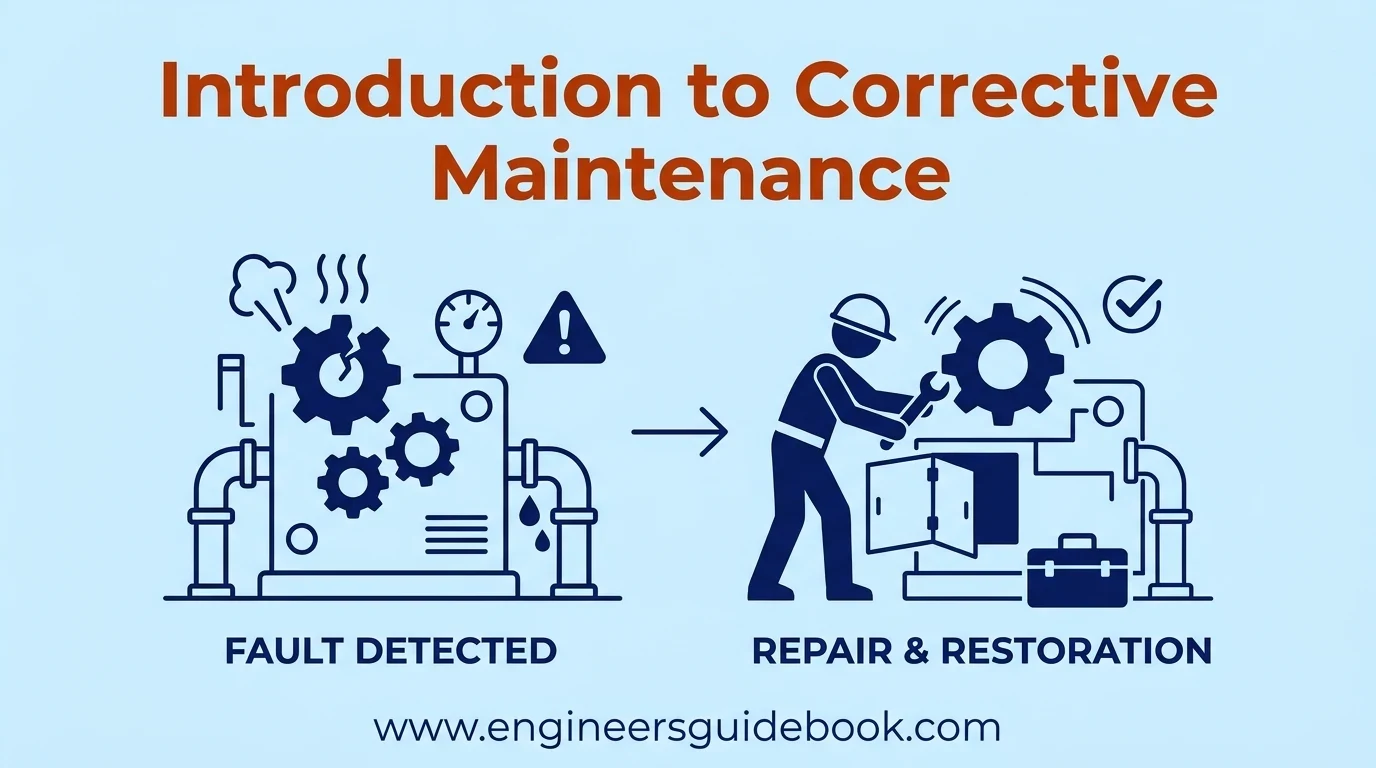
Corrective maintenance refers to maintenance activities performed after detecting an equipment fault or functional failure. Its primary objective is to restore machinery, components, or systems to their required operating condition.
Unlike preventive maintenance, corrective maintenance is initiated by an identified fault rather than a predetermined maintenance interval.
1.2 Purpose of Corrective Maintenance
The fundamental purpose of corrective maintenance is to rectify equipment deficiencies and restore operational functionality. It addresses mechanical deterioration, electrical malfunctions, component damage, and other operational abnormalities.
Effective corrective actions also help prevent minor equipment defects from developing into more consequential failures.
1.3 Importance of Corrective Maintenance in Industrial Operations
Corrective maintenance is an indispensable element of industrial asset management. Even facilities implementing advanced predictive maintenance technologies experience unexpected equipment faults.
An effective corrective maintenance system helps manufacturers maintain production continuity, improve equipment availability, minimize repair durations, and preserve operational safety.
1.4 When Is Corrective Maintenance Required?
Corrective maintenance becomes necessary whenever equipment deviates from its specified operating parameters or experiences functional failure.
Typical indications include abnormal vibration, excessive temperature, unusual noise, lubricant leakage, reduced production capacity, and electrical malfunction. Complete equipment breakdown is not a prerequisite for corrective intervention.
2. How Corrective Maintenance Works
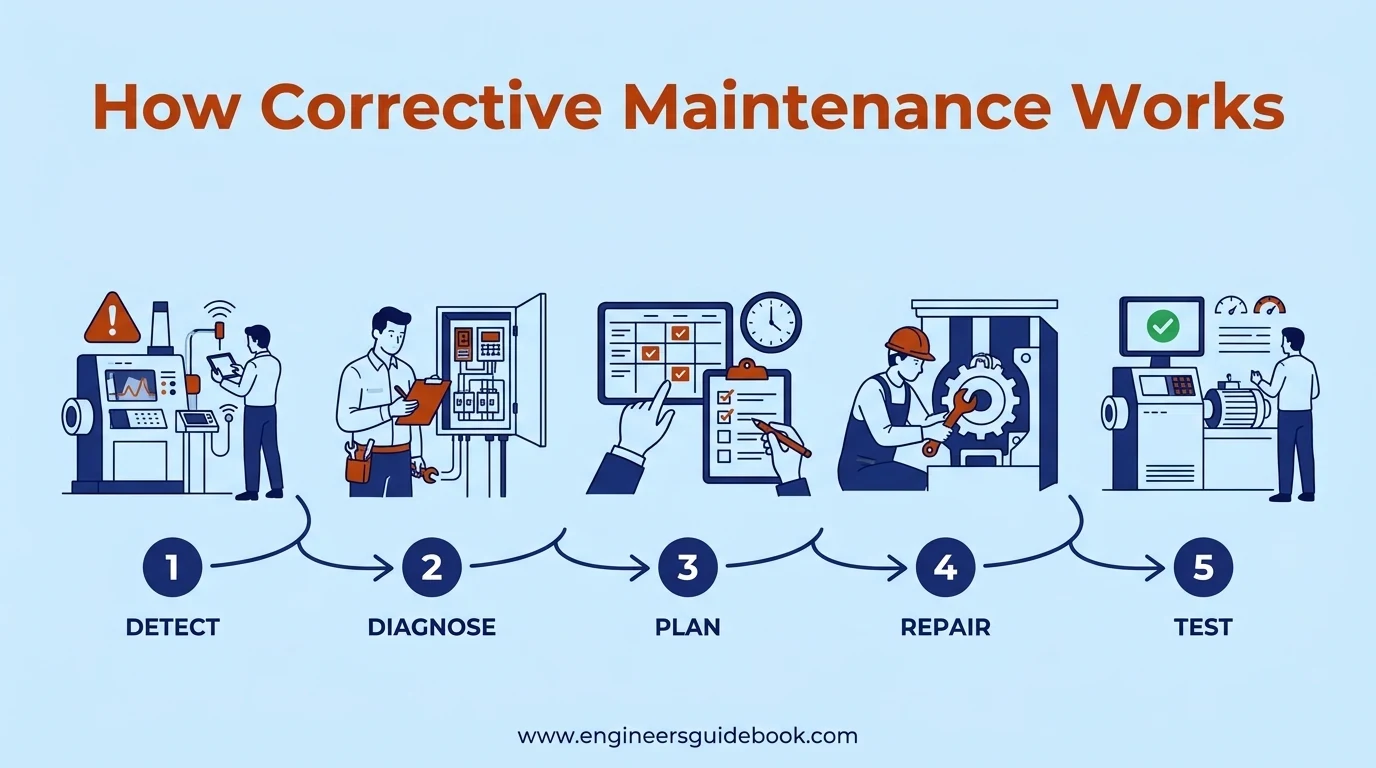
2.1 Equipment Fault Detection
The process begins with identifying an equipment abnormality through operator observations, routine inspections, sensor readings, or condition-monitoring systems.
Early fault detection provides maintenance teams with additional time to organize repairs before equipment deterioration becomes catastrophic.
2.2 Failure Diagnosis and Troubleshooting
Maintenance personnel investigate the detected abnormality using diagnostic instruments, equipment manuals, operating histories, and troubleshooting techniques.
Accurate diagnosis distinguishes the underlying failure mechanism from its observable symptoms, preventing ineffective repairs and recurrent equipment problems.
2.3 Maintenance Planning and Prioritization
After diagnosing the fault, maintenance teams determine its urgency according to equipment criticality, safety implications, production requirements, and failure progression.
Critical defects require immediate attention, whereas manageable abnormalities may be scheduled during planned production stoppages.
2.4 Repair and Component Replacement
The repair stage involves restoring defective components through adjustment, refurbishment, machining, replacement, or other appropriate technical interventions.
Maintenance personnel must follow manufacturer recommendations, engineering specifications, and applicable safety procedures throughout execution.
2.5 Equipment Testing and Restoration
Following repair, equipment undergoes functional testing to verify operational integrity. Relevant parameters such as vibration, temperature, pressure, current consumption, and production output are evaluated.
Equipment should return to service only after satisfying established operational and safety acceptance criteria.
3. Types of Corrective Maintenance
3.1 Planned Corrective Maintenance
Planned corrective maintenance involves repairing an identified defect through a scheduled maintenance intervention.
For example, a gearbox exhibiting minor lubricant leakage may be repaired during an upcoming production shutdown, provided continued operation remains safe and technically acceptable.
3.2 Unplanned Corrective Maintenance
Unplanned corrective maintenance occurs when unexpected equipment faults require maintenance activities that were not previously scheduled.
Sudden motor failure, conveyor belt rupture, and electrical contactor malfunction are typical examples. Such interventions frequently disrupt production schedules and resource allocation.
3.3 Immediate Corrective Maintenance
Immediate corrective maintenance involves addressing equipment faults without delay because postponement could produce unacceptable operational, environmental, or safety consequences.
Examples include hazardous solvent leakage, electrical short circuits, and critical compressor failures requiring immediate equipment isolation.
3.4 Deferred Corrective Maintenance
Deferred corrective maintenance postpones the rectification of an identified fault until an appropriate maintenance opportunity becomes available.
Deferral requires a documented risk assessment, appropriate monitoring, and a defined repair deadline. Uncontrolled postponement can accelerate equipment deterioration.
3.5 Corrective Maintenance After Condition Monitoring
Condition-monitoring techniques identify developing equipment defects through vibration analysis, thermography, lubricant analysis, and ultrasonic inspection.
Once a fault is identified, corrective maintenance eliminates the deficiency. Condition monitoring therefore facilitates early detection, while corrective maintenance provides the physical restoration.

4. Common Causes of Corrective Maintenance
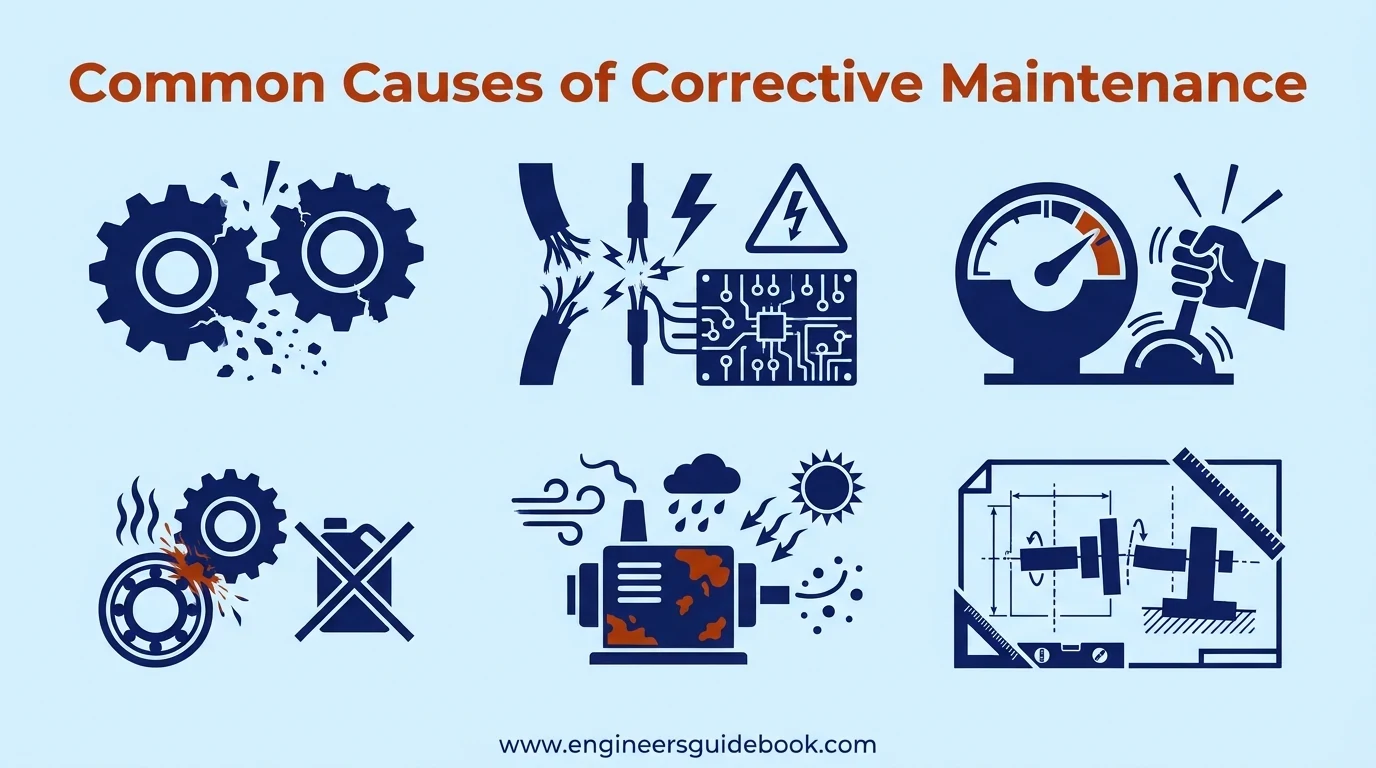
4.1 Mechanical Wear and Tear
Bearings, gears, seals, couplings, and other mechanical components experience progressive degradation through friction, fatigue, abrasion, and cyclic loading.
Excessive deterioration eventually necessitates corrective adjustment, refurbishment, or replacement.
4.2 Electrical and Electronic Failures
Electrical insulation breakdown, loose connections, damaged sensors, overloaded circuits, and electronic component degradation frequently cause equipment malfunctions.
Corrective maintenance restores electrical functionality by identifying defective elements and implementing suitable repairs.
4.3 Improper Equipment Operation
Operating machinery beyond its design capacity, disregarding operating procedures, or applying inappropriate process settings can induce premature failure.
Operator competency and adherence to standardized operating procedures significantly influence equipment longevity.
4.4 Inadequate Lubrication
Insufficient lubrication, lubricant contamination, incorrect viscosity, and excessive lubrication can damage mechanical assemblies.
Corrective interventions may involve replacing damaged bearings, cleaning lubrication systems, and restoring the correct lubricant specification.
4.5 Environmental and Operating Conditions
Elevated temperatures, humidity, corrosive substances, airborne contaminants, and excessive mechanical loading contribute to accelerated equipment degradation.
Equipment operating under aggressive environmental conditions often requires more frequent corrective interventions.
4.6 Design and Installation Deficiencies
Incorrect shaft alignment, inadequate equipment foundations, improper component selection, and engineering design deficiencies can generate repetitive equipment failures.
Permanent corrective solutions may require engineering modifications rather than repeated component replacement.
5. Step-by-Step Corrective Maintenance Procedure
5.1 Identifying and Reporting Equipment Faults
Operators or maintenance personnel should report equipment abnormalities through a standardized notification system.
The report should include equipment identification, observed symptoms, operating conditions, fault location, and relevant production implications.
5.2 Assessing Failure Severity
Maintenance teams evaluate the fault according to equipment criticality, potential failure consequences, environmental exposure, and occupational safety risks.
This assessment determines whether immediate isolation, controlled operation, or deferred repair is appropriate.
5.3 Performing Root Cause Analysis
Root cause analysis identifies the fundamental factors responsible for equipment failure. Techniques such as the 5 Whys, fishbone diagrams, and fault tree analysis support systematic investigations.
The depth of investigation should reflect the failure’s severity and recurrence.
5.4 Preparing Maintenance Resources and Spare Parts
Successful corrective maintenance requires appropriate manpower, replacement components, diagnostic instruments, technical documentation, and specialized tools.
Advance preparation minimizes repair interruptions and improves maintenance execution efficiency.
5.5 Implementing Corrective Actions
Technicians execute the repair according to approved maintenance procedures. Equipment isolation, lockout/tagout, and applicable work permits must be established before hazardous maintenance activities begin.
Corrective actions should address both immediate defects and identified underlying causes.
5.6 Verifying Equipment Performance
Post-maintenance verification confirms that equipment operates within acceptable engineering parameters.
Controlled trial runs, visual inspections, leakage tests, and performance measurements help establish whether the corrective intervention has successfully restored functionality.
5.7 Documenting Maintenance Activities
Maintenance records should capture failure descriptions, root causes, repair activities, consumed spare parts, labor hours, and equipment downtime.
Accurate documentation supports reliability analysis, maintenance budgeting, failure trending, and future maintenance strategy development.

6. Advantages of Corrective Maintenance
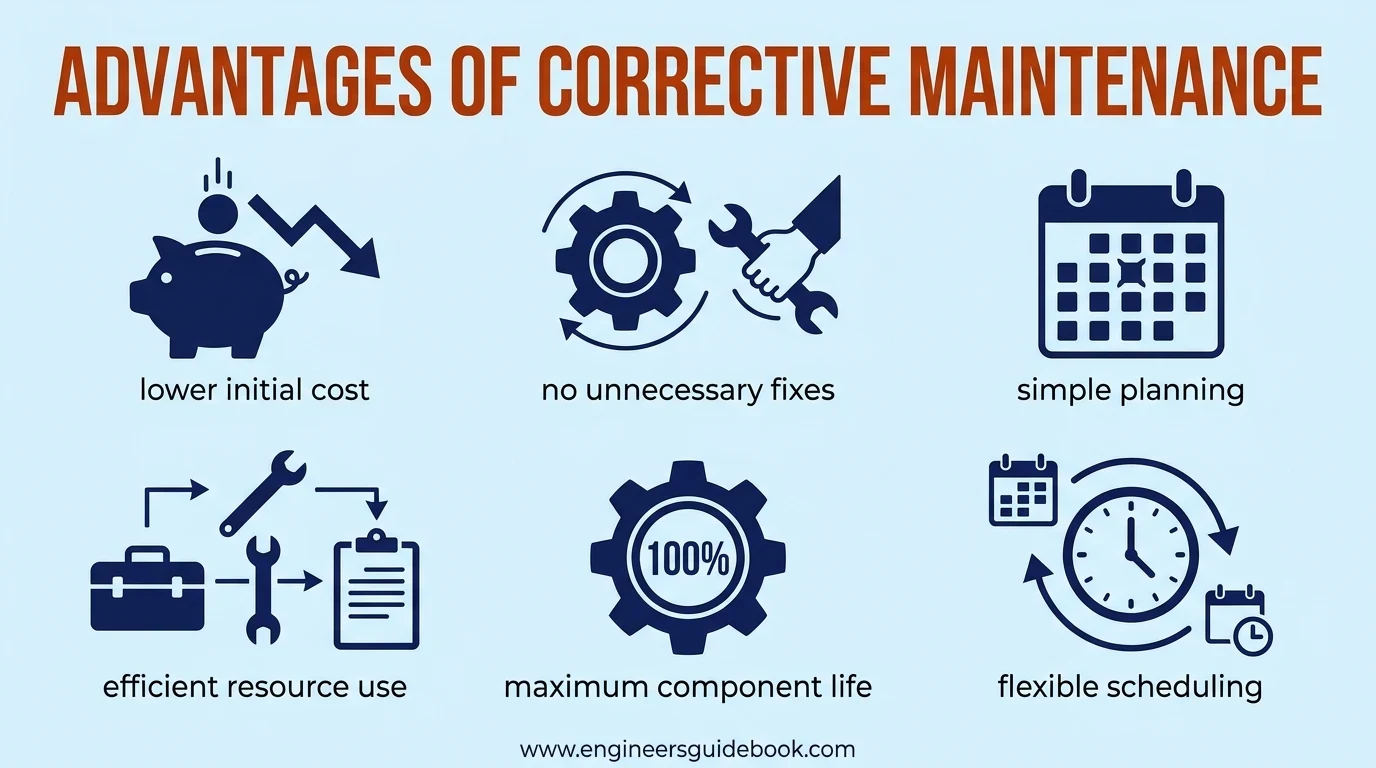
6.1 Lower Initial Maintenance Costs
Corrective maintenance can require less initial investment in monitoring infrastructure, diagnostic technologies, and elaborate maintenance scheduling systems.
This economic advantage is particularly relevant to inexpensive, noncritical assets with limited failure consequences.
6.2 Reduced Unnecessary Maintenance Activities
Corrective maintenance avoids predetermined interventions on components that remain functionally satisfactory.
Consequently, organizations can reduce unnecessary dismantling, premature replacement, and maintenance-induced equipment defects.
6.3 Simplified Maintenance Planning
For noncritical equipment, corrective maintenance eliminates the need for extensive recurring maintenance schedules.
Maintenance activities are initiated when identifiable deficiencies arise, simplifying certain administrative and operational requirements.
6.4 Efficient Utilization of Maintenance Resources
Planned corrective maintenance enables organizations to allocate personnel, tools, and materials according to verified equipment requirements.
However, excessive reliance on unplanned corrective work can undermine resource utilization.
6.5 Maximum Utilization of Noncritical Components
A controlled run-to-failure approach allows suitable noncritical components to deliver their maximum practical service life.
This approach can reduce premature replacement expenditure where failure presents negligible safety and production risks.
6.6 Flexibility in Maintenance Scheduling
Deferred corrective maintenance allows maintenance planners to coordinate repairs with production shutdowns, spare parts availability, and technician workloads.
Such flexibility helps minimize avoidable operational interruptions.
7. Disadvantages of Corrective Maintenance
7.1 Increased Equipment Downtime
Unexpected equipment failures can result in prolonged downtime, particularly when troubleshooting is complex or replacement components are unavailable.
Excessive unplanned corrective maintenance negatively affects equipment availability and overall equipment effectiveness (OEE).
7.2 Unexpected Production Losses
Failure of critical machinery can interrupt manufacturing processes, reduce production output, and delay customer deliveries.
The resulting financial losses may substantially exceed the direct expenditure associated with equipment repair.
7.3 Higher Emergency Repair Costs
Emergency repairs frequently involve overtime payments, expedited procurement, external technical assistance, and additional transportation expenses.
These expenditures increase maintenance costs and complicate departmental budget management.
7.4 Reduced Equipment Reliability
Repeated corrective interventions without investigating underlying failure mechanisms can perpetuate equipment deterioration and recurring malfunctions.
A predominantly reactive maintenance strategy may therefore compromise long-term asset reliability and operational stability.
7.5 Workplace Safety Risks
Unexpected failures involving pressurized systems, electrical equipment, rotating machinery, and hazardous chemicals can expose personnel to significant safety risks.
Emergency maintenance under production pressure may further increase the likelihood of unsafe interventions.
7.6 Unpredictable Spare Parts Requirements
Unexpected failures make spare parts consumption difficult to forecast. Organizations may experience inventory shortages, extended procurement lead times, or excessive emergency purchasing costs.
Effective inventory management and equipment criticality assessments are essential for mitigating these uncertainties.

8. Real-World Examples of Corrective Maintenance
8.1 Electric Motor Bearing Replacement
Electric motor bearings deteriorate due to mechanical fatigue, lubricant contamination, excessive loading, and shaft misalignment. Symptoms include abnormal noise, elevated temperatures, and increased vibration.
Corrective maintenance involves replacing defective bearings, inspecting shaft conditions, verifying alignment, and ensuring appropriate lubrication before restoring motor operation.
8.2 Centrifugal Pump Mechanical Seal Replacement
Mechanical seal failure frequently results in process fluid leakage from centrifugal pumps. Common causes include dry running, excessive vibration, seal face deterioration, and improper installation.
Replacing the damaged mechanical seal and eliminating the underlying failure mechanism restores pump functionality and containment integrity.
8.3 Conveyor Belt Repair and Replacement
Industrial conveyor belts experience abrasion, elongation, tearing, and tracking abnormalities during operation.
Corrective maintenance may involve belt replacement, vulcanization, tension adjustment, pulley alignment, or damaged roller replacement to restore material transportation efficiency.
8.4 Gearbox Failure Rectification
Gearboxes can develop excessive backlash, abnormal noise, lubricant leakage, and gear tooth damage.
Corrective interventions involve inspecting internal components, replacing damaged gears or bearings, restoring lubrication, and verifying transmission performance.
8.5 Hydraulic System Leakage Repair
Hydraulic leakage reduces system efficiency, operating pressure, and actuator performance. Maintenance personnel identify defective hoses, fittings, cylinders, or sealing elements.
Replacing compromised components and verifying system pressure after repair restores hydraulic functionality.
8.6 Compressor Component Replacement
Industrial compressors may experience valve deterioration, bearing damage, defective seals, and lubrication system failures.
Corrective maintenance restores compression efficiency through component replacement, mechanical adjustment, and operational performance verification.
8.7 Electrical Control Panel Fault Rectification
Defective contactors, damaged relays, malfunctioning circuit breakers, and loose electrical connections can interrupt equipment operation.
Qualified maintenance personnel diagnose electrical faults, safely isolate equipment, replace defective components, and verify circuit functionality before restarting machinery.

9. Corrective Maintenance vs Other Maintenance Strategies
9.1 Corrective Maintenance vs Preventive Maintenance
Corrective maintenance addresses existing equipment faults, whereas preventive maintenance involves scheduled interventions intended to reduce failure probability.
Preventive maintenance generally offers greater operational predictability, while corrective maintenance avoids certain unnecessary scheduled interventions.
9.2 Corrective Maintenance vs Predictive Maintenance
Predictive maintenance utilizes equipment condition data and analytical techniques to anticipate developing failures.
Corrective maintenance physically eliminates identified defects. Both strategies complement each other when predictive diagnostics facilitate planned corrective interventions.
9.3 Corrective Maintenance vs Breakdown Maintenance
Breakdown maintenance occurs after equipment loses its required functionality. Corrective maintenance encompasses a broader range of activities because it can address detected defects before complete equipment failure.
Consequently, breakdown maintenance represents a form of corrective maintenance.
9.4 Corrective Maintenance vs Reactive Maintenance
Reactive maintenance generally involves responding to unexpected failures after they occur.
Corrective maintenance may be reactive or deliberately planned, depending on fault severity, equipment criticality, and available maintenance opportunities.
9.5 Corrective Maintenance vs Condition-Based Maintenance
Condition-based maintenance initiates interventions according to actual equipment condition rather than predetermined intervals.
Corrective maintenance represents the repair activity undertaken when condition assessments reveal an existing defect requiring rectification.
9.6 Selecting the Right Maintenance Strategy
Maintenance strategy selection depends on asset criticality, failure consequences, equipment replacement costs, and operational requirements.
Critical machinery generally benefits from proactive maintenance, whereas inexpensive, noncritical components may be suitable for controlled corrective maintenance.

10. Corrective Maintenance Costs and Performance Indicators
10.1 Direct and Indirect Maintenance Costs
Direct maintenance costs include labor, spare parts, consumables, tools, and external repair services.
Indirect costs encompass production losses, operational interruptions, reduced productivity, and delivery delays. Both categories must be considered when evaluating the economic consequences of equipment failures.
10.2 Corrective Maintenance Cost Calculation
Total corrective maintenance cost can be calculated using the following formula:
Corrective Maintenance Cost = Labor Cost + Spare Parts Cost + Service Cost + Downtime Cost
For example, if labor costs $200, spare parts cost $350, external services cost $150, and downtime costs $800, the total economic cost is $1,500.
10.3 Corrective Maintenance Percentage
Corrective maintenance percentage measures the proportion of maintenance activities dedicated to fault rectification.
Corrective Maintenance (%) = (Corrective Maintenance Hours / Total Maintenance Hours) × 100
If corrective maintenance consumes 120 hours out of 500 total maintenance hours, the corrective maintenance percentage is 24%.
10.4 Mean Time to Repair
Mean Time to Repair (MTTR) measures the average duration required to repair failed equipment.
MTTR = Total Repair Time / Number of Repairs
Lower MTTR values generally indicate improved maintainability, troubleshooting efficiency, and maintenance resource preparedness.
10.5 Mean Time Between Failures
Mean Time Between Failures (MTBF) measures the average operating duration between successive failures of repairable equipment.
MTBF = Total Operating Time / Number of Failures
Increasing MTBF generally indicates improved equipment reliability and fewer failure-related interruptions.
10.6 Equipment Availability and Downtime
Equipment availability represents the proportion of required operating time during which machinery remains functional.
Availability (%) = (Operating Time / Planned Production Time) × 100
Reducing corrective maintenance downtime improves equipment availability and production continuity.
10.7 Corrective Maintenance Backlog
A corrective maintenance backlog represents identified repair activities awaiting completion.
Monitoring backlog size, work order aging, estimated labor requirements, and equipment criticality prevents excessive accumulation of unresolved defects.

11. Best Practices for Effective Corrective Maintenance Management
11.1 Equipment Criticality Assessment
Equipment criticality assessment categorizes assets according to their failure consequences, safety implications, production importance, and financial impact.
This prioritization ensures maintenance resources are directed toward the most consequential equipment defects.
11.2 Maintenance Work Order Management
Structured work orders establish clear maintenance responsibilities, technical requirements, resource allocations, and completion deadlines.
Effective work order management improves traceability, accountability, maintenance scheduling, and historical failure analysis.
11.3 Spare Parts Inventory Optimization
Maintaining appropriate inventories of critical spare parts minimizes procurement delays and equipment downtime.
Inventory decisions should consider component failure frequency, supplier lead times, equipment criticality, and inventory carrying costs.
11.4 Computerized Maintenance Management Systems
A Computerized Maintenance Management System (CMMS) facilitates work order management, maintenance scheduling, asset history tracking, inventory control, and performance reporting.
Digital maintenance records also support data-driven reliability improvements.
11.5 Maintenance Personnel Training
Technically competent maintenance personnel identify equipment faults more accurately and execute repairs more efficiently.
Continuous training in troubleshooting, mechanical systems, electrical diagnostics, and industrial safety improves maintenance quality and reduces repair durations.
11.6 Root Cause Analysis and Failure Prevention
Repeated component replacement without eliminating underlying causes produces recurrent maintenance expenditure.
Root cause analysis facilitates permanent corrective solutions by identifying systemic deficiencies, operating abnormalities, installation errors, and inappropriate maintenance practices.
11.7 Maintenance Safety and Standard Operating Procedures
Corrective maintenance must comply with established safety procedures, equipment isolation requirements, work permit systems, and manufacturer specifications.
Standardized procedures reduce execution variability, maintenance-induced failures, and occupational hazards.
11.8 Reducing Unplanned Corrective Maintenance
Organizations can reduce unplanned corrective maintenance through preventive inspections, predictive technologies, autonomous maintenance, reliability analysis, and systematic defect elimination.
Early intervention converts potentially disruptive failures into manageable scheduled repairs.

12. Frequently Asked Questions (FAQ)
12.1 What Is Corrective Maintenance in Simple Terms?
Corrective maintenance means repairing or replacing defective equipment components after identifying a fault to restore normal operating functionality.
12.2 What Are the Main Types of Corrective Maintenance?
The main types include planned, unplanned, immediate, and deferred corrective maintenance. These classifications can overlap depending on repair scheduling and urgency.
12.3 What Is an Example of Corrective Maintenance?
Replacing a damaged mechanical seal after detecting leakage from a centrifugal pump is a common industrial example of corrective maintenance.
12.4 What Is the Difference Between Corrective and Preventive Maintenance?
Corrective maintenance eliminates existing equipment defects, whereas preventive maintenance involves predetermined activities intended to reduce equipment failure probability.
12.5 Is Corrective Maintenance the Same as Breakdown Maintenance?
No. Breakdown maintenance follows functional failure, while corrective maintenance can also address identified defects before equipment completely loses functionality.
12.6 Can Corrective Maintenance Be Planned?
Yes. Identified equipment defects can be repaired during scheduled maintenance windows when postponement does not introduce unacceptable operational or safety risks.
12.7 What Are the Advantages and Disadvantages of Corrective Maintenance?
Advantages include lower initial investment, flexible scheduling, and reduced unnecessary maintenance. Disadvantages include unpredictable downtime, emergency repair expenditure, production losses, and potential safety risks.
12.8 How Do You Calculate Corrective Maintenance Percentage?
Divide total corrective maintenance hours by total maintenance hours and multiply the result by 100 to determine the corrective maintenance percentage.
12.9 When Should Corrective Maintenance Be Used?
Corrective maintenance should be used whenever an identified equipment fault requires rectification. A predominantly corrective strategy is most suitable for assets with limited failure consequences and manageable repair costs.
12.10 How Can Corrective Maintenance Be Reduced?
Unplanned corrective maintenance can be reduced through preventive maintenance, predictive diagnostics, proper lubrication, operator training, equipment condition monitoring, and systematic root cause elimination.
13. Conclusion
13.1 Key Takeaways of Corrective Maintenance
Corrective maintenance is an essential industrial maintenance strategy focused on restoring defective equipment to its required operating condition. Its effectiveness depends on accurate diagnosis, appropriate prioritization, competent execution, and comprehensive maintenance documentation.
13.2 Role of Corrective Maintenance in Equipment Reliability
Systematic corrective maintenance contributes to equipment reliability by eliminating existing defects and addressing underlying failure mechanisms. Effective repairs reduce recurrence, improve maintainability, and support consistent production performance.
13.3 Balancing Corrective and Proactive Maintenance Strategies
An effective asset management framework integrates corrective, preventive, and predictive maintenance according to equipment criticality and failure consequences.
By combining proactive defect detection with well-planned corrective interventions, organizations can minimize unexpected downtime, optimize maintenance expenditure, extend equipment service life, and achieve sustainable operational excellence.