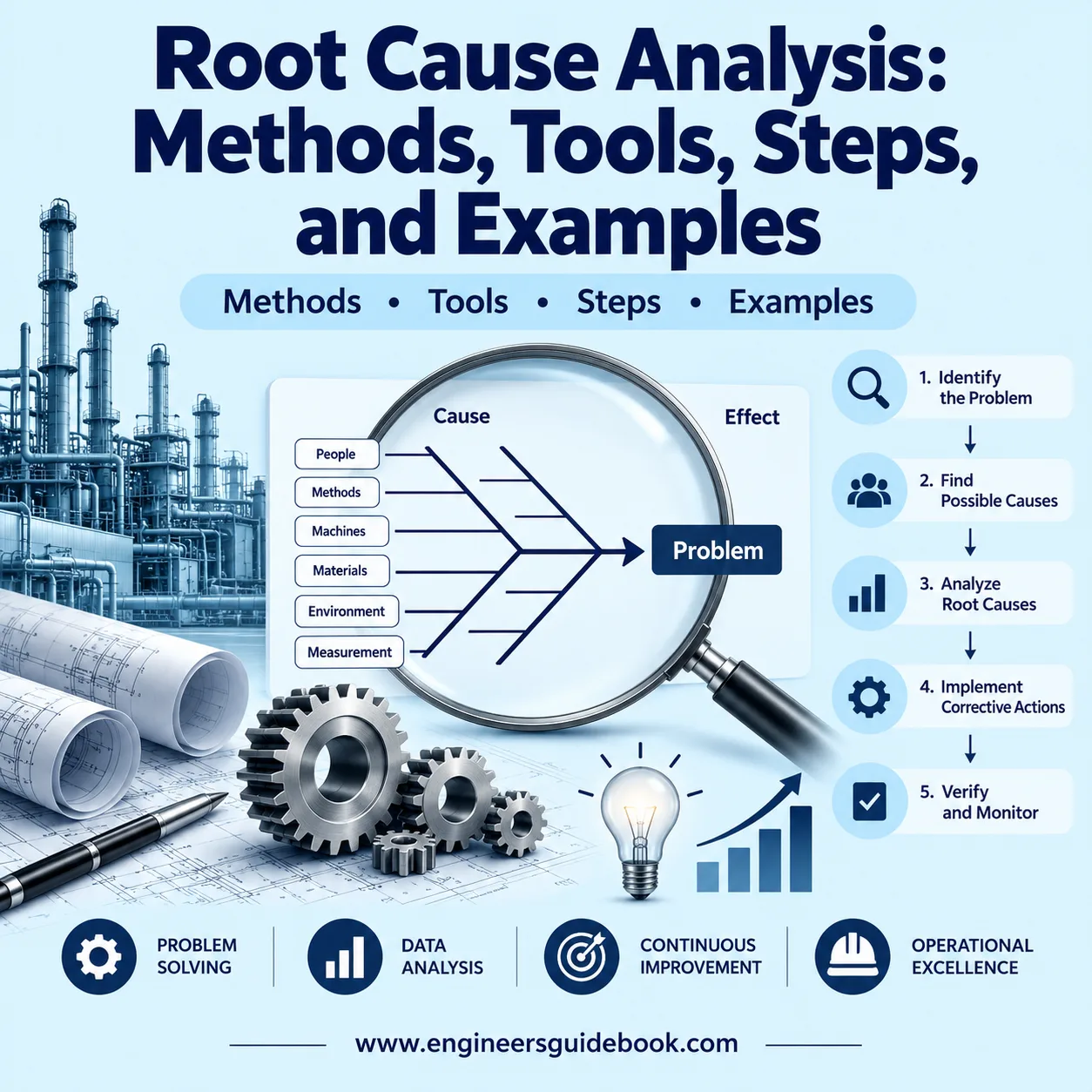
Root cause analysis is a structured problem-solving process used to identify the fundamental reasons a failure, defect, incident, or undesirable condition occurred. Instead of merely correcting visible symptoms, RCA examines evidence, causal relationships, processes, equipment, human factors, and organizational conditions to determine why the problem developed and what actions can prevent its recurrence.
1. Root Cause Analysis
Root cause analysis, commonly abbreviated as RCA, is widely used in engineering, manufacturing, maintenance, quality management, healthcare, information technology, and safety investigations. Its central premise is simple: recurring problems cannot be eliminated permanently unless their underlying causes are understood.
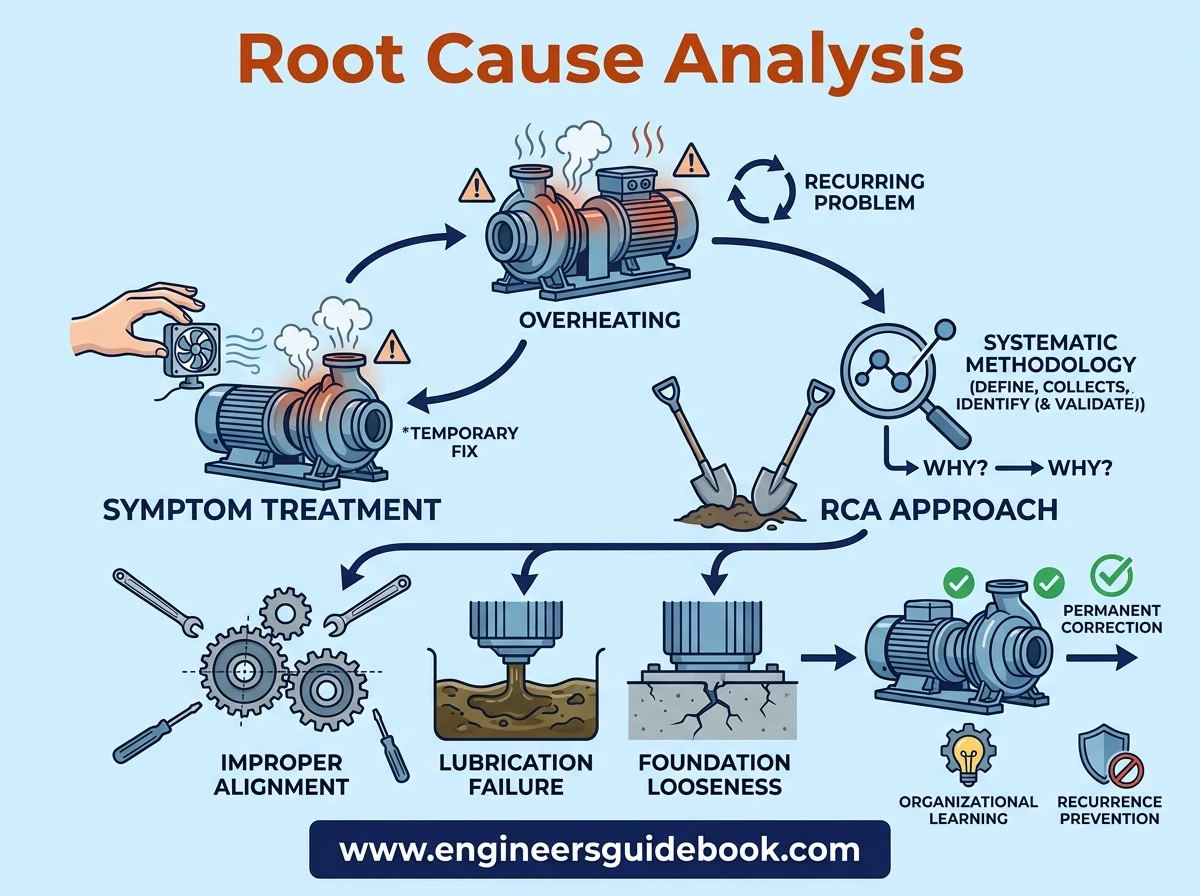
A machine that repeatedly overheats, for example, may appear to have a cooling problem. Yet the deeper cause could involve lubrication degradation, excessive mechanical loading, improper alignment, insufficient ventilation, or an unsuitable operating procedure. RCA moves the investigation beyond the obvious.
1.1 RCA Definition
Root cause analysis is a systematic methodology for identifying the fundamental cause or combination of causes responsible for an undesirable event.
The process normally involves defining the problem, collecting factual evidence, identifying possible causes, validating causal relationships, and implementing corrective measures. Effective RCA relies on verifiable data rather than conjecture.
1.2 Root Cause Meaning
A root cause is the underlying condition that creates or enables a problem to occur. Removing that condition should either eliminate the problem or substantially reduce its probability of recurrence.
Root causes may be technical, procedural, organizational, environmental, or behavioral. In complex systems, several interacting root causes may exist simultaneously rather than one isolated cause.
1.3 RCA Purpose
The principal purpose of RCA is recurrence prevention.
Instead of repeatedly repairing the same failure, organizations investigate why it continues to happen. This supports sustainable corrective actions, improved reliability, reduced operational risk, and better resource utilization.
RCA also converts individual failures into organizational learning opportunities. Each investigation can reveal weaknesses that were previously concealed within the system.
1.4 Root Cause vs Symptom
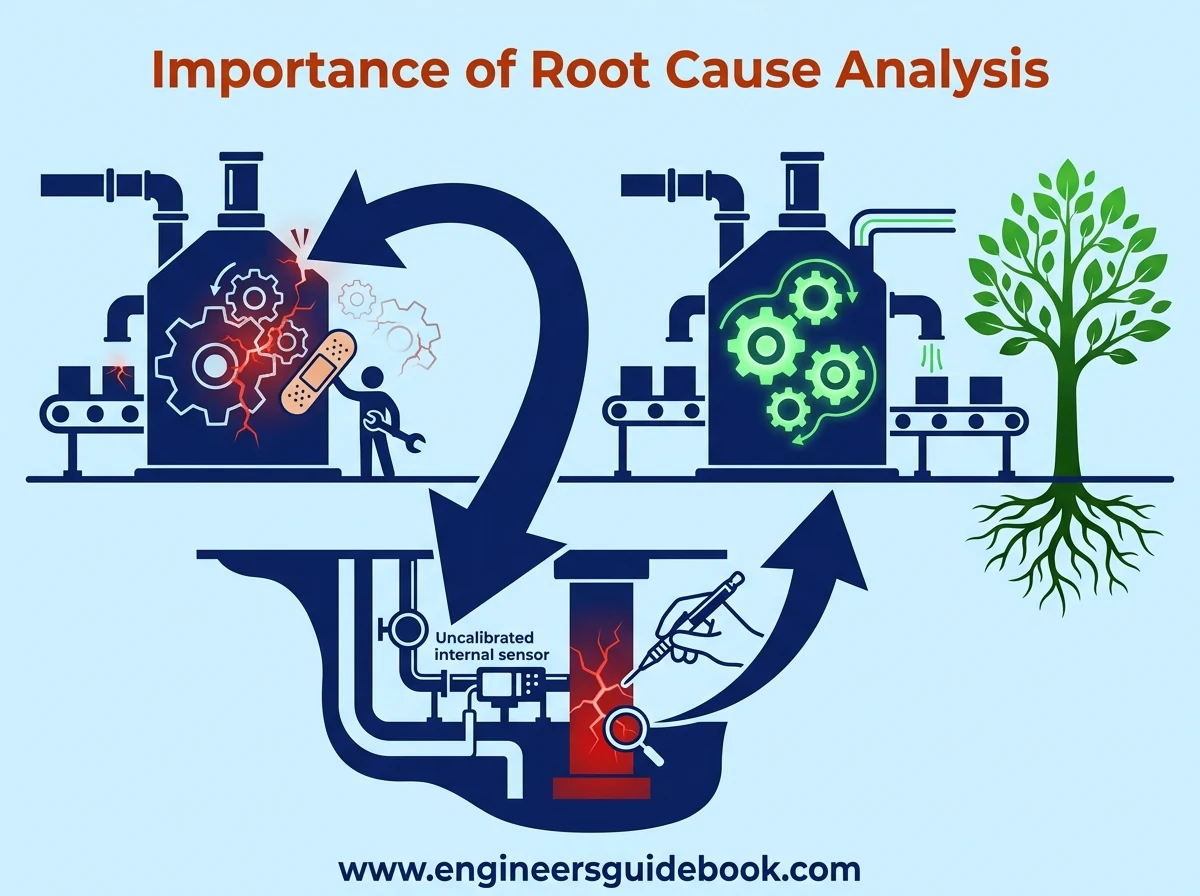
A symptom is the observable manifestation of a problem. A root cause explains why that symptom occurred.
Consider a centrifugal pump with excessive vibration. The vibration is a symptom. Replacing the bearing may temporarily restore operation, but the actual root cause could be shaft misalignment, cavitation, pipe strain, foundation looseness, or rotor imbalance.
Treating symptoms without identifying underlying causes frequently produces repetitive maintenance.
1.5 Root Cause vs Contributing Factor
A contributing factor increases the likelihood or severity of an event but may not independently create the failure.
Suppose a gearbox fails because lubrication was inadequate. High ambient temperature may have accelerated lubricant degradation and therefore contributed to the failure. However, the deeper root cause might be the absence of a defined lubrication inspection interval.
Separating primary causes from contributory conditions helps investigators develop more precise actions.
1.6 Corrective Action vs Preventive Action
Corrective action addresses the cause of an existing nonconformity or failure. Preventive action addresses conditions that could create similar problems elsewhere.
If a failed coupling is replaced because misalignment caused premature wear, realigning the shafts is corrective action. Reviewing alignment tolerances across similar machines may be preventive action.
Both approaches strengthen long-term reliability.
2. Importance of Root Cause Analysis
Organizations that rely entirely on reactive troubleshooting often experience repetitive failures, unnecessary expenditure, and unstable performance. RCA provides a disciplined alternative by converting isolated incidents into actionable knowledge.
2.1 Recurring Problem Prevention
One of the greatest benefits of RCA is preventing repeated failures.
When only the immediate fault is corrected, the underlying mechanism remains intact. A deeper investigation identifies the conditions responsible for recurrence and allows those conditions to be removed.
2.2 Downtime Reduction
Repeated equipment failures consume valuable production time.
By eliminating chronic failure mechanisms, RCA can reduce both planned and unplanned downtime. Fewer breakdowns also reduce emergency interventions, production interruptions, and maintenance backlog.
2.3 Quality Improvement
Quality defects frequently originate from process instability, incorrect settings, material variability, calibration issues, or procedural deficiencies.
RCA identifies these causal mechanisms and supports targeted improvements. The result can be lower rejection rates, improved consistency, and fewer customer complaints.
2.4 Safety Enhancement
Serious incidents rarely occur without antecedent conditions.
RCA examines failed safeguards, unsafe conditions, procedural deviations, equipment defects, supervision gaps, and systemic vulnerabilities. Correcting these factors helps reduce the probability of similar incidents.
2.5 Cost Reduction
Recurring problems generate direct and indirect costs.
These may include spare parts, overtime, lost production, scrap, rework, expedited procurement, contractor support, and warranty claims. Eliminating the underlying causes can therefore produce substantial lifecycle savings.
2.6 Reliability Improvement
RCA strengthens equipment reliability by identifying mechanisms that reduce asset life or increase failure frequency.
Examples include contamination, inadequate lubrication, misalignment, overheating, vibration, overloading, and poor installation practices. Eliminating such mechanisms improves dependable operating time.
2.7 Continuous Improvement
Root cause analysis fits naturally within continuous improvement systems such as Lean, Six Sigma, TPM, and reliability-centered maintenance.
Each investigation generates lessons that can improve procedures, equipment standards, training, inspection routines, and management systems.
2.8 Regulatory Compliance
Many regulated industries require formal investigation of significant incidents, quality deviations, or safety events.
A documented RCA process demonstrates that problems were investigated systematically and that corrective measures were established based on evidence.
3. Types of Root Causes
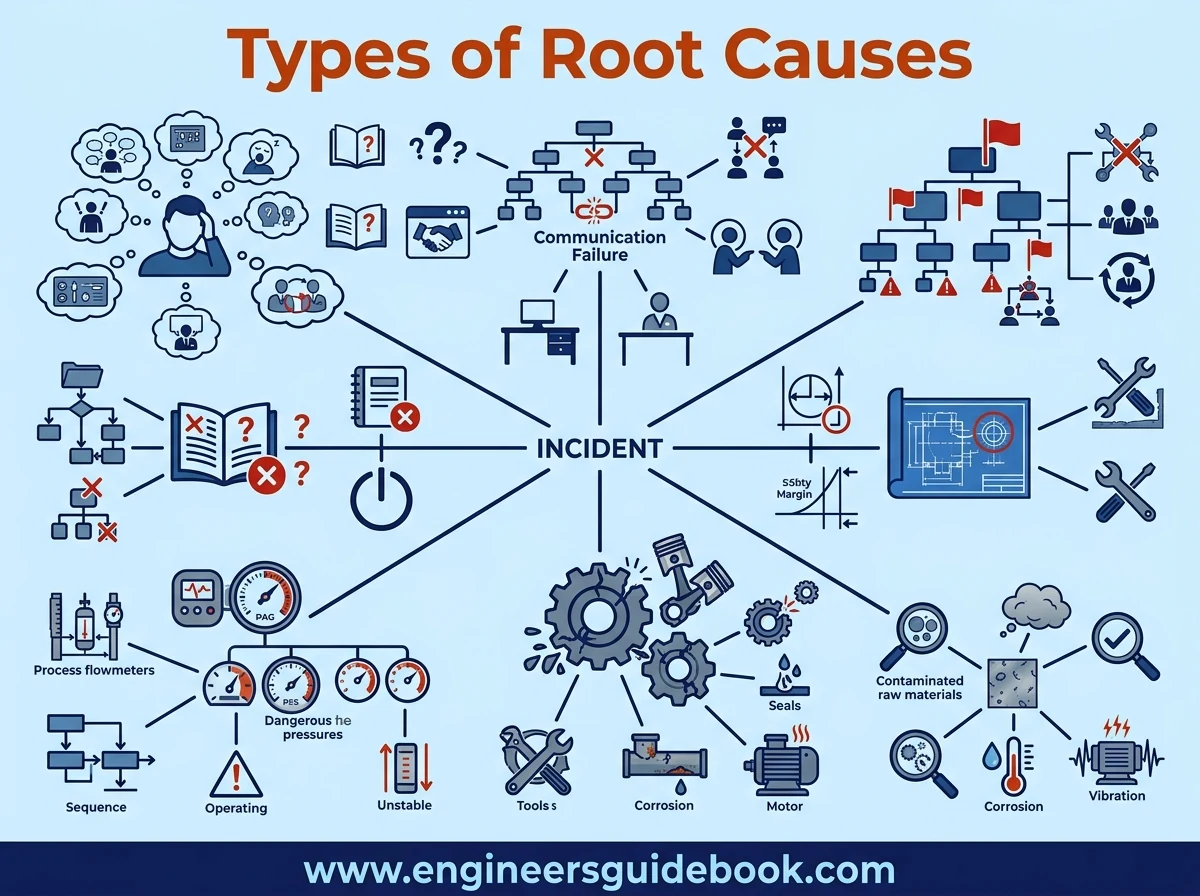
Root causes can originate from many parts of an operational system. Categorizing them helps investigation teams avoid focusing exclusively on equipment or individual behavior.
3.1 Human Factors
Human factors include mistakes influenced by workload, fatigue, inadequate training, poor interface design, unclear responsibilities, or insufficient supervision.
Simply labeling an event as operator error is rarely sufficient. Investigators should determine why the error became possible.
3.2 Equipment Failures
Mechanical or electrical defects can directly initiate failures.
Common examples include bearing deterioration, seal failure, insulation breakdown, fatigue cracking, corrosion, overheating, and component wear.
3.3 Process Failures
Processes can fail when operating conditions deviate from established requirements.
Incorrect temperatures, pressures, flow rates, sequence steps, tolerances, or control parameters may produce unstable or unsafe conditions.
3.4 Material Problems
Material defects can originate from incorrect specification, contamination, degradation, improper storage, or supplier variability.
Material traceability and inspection records are therefore valuable sources of RCA evidence.
3.5 Environmental Factors
Temperature, humidity, dust, vibration, corrosive atmospheres, inadequate ventilation, and water ingress can influence equipment and process performance.
Environmental conditions are sometimes overlooked because they exist continuously rather than appearing as sudden failures.
3.6 Management System Failures
Weak planning, ineffective inspection systems, inadequate resource allocation, poor change management, and deficient risk controls can create latent organizational vulnerabilities.
These causes often influence multiple incidents simultaneously.
3.7 Design Deficiencies
Equipment or process designs may contain insufficient safety margins, unsuitable materials, difficult maintenance access, or inadequate protection.
Repeated failures at the same location can indicate an intrinsic design limitation.
3.8 Procedural Weaknesses
Procedures may be incomplete, obsolete, ambiguous, or difficult to follow.
A procedure can technically exist while still failing to provide operators or technicians with practical guidance.
3.9 Organizational Causes
Organizational causes include communication failures, conflicting priorities, unclear accountability, inadequate staffing, and weak competence-management systems.
Such causes may remain invisible unless investigations extend beyond the immediate work area.
4. Root Cause Analysis Methods
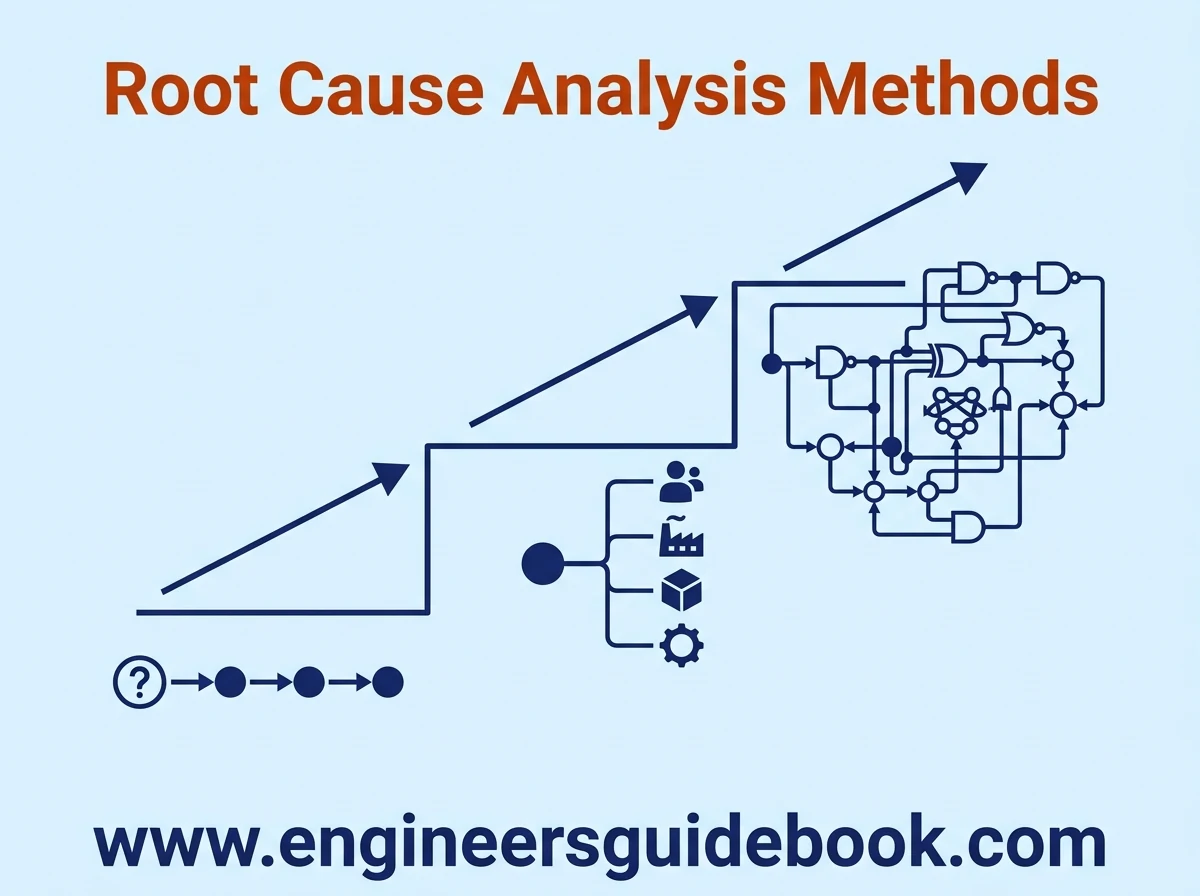
Different RCA methods suit different levels of complexity. Simple failures may require only structured questioning, while major incidents may demand sophisticated causal modeling.
4.1 Five Whys
The Five Whys method repeatedly asks why an event occurred until the underlying causal mechanism becomes visible.
It is quick, intuitive, and useful for relatively straightforward problems. However, complex failures may require multiple causal branches rather than a single sequence.
4.2 Fishbone Diagram
A Fishbone Diagram organizes potential causes into structured categories.
Typical categories include Man, Machine, Method, Material, Measurement, and Environment. The visual arrangement encourages teams to explore causes beyond their initial assumptions.
4.3 Fault Tree Analysis
Fault Tree Analysis uses deductive logic to examine combinations of events that can produce a defined failure.
Logical AND and OR relationships allow investigators to model complex interactions between component failures and system conditions.
4.4 Failure Mode and Effects Analysis
FMEA identifies potential failure modes before or after problems occur and evaluates their consequences.
Teams assess how components or processes might fail, what effects those failures could create, and what controls are needed.
4.5 Pareto Analysis
Pareto Analysis ranks problems according to frequency, cost, downtime, or another measurable consequence.
It helps teams focus attention on the relatively small number of causes responsible for a substantial proportion of losses.
4.6 Kepner Tregoe Analysis
Kepner Tregoe analysis uses structured comparison to distinguish what the problem is from what it is not.
By analyzing differences in location, timing, magnitude, and circumstances, investigators can narrow the field of plausible causes.
4.7 Change Analysis
Change Analysis investigates what changed before a problem appeared.
Changes may involve equipment, materials, suppliers, operators, software, procedures, operating conditions, or maintenance practices.
4.8 Barrier Analysis
Barrier Analysis evaluates safeguards intended to prevent an undesirable event.
Investigators examine whether barriers were missing, ineffective, bypassed, poorly designed, or inadequately maintained.
4.9 Event and Causal Factor Analysis
This method reconstructs an incident chronologically and connects significant events with causal conditions.
It is particularly useful for complex accidents where several actions and failures developed over time.
4.10 Apollo Root Cause Analysis
Apollo Root Cause Analysis uses cause-and-effect relationships to identify multiple causal pathways.
The approach discourages simplistic single-cause explanations and emphasizes evidence-supported connections between conditions and actions.
5. Root Cause Analysis Tools
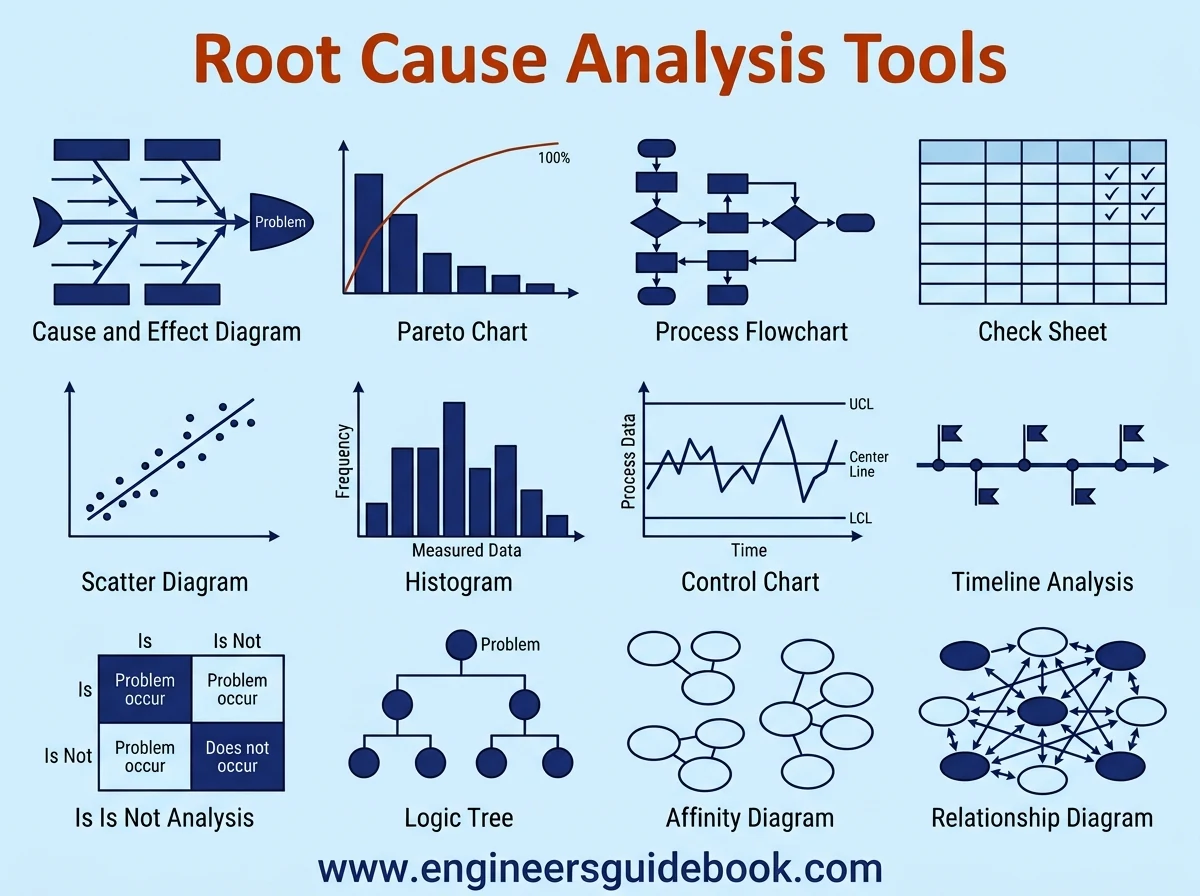
RCA tools help investigators visualize data, organize evidence, detect patterns, and test hypotheses.
5.1 Cause and Effect Diagram
The Cause and Effect Diagram structures potential causes around a clearly defined problem. It is especially valuable during multidisciplinary brainstorming.
5.2 Pareto Chart
A Pareto Chart displays categories from highest to lowest impact. It helps identify the dominant sources of failures, defects, or losses.
5.3 Process Flowchart
Process flowcharts map activities, decisions, transfers, and control points. They can reveal bottlenecks, missing steps, and process inconsistencies.
5.4 Check Sheet
Check sheets provide a standardized method for recording observations. Consistent data collection makes subsequent analysis more reliable.
5.5 Scatter Diagram
Scatter diagrams compare two variables to identify possible relationships. They can reveal whether parameters such as temperature and defect rate move together.
5.6 Histogram
Histograms display the distribution of measured data. They help investigators identify variation, skewness, clustering, and abnormal patterns.
5.7 Control Chart
Control charts distinguish normal process variation from statistically unusual behavior. They are useful when investigating process instability.
5.8 Timeline Analysis
Timeline analysis arranges events chronologically. This can reveal sequences, delays, and precursor conditions that were initially overlooked.
5.9 Is Is Not Analysis
Is Is Not Analysis compares where, when, and under what conditions a problem occurs against situations where it does not occur.
The contrast can expose critical distinguishing factors.
5.10 Logic Tree
Logic trees break a problem into progressively smaller causal branches. Each branch can then be verified or rejected using evidence.
5.11 Affinity Diagram
Affinity diagrams group related observations and ideas into logical categories. They are useful when investigations generate large amounts of qualitative information.
5.12 Relationship Diagram
Relationship diagrams show interactions among multiple causes. They help investigators identify influential factors within complicated systems.
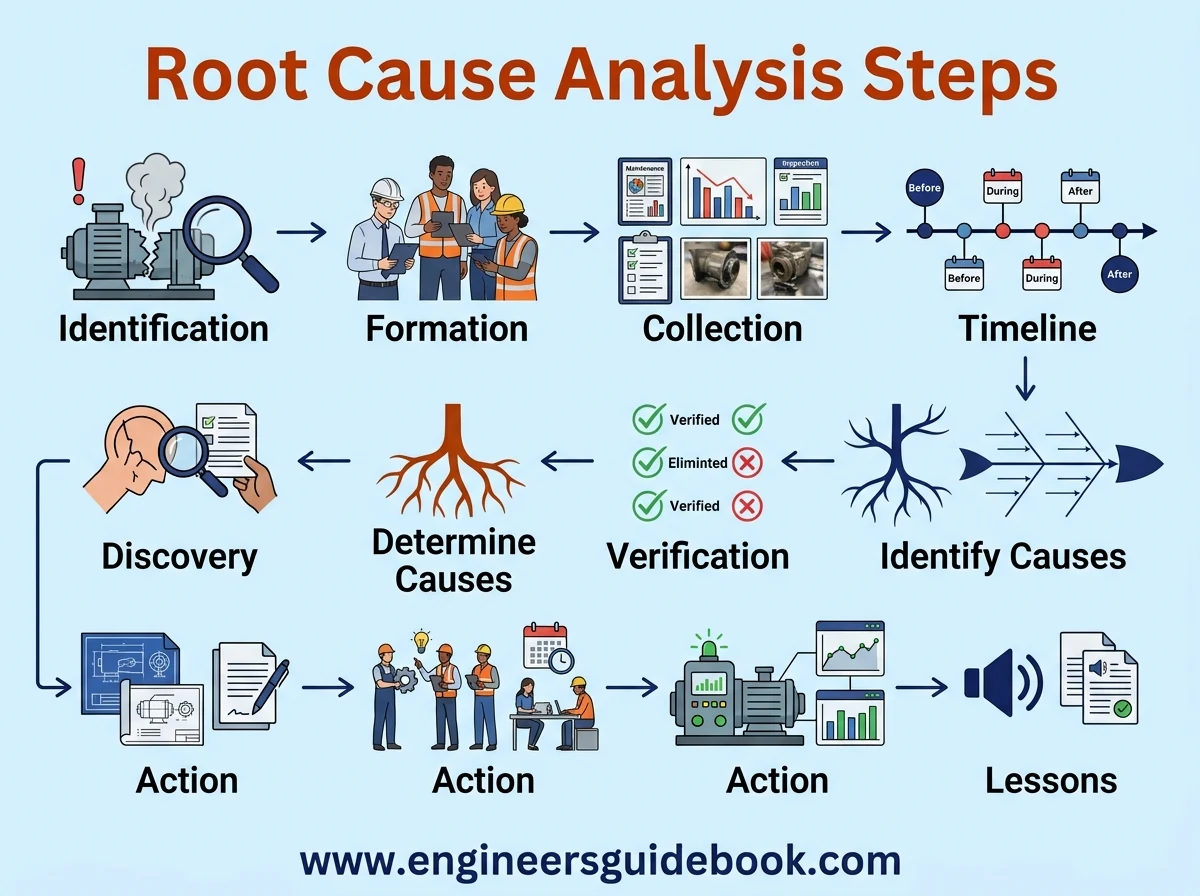
6. Root Cause Analysis Steps
A disciplined RCA follows a logical sequence from problem recognition to effectiveness verification.
6.1 Problem Identification
The process begins by recognizing a significant failure, defect, incident, or recurring abnormality.
6.2 Problem Definition
The problem should be described precisely using measurable facts rather than assumptions or vague terminology.
6.3 Team Formation
Relevant specialists should be selected according to the nature of the problem. Multidisciplinary teams generally provide stronger investigations.
6.4 Data Collection
Investigators gather maintenance records, process data, inspection results, photographs, interviews, and other supporting evidence.
6.5 Timeline Development
Events are arranged chronologically to understand what happened before, during, and after the failure.
6.6 Possible Cause Identification
Potential causes are generated using tools such as brainstorming, Fishbone Diagrams, Five Whys, or logic trees.
6.7 Cause Verification
Each proposed cause should be tested against available evidence. Unsupported hypotheses should be eliminated.
6.8 Root Cause Confirmation
The remaining causes are evaluated to determine whether eliminating them would prevent recurrence.
6.9 Corrective Action Development
Actions are developed to remove, control, or mitigate confirmed causes.
6.10 Corrective Action Implementation
Responsibilities, deadlines, resources, and verification criteria should be assigned before actions are executed.
6.11 Effectiveness Verification
Performance should be monitored afterward to confirm that the problem has actually been eliminated or reduced.
6.12 Lessons Learned
Key findings should be communicated to relevant departments so similar vulnerabilities can be addressed elsewhere.
7. Problem Definition and Data Collection
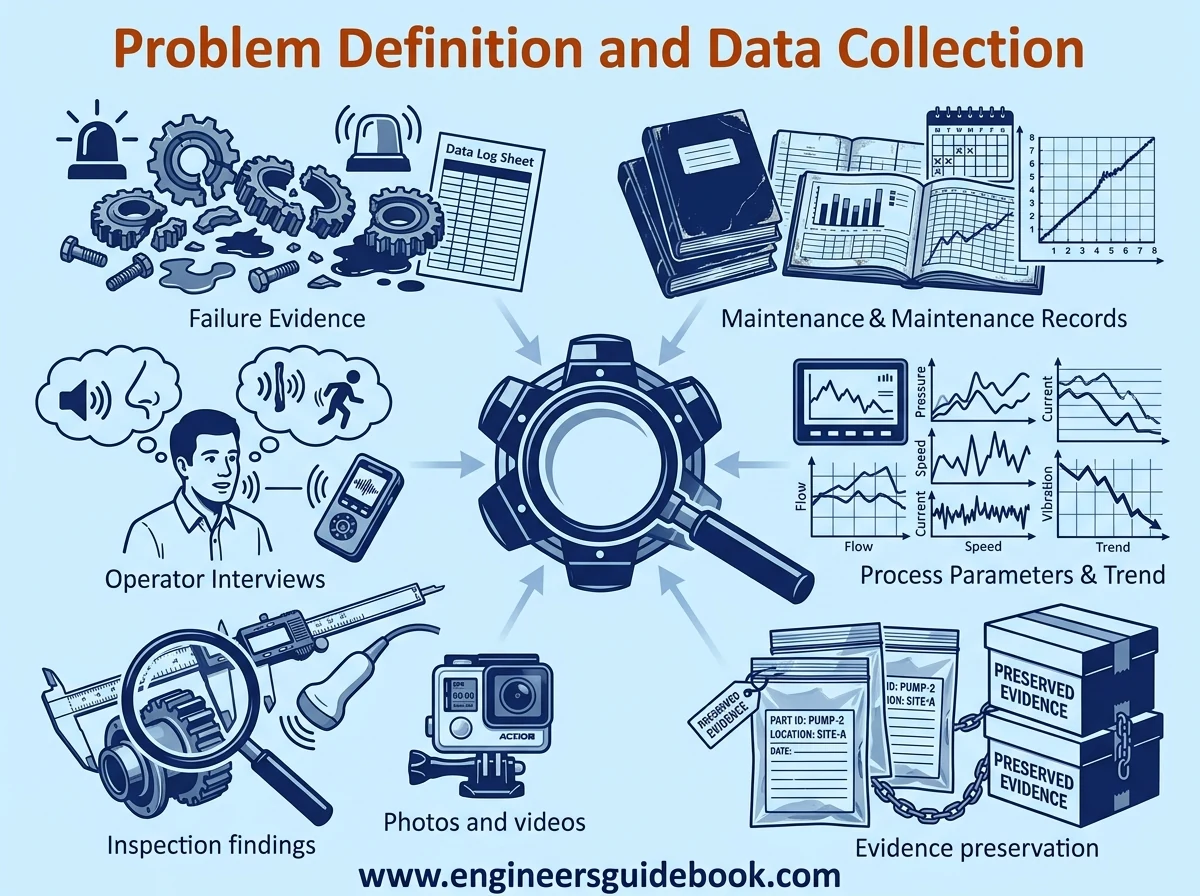
Accurate RCA depends heavily on evidence quality. Weak information often produces weak conclusions.
7.1 Problem Statement
A strong problem statement defines what happened, where it occurred, when it occurred, and the measurable consequence.
7.2 Failure Evidence
Damaged components, residues, broken fasteners, alarm records, and other physical evidence should be examined before repair activities alter them.
7.3 Historical Records
Previous failures can reveal recurrence patterns and chronic conditions that are difficult to detect from a single incident.
7.4 Maintenance Records
Work orders, inspection reports, lubrication histories, and repair records provide valuable information about asset condition and previous interventions.
7.5 Operator Interviews
Operators often possess tacit knowledge about unusual sounds, smells, vibration, behavior, or operating conditions preceding a failure.
7.6 Process Parameters
Pressure, temperature, speed, flow, current, vibration, and other recorded variables can help reconstruct operating conditions.
7.7 Inspection Findings
Dimensional checks, visual inspections, nondestructive testing, and condition-monitoring results provide objective evidence of degradation.
7.8 Photos and Videos
Photographs and videos preserve transient conditions that may disappear during dismantling or cleanup.
7.9 Trend Data
Historical trends can expose gradual deterioration, recurring deviations, and relationships between operating parameters.
7.10 Evidence Preservation
Critical evidence should be identified, labeled, stored, and documented carefully. Preserving its integrity ensures that later conclusions remain traceable, defensible, and technically credible.
8. Root Cause Verification
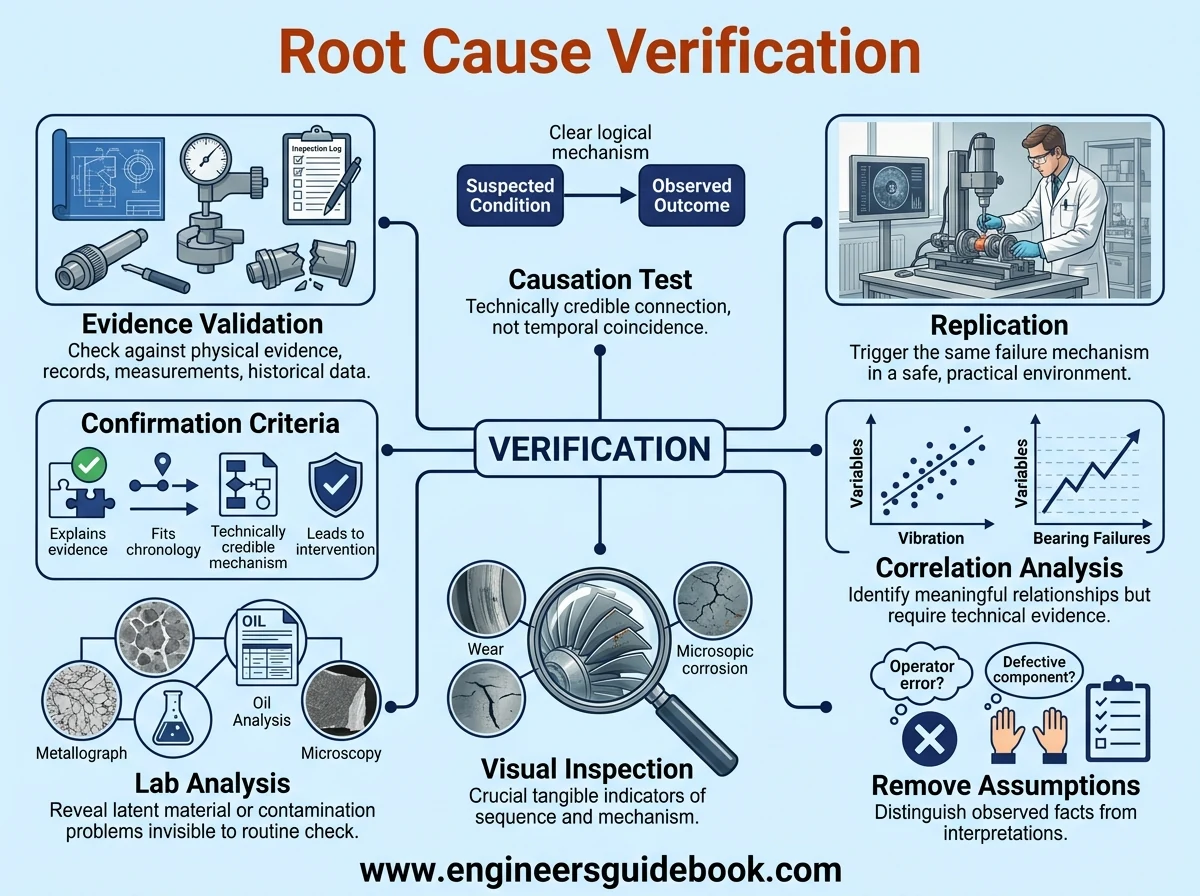
Root cause verification separates credible conclusions from convenient assumptions. A suspected cause should be supported by evidence demonstrating a defensible connection between the condition and the observed failure.
8.1 Evidence Based Validation
Every proposed root cause should be compared with physical evidence, operating records, inspection findings, measurements, and historical data. A hypothesis that contradicts reliable evidence should be rejected, regardless of how plausible it initially appears.
8.2 Cause and Effect Testing
Cause and effect testing examines whether the suspected condition can realistically produce the observed outcome. Investigators should establish a logical mechanism linking the cause to the failure rather than relying on temporal coincidence.
8.3 Reproduction Testing
Where safe and practical, controlled reproduction can provide strong verification. Recreating specific operating conditions may demonstrate whether a suspected parameter, component, material, or procedural deviation actually triggers the same failure mechanism.
8.4 Data Correlation
Correlation analysis compares variables to identify meaningful relationships. For example, repeated bearing failures occurring alongside elevated vibration or temperature may strengthen a hypothesis. Correlation alone, however, does not prove causation and should be supported by technical evidence.
8.5 Assumption Elimination
Effective RCA systematically removes unsupported assumptions. Statements such as “the operator probably made a mistake” or “the component must have been defective” require verification. Investigators should distinguish observed facts from interpretations.
8.6 Physical Inspection
Physical inspection can reveal wear patterns, discoloration, deformation, corrosion, cracking, looseness, contamination, or abnormal clearances. These tangible indicators often provide crucial information about the sequence and mechanism of failure.
8.7 Laboratory Testing
Complex failures may require metallography, chemical analysis, hardness testing, lubricant analysis, fracture examination, microscopy, or other laboratory techniques. Such testing can reveal latent material or contamination problems invisible during routine inspection.
8.8 Root Cause Confirmation Criteria
A confirmed root cause should explain the available evidence, fit the event chronology, possess a technically credible causal mechanism, and lead to an intervention capable of preventing or substantially reducing recurrence.
9. Corrective and Preventive Actions
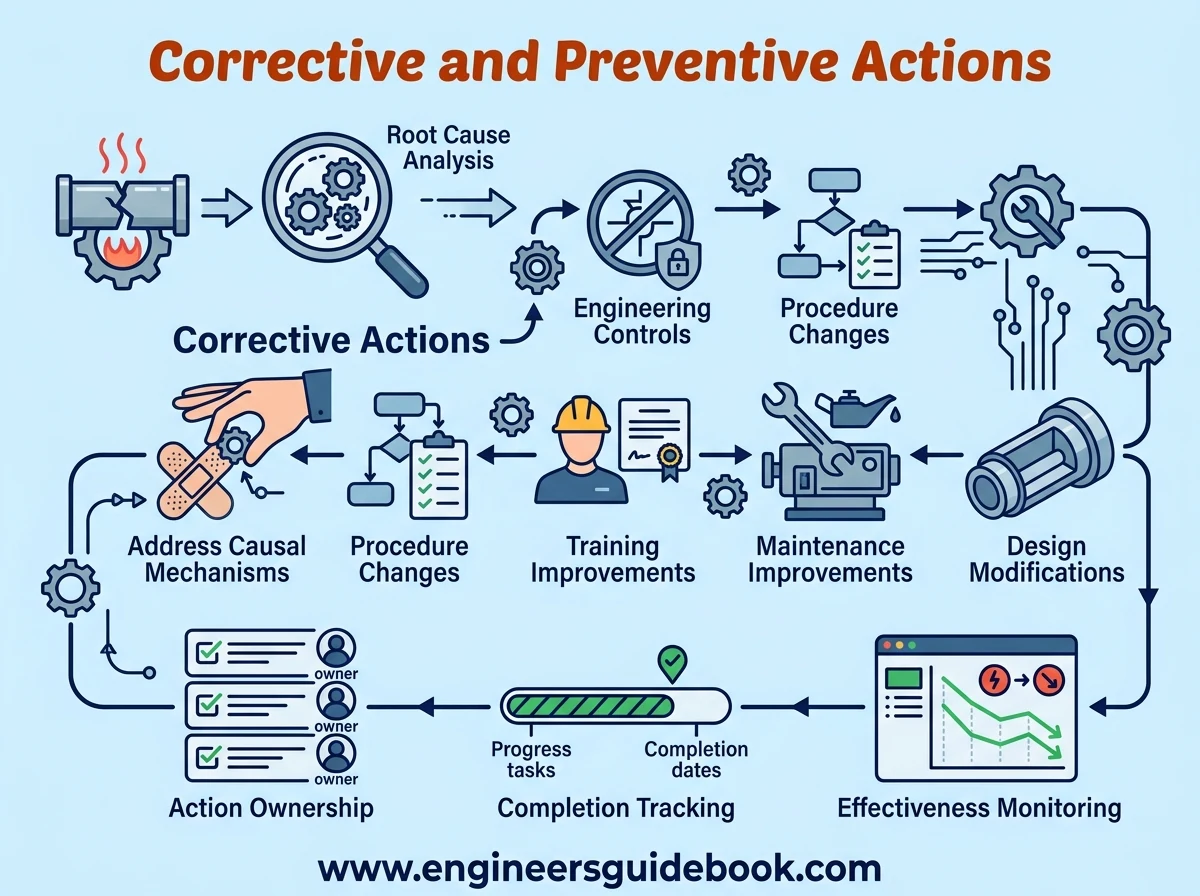
Identifying a root cause has limited value unless the finding is translated into effective action. Corrective and preventive measures should address causal mechanisms rather than merely restoring normal operation.
9.1 Immediate Correction
An immediate correction restores the affected condition. Examples include replacing a failed bearing, tightening a loose connection, resetting an instrument, or removing contaminated material.
9.2 Containment Action
Containment prevents the problem from spreading while a permanent solution is developed. Production holds, additional inspections, temporary barriers, or increased monitoring are common containment measures.
9.3 Corrective Action
Corrective action eliminates or controls the verified cause of an existing problem. If shaft misalignment caused repeated bearing damage, precision realignment addresses the causal mechanism more effectively than repeated bearing replacement.
9.4 Preventive Action
Preventive action extends learning beyond the original failure. Similar machines, products, processes, or locations can be reviewed for the same latent vulnerability before another incident occurs.
9.5 Engineering Controls
Engineering controls modify equipment or processes so that undesirable conditions become less likely. Interlocks, guards, automatic shutdowns, alarms, ventilation improvements, and mistake-proofing devices are typical examples.
9.6 Procedure Changes
Procedures should be revised when unclear instructions, missing steps, incorrect limits, or obsolete practices contribute to failure. Updated procedures must remain practical enough for personnel to follow consistently.
9.7 Training Improvements
Training should target demonstrated competence gaps rather than become a default response to every incident. Effective programs explain both the required task and the technical consequences of incorrect execution.
9.8 Maintenance Improvements
RCA frequently exposes weaknesses in lubrication, inspection, calibration, alignment, condition monitoring, or preventive maintenance intervals. Improving these activities can remove degradation mechanisms before functional failure develops.
9.9 Design Modifications
Some recurring problems originate from intrinsic design limitations. Material upgrades, geometry changes, improved accessibility, greater capacity, or additional protection may provide a more durable solution.
9.10 Action Ownership
Every corrective action needs a clearly identified owner. Responsibility should include authority, required resources, completion expectations, and accountability for verifying implementation.
9.11 Completion Tracking
Corrective actions should be documented and monitored until closure. Tracking systems prevent important recommendations from becoming forgotten after the urgency surrounding an incident diminishes.
9.12 Effectiveness Monitoring
Completion does not automatically prove effectiveness. Failure frequency, downtime, defects, alarms, inspection findings, or other relevant indicators should be monitored to determine whether recurrence has genuinely declined.
10. Root Cause Analysis Examples
Practical examples demonstrate how visible failures can originate from less obvious underlying conditions.
10.1 Bearing Failure
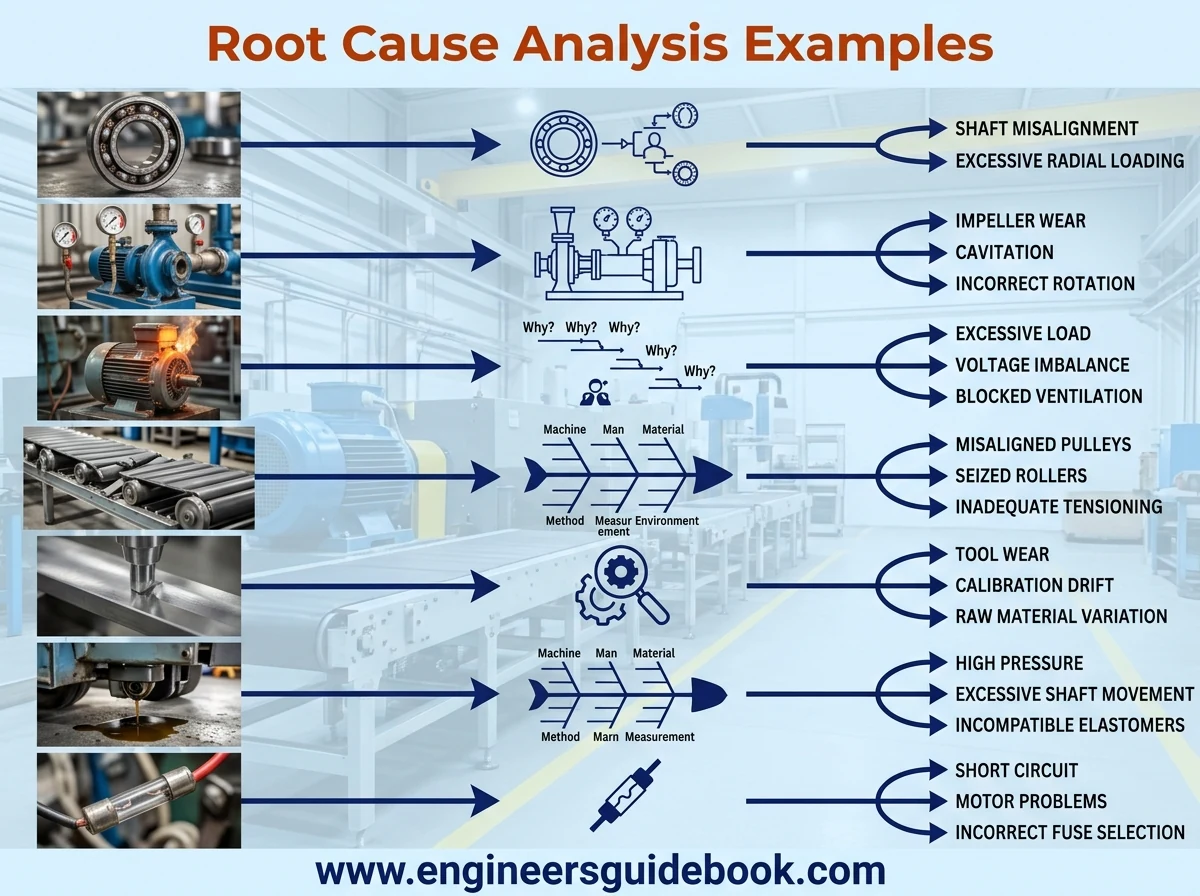
A repeatedly damaged bearing may initially suggest poor bearing quality. Investigation could instead identify shaft misalignment that generates excessive radial loading and accelerates fatigue.
10.2 Pump Failure
Low pump discharge pressure may result from impeller wear, suction restriction, air ingress, incorrect rotation, cavitation, or process changes. RCA differentiates these possibilities through measurement and inspection.
10.3 Motor Overheating
An overheating motor might be caused by excessive load, voltage imbalance, blocked ventilation, frequent starts, deteriorated insulation, or mechanical resistance in the driven equipment.
10.4 Conveyor Breakdown
Repeated belt tracking problems may originate from misaligned pulleys, uneven loading, seized rollers, structural distortion, or inadequate tensioning rather than the belt itself.
10.5 Product Quality Defect
A dimensional defect could result from tool wear, calibration drift, incorrect machine settings, raw material variation, or inconsistent operating practices.
10.6 Production Downtime
Frequent production stoppages may appear unrelated until Pareto analysis reveals that a small group of recurring equipment failures accounts for most lost operating time.
10.7 Safety Incident
A slip incident may involve a contaminated floor, but deeper investigation might reveal leaking equipment, inadequate inspection routines, poor drainage, and insufficient housekeeping controls.
10.8 Oil Leakage
Replacing a leaking seal may provide temporary relief. Excessive shaft movement, incorrect seal installation, high pressure, incompatible elastomers, or damaged sealing surfaces may be the actual causes.
10.9 Repeated Fuse Failure
Repeated fuse operation can indicate overcurrent, short circuits, motor problems, incorrect fuse selection, damaged wiring, or excessive starting loads. Installing a larger fuse without investigation may conceal a serious fault.
10.10 Customer Complaint
A recurring customer complaint about damaged products may trace back through packaging defects, handling practices, transportation conditions, or process variation.
10.11 Five Whys Example
A machine stopped because a bearing seized. The bearing seized because lubrication was insufficient. Lubrication was insufficient because the scheduled task was missed. The task was missed because it was absent from the maintenance system. The deeper cause is therefore a maintenance-planning deficiency rather than simply bearing failure.
10.12 Fishbone Diagram Example
For repeated product rejection, a Fishbone Diagram might investigate machine condition, operator practices, materials, measurement systems, methods, and environmental conditions simultaneously. Evidence can then eliminate improbable branches.
11. Root Cause Analysis Best Practices
Strong RCA requires disciplined investigation, technical skepticism, and careful documentation.
11.1 Facts Before Assumptions
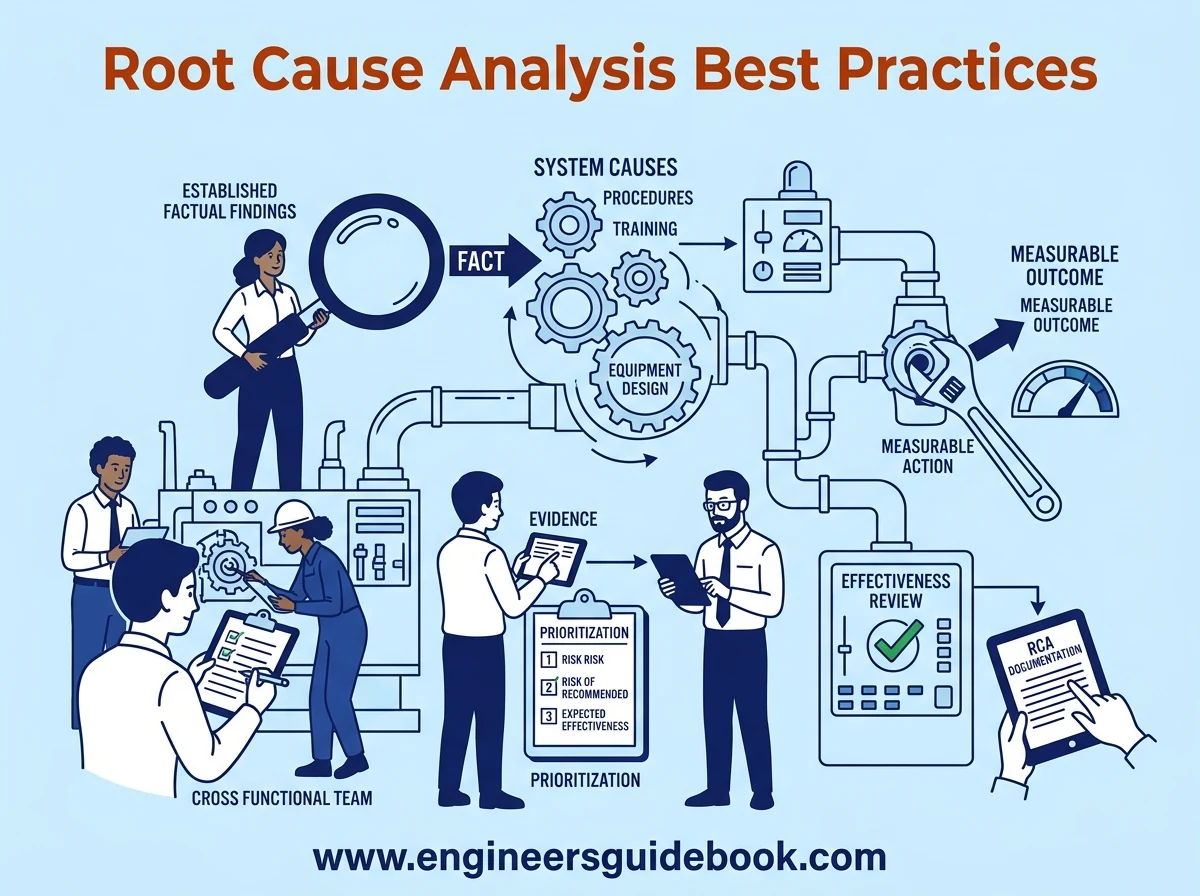
Facts should be established before theories dominate the investigation. Early assumptions can create confirmation bias and direct attention away from contradictory evidence.
11.2 Cross Functional Teams
Complex problems benefit from multidisciplinary participation. Operations, maintenance, engineering, quality, safety, and other specialists can contribute different forms of technical knowledge.
11.3 System Causes
Investigations should examine systems as well as individual actions. Human errors often occur within environments shaped by procedures, workload, equipment design, communication, and supervision.
11.4 Evidence Based Decisions
Recommendations should follow validated findings. Actions based primarily on intuition may consume resources while leaving the real failure mechanism untouched.
11.5 Action Prioritization
Actions can be prioritized according to risk, recurrence probability, consequence, implementation complexity, and expected effectiveness.
11.6 Clear Ownership
Specific ownership prevents ambiguous responsibility. Each action should have one accountable owner even when several departments participate.
11.7 Measurable Actions
Actions should define observable outcomes. Statements such as “improve maintenance” are weaker than measurable requirements describing exactly what must change.
11.8 Effectiveness Reviews
Formal reviews should confirm whether corrective actions produced the expected improvement after an appropriate operating period.
11.9 RCA Documentation
RCA records should capture the problem, evidence, analysis, confirmed causes, actions, responsibilities, deadlines, and verification results.
11.10 Lessons Learned Sharing
Relevant findings should be communicated across similar equipment and processes. A failure in one area may expose vulnerabilities elsewhere.
11.11 Common RCA Mistakes
Common mistakes include stopping at symptoms, blaming individuals, accepting unsupported causes, collecting inadequate evidence, selecting weak actions, and closing investigations without effectiveness verification.
11.12 RCA Failure Prevention
RCA itself becomes ineffective when treated as paperwork. Competent teams, management support, disciplined methodology, and action follow-through are essential for meaningful results.
12. Root Cause Analysis FAQs
12.1 What Is Root Cause Analysis?
Root cause analysis is a systematic process for identifying the fundamental causes of failures, defects, incidents, or recurring problems so effective corrective actions can prevent recurrence.
12.2 What Are the Main Steps of Root Cause Analysis?
The main steps include defining the problem, gathering evidence, developing a timeline, identifying possible causes, verifying those causes, implementing corrective actions, and checking effectiveness.
12.3 What Are the Most Common Root Cause Analysis Methods?
Common methods include Five Whys, Fishbone Diagrams, Fault Tree Analysis, FMEA, Pareto Analysis, Change Analysis, Barrier Analysis, and Event and Causal Factor Analysis.
12.4 What Is the Difference Between Five Whys and Fishbone Analysis?
Five Whys follows a questioning sequence toward deeper causes, while Fishbone Analysis organizes multiple possible causes into structured categories for broader investigation.
12.5 How Do You Identify the True Root Cause of a Problem?
The true root cause is identified by combining evidence, technical analysis, causal testing, historical data, inspection, and verification rather than relying on assumptions.
12.6 How Many Whys Should Be Asked in Root Cause Analysis?
Five is a guideline rather than a mandatory number. Investigators should continue questioning until they reach a cause that can be verified and meaningfully controlled.
12.7 What Is an Example of Root Cause Analysis?
If a bearing repeatedly fails, RCA may discover that misalignment creates excessive loading. Replacing bearings treats the symptom, while correcting alignment addresses the underlying cause.
12.8 When Should Root Cause Analysis Be Used?
RCA is appropriate for recurring failures, major breakdowns, safety incidents, significant quality defects, customer complaints, costly downtime, and other consequential or repetitive problems.
12.9 Who Should Participate in Root Cause Analysis?
Participants should include personnel with direct knowledge of the event and relevant technical expertise, such as operators, maintenance personnel, engineers, quality specialists, and safety professionals.
12.10 How Do You Verify a Root Cause?
A root cause is verified by confirming that it matches available evidence, explains the failure mechanism, fits the event timeline, and can be linked logically to recurrence.
12.11 What Is the Difference Between Root Cause and Corrective Action?
A root cause explains why the problem occurred. A corrective action is the intervention implemented to eliminate or control that cause.
12.12 How Do You Document Root Cause Analysis?
RCA documentation should include the problem statement, evidence, timeline, analysis method, verified causes, corrective actions, owners, deadlines, and effectiveness results.
13. Conclusion
Root cause analysis transforms problem solving from repetitive repair into structured prevention. Its effectiveness depends not simply on identifying what failed but on understanding why failure became possible.
Successful RCA combines precise problem definition, reliable evidence, appropriate analytical tools, cause verification, targeted corrective action, and subsequent effectiveness monitoring.
Sustainable solutions remove causal mechanisms rather than repeatedly suppressing symptoms. This reduces the likelihood that the same failure will reappear under similar conditions.
Each completed investigation adds knowledge to the organization. Applied systematically, these lessons strengthen reliability, safety, quality, productivity, and operational discipline.
Long-term prevention requires more than closing an RCA report. Organizations must preserve lessons, monitor corrective actions, review similar systems, and integrate findings into engineering, maintenance, procedures, training, and future decision-making.