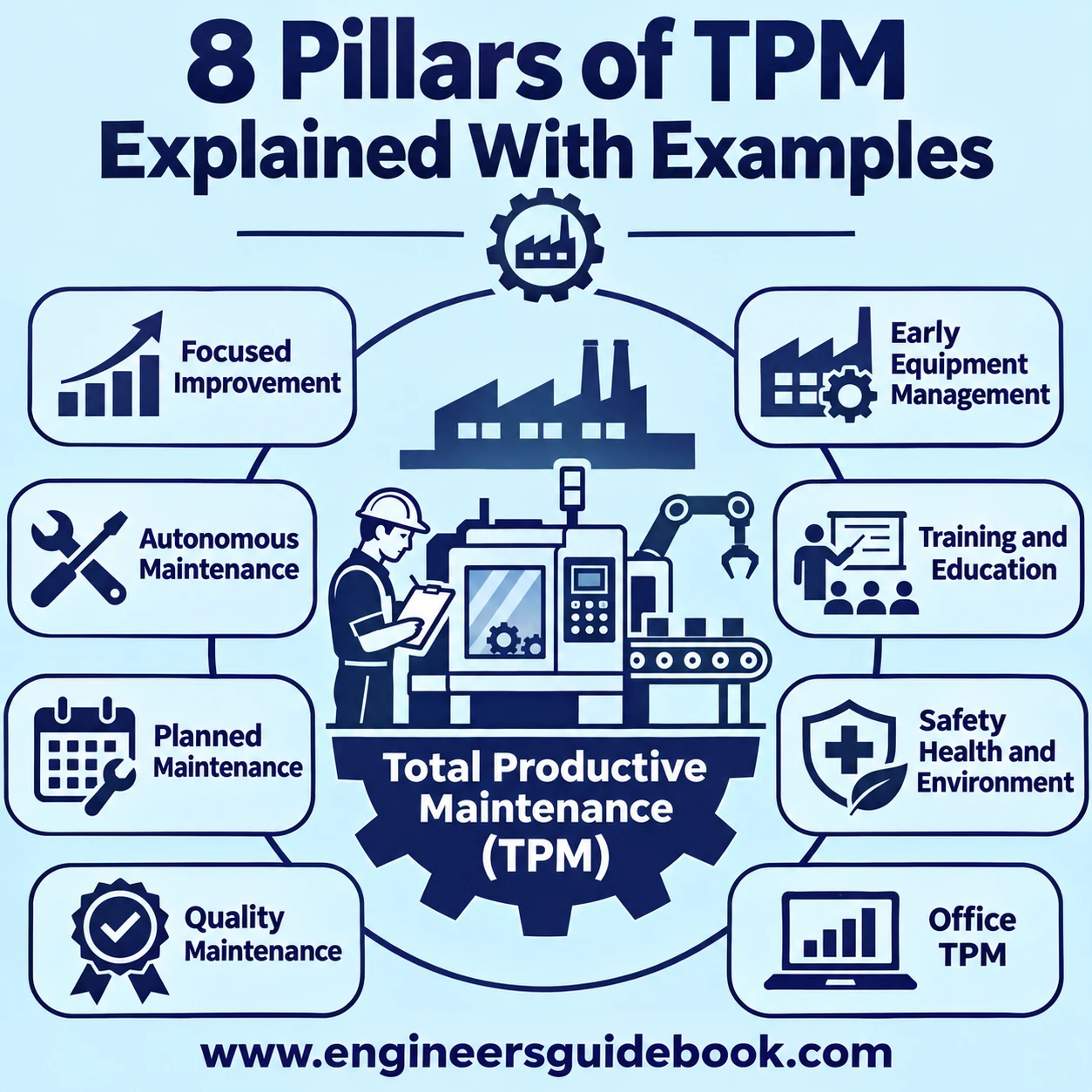
The 8 pillars of TPM are Autonomous Maintenance, Planned Maintenance, Focused Improvement, Quality Maintenance, Early Equipment Management, Education and Training, Safety, Health and Environment, and Office TPM. These pillars work together to eliminate equipment losses, improve reliability, increase productivity, prevent defects, and promote employee involvement in achieving sustainable manufacturing excellence.
1. Introduction to the 8 Pillars of TPM
1.1 What Is Total Productive Maintenance?
Total Productive Maintenance (TPM) is a comprehensive equipment management methodology that maximizes operational efficiency through employee participation, proactive maintenance, and continuous improvement. Unlike conventional maintenance approaches, TPM distributes responsibility for equipment performance across production, maintenance, engineering, and administrative departments.
Its fundamental philosophy revolves around preventing equipment deterioration rather than merely responding to failures.
1.2 What Are the 8 Pillars of TPM?
The eight pillars of TPM represent interconnected improvement practices that address different aspects of manufacturing performance. Each pillar has a distinct responsibility, ranging from routine equipment care to administrative efficiency.
Together, these pillars establish a systematic framework for eliminating operational inefficiencies throughout an organization.
1.3 Objectives of the TPM Pillars
The primary objectives of the eight TPM pillars include:
Minimizing equipment breakdowns.
Eliminating production defects.
Preventing workplace accidents.
Reducing manufacturing losses.
Improving Overall Equipment Effectiveness (OEE).
Developing employee technical competencies.
Optimizing equipment life cycle costs.
These objectives collectively support operational excellence and long-term business sustainability.
1.4 Importance of TPM in Manufacturing
Manufacturing facilities depend heavily on equipment availability and consistent production performance. Unplanned breakdowns disrupt production schedules, increase operating costs, and compromise delivery commitments.
TPM addresses these vulnerabilities by establishing equipment ownership, systematic maintenance practices, and measurable performance improvement initiatives.
1.5 The Role of 5S as the Foundation of TPM
The 5S methodology provides the organizational foundation for implementing TPM. It comprises five fundamental practices: Sort, Set in Order, Shine, Standardize, and Sustain.
A clean, organized workplace makes equipment abnormalities easier to identify, reduces unnecessary movement, and establishes the operational discipline required for successful TPM implementation.

2. Pillar 1 – Autonomous Maintenance
2.1 What Is Autonomous Maintenance?
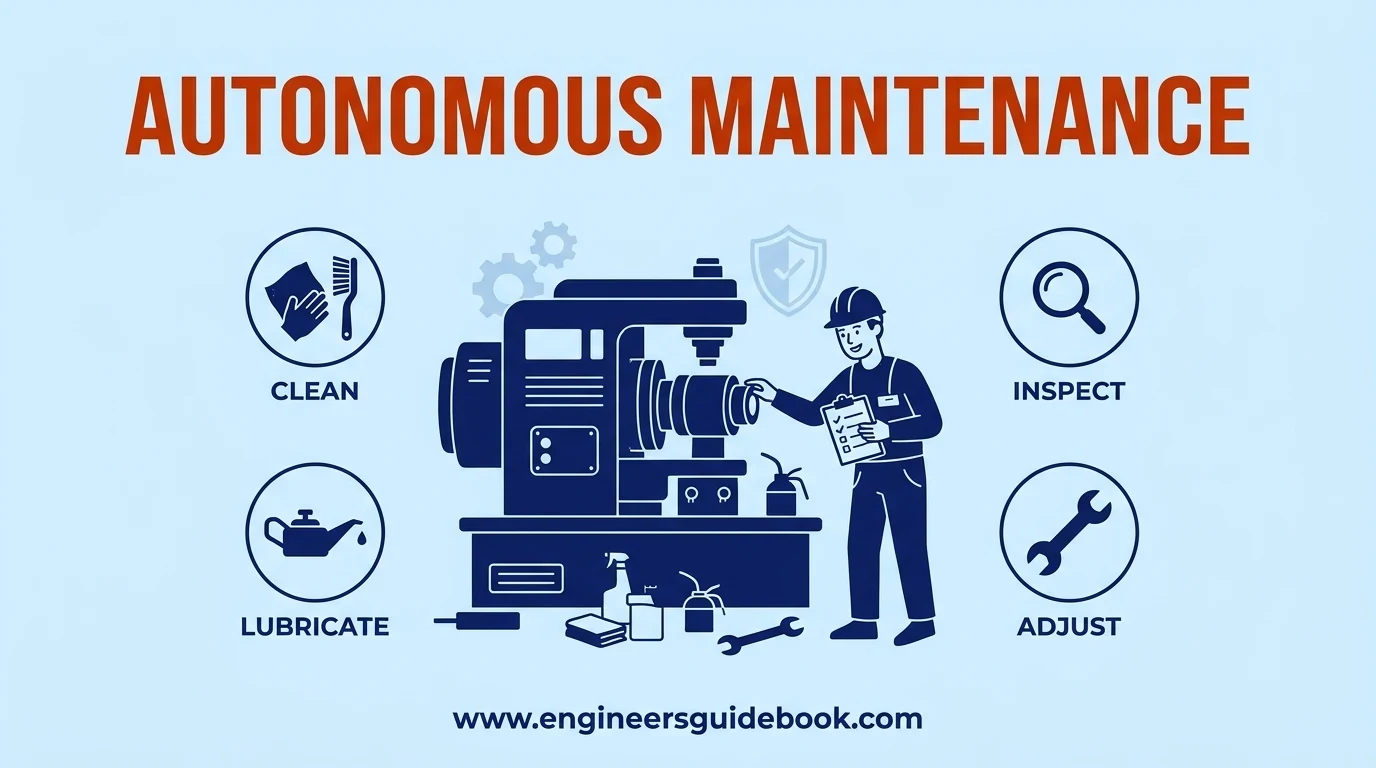
Autonomous Maintenance, also known as Jishu Hozen, empowers machine operators to perform fundamental equipment care activities. These activities include cleaning, lubrication, inspection, and authorized minor adjustments.
Specialized maintenance personnel remain responsible for complex repairs and technical interventions.
2.2 Objectives of Autonomous Maintenance
Autonomous Maintenance aims to prevent accelerated equipment deterioration, detect abnormalities early, and develop operator ownership. It also reduces dependence on maintenance technicians for routine activities, allowing technical teams to concentrate on reliability improvement.
2.3 Seven Steps of Autonomous Maintenance
The seven commonly adopted steps of Autonomous Maintenance are:
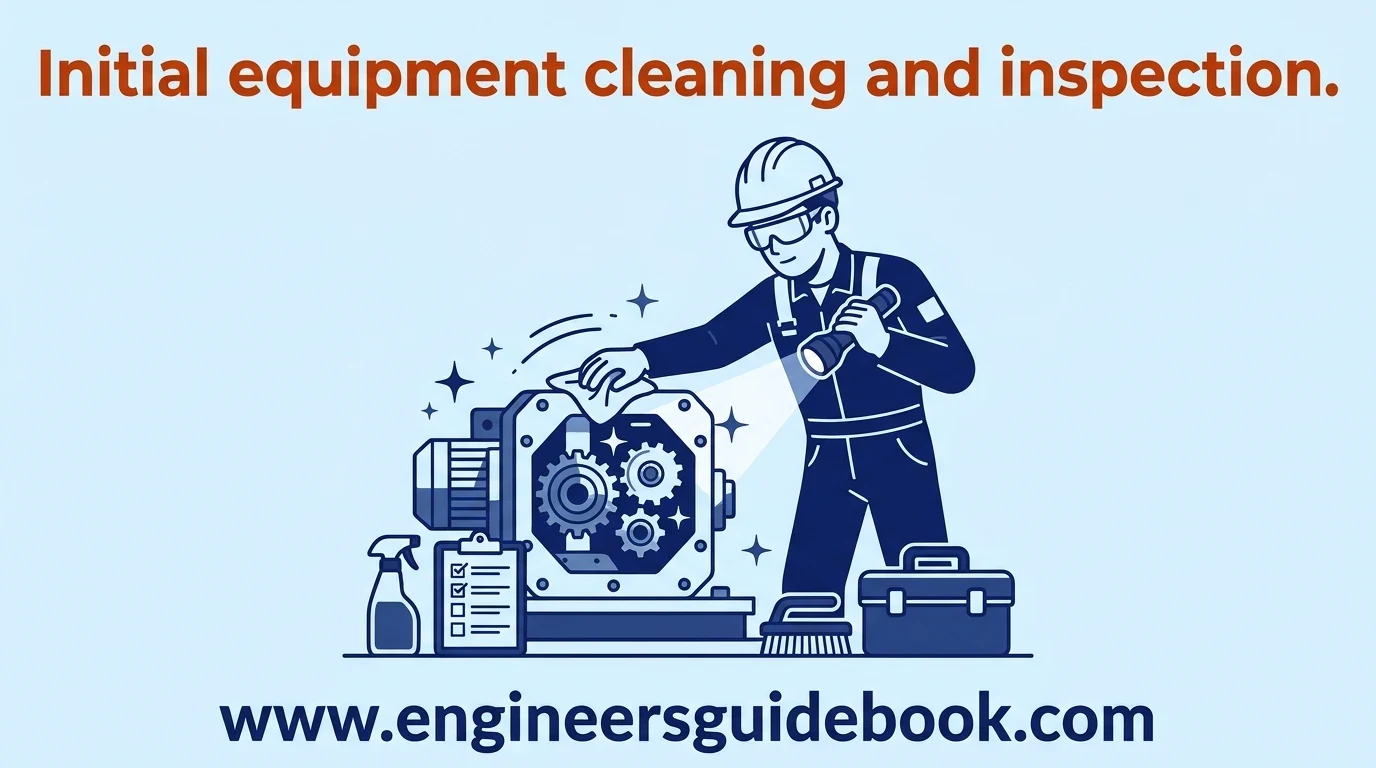
1. Initial equipment cleaning and inspection.
2. Eliminating contamination sources and inaccessible areas.

3. Establishing provisional cleaning and lubrication standards.

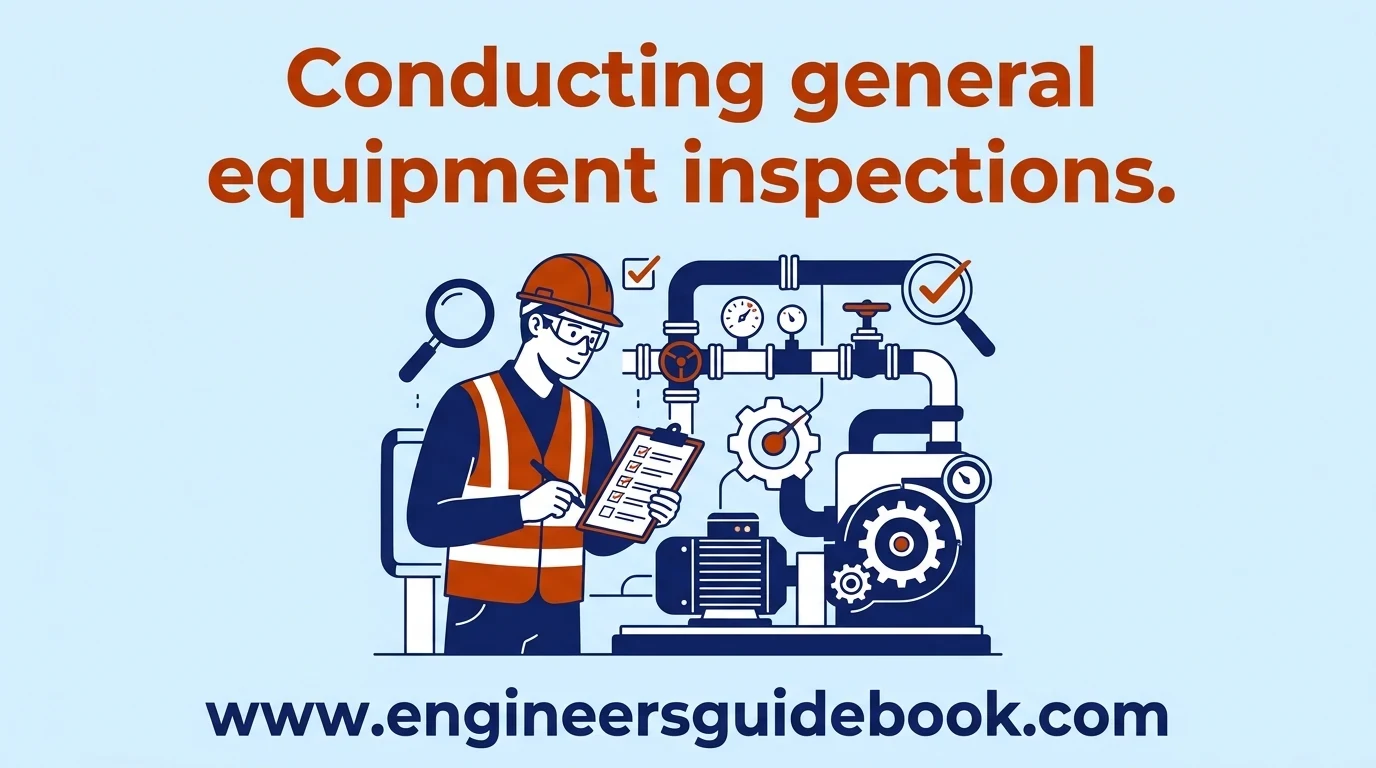
4. Conducting general equipment inspections.
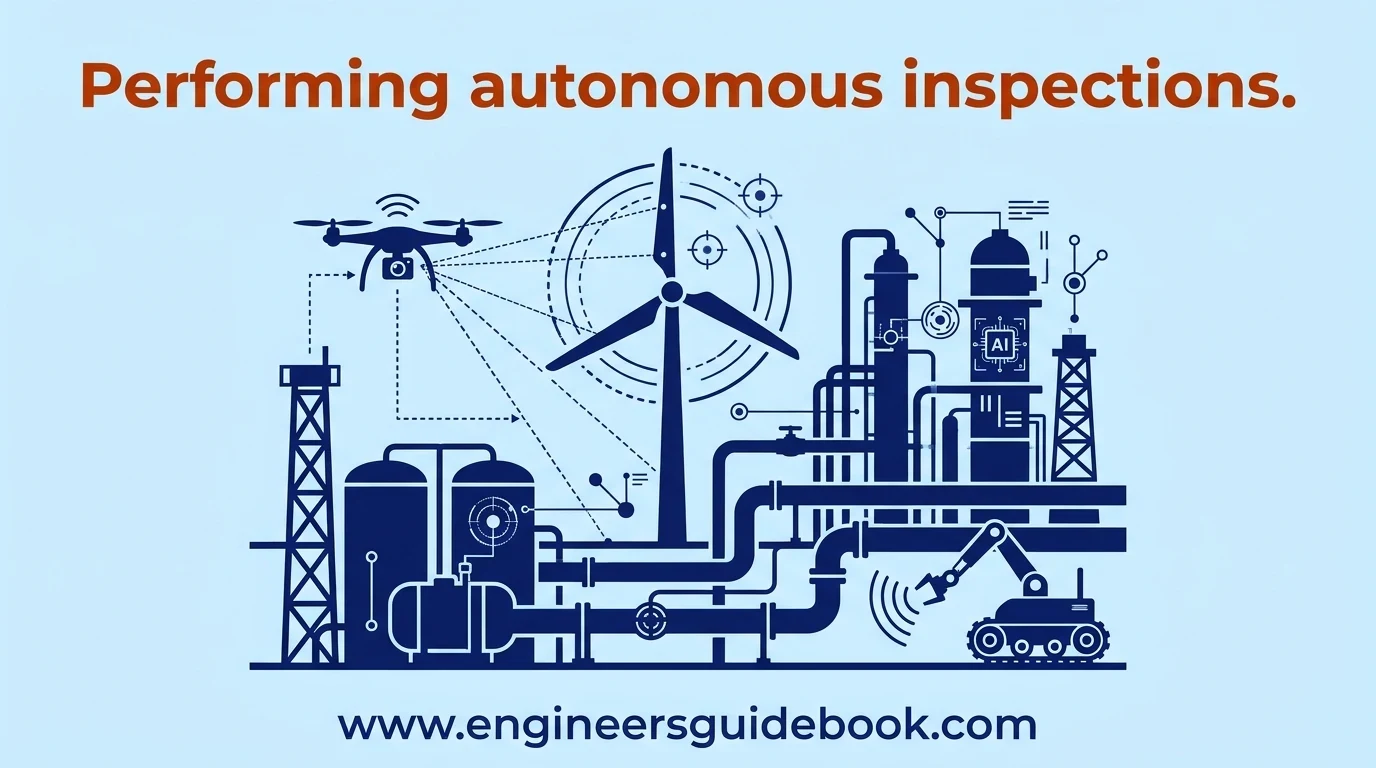
5. Performing autonomous inspections.
6. Standardizing workplace and equipment care practices.

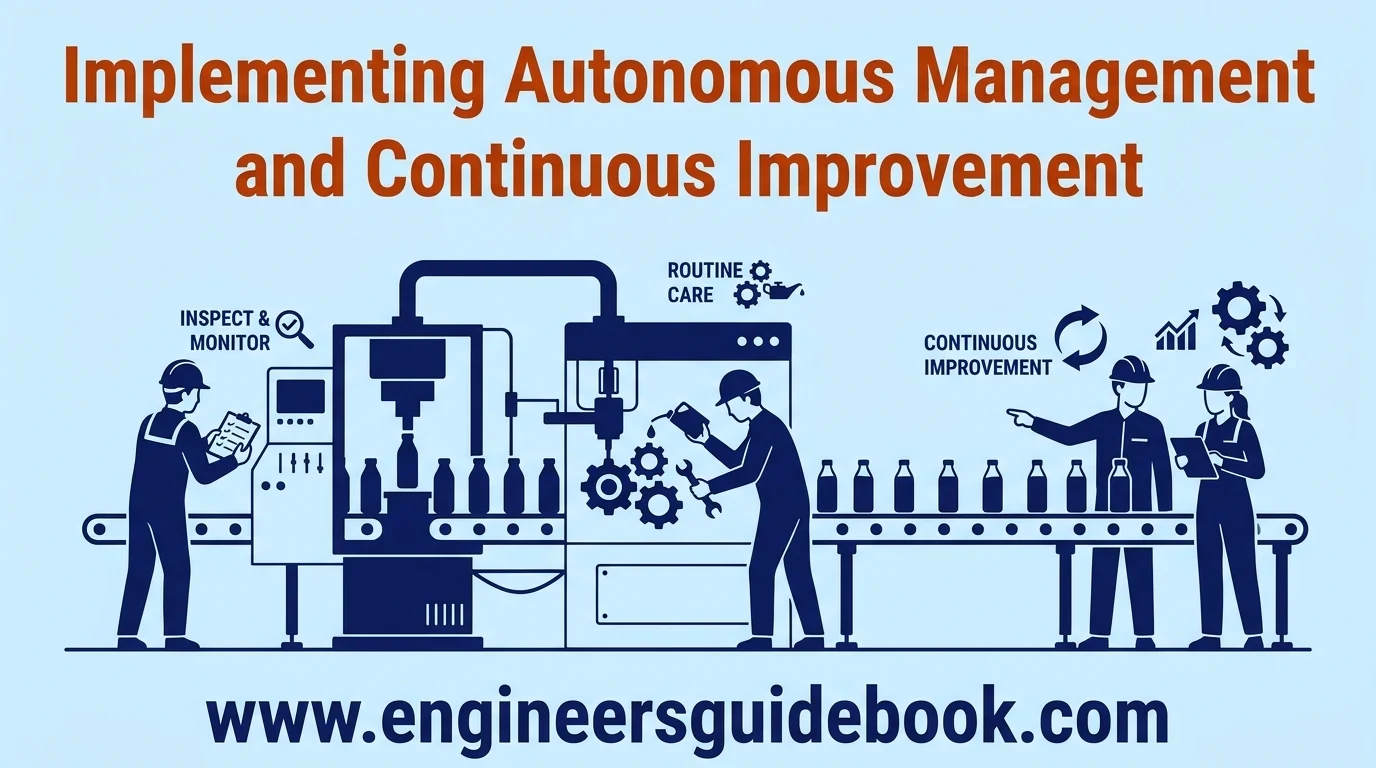
7. Implementing autonomous management and continuous improvement.
Each stage progressively strengthens operator competency and equipment ownership.
2.4 Operator Responsibilities in Equipment Maintenance
Operators perform scheduled inspections, monitor abnormal noise and vibration, check lubrication levels, identify leakages, and document equipment abnormalities.
All activities must remain within authorized competency limits, with appropriate isolation and safety procedures applied whenever required.
2.5 Practical Example of Autonomous Maintenance
Consider a bottle-filling machine experiencing frequent conveyor stoppages due to product accumulation and loose components.
Operators introduce daily cleaning, visual inspections, and authorized lubrication routines. Abnormalities are reported before they develop into functional failures.
This proactive approach reduces avoidable stoppages and improves production continuity.
2.6 Benefits of Autonomous Maintenance
Autonomous Maintenance improves equipment cleanliness, accelerates fault detection, reduces minor stoppages, and strengthens operator accountability. It also fosters closer collaboration between production and maintenance departments.
3. Pillar 2 – Planned Maintenance
3.1 What Is Planned Maintenance?
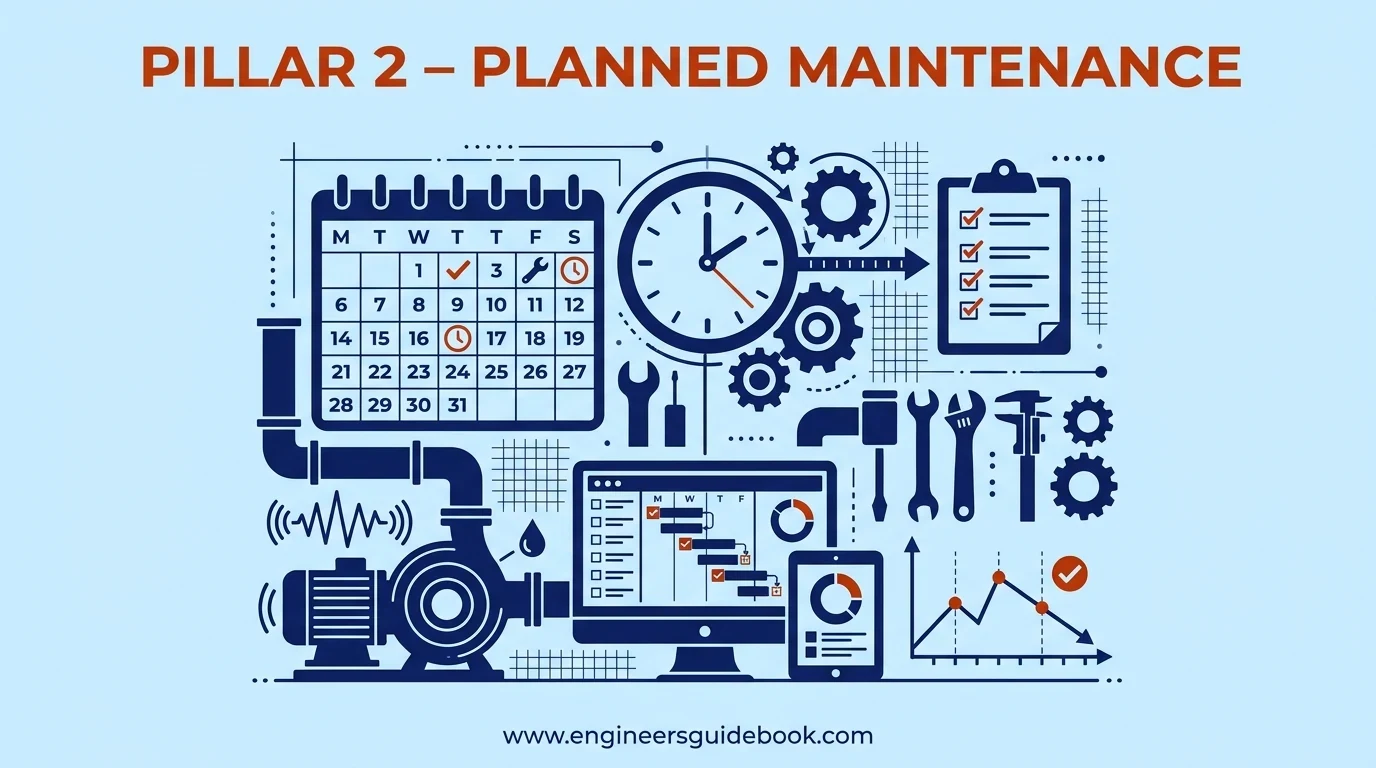
Planned Maintenance is a structured approach to scheduling equipment maintenance according to operating conditions, failure history, manufacturer recommendations, and asset criticality.
It replaces excessive reactive maintenance with controlled and systematically organized interventions.
3.2 Objectives of Planned Maintenance
The primary objectives are to improve equipment reliability, minimize unexpected failures, extend component service life, and optimize maintenance expenditure.
Planned Maintenance also facilitates effective resource allocation and spare parts forecasting.
3.3 Types of Planned Maintenance
Planned Maintenance encompasses several maintenance strategies:
Preventive Maintenance: Servicing equipment at predetermined intervals.
Predictive Maintenance: Forecasting failures through condition data.
Condition-Based Maintenance: Initiating maintenance when measured conditions indicate deterioration.
Planned Corrective Maintenance: Scheduling the rectification of identified defects.
The appropriate strategy depends on equipment criticality, failure characteristics, and economic considerations.
3.4 Developing a Planned Maintenance Schedule
Maintenance schedules should incorporate equipment inventories, operating hours, historical breakdown records, inspection frequencies, lubrication requirements, and workforce availability.
Computerized Maintenance Management Systems (CMMS) can simplify work order generation, resource planning, and maintenance compliance monitoring.
3.5 Practical Example of Planned Maintenance
A centrifugal pump experiences recurrent bearing failures. Maintenance engineers establish periodic vibration measurements, lubrication inspections, and temperature monitoring.
When monitoring indicates bearing deterioration, replacement is scheduled during a planned shutdown instead of waiting for catastrophic failure.
3.6 Benefits of Planned Maintenance
Planned Maintenance increases equipment availability, reduces emergency repair expenditure, improves spare parts utilization, and establishes predictable maintenance workloads. It also contributes to improved asset longevity.
4. Pillar 3 – Focused Improvement
4.1 What Is Focused Improvement?
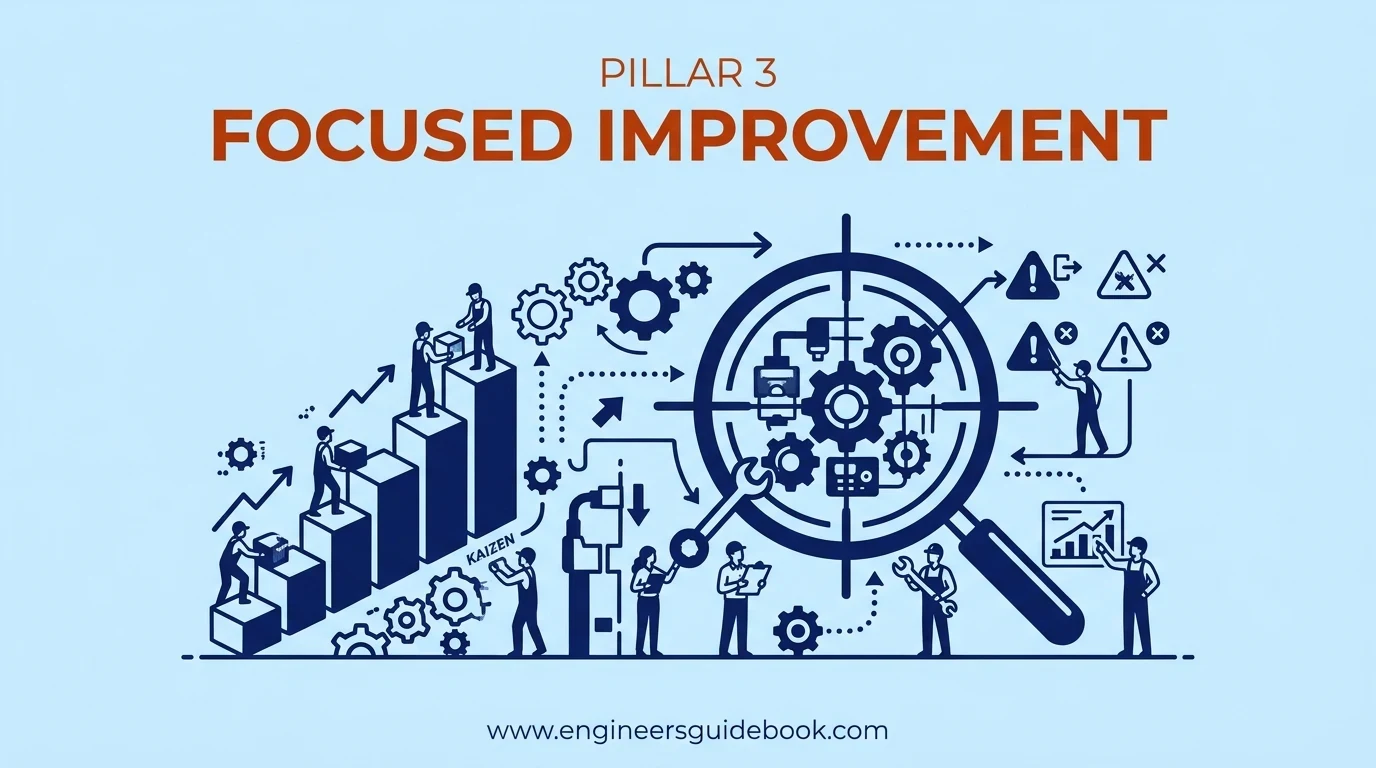
Focused Improvement is a systematic methodology for eliminating specific equipment and process losses through cross-functional problem-solving initiatives.
It concentrates on measurable operational deficiencies rather than indiscriminate improvement activities.
4.2 Understanding Kobetsu Kaizen
Kobetsu Kaizen is the Japanese terminology associated with Focused Improvement. It encourages small, targeted improvements supported by analytical investigation, employee participation, and performance measurement.
Repeated incremental improvements can generate substantial cumulative productivity gains.
4.3 Identifying the Six Big Equipment Losses
The six big equipment losses addressed through TPM are:
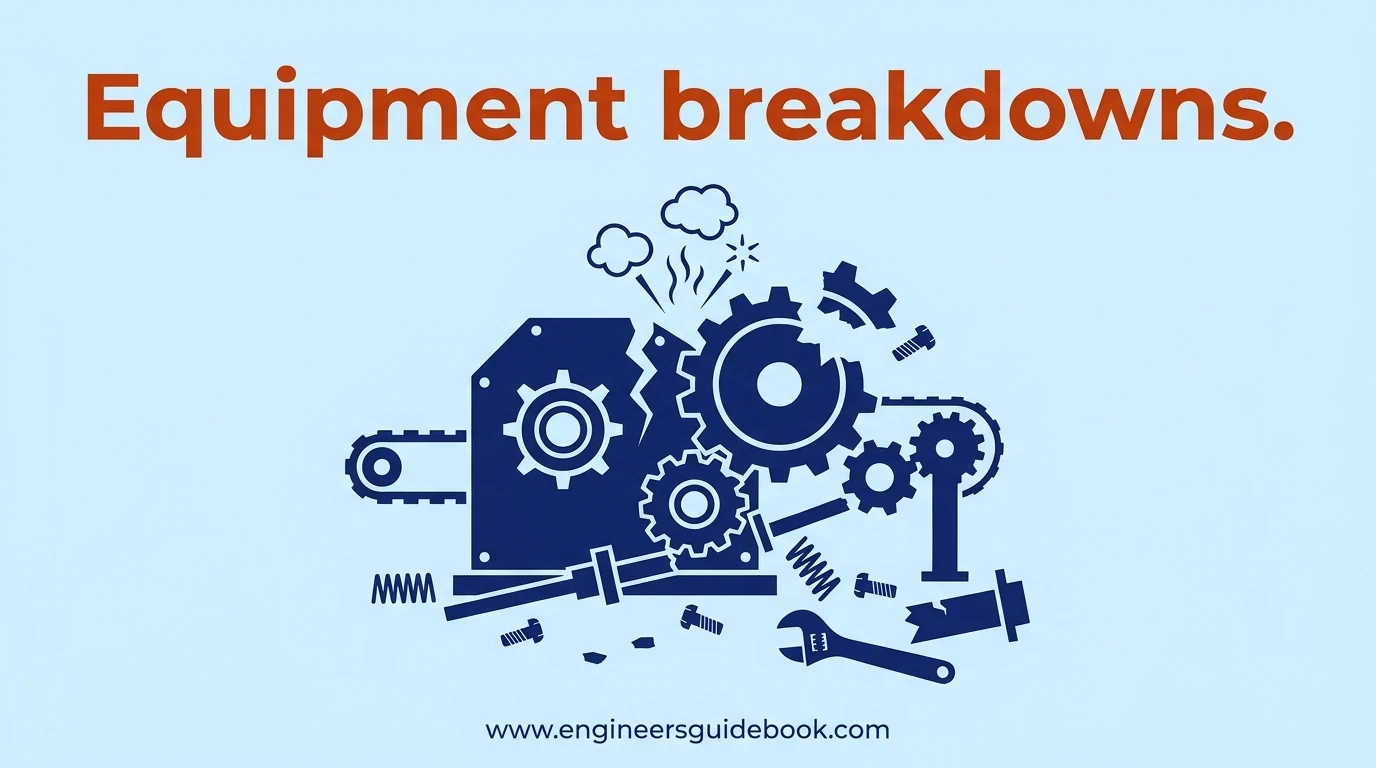
1. Equipment breakdowns.
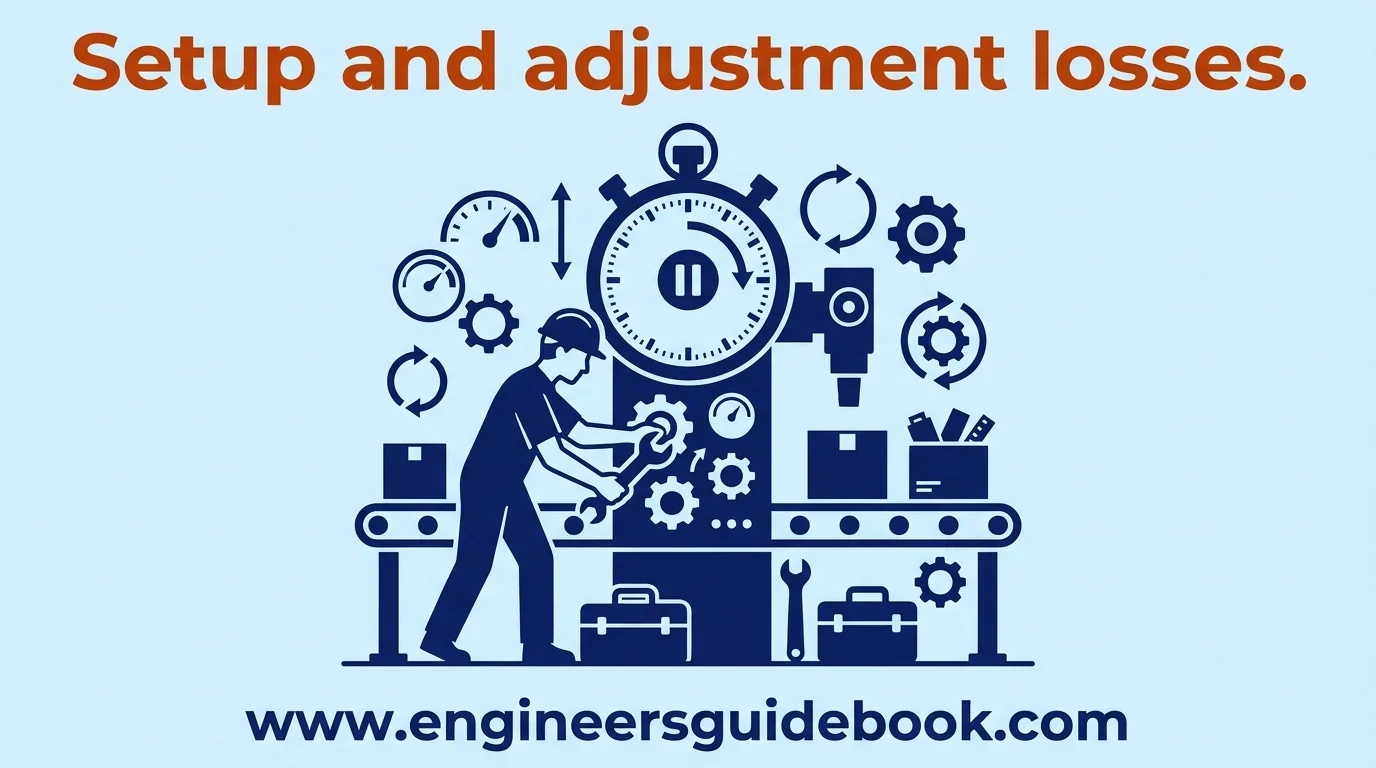
2. Setup and adjustment losses.
3. Idling and minor stoppages.

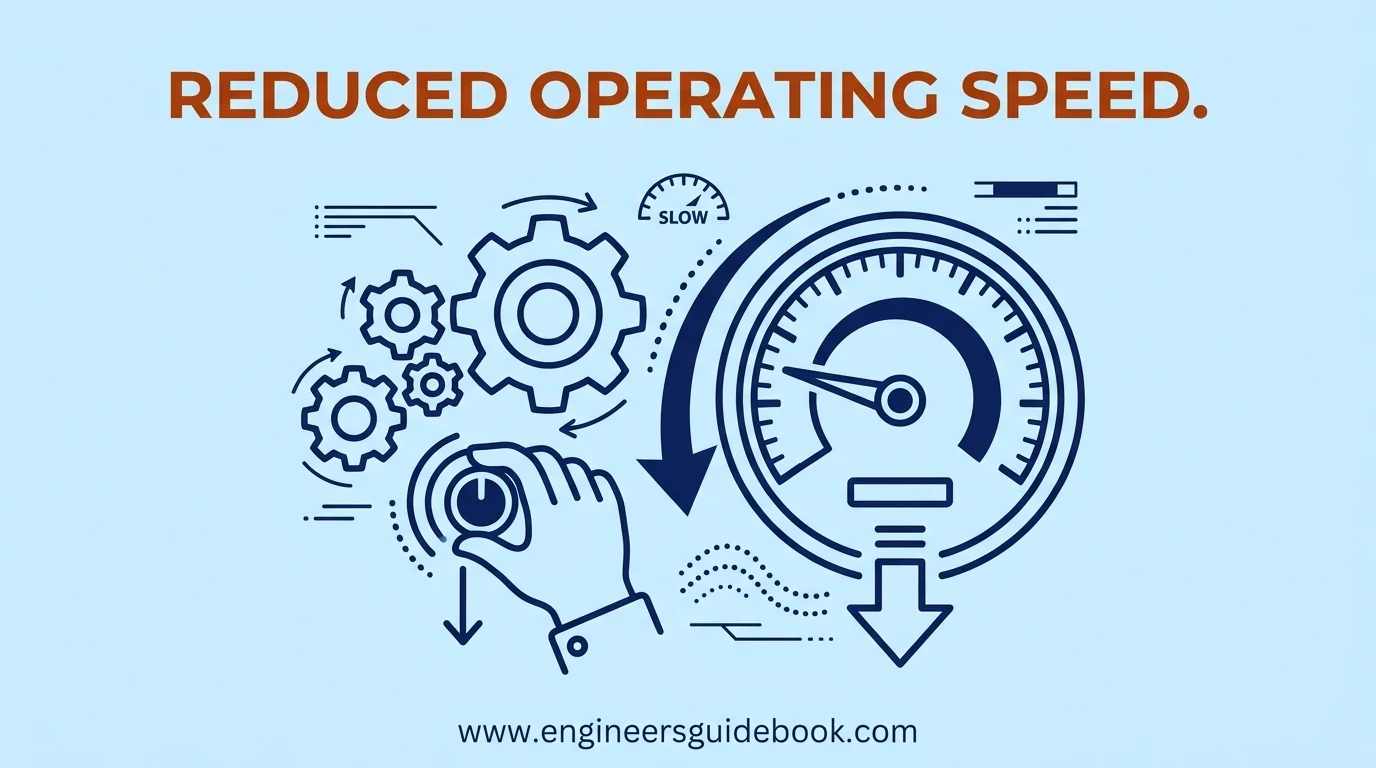
4. Reduced operating speed.
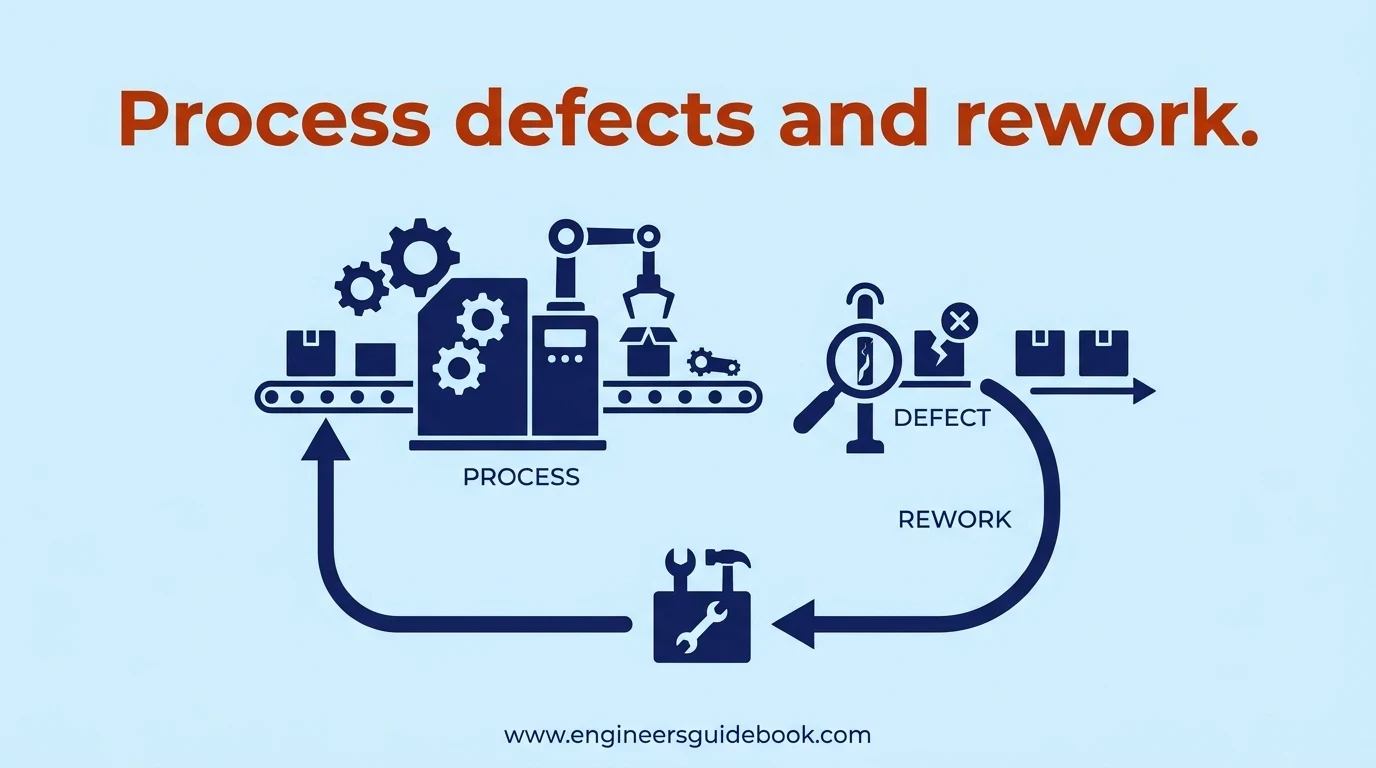
5. Process defects and rework.
6. Startup and reduced yield losses.
These losses directly affect the availability, performance, and quality components of OEE.
4.4 Root Cause Analysis and Continuous Improvement
Focused Improvement utilizes analytical techniques such as the 5 Whys, Fishbone Diagram, Pareto Analysis, and Fault Tree Analysis to identify underlying failure mechanisms.
Corrective measures are subsequently implemented, validated, standardized, and monitored to prevent recurrence.
4.5 Practical Example of Focused Improvement
A packaging machine repeatedly stops because of bottle misalignment. Investigation identifies an inadequately designed conveyor guide as the underlying cause.
Engineers modify the guide arrangement and standardize its adjustment procedure. Consequently, recurring stoppages decrease without requiring additional production personnel.
4.6 Benefits of Focused Improvement
Focused Improvement eliminates chronic operational losses, increases production throughput, strengthens problem-solving capabilities, and improves equipment effectiveness.

5. Pillar 4 – Quality Maintenance
5.1 What Is Quality Maintenance?
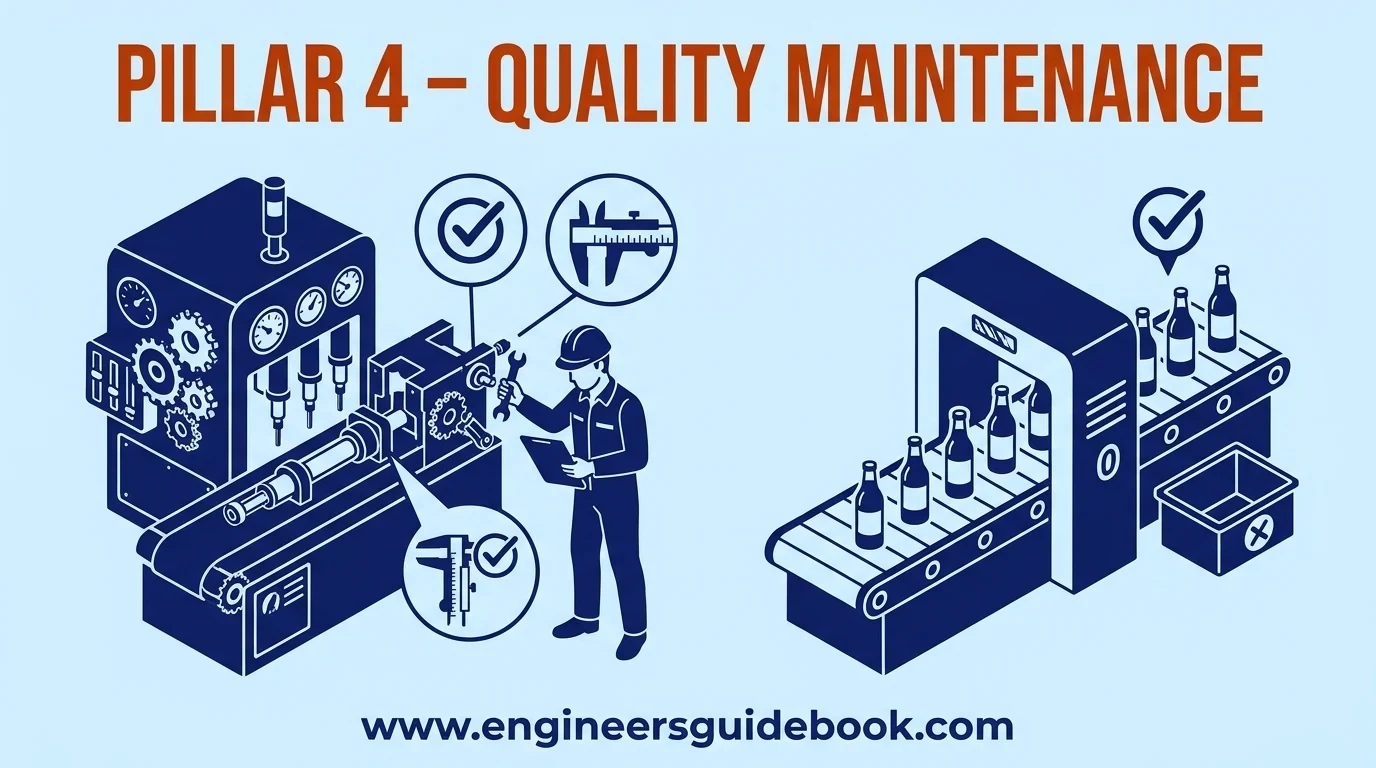
Quality Maintenance focuses on establishing and preserving equipment conditions necessary for consistent product quality. It emphasizes defect prevention rather than relying exclusively on downstream inspection.
5.2 Objectives of Quality Maintenance
Its objectives include reducing rejection rates, preventing equipment-induced defects, maintaining process stability, and achieving consistent conformance with product specifications.
5.3 Identifying Equipment-Related Quality Defects
Common equipment-related quality defects originate from component wear, inaccurate calibration, mechanical misalignment, unstable operating temperatures, excessive vibration, and incorrect machine settings.
Analyzing these parameters helps establish relationships between equipment conditions and product defects.
5.4 Establishing Zero-Defect Manufacturing Conditions
Zero-defect manufacturing requires defined operating limits, reliable measurement systems, standardized machine settings, regular inspections, and appropriate mistake-proofing mechanisms.
Although absolute zero defects may be challenging, systematic process control progressively minimizes defect occurrence.
5.5 Practical Example of Quality Maintenance
A liquid-filling machine produces inconsistent filling volumes because of worn piston seals.
Maintenance personnel introduce periodic seal inspections, preventive replacement criteria, and filling volume verification. These measures reduce underfilled and overfilled products while improving process consistency.
5.6 Benefits of Quality Maintenance
Quality Maintenance reduces material wastage, rework, customer complaints, and product rejection rates while improving manufacturing consistency and profitability.
6. Pillar 5 – Early Equipment Management
6.1 What Is Early Equipment Management?
Early Equipment Management integrates operational and maintenance experience into the design, procurement, installation, and commissioning of new equipment.
Its purpose is to prevent foreseeable equipment deficiencies before commercial operation begins.
6.2 Objectives of Early Equipment Management
This pillar aims to shorten commissioning periods, improve equipment reliability, minimize initial production losses, and enhance maintainability throughout the equipment life cycle.
6.3 Equipment Design and Maintainability
Equipment design should incorporate accessible lubrication points, convenient inspection locations, standardized components, ergonomic arrangements, and safe maintenance access.
These design considerations simplify maintenance interventions and reduce unnecessary downtime.
6.4 Life Cycle Cost and Equipment Reliability
Life cycle cost encompasses equipment acquisition, installation, energy consumption, maintenance, spare parts, downtime, and eventual disposal expenses.
Evaluating these costs enables organizations to select equipment based on long-term economic performance rather than initial purchase price alone.
6.5 Practical Example of Early Equipment Management
During the procurement of a new packaging machine, engineers incorporate lessons learned from existing equipment failures.
The specifications require accessible bearings, standardized gearboxes, removable guards, and easily adjustable conveyor assemblies. These improvements enhance future maintenance efficiency.
6.6 Benefits of Early Equipment Management
Early Equipment Management reduces commissioning difficulties, improves maintainability, minimizes life cycle expenditure, and facilitates faster production stabilization.

7. Pillar 6 – Education and Training
7.1 What Is Education and Training in TPM?
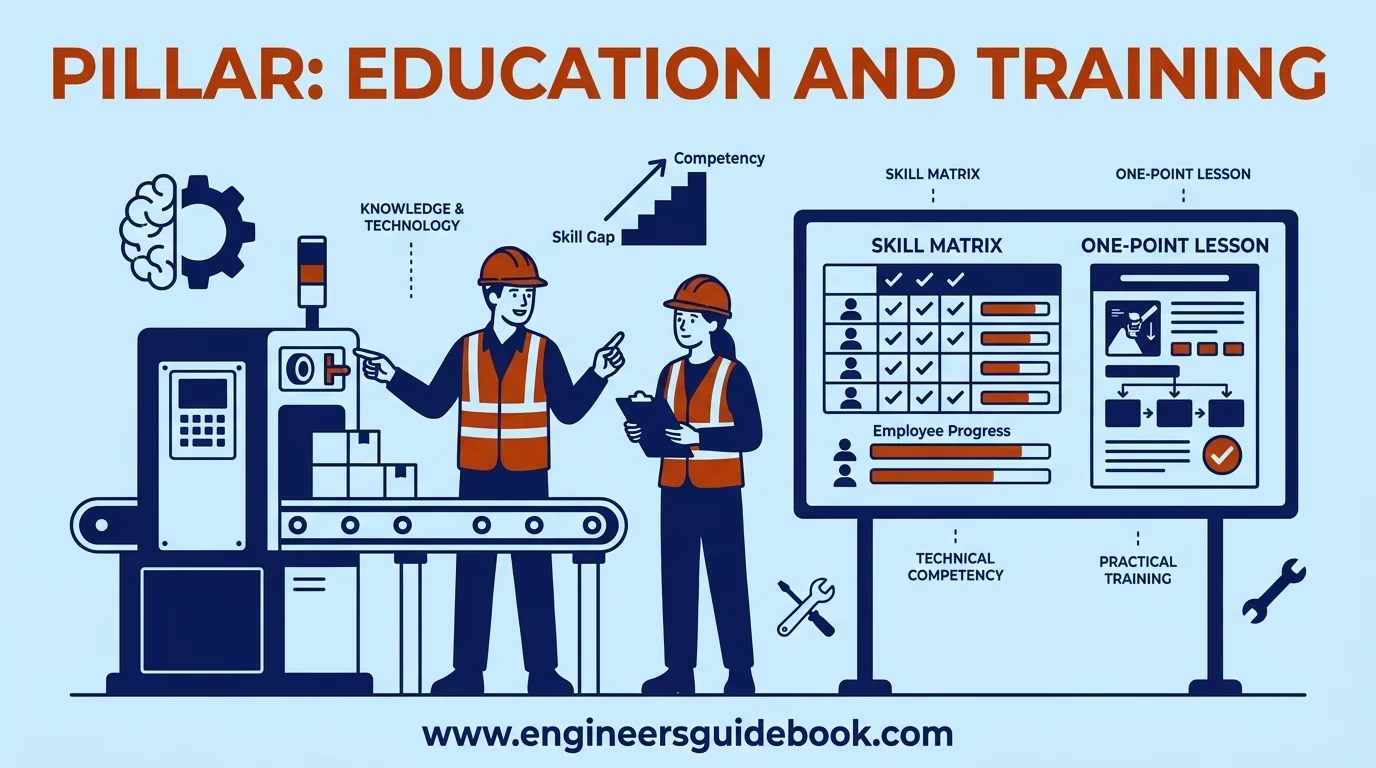
Education and Training is the TPM pillar responsible for developing employee knowledge, technical proficiency, operational discipline, and problem-solving capabilities.
7.2 Identifying Employee Skill Gaps
Skill gaps are identified through competency assessments, equipment failure investigations, performance evaluations, and practical demonstrations. The findings establish priorities for targeted employee development.
7.3 Developing Technical Competency
Technical training should address equipment fundamentals, troubleshooting, lubrication practices, inspection techniques, maintenance procedures, and occupational safety.
Practical instruction reinforces theoretical knowledge and improves employee confidence.
7.4 Skill Matrices and One-Point Lessons
A skill matrix documents employee competency levels across specific tasks. One-point lessons provide concise, visually supported instructions addressing individual technical concepts or recurring equipment problems.
Both tools facilitate structured knowledge transfer.
7.5 Practical Example of Education and Training
Machine operators frequently report conveyor misalignment problems. Engineers conduct practical training covering abnormality identification, inspection standards, safe operating practices, and escalation procedures.
Operators subsequently detect developing problems earlier, allowing timely maintenance interventions.
7.6 Benefits of Education and Training
Education and Training reduces human error, improves troubleshooting capabilities, strengthens workforce flexibility, and establishes a sustainable culture of equipment ownership and continuous improvement.
8. Pillar 7 – Safety, Health, and Environment
8.1 What Is Safety, Health, and Environment in TPM?
Safety, Health, and Environment (SHE) is the TPM pillar dedicated to establishing a safe, healthy, and environmentally responsible manufacturing workplace. It integrates occupational safety and environmental protection into routine equipment management and production activities.
8.2 Objectives of the SHE Pillar
The primary objectives include preventing workplace injuries, eliminating unsafe operating conditions, minimizing environmental pollution, and protecting employee health. This pillar also promotes regulatory compliance and strengthens organizational safety culture.
8.3 Workplace Hazard Identification and Risk Assessment
Manufacturing facilities must systematically identify mechanical, electrical, chemical, ergonomic, and environmental hazards. Risk assessment techniques evaluate the likelihood and severity of potential incidents, enabling organizations to prioritize appropriate engineering and administrative controls.
8.4 Achieving Zero Accidents and Environmental Incidents
Achieving zero accidents requires proactive hazard elimination, machine guarding, energy isolation procedures, preventive inspections, and employee safety training. Environmental protection measures should address chemical leakages, waste generation, excessive emissions, and inefficient resource consumption.
Zero incidents represent a continuous improvement objective rather than a guaranteed outcome.
8.5 Practical Example of the SHE Pillar
Consider a manufacturing facility experiencing recurring lubricant leakages around production equipment. Maintenance personnel identify deteriorated seals, replace defective components, and establish routine leakage inspections.
These measures reduce slipping hazards, prevent environmental contamination, and improve equipment reliability.
8.6 Benefits of the SHE Pillar
The SHE pillar reduces occupational risks, improves working conditions, minimizes environmental liabilities, and strengthens employee confidence. It also helps prevent production interruptions caused by safety incidents.

9. Pillar 8 – Office TPM
9.1 What Is Office TPM?
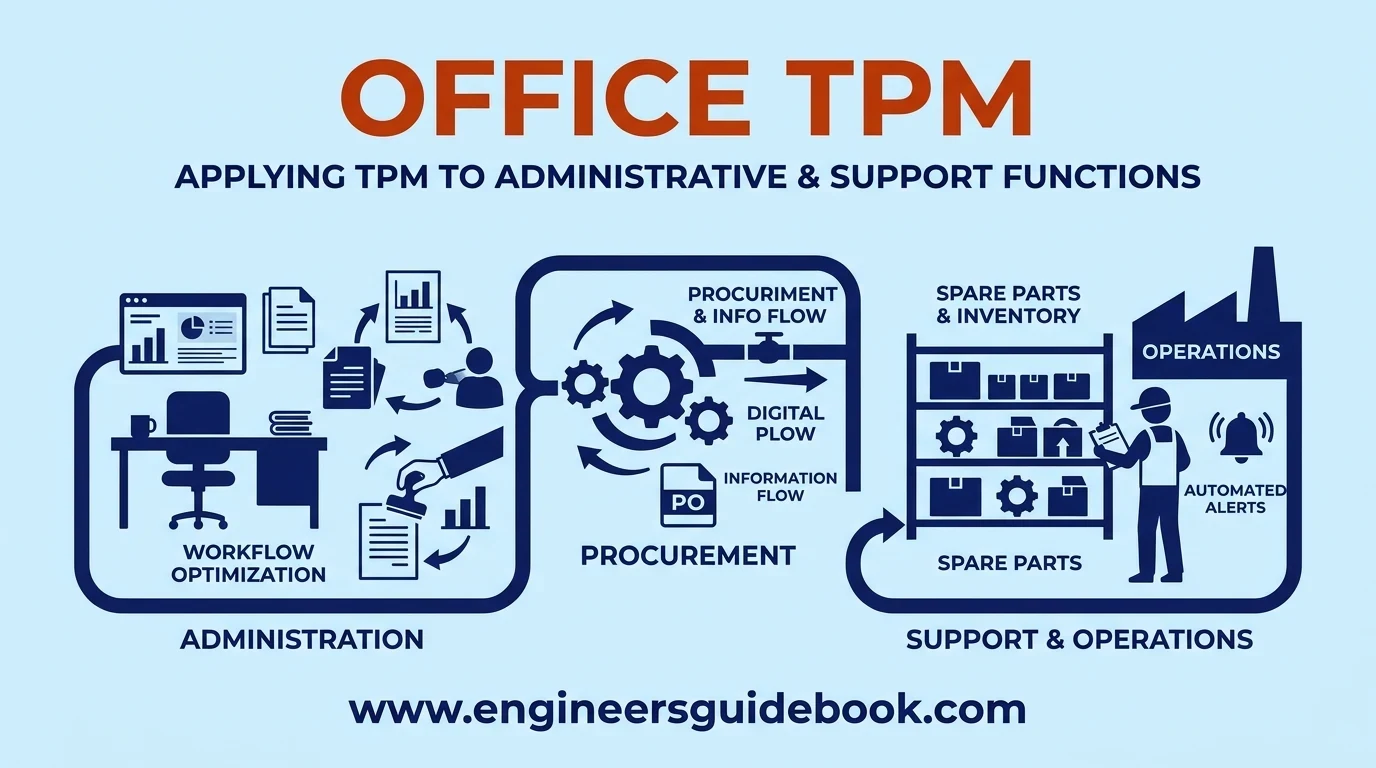
Office TPM extends Total Productive Maintenance principles beyond manufacturing equipment into administrative and supporting business functions. It targets inefficiencies within procurement, inventory management, finance, production planning, and documentation processes.
9.2 Objectives of Office TPM
Office TPM aims to eliminate administrative bottlenecks, reduce processing delays, improve information accuracy, and strengthen coordination between operational and supporting departments.
9.3 Identifying Administrative Process Losses
Common administrative losses include excessive approval times, duplicate documentation, inaccurate inventory records, communication gaps, unnecessary paperwork, and delayed purchase orders.
Process mapping and workflow analysis help identify these non-value-adding activities and establish improvement priorities.
9.4 Improving Procurement and Spare Parts Management
Effective spare parts management requires accurate inventory records, equipment criticality assessments, appropriate reorder levels, standardized material descriptions, and reliable supplier coordination.
Office TPM streamlines procurement processes to ensure essential replacement components remain available when required.
9.5 Practical Example of Office TPM
A manufacturing plant frequently experiences extended breakdowns because critical bearings are unavailable in its warehouse.
The procurement and maintenance departments introduce standardized spare parts descriptions, minimum stock levels, and automated replenishment alerts. Consequently, procurement delays decrease, and maintenance responsiveness improves.
9.6 Benefits of Office TPM
Office TPM reduces administrative waste, improves information flow, accelerates decision-making, optimizes inventory expenditure, and supports uninterrupted manufacturing operations.
10. How to Implement the 8 Pillars of TPM
10.1 Establishing Management Commitment
Successful TPM implementation begins with unequivocal management commitment. Senior leadership must establish measurable objectives, allocate adequate resources, define departmental responsibilities, and communicate the long-term importance of TPM throughout the organization.
10.2 Forming Cross-Functional TPM Teams
Cross-functional teams should include representatives from production, maintenance, engineering, quality assurance, safety, and administration. Their collective expertise facilitates comprehensive problem-solving and prevents departmental isolation.
10.3 Conducting an Initial Equipment Assessment
An initial assessment establishes baseline equipment conditions and performance levels. Organizations should evaluate breakdown history, maintenance expenditure, production losses, defect rates, asset criticality, and existing maintenance practices before initiating improvement activities.
10.4 Establishing 5S Workplace Practices
Implementing 5S creates an orderly and disciplined manufacturing environment. Removing unnecessary materials, organizing tools, cleaning equipment, and standardizing workplace practices establish the foundation for subsequent TPM activities.
10.5 Developing a Pillar-Wise Implementation Roadmap
A comprehensive implementation roadmap should define pillar-specific objectives, responsible personnel, improvement projects, performance indicators, resource requirements, and implementation milestones.
Each pillar must have clearly established deliverables and accountability mechanisms.
10.6 Implementing TPM on Pilot Equipment
Organizations should initially implement TPM on selected equipment with measurable improvement potential. Pilot projects allow teams to evaluate maintenance standards, identify implementation deficiencies, and demonstrate tangible operational benefits before wider deployment.
10.7 Scaling TPM Across Manufacturing Operations
Following successful pilot implementation, validated maintenance procedures and improvement practices should be replicated across additional machines, production lines, and departments. Standardization ensures consistency while accommodating equipment-specific requirements.
10.8 Common TPM Implementation Challenges
Typical implementation challenges include employee resistance, inadequate training, insufficient management support, unreliable performance data, limited resources, and poor interdepartmental coordination.
Addressing these impediments requires effective communication, realistic milestones, continuous training, and sustained leadership involvement.

11. Measuring the Effectiveness of the 8 Pillars of TPM
11.1 Overall Equipment Effectiveness
Overall Equipment Effectiveness (OEE) measures manufacturing effectiveness through equipment availability, performance, and quality.
OEE Formula
OEE = Availability × Performance × Quality
For example, equipment operating with 90% availability, 95% performance, and 98% quality achieves an OEE score of 83.79%.
11.2 Mean Time Between Failures
Mean Time Between Failures (MTBF) measures the average operating duration between consecutive equipment failures.
MTBF = Total Operating Time ÷ Number of Failures
An increasing MTBF generally indicates improved equipment reliability.
11.3 Mean Time to Repair
Mean Time to Repair (MTTR) measures the average time required to restore failed equipment to operational condition.
MTTR = Total Repair Time ÷ Number of Repairs
A decreasing MTTR indicates improved maintenance responsiveness and repair efficiency.
11.4 Equipment Downtime and Breakdown Frequency
Monitoring equipment downtime and breakdown frequency helps identify unreliable assets and recurring failure mechanisms. Comparing these indicators against baseline measurements reveals the effectiveness of TPM improvement initiatives.
11.5 Maintenance Cost Reduction
Maintenance expenditure should be evaluated through labor costs, spare parts consumption, external repair services, and emergency maintenance expenses. Effective TPM can reduce long-term maintenance costs by preventing premature component deterioration and recurrent failures.
11.6 Product Quality and Defect Rates
Product rejection rates, rework quantities, process deviations, and customer complaints provide valuable insights into Quality Maintenance effectiveness.
Declining defect rates indicate improved process stability when evaluated alongside consistent production conditions.
11.7 Employee Participation and Skill Development
Employee participation can be evaluated through training completion rates, competency assessments, autonomous maintenance compliance, improvement suggestions, and participation in problem-solving activities.
These indicators reflect the development of organizational TPM capabilities.
11.8 Integrated TPM Manufacturing Case Study
Consider a hypothetical packaging line with initial availability of 80%, performance of 85%, and quality of 95%. Its initial OEE is 64.60%.
Following integrated TPM implementation, availability increases to 92%, performance reaches 95%, and quality improves to 98%.
The resulting OEE becomes 85.65%, demonstrating how coordinated TPM activities can substantially improve manufacturing effectiveness.
11.9 TPM Performance Audits and Continuous Improvement
Periodic TPM audits evaluate compliance with maintenance standards, pillar objectives, employee responsibilities, and improvement targets. Identified deficiencies should be addressed through corrective action plans and continuous improvement cycles.

12. Frequently Asked Questions
12.1 What Are the 8 Pillars of TPM?
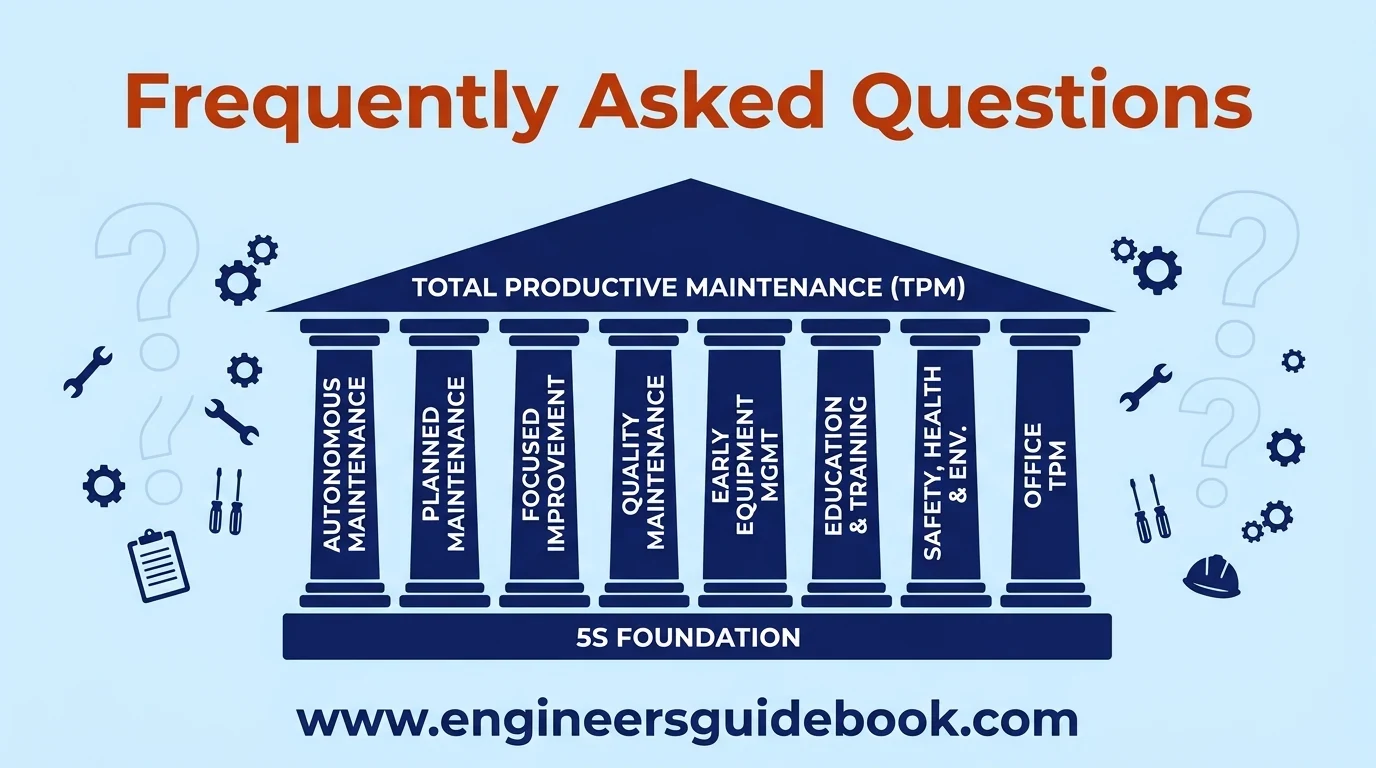
The eight pillars of TPM are Autonomous Maintenance, Planned Maintenance, Focused Improvement, Quality Maintenance, Early Equipment Management, Education and Training, Safety, Health and Environment, and Office TPM.
12.2 What Is the Main Purpose of the 8 TPM Pillars?
Their main purpose is to maximize equipment effectiveness by eliminating manufacturing losses, preventing breakdowns, improving product quality, enhancing workplace safety, and encouraging employee participation.
12.3 What Is the Foundation of the 8 Pillars of TPM?
The 5S methodology is commonly recognized as the foundation of TPM. It establishes workplace organization, cleanliness, standardization, and operational discipline.
12.4 What Is the First Pillar of TPM?
Autonomous Maintenance is commonly presented as the first pillar of TPM. It encourages machine operators to assume responsibility for routine equipment cleaning, inspection, lubrication, and abnormality detection.
12.5 What Is the Difference Between Autonomous and Planned Maintenance?
Autonomous Maintenance involves routine equipment care performed by trained operators, whereas Planned Maintenance involves systematically scheduled technical inspections, servicing, and repairs managed primarily by maintenance professionals.
12.6 What Are the Six Big Losses in TPM?
The six big losses are equipment breakdowns, setup and adjustment losses, minor stoppages, reduced operating speed, production defects, and startup yield losses.
12.7 How Do the 8 Pillars of TPM Improve OEE?
The eight pillars improve OEE by increasing equipment availability, eliminating performance losses, and reducing product defects through coordinated maintenance and continuous improvement practices.
12.8 What Is the Difference Between TPM and TQM?
Total Productive Maintenance primarily focuses on equipment effectiveness and manufacturing losses, whereas Total Quality Management (TQM) emphasizes organization-wide quality improvement and customer satisfaction. Both methodologies complement each other.
12.9 Can the 8 Pillars of TPM Be Applied to Any Industry?
TPM can be adapted to numerous industries, including automotive manufacturing, pharmaceuticals, food processing, chemicals, textiles, power generation, and other equipment-intensive operations.
12.10 How Long Does It Take to Implement the 8 Pillars of TPM?
Initial improvements may become visible within several months. However, comprehensive implementation can take several years, depending on organizational size, equipment complexity, workforce competency, and management commitment.
12.11 What Are the Main Benefits of Implementing TPM?
Major benefits include reduced downtime, improved equipment reliability, increased productivity, lower maintenance costs, enhanced product quality, safer working conditions, and greater employee engagement.
13. Conclusion
13.1 Key Takeaways From the 8 Pillars of TPM
The eight pillars of TPM provide a comprehensive framework for eliminating manufacturing losses, strengthening equipment reliability, and improving operational performance through organization-wide participation.
13.2 Importance of Integrated TPM Implementation
Each TPM pillar addresses a distinct operational requirement. However, their collective implementation delivers greater benefits than isolated maintenance initiatives by integrating equipment care, quality management, safety, employee development, and administrative efficiency.
13.3 Achieving Sustainable Manufacturing Excellence
Sustainable manufacturing excellence requires consistent equipment management, measurable performance improvement, employee accountability, and unwavering organizational commitment. By implementing the eight pillars of TPM systematically, organizations can transition from reactive maintenance toward proactive asset management, greater operational resilience, and long-term manufacturing competitiveness.