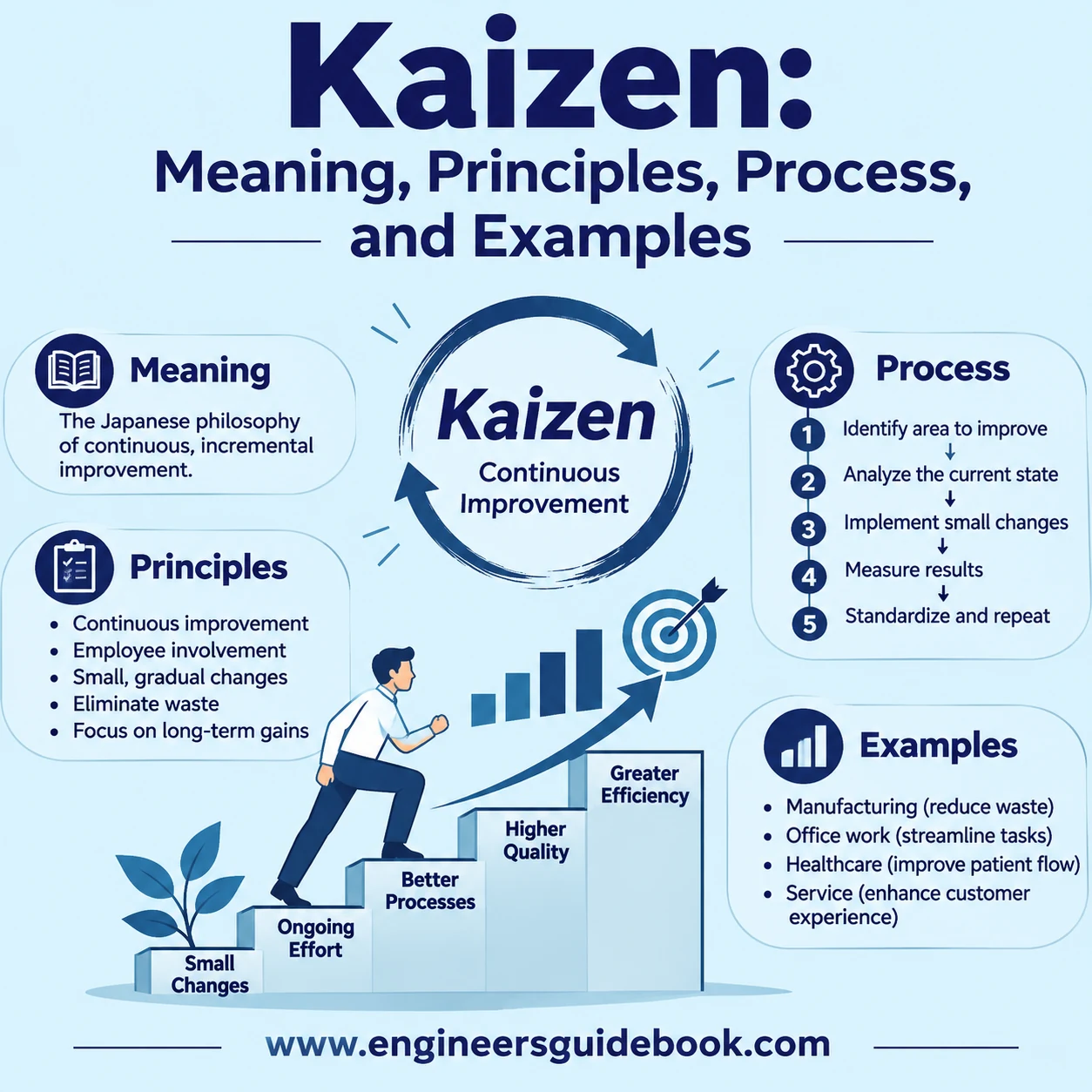
Kaizen is a Japanese management philosophy focused on continuous improvement through small, systematic changes involving employees at every organizational level. Its core principles include waste elimination, employee empowerment, process optimization, and customer satisfaction. Kaizen uses structured improvement cycles and practical tools to enhance productivity, reduce operational costs, improve quality, and establish sustainable workplace efficiency.
1. Introduction to Kaizen
1.1 What Is Kaizen?
Kaizen is a continuous improvement methodology that encourages organizations to enhance their processes through incremental, measurable changes. Rather than relying exclusively on major technological investments, it emphasizes practical improvements that optimize existing resources, equipment, and operational procedures.
1.2 Origin and History of Kaizen
Kaizen gained prominence in Japan following World War II as manufacturers adopted systematic quality improvement practices. Toyota incorporated continuous improvement into its production system. In 1986, Masaaki Imai popularized the methodology internationally through his influential book on Kaizen.
1.3 Meaning of the Japanese Term Kaizen
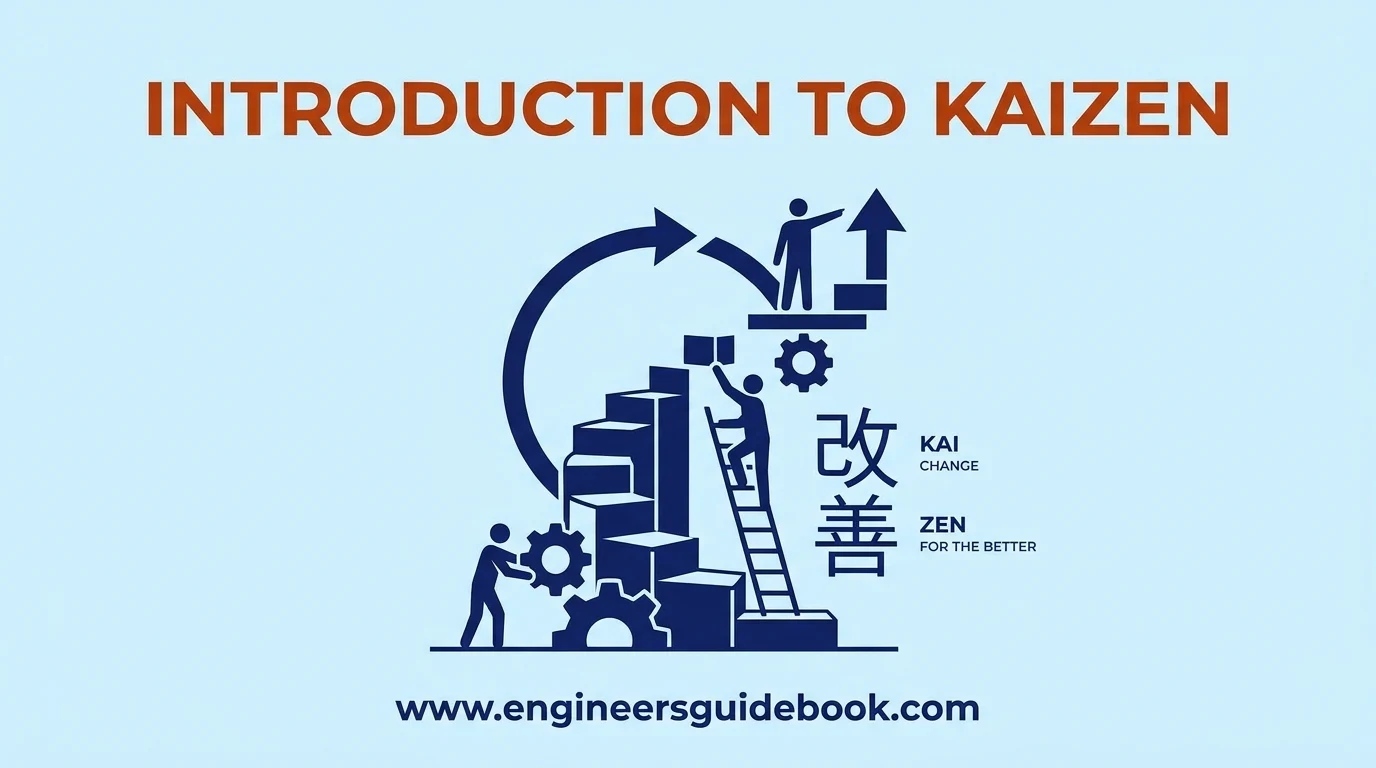
The Japanese word Kaizen combines two terms.
- Kai: Change.
- Zen: Good or better.
Together, these terms signify change for the better. In industrial management, Kaizen represents an ongoing commitment to improving organizational processes and performance.
1.4 Importance of Kaizen in Modern Industries
Modern industries face escalating production costs, stringent quality requirements, and intense competition. Kaizen addresses these challenges by eliminating operational inefficiencies, reducing equipment downtime, improving resource utilization, and strengthening organizational adaptability without necessarily requiring substantial capital expenditure.
2. Understanding the Kaizen Philosophy
2.1 The Concept of Continuous Improvement
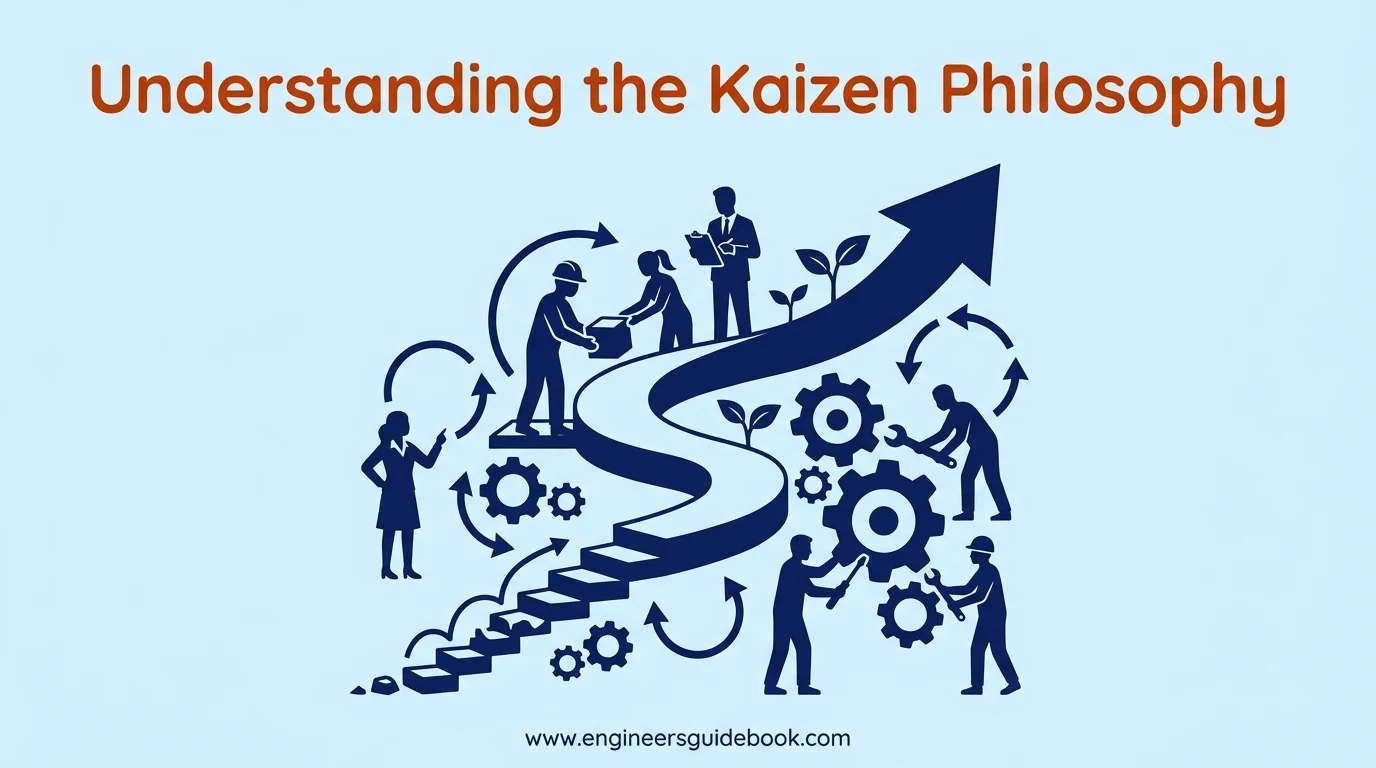
Continuous improvement involves systematically identifying and eliminating deficiencies within existing processes. Kaizen treats improvement as a perpetual activity rather than an isolated initiative with a predetermined completion date.
2.2 Small Changes and Long-Term Results
Minor operational modifications can produce substantial cumulative benefits. For example, reducing machine setup time by several minutes per production cycle can generate significant additional manufacturing capacity over an entire year.
2.3 Employee Involvement and Empowerment
Kaizen encourages participation from operators, technicians, engineers, supervisors, and senior management. Frontline employees possess valuable practical knowledge because they interact directly with machinery, materials, and production processes.
2.4 Process-Oriented Thinking
Instead of concentrating exclusively on production outputs, Kaizen examines the processes responsible for those outcomes. Improving process consistency, eliminating bottlenecks, and addressing procedural deficiencies creates a more reliable foundation for operational excellence.
2.5 Building a Continuous Improvement Culture
A sustainable Kaizen culture requires management commitment, open communication, employee recognition, and constructive problem-solving. Organizations should encourage employees to report inefficiencies without fear of criticism or unnecessary administrative restrictions.
3. Core Principles of Kaizen
3.1 Know Your Customer
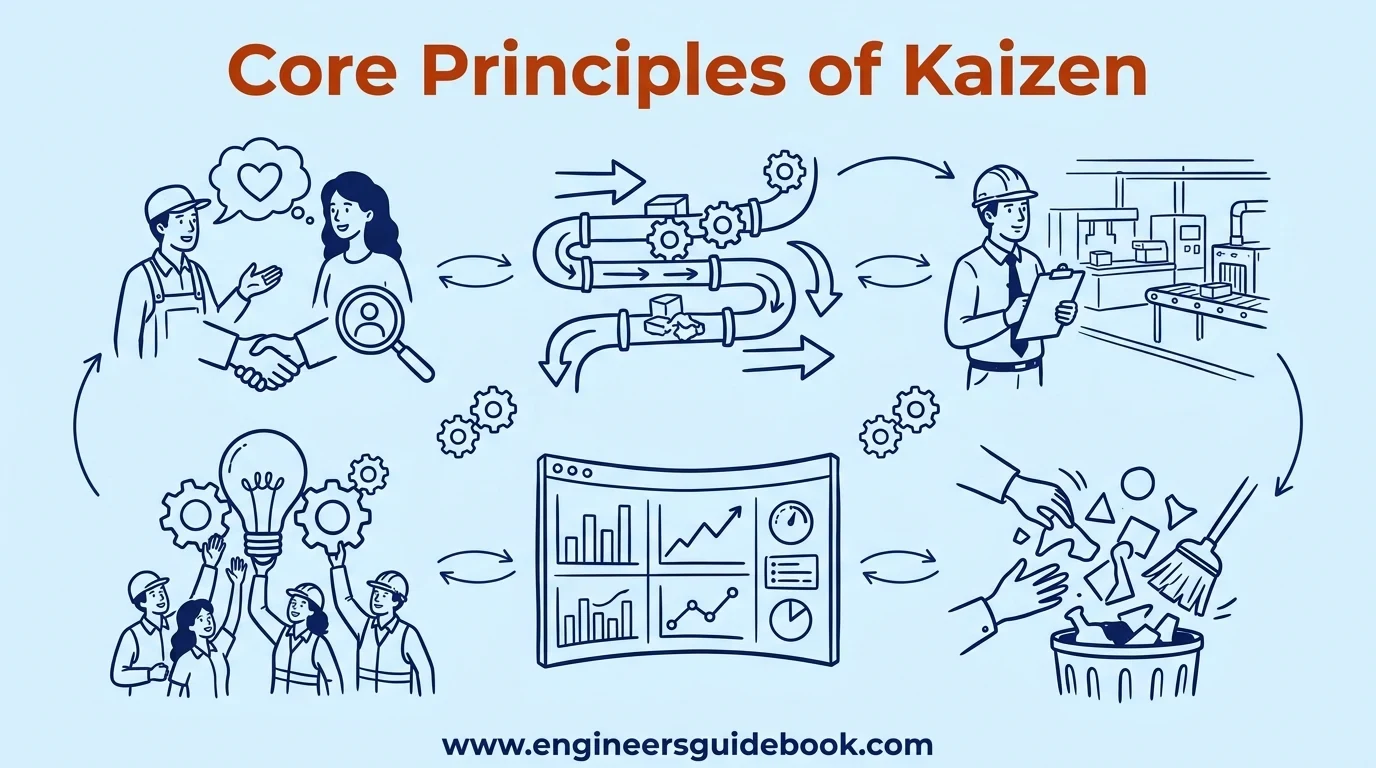
Organizations must understand customer expectations regarding quality, functionality, cost, and delivery. Improvement initiatives should prioritize activities that generate tangible customer value rather than improvements that merely increase internal activity.
3.2 Let It Flow
Uninterrupted material and information flow improves operational efficiency. Kaizen identifies production bottlenecks, excessive inventory, unnecessary transportation, and procedural delays that obstruct workflow and increase manufacturing lead times.
3.3 Go to Gemba
Gemba refers to the actual place where work occurs. Managers and engineers should observe manufacturing operations directly, communicate with employees, and investigate problems using firsthand evidence rather than assumptions.
3.4 Empower People
Employee empowerment enables workers to contribute ideas, participate in problem-solving, and implement authorized improvements. Appropriate training and clearly defined responsibilities strengthen accountability while encouraging organizational innovation.
3.5 Be Transparent
Operational performance should remain visible and understandable. Production dashboards, visual indicators, performance charts, and improvement registers enable employees to recognize abnormalities and evaluate progress objectively.
3.6 Eliminate Waste and Non-Value-Added Activities
Waste elimination is fundamental to Kaizen. Organizations continuously address three operational inefficiencies.
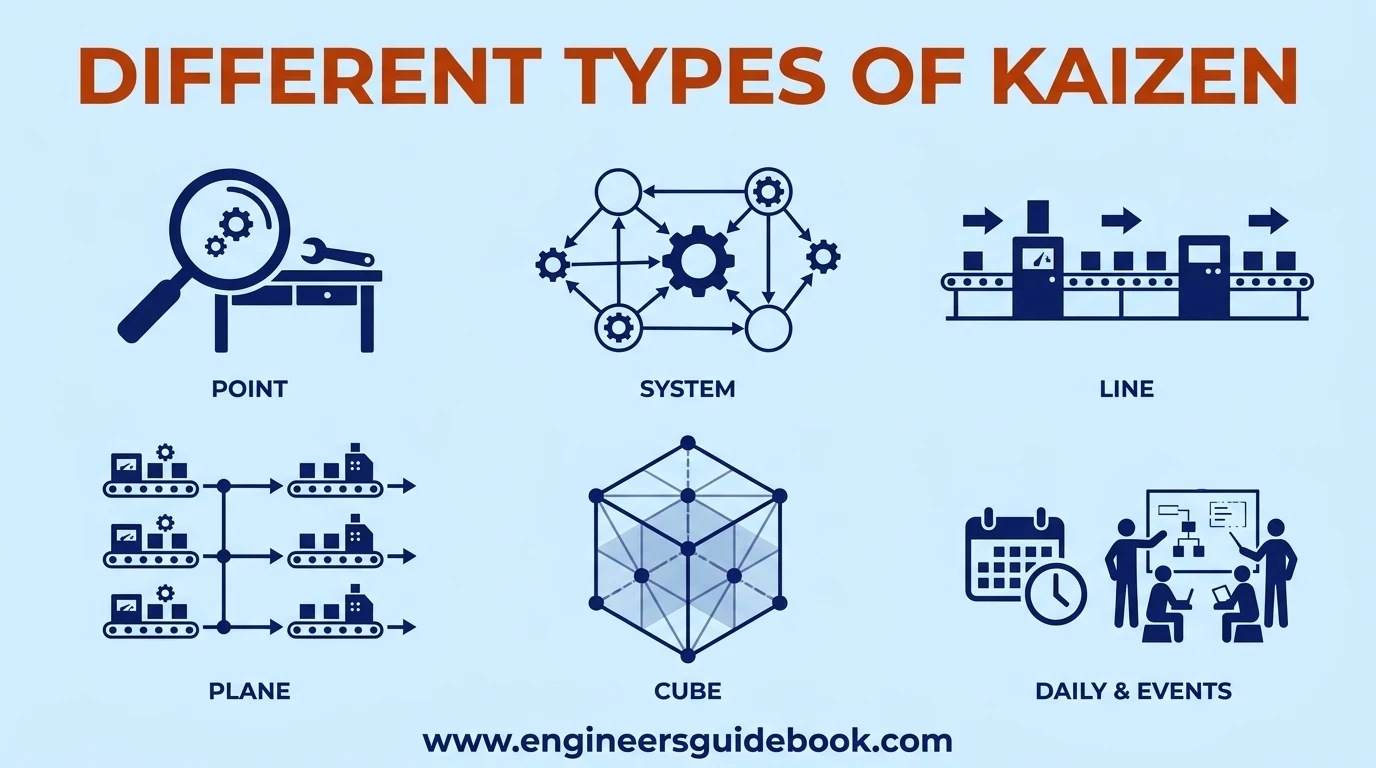
4. Different Types of Kaizen
4.1 Point Kaizen
Point Kaizen targets a specific workstation, activity, or operational problem. Examples include repositioning tools, improving equipment accessibility, and modifying inspection procedures to eliminate unnecessary movements.
4.2 System Kaizen
System Kaizen focuses on interconnected organizational processes. It involves coordinated improvements across departments to optimize broader operational systems rather than isolated manufacturing activities.
4.3 Line Kaizen
Line Kaizen improves an entire production line by addressing equipment synchronization, workstation balancing, material movement, and processing delays. Its objective is to increase overall production line efficiency.
4.4 Plane Kaizen
Plane Kaizen extends improvement initiatives across multiple interconnected production lines or functional departments. It emphasizes horizontal coordination, resource optimization, and eliminating inefficiencies between operational areas.
4.5 Cube Kaizen
Cube Kaizen represents multidimensional improvement across organizational systems and functions. It connects production, procurement, logistics, maintenance, and management activities to achieve comprehensive operational optimization.
4.6 Daily Kaizen and Kaizen Events
Daily Kaizen involves routine, incremental improvements performed by employees. Kaizen events are concentrated improvement workshops, commonly conducted over several days, targeting specific operational problems through collaborative problem-solving.
5. Kaizen Process and Improvement Cycle
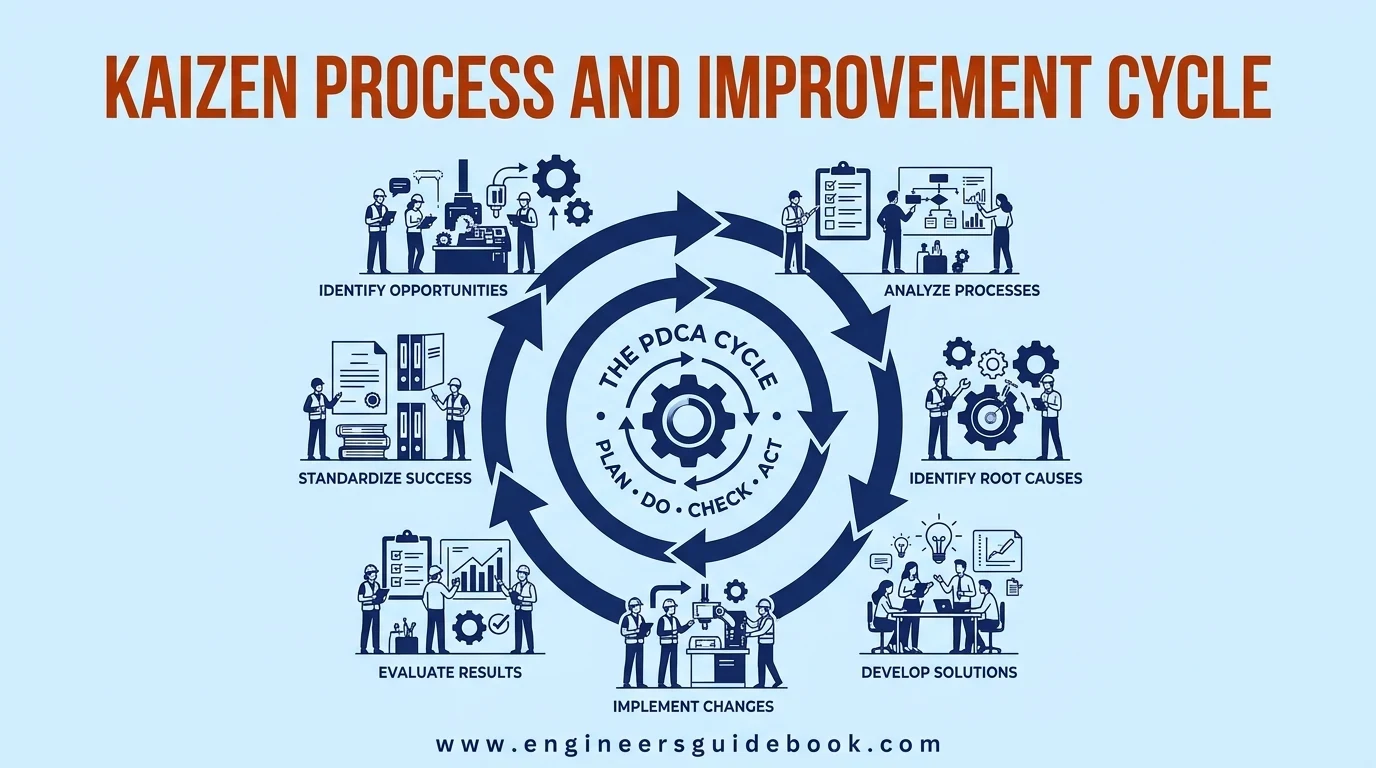
5.1 Identifying Improvement Opportunities
The improvement process begins by recognizing operational deficiencies through employee feedback, equipment inspections, production records, customer complaints, and performance indicators. Clearly defined problems provide direction for subsequent improvement activities.
5.2 Analyzing Existing Processes
Engineers examine current operating conditions, process sequences, cycle times, resource consumption, and procedural constraints. Process mapping helps reveal unnecessary activities and discrepancies between established procedures and actual working practices.
5.3 Identifying Root Causes
Effective Kaizen addresses underlying causes rather than superficial symptoms. Root cause analysis techniques help determine why equipment failures, production defects, material losses, or recurrent operational delays occur.
5.4 Developing Improvement Solutions
Improvement teams evaluate potential solutions according to technical feasibility, implementation cost, safety implications, and anticipated benefits. Preference is generally given to practical, low-cost modifications with measurable operational advantages.
5.5 Implementing Proposed Changes
Selected improvements should be implemented under controlled conditions. Pilot trials allow organizations to evaluate proposed modifications while minimizing production disruption and identifying unintended operational consequences.
5.6 Evaluating Improvement Results
Actual performance is compared against baseline measurements. Relevant indicators may include production output, rejection rates, equipment downtime, labor utilization, energy consumption, and manufacturing costs.
5.7 Standardizing Successful Improvements
Successful modifications should become part of established operating procedures. Updated documentation, employee training, visual instructions, and periodic inspections prevent regression to previous inefficient working practices.
5.8 The PDCA Cycle in Kaizen
The Plan-Do-Check-Act cycle provides a structured framework for continuous improvement.
- Plan: Identify problems and develop solutions.
- Do: Implement proposed improvements.
- Check: Evaluate performance results.
- Act: Standardize successful changes or refine solutions.
6. Essential Kaizen Tools and Techniques
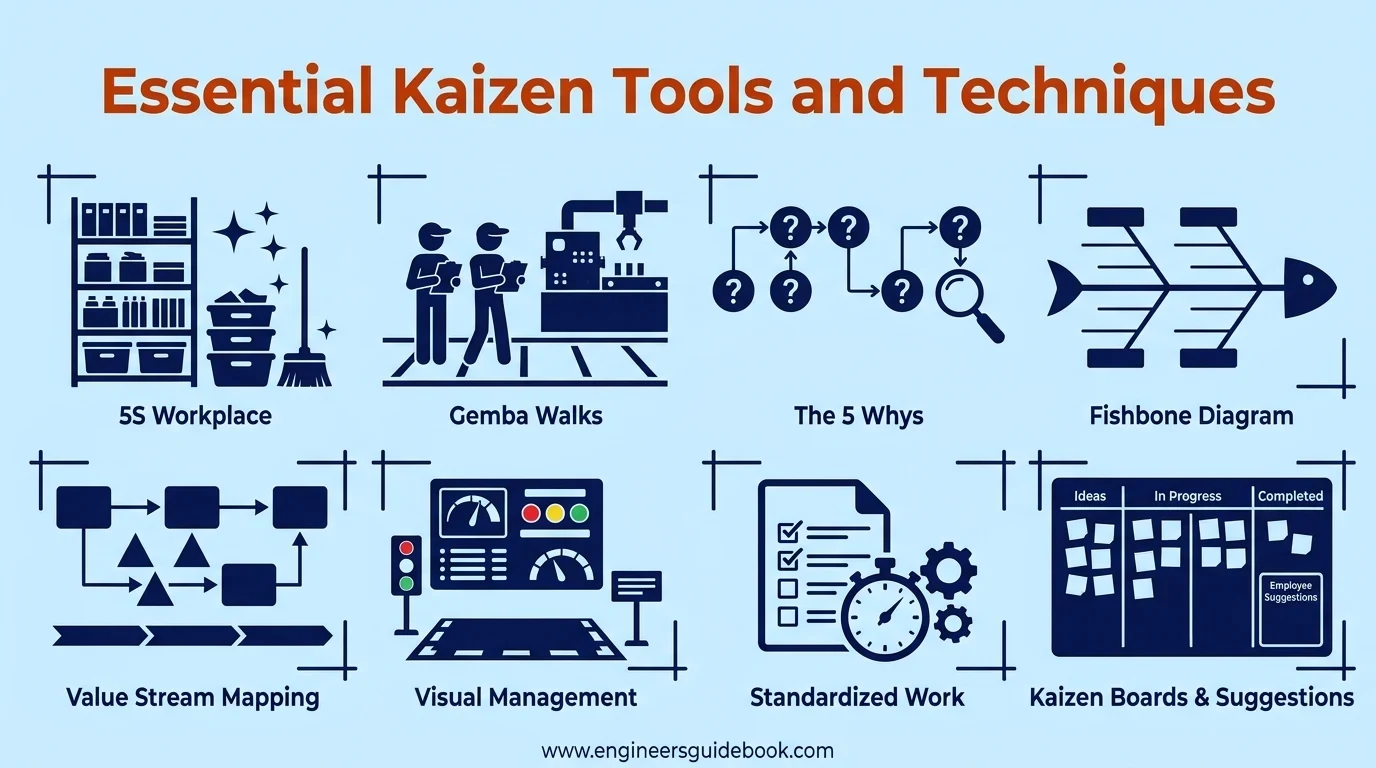
6.1 5S Workplace Organization
The 5S methodology improves workplace organization through Sort, Set in Order, Shine, Standardize, and Sustain. It reduces unnecessary movement, improves equipment accessibility, and establishes disciplined housekeeping practices.
6.2 Gemba Walks
Gemba walks involve visiting operational areas to observe working conditions and identify improvement opportunities. Direct observation enables managers to understand practical challenges while encouraging constructive communication with frontline employees.
6.3 The 5 Whys Technique
The 5 Whys technique investigates underlying problems by repeatedly asking why a particular failure or deficiency occurred. Each answer should be supported by evidence rather than speculation.
6.4 Fishbone Diagram
A fishbone diagram categorizes potential problem causes into areas such as manpower, machinery, materials, methods, measurement, and environment. This structured visualization facilitates comprehensive root cause investigation.
6.5 Value Stream Mapping
Value stream mapping illustrates material and information flow throughout a production process. It helps distinguish value-adding activities from wasteful operations, excessive inventory, and unnecessary waiting periods.
6.6 Visual Management
Visual management uses color coding, floor markings, performance boards, status indicators, and standardized labels to communicate operational information. Abnormalities become easier to identify, understand, and address.
6.7 Standardized Work
Standardized work establishes consistent methods for performing operational activities safely and efficiently. It provides a measurable performance baseline against which future Kaizen improvements can be evaluated.
6.8 Kaizen Boards and Suggestion Systems
Kaizen boards document improvement opportunities, assigned responsibilities, implementation status, and achieved benefits. Employee suggestion systems complement these boards by encouraging workforce participation in continuous improvement activities.
7. Step-by-Step Kaizen Implementation Guide
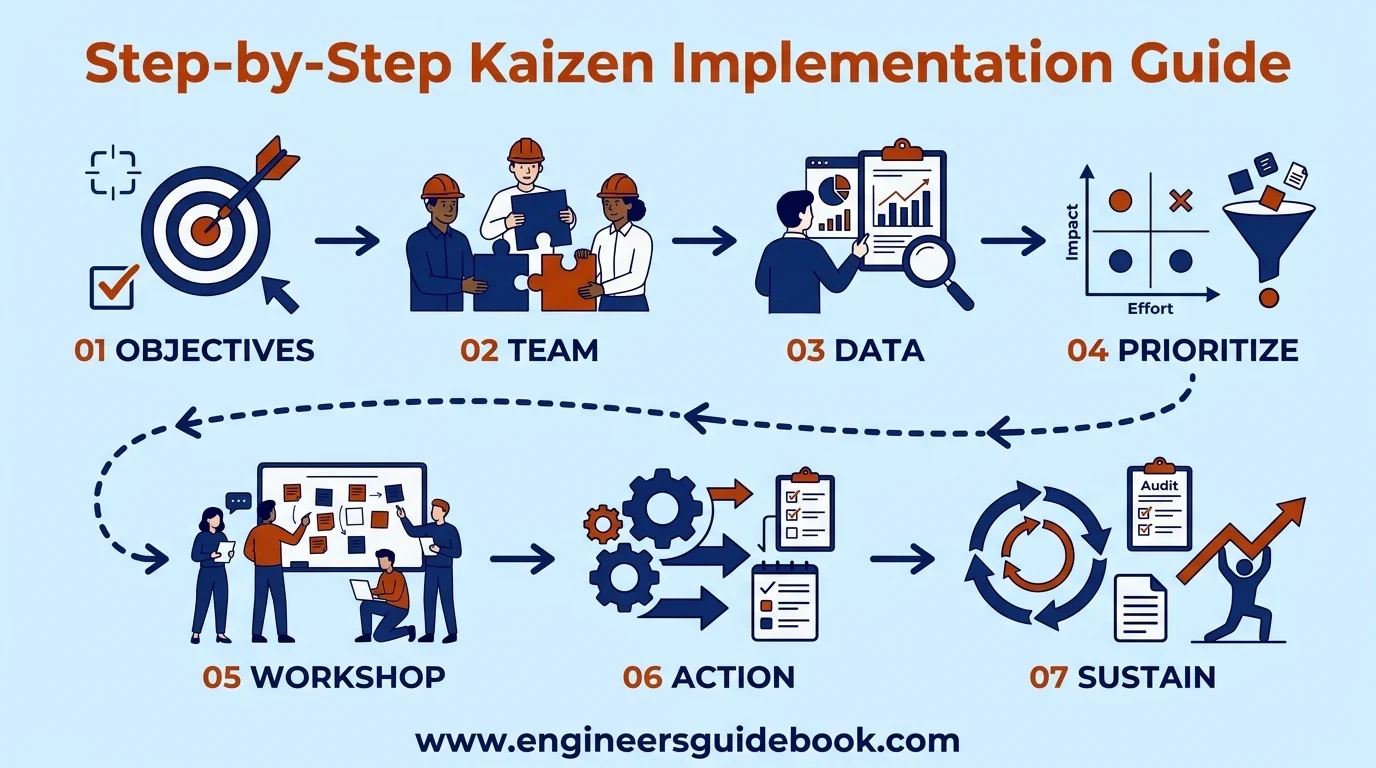
7.1 Establishing Clear Improvement Objectives
Organizations should define specific, measurable, achievable, relevant, and time-bound improvement objectives. Targets may include reducing equipment downtime, minimizing product rejection, or improving manufacturing throughput.
7.2 Forming a Kaizen Implementation Team
A cross-functional Kaizen team should include employees with relevant technical knowledge, operational experience, and decision-making authority. Collaboration between production, maintenance, quality, and safety departments supports comprehensive improvement.
7.3 Collecting Baseline Performance Data
Baseline measurements establish the initial operational condition before implementing changes. Accurate records of cycle time, production losses, maintenance costs, and defect rates enable objective performance comparisons.
7.4 Prioritizing Improvement Opportunities
Improvement opportunities should be prioritized according to operational impact, implementation difficulty, financial benefits, and safety requirements. Pareto analysis and impact-effort matrices can support systematic prioritization.
7.5 Conducting Kaizen Workshops
Kaizen workshops bring employees together to investigate problems, generate improvement ideas, and test practical solutions. Workshops should maintain clearly defined objectives and emphasize evidence-based decision-making.
7.6 Developing and Executing Action Plans
An effective Kaizen action plan specifies improvement activities, responsible personnel, required resources, completion deadlines, and expected outcomes. Regular progress reviews help prevent implementation delays and unresolved technical obstacles.
7.7 Monitoring and Sustaining Improvements
Continuous monitoring ensures implemented improvements deliver lasting benefits. Organizations should incorporate periodic audits, performance reviews, employee feedback, refresher training, and standardized procedures into routine operations. Sustaining these changes transforms Kaizen from an occasional improvement initiative into an enduring organizational management philosophy.
8. Practical Kaizen Examples and Applications
8.1 Kaizen in Manufacturing
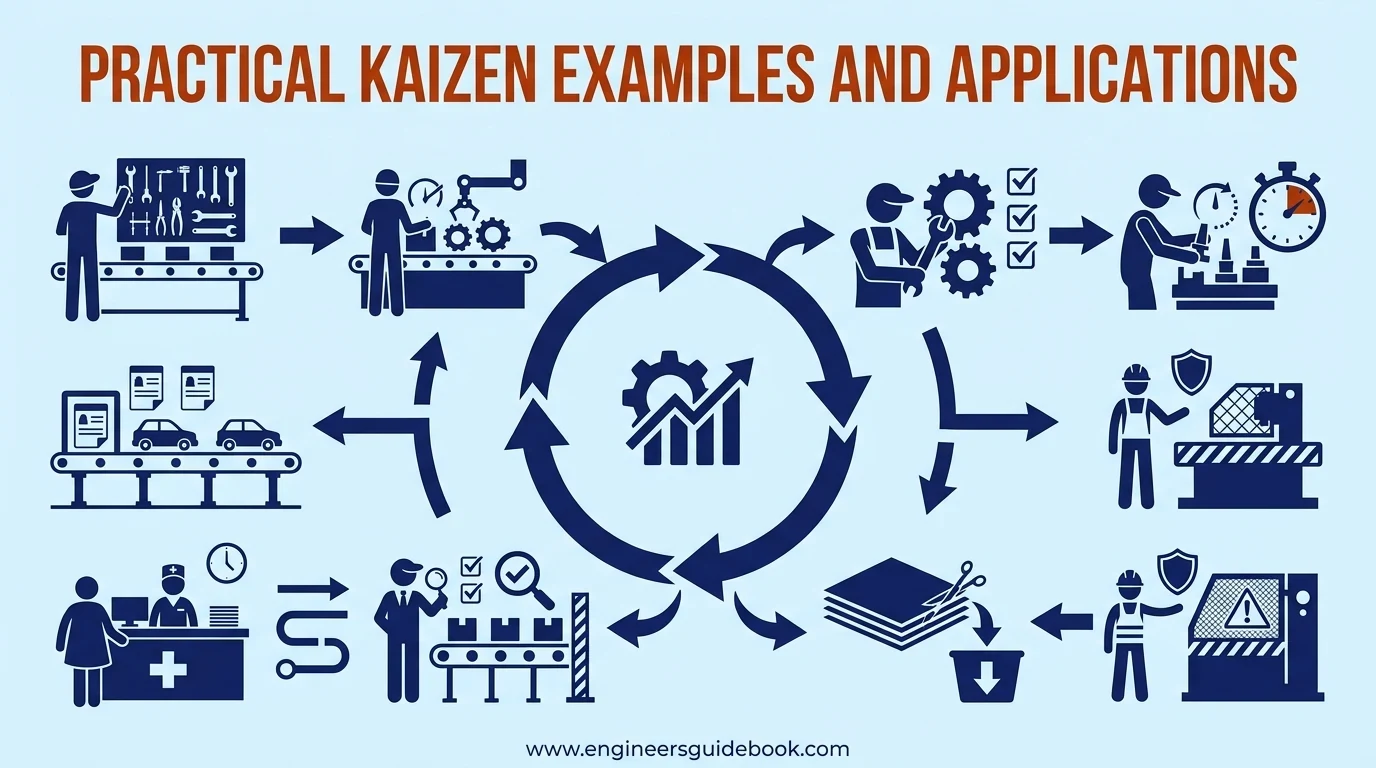
Manufacturing organizations apply Kaizen to streamline production sequences, eliminate bottlenecks, and improve workstation layouts. For example, reorganizing assembly tools according to their frequency of use can reduce unnecessary operator movements and improve production throughput.
8.2 Kaizen in Industrial Maintenance
Maintenance teams implement Kaizen by investigating recurring equipment failures, optimizing lubrication schedules, and improving preventive maintenance procedures. Standardizing bearing replacement practices and correcting shaft misalignment can reduce repetitive breakdowns and improve equipment reliability.
8.3 Reducing Production Changeover Time
Kaizen supports changeover optimization through Single-Minute Exchange of Die (SMED). Preparing tooling before machine shutdown and converting internal setup activities into external activities can substantially reduce production downtime and increase available operating hours.
8.4 Improving Workplace Safety
Employees can identify unsafe working conditions through routine inspections and improvement activities. Installing appropriate machine guards, eliminating trip hazards, and improving equipment accessibility reduces occupational risks while strengthening industrial safety practices.
8.5 Reducing Material Waste
Material waste often originates from inaccurate cutting, improper storage, excessive processing, and production defects. Kaizen encourages systematic investigation of these losses and the implementation of practical countermeasures to improve material utilization.
8.6 Improving Product Quality
Organizations apply Kaizen to identify recurring defects and improve process consistency. Standardizing machine parameters, introducing mistake-proofing mechanisms, and improving inspection procedures can reduce rejection rates and unnecessary rework.
8.7 Kaizen in Healthcare and Service Industries
Healthcare facilities use Kaizen to reduce patient waiting times, improve inventory management, and streamline administrative procedures. Service organizations similarly apply continuous improvement to minimize processing delays, documentation errors, and customer complaints.
8.8 Kaizen in the Toyota Production System
Toyota incorporates Kaizen into its production philosophy through employee participation, waste elimination, standardized work, and systematic problem-solving. Continuous improvement complements Just-in-Time manufacturing and Jidoka to enhance operational efficiency and process quality.
9. Benefits and Limitations of Kaizen
9.1 Increased Operational Productivity
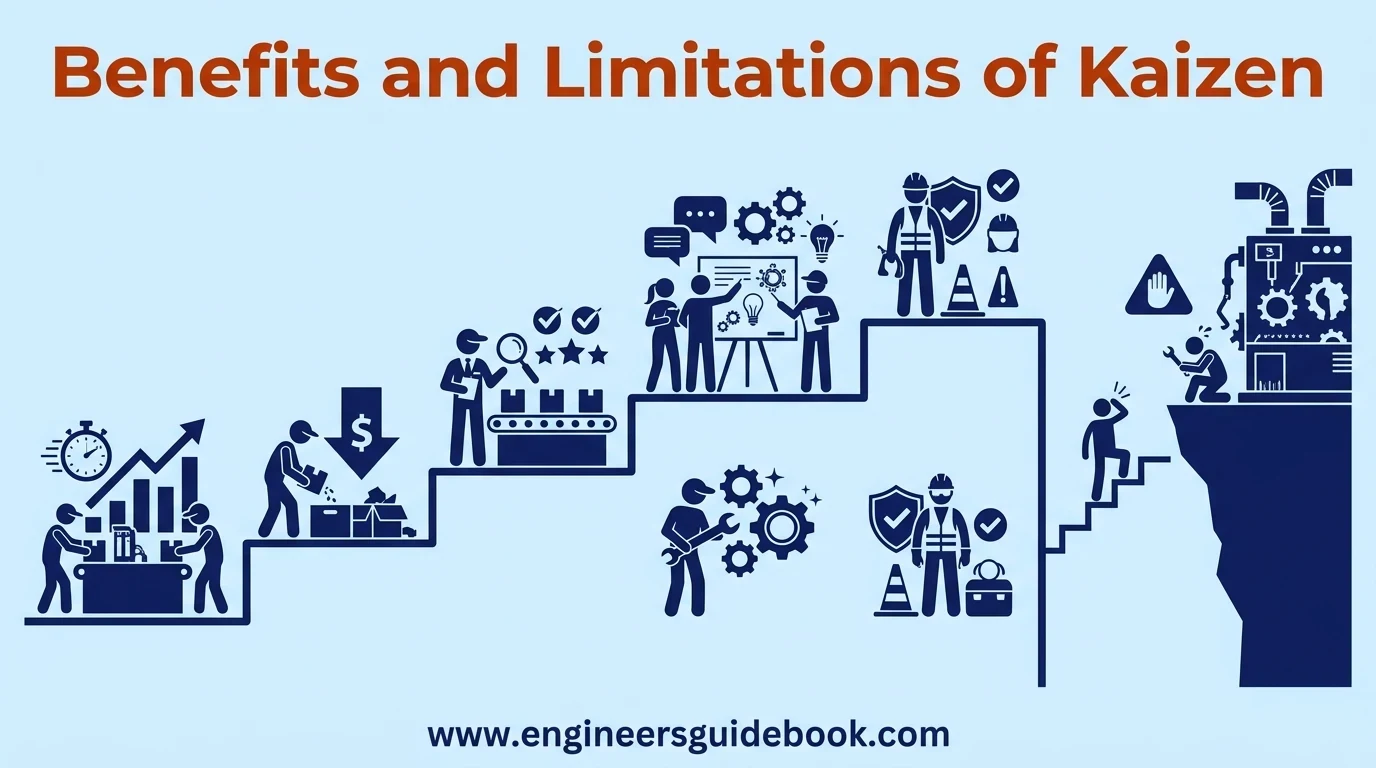
Kaizen improves productivity by eliminating redundant activities and optimizing existing workflows. Employees spend less time performing unnecessary tasks, allowing organizations to generate greater output using available resources.
9.2 Reduced Manufacturing Costs
Continuous improvement reduces expenses associated with material wastage, excessive inventory, energy consumption, equipment breakdowns, and product rework. Cumulative cost reductions can significantly improve organizational profitability.
9.3 Improved Product and Process Quality
Systematic process refinement reduces operational variability and improves manufacturing consistency. Consequently, organizations experience fewer defects, reduced customer complaints, and greater conformity with established quality specifications.
9.4 Enhanced Employee Engagement
Employee participation creates a sense of ownership and accountability. When management recognizes practical improvement suggestions, employees become more motivated to identify inefficiencies and contribute to organizational development.
9.5 Improved Equipment Reliability
Kaizen helps maintenance professionals eliminate recurrent failure mechanisms and improve equipment maintainability. Better inspection practices, standardized maintenance procedures, and systematic defect elimination contribute to improved asset availability.
9.6 Enhanced Workplace Safety
Continuous identification and elimination of workplace hazards strengthen occupational safety. Kaizen also encourages proactive hazard reporting, ergonomic improvements, and greater employee awareness of operational risks.
9.7 Limitations of Incremental Improvement
Incremental improvements may deliver insufficient results when organizations face obsolete technology, fundamental design deficiencies, or severe capacity constraints. Certain circumstances require extensive engineering modifications, capital investment, or radical process transformation.
10. Measuring Kaizen Performance and Effectiveness
10.1 Establishing Kaizen Performance Indicators
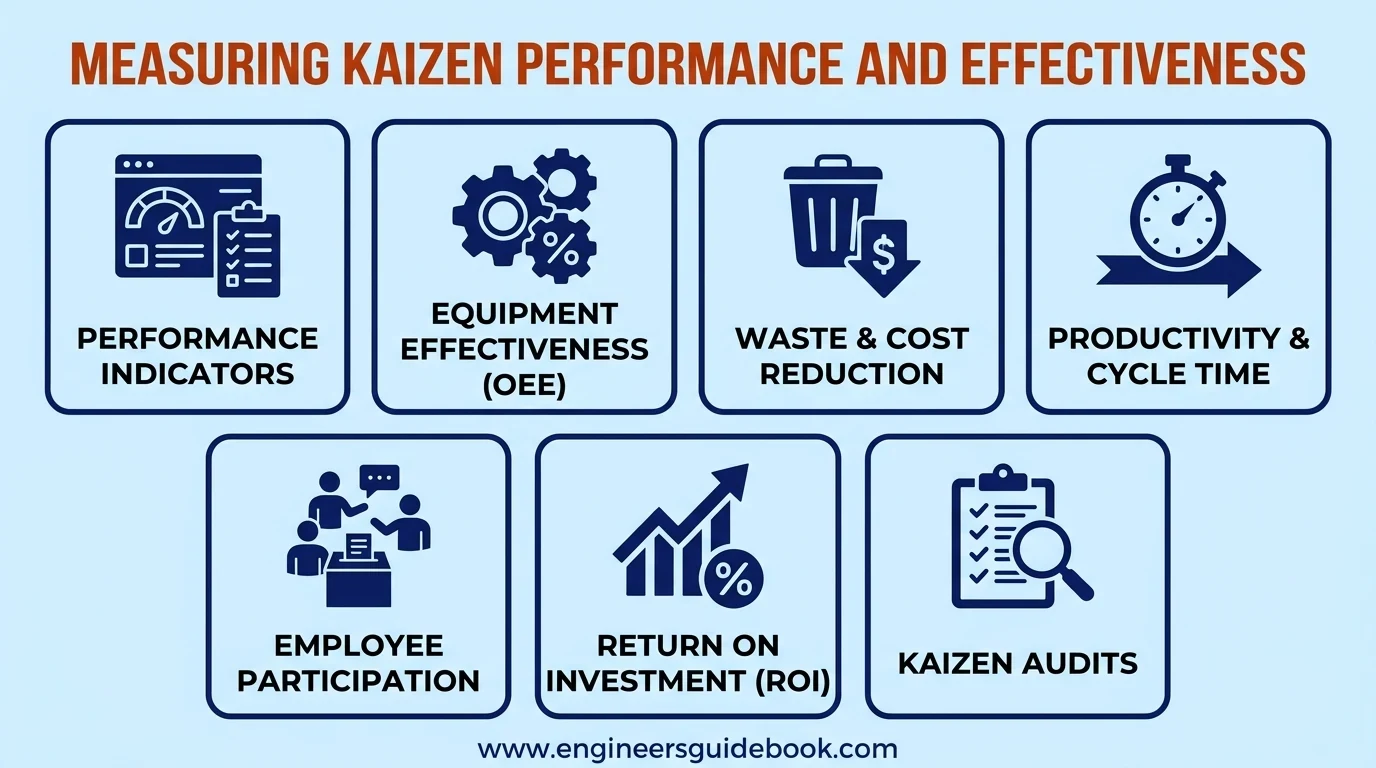
Key Performance Indicators (KPIs) provide quantifiable evidence of improvement effectiveness. Common Kaizen indicators include production output, defect rates, downtime, operational expenditure, safety performance, and employee participation.
10.2 Measuring Overall Equipment Effectiveness
Overall Equipment Effectiveness (OEE) measures manufacturing equipment performance through three fundamental components.
OEE = Availability × Performance × Quality
Increasing OEE indicates improved utilization of planned production time, provided the underlying measurements remain accurate and consistent.
10.3 Tracking Waste and Cost Reduction
Organizations should compare material consumption, scrap generation, energy usage, and operating expenditure before and after implementing improvements. These comparisons help quantify financial savings and identify additional optimization opportunities.
10.4 Monitoring Productivity and Cycle Time
Cycle time measurements reveal how efficiently manufacturing activities are completed. Reductions in cycle time, without compromising safety or product quality, can increase production capacity and improve delivery performance.
10.5 Measuring Employee Participation
Employee participation can be evaluated through submitted suggestions, implemented improvement ideas, workshop attendance, and departmental involvement. These indicators reflect the integration of continuous improvement into everyday organizational activities.
10.6 Calculating Kaizen Return on Investment
Return on Investment (ROI) evaluates the financial effectiveness of improvement initiatives.
ROI (%) = [(Financial Benefits − Implementation Cost) / Implementation Cost] × 100
For example, an improvement costing $2,000 and generating $8,000 in annual savings produces a first-year ROI of 300%, assuming no additional recurring costs.
10.7 Conducting Kaizen Audits
Periodic Kaizen audits evaluate compliance with standardized procedures, improvement sustainability, and achieved performance targets. Audit findings help identify operational regression and establish corrective actions for unresolved deficiencies.
11. Kaizen Comparisons and Implementation Challenges
11.1 Kaizen vs Lean Manufacturing
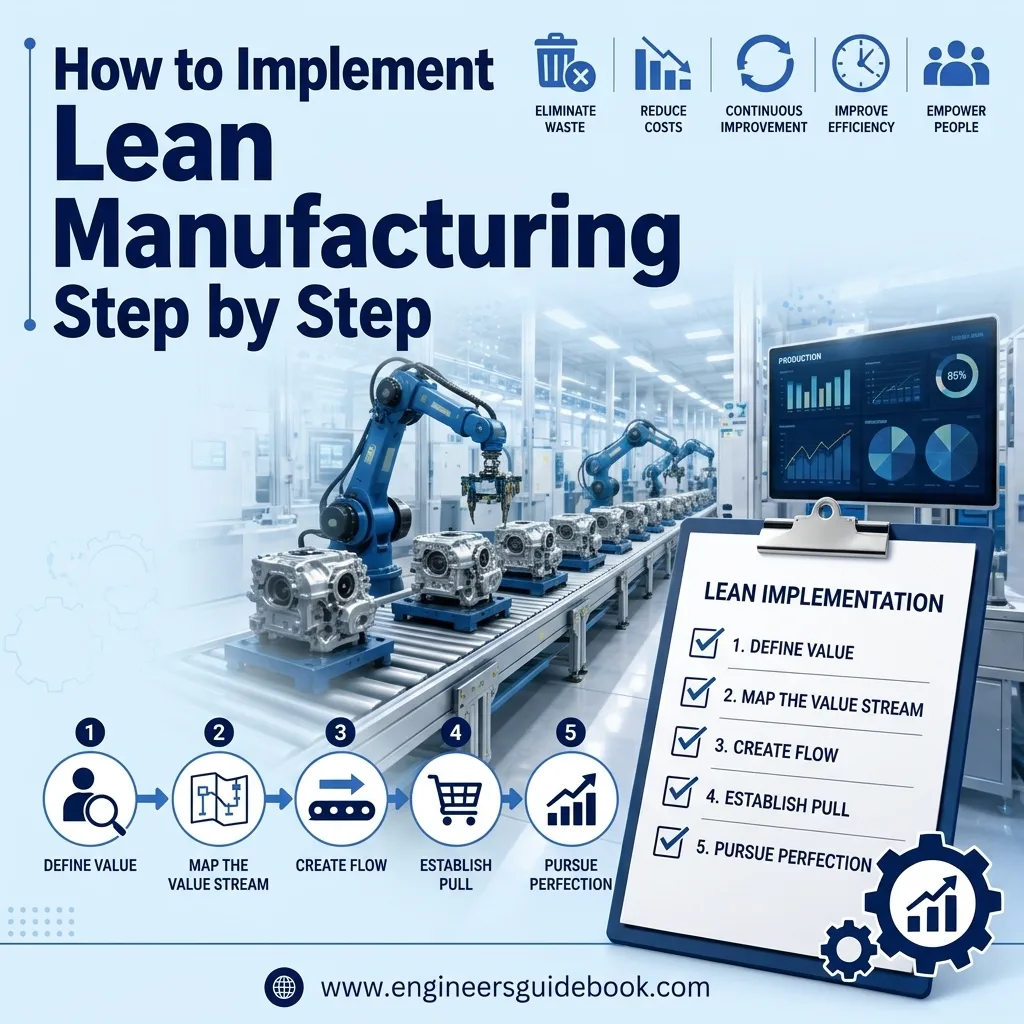
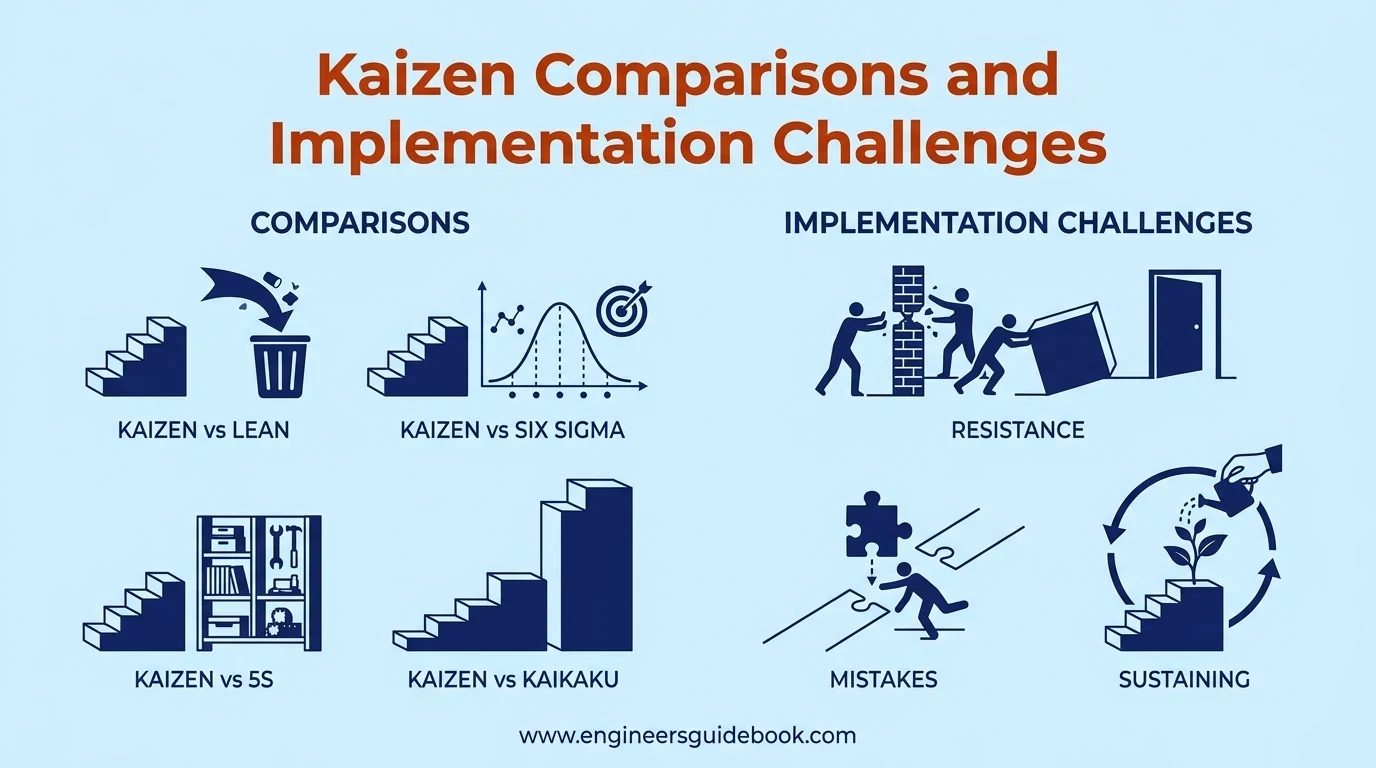
Kaizen emphasizes continuous, incremental improvement, whereas Lean Manufacturing focuses more broadly on maximizing customer value through waste elimination. Kaizen serves as an integral component of the Lean management philosophy.
11.2 Kaizen vs Six Sigma
Kaizen encourages practical and frequent process improvements involving employees throughout an organization. Six Sigma emphasizes statistical analysis, variation reduction, and structured problem-solving through methodologies such as DMAIC.
Both approaches can complement one another.
11.3 Kaizen vs 5S
Kaizen represents a comprehensive continuous improvement philosophy. In contrast, 5S is a structured workplace organization methodology that supports Kaizen through improved cleanliness, accessibility, standardization, and operational discipline.
11.4 Kaizen vs Kaikaku
Kaizen involves gradual process refinement, whereas Kaikaku represents radical organizational or operational transformation. Kaikaku may involve introducing advanced machinery, redesigning manufacturing systems, or fundamentally restructuring production processes.
11.5 Overcoming Employee Resistance
Resistance frequently originates from inadequate communication, unfamiliarity with improvement methodologies, or concerns about increased workloads. Management can mitigate resistance through practical training, transparent objectives, and meaningful employee involvement.
11.6 Avoiding Common Kaizen Implementation Mistakes
Common mistakes include insufficient management commitment, unrealistic performance targets, inadequate baseline measurements, and failure to standardize improvements. Organizations should avoid prioritizing the quantity of improvement suggestions over their actual operational significance.
11.7 Sustaining Long-Term Continuous Improvement
Sustainable Kaizen requires consistent leadership support, performance monitoring, employee recognition, and periodic improvement reviews. Continuous improvement must become embedded within routine management practices rather than remaining an intermittent organizational campaign.
12. Frequently Asked Questions (FAQ)
12.1 What Does Kaizen Mean?
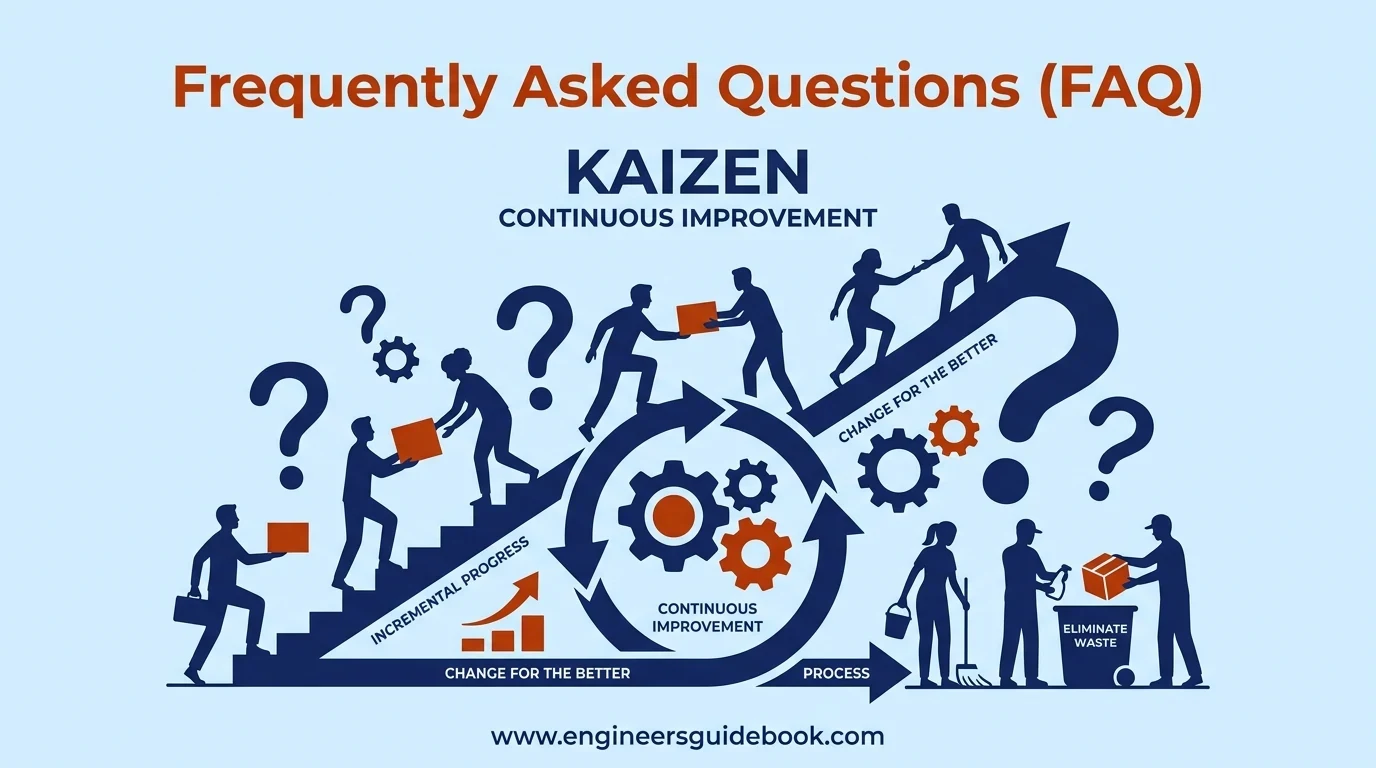
Kaizen is a Japanese term meaning change for the better. In organizational management, it describes a philosophy of continuous improvement through systematic, incremental changes involving employees at all organizational levels.
12.2 What Are the Five Principles of Kaizen?
The five commonly recognized Kaizen principles are knowing your customer, letting processes flow, going to Gemba, empowering people, and maintaining transparency. These principles support customer value creation and operational excellence.
12.3 What Are the Seven Steps of Kaizen?
A common seven-step Kaizen process involves identifying improvement opportunities, analyzing existing processes, determining root causes, developing solutions, implementing changes, evaluating results, and standardizing successful improvements.
12.4 What Is a Real-Life Example of Kaizen?
A practical example is reorganizing frequently used maintenance tools near production equipment. This improvement reduces tool retrieval time, minimizes unnecessary movement, and enables technicians to complete maintenance activities more efficiently.
12.5 What Are the Three M’s of Kaizen?
The three M’s are Muda, Mura, and Muri. Muda represents waste, Mura refers to unevenness or inconsistency, and Muri describes excessive operational burden on employees or equipment.
12.6 What Is the Difference Between Kaizen and 5S?
Kaizen focuses on continuous improvement across organizational processes, while 5S concentrates on workplace organization and standardization. The 5S methodology is commonly used as a foundational tool for implementing Kaizen.
12.7 What Is the Main Purpose of Kaizen?
The main purpose of Kaizen is to continuously improve organizational performance by eliminating inefficiencies, reducing waste, enhancing quality, and encouraging employees to participate actively in systematic problem-solving.
12.8 Is Kaizen a Lean or Six Sigma Tool?
Kaizen is primarily associated with Lean Manufacturing. However, organizations frequently integrate Kaizen into Lean Six Sigma initiatives to complement statistical problem-solving with practical, incremental process improvements.
12.9 What Is a Kaizen Event?
A Kaizen event is a focused improvement workshop in which a cross-functional team investigates a specific operational problem, develops solutions, implements changes, and evaluates results within a defined timeframe.
12.10 How Is Kaizen Used in Manufacturing?
Manufacturers use Kaizen to reduce downtime, optimize production layouts, eliminate material waste, improve equipment reliability, shorten changeover times, and strengthen product quality through continuous process refinement.
12.11 What Are the Disadvantages of Kaizen?
Kaizen may produce gradual results, require sustained employee participation, and encounter organizational resistance. Incremental improvements may also prove inadequate when operational problems require substantial technological or structural changes.
12.12 How Do You Measure Kaizen Success?
Kaizen success is measured using performance indicators such as OEE, productivity, defect rates, downtime, cost savings, employee participation, cycle time reduction, and return on investment.
13. Conclusion
13.1 Key Takeaways from Kaizen
Kaizen provides a systematic framework for improving productivity, eliminating operational waste, enhancing quality, and strengthening employee engagement through practical, measurable, and continuous improvements.
13.2 Importance of Sustainable Continuous Improvement
Long-term operational excellence depends on consistently evaluating existing processes and maintaining successful improvements. Standardization, performance measurement, and employee development are indispensable components of sustainable continuous improvement.
13.3 Building a Kaizen-Driven Organization
A Kaizen-driven organization combines committed leadership, workforce empowerment, transparent communication, and disciplined problem-solving. By incorporating continuous improvement into everyday operations, businesses can strengthen industrial competitiveness, improve asset performance, reduce operational expenditure, and establish a resilient foundation for long-term organizational growth.